Your Guide to Landing Careers in Sports
When you think of a career in sports, what comes to mind? For most, it's the athletes on the field or the coaches pacing the sidelines. But that's just the part of the iceberg you see on TV. Behind every team, every event, and every broadcast is a massive, passionate industry driven by professionals. Your love for the game can be the foundation for dozens of rewarding careers, from management and marketing to analytics and fan engagement. This guide is your playbook for finding where you fit in.
Charting Your Course in the Sports Industry
It’s true, the star players and head coaches are vital. But for every athlete on a roster, there's a whole army of dedicated people making sure the business runs smoothly. They're the ones managing operations, building a connection with fans, crunching performance data, and keeping the lights on financially.
This isn’t a niche field; it's a booming global sector. In the UK, for instance, employment in sports and fitness shot up by 20% since 2021. The story is similar across the pond, where the U.S. is projected to see a 9.2% growth in coaching jobs alone by 2032—and that's just one of many paths on the rise.
It's a Business, Not Just a Game
The first step to building a career here is understanding the sheer variety of jobs available. Think of a sports team or league as a complex business with a lot of moving parts. Every single department is essential to achieving victory, whether that’s winning a championship or cultivating a die-hard fan base that sticks around for generations.
To get a clearer picture of where your skills and passion might fit, it helps to break down the industry into its core functions.
To give you a quick snapshot, here’s a look at some of the most common career categories you’ll find in the sports world.
Top Career Categories in the Sports Industry at a Glance
| Career Category | Core Focus | Example Roles |
|---|---|---|
| Team Operations | On-field success and player development. | Coach, Scout, General Manager |
| Business & Revenue | Driving financial growth and stability. | Marketing Manager, Ticket Sales, Sponsorship Coordinator |
| Media & Communications | Crafting and sharing the team's story. | Public Relations, Social Media Manager, Broadcaster |
| Venue & Events | Creating an unforgettable fan experience. | Event Manager, Facilities Director, Guest Services |
| Health & Performance | Keeping athletes in peak physical condition. | Athletic Trainer, Strength Coach, Sports Scientist |
Each of these areas is critical, and they all work together to create the product that fans love.
A career in sports is about channeling a passion for competition into a professional skill set. The industry needs strategic thinkers, creative marketers, data wizards, and community builders just as much as it needs talented athletes.
Don't forget to look beyond the big professional leagues, too. Incredible opportunities exist in collegiate athletics, youth sports organizations, equipment companies, and the major brands that pour money into sponsorships. A great way to see the diversity of employers is to browse the leading companies hiring in sports right now.
Consider this guide your roadmap. It's here to help you navigate all these different avenues and find a role where you can truly make an impact.
Finding Your Position Beyond the Playing Field

For every incredible play you see on the field, there's a huge support system working tirelessly behind the scenes. These are the roles that keep the whole machine running, turning the passion we see on game day into a successful, sustainable business. Figuring out where you fit into this world is the very first step to building a career you love in sports.
Think of it like building a championship team. You can't win with just a star quarterback. You need a rock-solid offensive line, a brilliant coaching staff, and a front office that knows how to manage the salary cap. In the same way, a sports organization needs a whole range of different talents to really succeed.
Let's break down the main career paths that form the backbone of the industry. We'll get into what each department actually does, the kinds of jobs you'll find there, and the real impact you can make. This will help you find the position on the "team" that truly matches your skills and drive.
The Brains of the Operation
At the heart of it all are the people who manage the strategy, the talent, and the day-to-day logistics. This is the world of Team and Football Operations, where the one and only focus is winning. These roles are completely intertwined with the on-field product, directly shaping player performance and who even makes the roster.
If you have a knack for spotting talent and can think about the game on a strategic level, this could be your calling.
- Coaching Staff: This goes way beyond the head coach. It includes all the specialized assistants—like a quarterbacks coach or a defensive coordinator—who are hands-on with player development, game planning, and making those crucial in-game calls.
- Scouting and Talent Identification: Scouts are the talent hunters. They’re on the road constantly, evaluating college and pro players to figure out who has the potential to make it at the next level.
- General Manager (GM) and Front Office: The GM is basically the architect of the team. They make the tough calls on contracts, trades, and the draft, working with a whole team of analysts and executives to put together a winning roster.
Driving Business and Building the Brand
Away from the field, another team is fighting for a different kind of win: financial success and deep-rooted fan loyalty. The Business Management side of sports is all about generating revenue, managing budgets, and forging a real connection with the fanbase. This is where sharp business skills meet a genuine passion for the game.
These jobs make sure the organization has the money and resources to compete. From selling out the stadium to landing major corporate sponsorships, this department is absolutely critical for long-term health. You can get a closer look at many of these jobs in our detailed guide to sports management careers.
A modern sports team isn't just a team—it's a full-blown entertainment company. Its success depends just as much on fan engagement and powerful partnerships as it does on the final score.
Telling the Team's Story
So, how does a team connect with millions of fans all over the world? That's the job of the Media and Communications department. These are the storytellers, the people who shape the team’s public image and manage the constant flow of information between the organization, the media, and the fans.
A career here demands top-notch communication skills, a creative mind, and the ability to thrive under the pressure of tight deadlines.
- Public Relations (PR): PR pros manage the team's reputation, set up media interviews, write press releases, and step in to handle any crisis situations.
- Social Media and Digital Content: This team is on the front lines, talking directly to fans on platforms like X (formerly Twitter), Instagram, and TikTok. They create the viral clips and behind-the-scenes content that build a real community.
- Broadcasting and Production: From the play-by-play announcers in the booth to the camera operators and video editors, these are the people who bring the game to life for everyone watching at home.
Optimizing Athlete Potential
Finally, one of the fastest-growing and most crucial areas in modern sports is Health and Performance. This is where science meets pure athleticism. Professionals here use data to maximize player health, prevent injuries, and push physical performance to its absolute limit.
They ensure the players—the team's most valuable assets—are always in peak condition. This includes athletic trainers, strength and conditioning coaches, sports scientists, and nutritionists, all working together to give their team a crucial physical advantage.
Building Your Skillset for the Sports Industry
Knowing what jobs are out there is one thing, but knowing how to actually win one is the real game-changer. Landing a career in sports isn't just about loving the game or having a degree. It’s about building a specific toolkit of skills that prove you can deliver results from day one.
A degree in sports management, business, or marketing is a great starting point. It gives you the foundational knowledge—the business principles that make the industry tick, from contract law to fan engagement. Think of it as your price of admission.
But in the sports world, what you've done often speaks louder than what you've studied. Your degree is the rulebook, but internships, volunteer gigs, and part-time jobs are your practice reps. This is where you prove you can handle the pressure and apply your knowledge when it counts. It's that hands-on experience that often separates you from the pack.
Mastering the Essential Hard Skills
Hard skills are your bread and butter—the practical, technical abilities you need to get the job done. You can list them on a resume and demonstrate them in an interview. In sports, some of these have become absolutely essential.
Think of them as the specific tools for the job. A social media manager needs to know their way around analytics dashboards, and a scout needs to be fluent in talent evaluation software.
Here are a few of the most critical hard skills employers are looking for right now:
- Data Analysis and Literacy: Sports runs on data. You need to be able to read the story the numbers are telling, whether it's tracking player performance stats or analyzing ticket sales trends to make smarter decisions.
- Digital Marketing and Social Media: Knowing how to create great content, run an email campaign, or manage a team's social media presence is non-negotiable for connecting with today's fans.
- Sales and CRM Software: If you're in ticket sales or corporate partnerships, you'll live inside customer relationship management (CRM) software like Salesforce. Understanding how it works is a huge plus.
- Project Management: From planning a charity golf tournament to coordinating a stadium-wide promotion, the ability to manage a project from start to finish is a skill that’s valuable in almost any role.
Cultivating Winning Soft Skills
If hard skills are about what you can do, soft skills are all about how you do it. These are the personal qualities that define how you communicate, lead, and work with others. In an industry built on teamwork and high-pressure moments, soft skills are often what separate good employees from great ones.
The sports industry isn't just getting bigger; it's getting more professional. In the EU, 1.5 million people held sport-related jobs in 2023, a 2.2% jump from the year before. As the workforce grows, so does the demand for people who are more than just technically proficient. You can dig into these European sports employment trends over at Eurostat.
Resilience is your most valuable asset in the sports industry. You will face intense pressure, long hours, and unexpected setbacks. The ability to bounce back, stay positive, and remain focused on the goal is what defines a successful professional in this competitive field.
Here are the soft skills that truly move the needle:
- Communication: Can you clearly explain an idea to your boss, an athlete, a fan, and a reporter? Strong writing, speaking, and presentation skills are a must.
- Leadership: You don't need a formal title to be a leader. Taking ownership of your work, motivating your teammates, and leading by example will get you noticed and promoted.
- Adaptability: Things change fast in sports. Games get postponed, players get traded, and unexpected challenges pop up all the time. You have to be able to think on your feet and roll with the punches.
- Networking: In sports, your network is everything. Building real, genuine relationships can open doors to jobs, partnerships, and insights you'd never get otherwise.
By building a strong mix of both hard and soft skills, you’re not just showing you're qualified for the job. You’re showing you have the right character to thrive in the unique, team-first culture of the sports industry.
Understanding Salaries and Career Growth in Sports
Let's talk about money. It's a crucial part of planning your career, but it's often surrounded by myths, especially in sports. The biggest misconception? That only star athletes and head coaches make a great living. The reality is that a massive, well-paid professional workforce powers the entire industry behind the scenes.
Your salary in a sports career isn't a simple number; it's influenced by several key factors. Think of it like a game where the league you're in (NFL versus MLS), the size of your team's market (New York versus Green Bay), and your specific expertise all impact the final score on your paycheck.
Mapping Out Your Financial Future
So, what can you actually expect to earn at different stages? An entry-level ticket sales coordinator, for example, might start in the $35,000 to $50,000 range. But with a few years of solid experience and a proven track record, they can climb the ladder to a Director of Ticket Sales, where salaries often push past $100,000.
It's a similar story in digital media. A social media coordinator might start out earning around $45,000. Once they demonstrate their ability to build a passionate fan base and drive revenue, they can advance to a Director of Digital Media role, where salaries can reach $90,000 to $120,000 or even more, depending on the organization. These aren't just one-off examples; they show a clear and expected path for dedicated pros.
The future for these roles looks incredibly strong. The global sports market is on track to hit a staggering $614.1 billion by 2026, which means a huge wave of new jobs is coming. In the U.S. alone, an estimated 99,700 new jobs in entertainment and sports are expected to open up each year through 2034. This growth is fueled by both the industry's expansion and the simple need to replace professionals who are retiring. You can dive deeper into these sports industry trends and opportunities.
This infographic gives a great visual of the core skills you'll need to advance in just about any sports career.
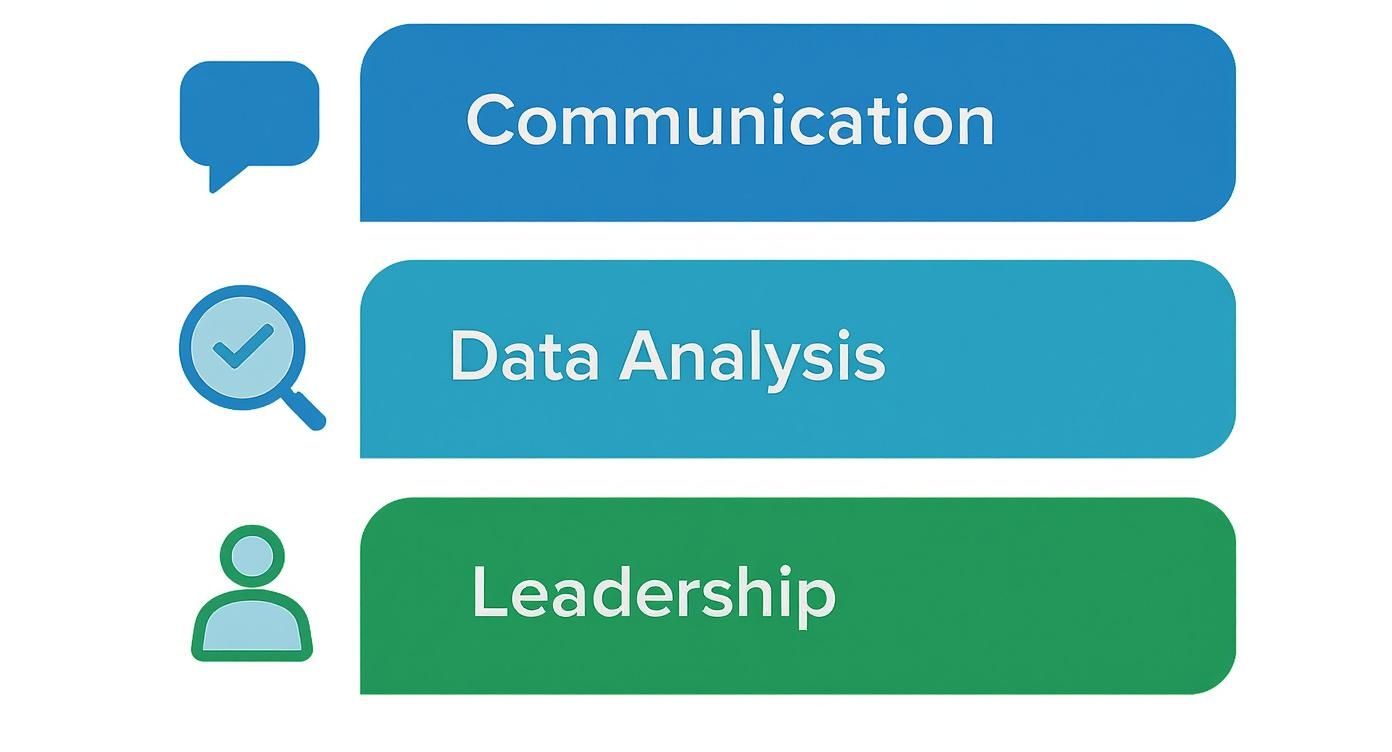
As you can see, things like communication, data analysis, and leadership aren't just nice-to-haves. They are the absolute foundation for long-term growth and unlocking higher salaries.
Typical Salary Ranges for Common Sports Careers
To give you a clearer picture of what to expect, here’s a breakdown of potential salary ranges for a few key roles in the industry. Keep in mind that these numbers can vary based on location, league, and organization size, but they provide a solid baseline for what's possible as you gain experience.
| Job Role | Entry-Level Salary Range | Mid-Career Salary Range | Senior-Level Salary Range |
|---|---|---|---|
| Sports Marketing Coordinator | $40,000 - $55,000 | $60,000 - $85,000 | $90,000 - $130,000+ |
| Ticket Sales Representative | $35,000 - $50,000 (plus commission) | $55,000 - $75,000 (plus commission) | $80,000 - $120,000+ |
| Data Analyst | $50,000 - $70,000 | $75,000 - $110,000 | $120,000 - $160,000+ |
| Athletic Trainer | $45,000 - $60,000 | $65,000 - $90,000 | $95,000 - $125,000+ |
| Social Media Manager | $48,000 - $65,000 | $70,000 - $95,000 | $100,000 - $140,000+ |
This table illustrates that while starting salaries are respectable, the real financial growth happens when you build a strong reputation and move into management and leadership roles. Your initial job is just the first step on a much longer—and more lucrative—path.
From Rookie to Veteran: The Progression Path
Think of your career in sports as a marathon, not a sprint. The journey from an entry-level spot to a senior leadership role is paved with strong performance, good relationships, and an unquenchable thirst to keep learning. It's about more than just logging hours; it's about making a real, tangible impact.
A great way to visualize this is the path from an analytics intern to a Director of Football Operations.
- The Internship: You start by learning the ropes—running reports, helping with data entry, and supporting the analytics team wherever you can.
- The Full-Time Analyst: After proving your worth, you land a full-time job. Now you're responsible for analyzing specific datasets, like opponent tendencies or player performance metrics.
- The Senior Analyst/Manager: With a few years under your belt, you start leading projects, mentoring junior analysts, and presenting your findings directly to coaches and the front office.
- The Director of Operations: Eventually, you can climb into a director role where you oversee the entire department and play a crucial part in major strategic decisions, from scouting players to shaping game-day strategy.
Your career trajectory is directly tied to the value you create. Focus on solving problems, delivering measurable results, and becoming the go-to person for your area of expertise. That’s how you earn promotions and unlock greater earning potential.
This kind of progression isn't just for the analytics geeks. A similar path exists in marketing, where a coordinator can become a manager and, eventually, a Vice President. The key is to consistently show your value and actively seek out new responsibilities that will get you ready for that next big step.
Your Playbook for Job Searching and Networking
Having the right qualifications is one thing, but turning them into a job offer requires a whole different strategy. The sports industry runs on relationships—it’s a tight-knit world where who you know often opens doors that what you know can’t. This is your game plan for putting your skills into action, focusing on the real-world tactics that get you noticed.
Think of your job search less like blindly sending applications into a void and more like running a targeted campaign. Every single resume, cover letter, and conversation is a chance to show you get the business of sports and can help a team win, whether that's on the field or on the balance sheet.
Crafting a Winning Resume and Cover Letter
Your resume shouldn't just be a laundry list of duties. It’s your personal highlight reel, and in sports, numbers tell the story. You need to show your impact with quantifiable achievements.
Don't just say you "managed social media." Instead, show your value: "Grew the team's Instagram following by 15% in six months by launching three new content series." See the difference? One is passive, the other is a home run.
Tailoring is non-negotiable. A generic resume gets tossed in the "no" pile immediately. Dig into the organization you're applying to. What are their recent wins? What challenges are they facing? Frame your experience to be the direct solution they’ve been looking for. Before hitting send, it’s always a good idea to run your resume by a specialized tool. You can get instant, targeted feedback from a dedicated sports industry resume analyzer to make sure you're ready for the big leagues.
Mastering the Art of Networking
Let's get one thing straight: networking isn't about awkwardly asking for a job. It's about building genuine relationships over time. The real goal is to become a known, trusted face in the community, so when the right role opens up, your name is already on their shortlist.
Start on platforms like LinkedIn, but do it with purpose. Don't just fire off empty connection requests. Follow the people and organizations you admire, engage with their posts in a meaningful way, and share your own takes on what’s happening in the industry.
"Your network is your net worth" isn't just a catchy phrase—it's the gospel in sports. Every single person you meet, from a fellow intern to a VP, is a potential mentor, advocate, or future teammate. Treat every interaction like it matters, because it does.
Here are a few practical ways to start building those connections:
- Ask for an Informational Interview: Find someone in a role you aspire to and politely ask for 15 minutes of their time. Frame it as wanting to learn from their journey, not asking for a job. You'd be surprised how many people are happy to share their story.
- Show Up at Industry Events: Whether it's in-person or virtual, conferences are goldmines for connections. Participate in the Q&A, join the conversation, and follow up with people you met afterward.
- Volunteer at Local Events: This is one of the best ways to get your foot in the door. You'll gain hands-on experience and meet the very people who do the hiring, all while proving you've got the work ethic to back it up.
Nailing the Interview Process
The interview is your championship game. This is where all your preparation pays off. You need to prove you have the skills, the personality, and the drive to be a valuable part of the team.
Your prep work is key. Research the organization inside and out. Know their recent successes, their biggest rivals, and the challenges they’re currently navigating. Walk in ready to talk about them, not just you.
Be ready with specific stories that show how you've handled relevant challenges in the past. Use the STAR method (Situation, Task, Action, Result) to frame your answers clearly, always circling back to the tangible outcome. Finally, ask smart questions—not just about salary or vacation time, but questions that show you're already thinking about how you can help them win.
Got Questions About a Career in Sports? We've Got Answers.
Trying to break into the sports industry can feel a lot like trying to get a spot on a pro team—you're excited, but you know the competition is stiff. If you're just starting out, you’ve probably got some big questions about what it really takes to land a job. Let's clear the air and tackle some of the most common ones.
Think of this as your pre-game huddle. We're going to go over the fundamentals so you can walk onto the field feeling confident and ready to play.
Do I Actually Need a Sports Management Degree?
This is easily the question I hear most often, and the short answer is no. While a degree in sports management or a similar field can definitely give you a solid playbook, it’s far from the only path to a great career. I've worked with countless successful people who came from backgrounds in business, marketing, communications, and even psychology.
What hiring managers really care about is what you can do. Can you sell tickets? Can you analyze data? Can you write a compelling press release? A marketing degree from a top business school is incredibly valuable, especially if you can show you've used those skills in a sports context—even through an internship or a volunteer project.
Your degree might get you an interview, but it's your skills, experience, and passion that will land you the job. Build a resume that proves you can deliver results, no matter what your major was.
How Do I Get Experience When I Have No Experience?
Ah, the classic paradox. It’s the biggest hurdle for almost everyone starting out. The trick is to stop thinking of "experience" as only a paid, full-time position. You can build a rock-solid foundation in other ways.
- Volunteer, but be smart about it. Don't just show up; find a role that teaches you something. Help run a local 5k race, work a youth basketball tournament, or see if your university's athletic department needs a hand. You'll gain practical skills and, just as importantly, meet people.
- Create your own thing. Start a blog analyzing your favorite team’s draft picks. Launch a podcast interviewing local athletes. Build a social media account dedicated to sports analytics. This shows incredible initiative and proves you have real skills.
- Look for part-time and game-day roles. Pro teams, minor league affiliates, and college programs are always hiring seasonal staff for ticketing, fan services, and operations. These are fantastic foot-in-the-door opportunities.
What's the Biggest Challenge No One Talks About?
If there's one thing that catches people off guard, it's the lifestyle. A career in sports isn't a 9-to-5 gig where you clock out on Friday and forget about work until Monday. The industry runs on the game schedule, not a corporate calendar.
That means nights, weekends, and holidays are often your busiest times. The same passion that makes the industry so exciting also makes it incredibly demanding. Burnout is a real thing. To make it long-term, you need serious grit, a genuine love for the work, and the discipline to carve out a personal life in an industry that’s always on.
Your Game-Winning Drive Starts Now
This is it—the final whistle on our guide, but the opening kickoff for your career. You've now seen the full field of play, from coaching and operations to marketing and media. The sports industry is massive, with a spot for just about every kind of talent and passion. It's not just about being on the field; it’s about being the person who keeps the lights on, sells the tickets, analyzes the stats, and tells the stories.
Your degree might get you an interview, but it’s your hands-on experience that will land you the job. Think of your education as the rulebook and your internships, volunteer work, and real-world projects as your highlight reel. That's what truly demonstrates your value and proves you're ready to contribute from day one.
Building Your Playbook for Success
If there's one thing to take away from all this, it's that relationships are your currency in this business. The sports world can feel surprisingly small, and your network is everything. It’s not just about collecting contacts; it's about building genuine connections and a reputation for being reliable, hardworking, and great to work with.
Your dream job in sports won't just fall into your lap. It begins with one small, decisive action. Don't get stuck in the planning phase. Take what you’ve learned here and start moving the ball down the field.
You have the map. You know the routes. The only thing separating your dream from reality is what you do next. Tweak your resume, reach out to one new person on LinkedIn, or apply for that internship. The time to get in the game is right now.
You’ve always had the passion. Now you have the strategy. Combine that passion with persistent effort, smart networking, and the right tools, and you’ll be unstoppable. The field is wide open. Go make your mark.
Ready to make your first move? Start exploring hundreds of opportunities from teams, leagues, and brands across the industry. Find your perfect position and launch your career today with GetSportJobs at https://www.getsportjobs.com.