Your Guide to Careers in Sports Management
When you think of a career in sports, what comes to mind? For most, it's the players on the field or the coaches on the sideline. But behind every team, league, and event, there's a powerful business engine at work. That's the world of sports management.
This field is all about applying smart business strategy to the world of athletics. It's where a passion for the game meets sharp commercial acumen, covering everything from marketing and finance to operations and law. These roles are the true backbone of any successful sports organization.
What a Career in Sports Management Really Means
Let's clear something up: a job in sports isn't just about being a coach or a general manager anymore. Picture a major sports franchise as a high-performance machine. The athletes are the stars, sure, but a huge team of business pros is working behind the scenes to keep that machine fine-tuned and running flawlessly.
A career here could mean you're the marketing guru figuring out how to sell out the stadium, the operations director making sure gameday logistics are perfect, or the data analyst who helps set ticket prices. It's a dynamic, interconnected industry where success is measured not just in wins and losses, but in ticket sales, sponsorship dollars, and brand loyalty.
More Than Just a Game
The demand for sharp, business-minded professionals in sports is exploding. The global sports market was valued at a massive $495.38 billion in 2025 and is on track to hit $617.57 billion by 2029. That incredible growth means more jobs and more opportunities for talented people to manage the business of sports. Learn more about the latest sports market trends.
This opens up a ton of different career paths. You could find yourself in:
- Pro Team Front Offices: Working for an NFL, NBA, or MLB team on things like player contracts, scouting operations, or team travel.
- Collegiate Athletic Departments: Managing NCAA compliance, fundraising for new facilities, or supporting student-athletes at a major university.
- Sports Marketing Agencies: Building creative campaigns for global brands or managing endorsement deals for star athletes.
At its heart, a sports management career is about turning fan passion into a sustainable, profitable business. It demands a special mix of analytical skill, creative marketing, and solid leadership.
Ultimately, choosing a career in sports management means becoming a crucial part of the ecosystem that lets the games we love happen. It’s your chance to put your business skills to work in an industry fueled by intense competition and incredible community.
To get a feel for what's out there right now, you can explore a wide range of sports management job openings across every corner of the industry.
Finding Your Position on the Field
Choosing a career in sports management is a lot like a coach building a team. It’s about figuring out where your unique talents—whether you're a natural leader, a creative force, or a data wizard—can make the biggest impact. The industry is massive, with a wide array of roles, and each one has its own playbook.
Let's break down the starting lineup of the most in-demand careers in sports. Think of this as your scouting report, designed to help you see where you might fit best, whether that's orchestrating game day behind the scenes or crafting the next iconic brand partnership.
The diagram below shows how different areas like marketing, operations, and finance all work together. They're not isolated jobs; they're interconnected parts of a much larger machine.
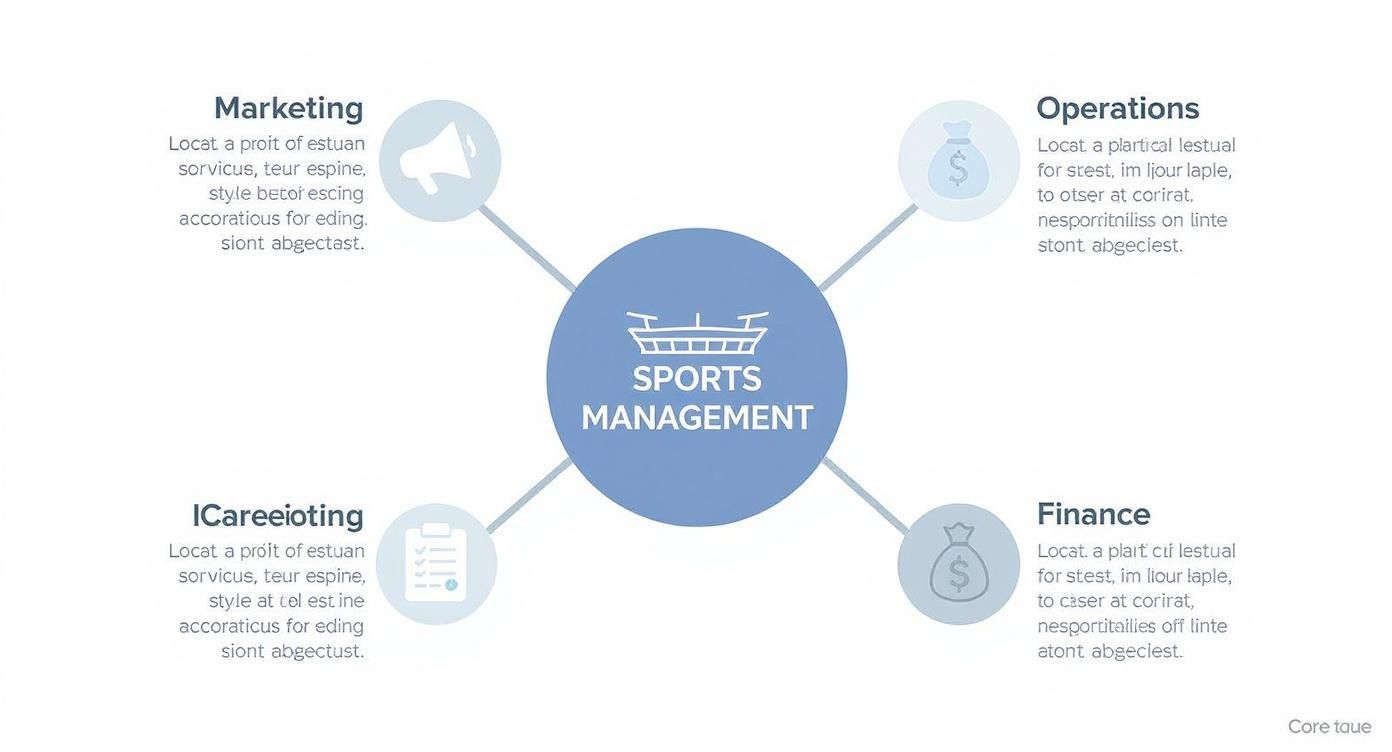
As you can see, a successful sports organization needs all these specialized functions humming in unison to create a winning product on the field and a profitable business off it.
To help you compare these paths, here’s a quick overview of what each role entails.
Key Sports Management Career Paths at a Glance
| Career Path | Core Focus | Example Responsibilities | Essential Skills |
|---|---|---|---|
| Sports Operations | Logistics & Gameday Execution | Managing team travel, venue readiness, equipment, scheduling | Problem-solving, detail-orientation, project management |
| Marketing & Sponsorships | Fan Engagement & Revenue | Running ad campaigns, social media, securing corporate partners | Creativity, communication, sales, relationship building |
| Athletic Administration | Program Oversight & Compliance | Overseeing budgets, hiring coaches, ensuring NCAA/league rule adherence | Leadership, financial acumen, strategic planning |
| Event Management | Fan Experience & Execution | Planning tournaments, managing vendors, coordinating ticketing | Organization, creativity, logistics, customer service |
| Sports Analytics | Data-Driven Decision Making | Analyzing player performance, ticket sales data, marketing ROI | Statistics, data visualization, critical thinking, business intelligence |
This table gives you the 30,000-foot view. Now, let’s get into the specifics of what it’s really like to work in each of these dynamic fields.
Sports Operations: The Heartbeat of Gameday
Ever wonder who makes sure the stadium lights are on, the visiting team’s bus arrives on time, and the field is in perfect condition? That’s the work of sports operations. These are the logistical masters, the ultimate problem-solvers who ensure every single moving part of an event runs like clockwork.
Think of an operations director as the stage manager for a Broadway show. Their job is to fix problems before anyone—the fans, the players, the media—even knows they exist. If you’re a detail-oriented person who stays cool under pressure and loves a good checklist, this is your world.
Marketing and Sponsorships: The Voice of the Team
Sports marketing is all about forging that powerful, emotional connection between a team, its brand, and its fans. These professionals are the storytellers. They run the ad campaigns, manage the social media accounts, and dream up the fan engagement initiatives that create lifelong loyalty.
A huge piece of this puzzle is sponsorships. A sponsorship coordinator is a relationship-builder, working with corporate partners to create deals that bring in crucial revenue for the organization while giving brands valuable exposure. This career demands creativity, killer communication skills, and a real feel for what makes both fans and businesses tick.
Athletic Administration: Shaping the Future of Athletes
While you might immediately think of college sports, athletic administration roles are vital at every level, from high schools to pro leagues. An Athletic Director (AD) is essentially the CEO of an athletic department. They're responsible for everything: managing budgets, hiring and firing coaches, ensuring compliance with complex regulations (like NCAA rules), and fundraising.
This role is a unique blend of business management and educational leadership. Athletic administrators must balance financial sustainability with the developmental and academic well-being of their athletes, making it a demanding but highly rewarding career path.
To succeed here, you need serious leadership skills, a strong grasp of finance, and a deep understanding of the legal and ethical rules that govern the game.
Event Management: Creating Unforgettable Experiences
Event management is all about the planning and execution of live sporting events. This could be anything from a local 5K race to a massive international tournament like the Olympics. While it shares some DNA with operations, event management is hyper-focused on the fan experience. An event manager coordinates everything from ticketing and venue selection to vendor contracts and VIP hospitality.
Imagine you’re planning a major golf tournament. Your responsibilities would be vast:
- Logistics: Arranging player transportation, course setup, and caddie services.
- Fan Experience: Designing spectator zones, managing concessions, and organizing off-course entertainment.
- Safety: Coordinating with security and medical teams to keep thousands of attendees safe.
This path is a perfect fit for highly organized, creative people who get a thrill from watching a complex plan come together flawlessly.
Sports Analytics: The New Frontier
One of the fastest-growing careers in sports management is, without a doubt, sports analytics. Data analysts use numbers to find a competitive edge. On the business side, they analyze ticket sales to optimize pricing or measure the ROI on a marketing campaign. On the team side, they break down player performance data to give coaches and GMs an edge in strategy and scouting.
This is where a love for sports meets a love for numbers. The role requires a solid foundation in statistics, data visualization, and business intelligence. As teams and leagues lean more heavily on data to make smarter decisions, the demand for sharp analysts has gone through the roof, making it an incredibly exciting and valuable career path.
Building a Championship-Level Skillset

Knowing the different positions on the field is a great start. But to really make a mark in any of the exciting careers in sports management, you need to build a powerful and versatile skillset. Just like an athlete, your success hinges on mastering both the fundamentals and the more advanced strategies.
This really comes down to a strong mix of hard and soft skills. Hard skills are your technical tools—the things you can prove you know, like managing a budget or analyzing data. Soft skills, on the other hand, are all about people—how you lead a team, negotiate a tough deal, and get everyone to buy into your vision.
Mastering the Technical Hard Skills
Hard skills are the concrete, teachable abilities that get your resume to the top of the pile. They’re your proof that you can handle the specific demands of a job from day one. In the sports world, hiring managers are always on the lookout for candidates who can hit the ground running with these competencies.
Here are some of the most critical hard skills you need to focus on:
- Financial Management: This is more than just balancing a checkbook. We're talking about creating and managing departmental budgets, understanding profit and loss statements, and making sound financial decisions. This is non-negotiable, whether you’re an Athletic Director or a Sponsorship Coordinator.
- Data Analysis: The ability to look at a spreadsheet and find the story in the numbers is no longer a "nice-to-have." This skill helps you analyze ticket sales, measure marketing campaign ROI, or even evaluate player performance metrics.
- Contract Negotiation: From player contracts and vendor agreements to massive, multi-million dollar sponsorship deals, knowing your way around a negotiation table is essential. You're there to protect your organization's interests and get the most value out of every partnership.
- Digital Proficiency: You have to be comfortable with modern tech. This includes everything from CRM software for tracking fan relationships to project management tools like Asana or Trello, and the latest digital platforms for fan engagement.
Think of your hard skills as your playbook. They provide the specific strategies and technical knowledge you need to execute your job effectively and drive real, measurable results.
Building these skills is a mix of classroom theory and real-world practice. An internship might give you your first real shot at managing a budget, while an online certification can help you master a specific analytics tool everyone is using.
Cultivating Essential Soft Skills
If hard skills are your playbook, then soft skills are your ability to lead the team on the field. These are the interpersonal traits that dictate how you interact with colleagues, motivate your staff, and represent your organization. In an industry built entirely on relationships, your soft skills can be what truly sets you apart.
These abilities are often harder to pin down on a resume, but they are every bit as crucial for long-term success in the competitive sports landscape.
Here are the soft skills that top professionals have in spades:
- Leadership: This isn't just for the person with the fancy title. It's the ability to inspire a team—whether it’s a whole department or just the gameday crew—and guide them toward a common goal.
- Communication: You have to be a clear, persuasive communicator. That could mean presenting a marketing plan to executives, writing a press release on a tight deadline, or just giving a pep talk to your staff before a huge event.
- Crisis Management: The sports world is unpredictable. A facility emergency, a PR nightmare—it can all happen in a flash. Being able to think clearly and act decisively under pressure is an invaluable skill.
- Adaptability: The industry is constantly evolving with new league rules, fan expectations, and technology. The most successful people are flexible and see new challenges as opportunities, not obstacles.
Developing these skills is a career-long journey. Using professional development plan templates can give you a structured way to identify and work on your growth areas. Taking this kind of proactive approach shows potential employers you’re serious about continuous improvement. Whether it’s through mentorship, workshops, or just volunteering for tough projects, investing in your soft skills will pay off for years to come.
Navigating the Different Leagues of the Sports Industry
https://www.youtube.com/embed/RQzv02lg-jY
Landing a job in sports management isn't just about picking a role—it's about picking your league. A marketing gig with an NFL team is a world away from a similar-sounding job at Nike or a major university. To find a career that really clicks, you have to understand these different sectors and figure out where you’ll thrive.
Think of it like an athlete choosing their sport. You need to decide which part of the industry you want to compete in. The high-pressure world of pro sports, the rule-driven landscape of college athletics, and the brand-focused hustle at an apparel company all demand different skills and personalities.
Let’s break down the major playing fields.
Professional Sports Organizations
This is the big leagues—the one most people picture when they think of a sports career. We're talking about working directly for a team or a league office like the NBA, MLB, or NHL. The atmosphere is intense, and success is measured in very clear terms: wins, ticket sales, and TV ratings.
Roles here are incredibly varied, covering everything from scouting new talent and managing player contracts to selling corporate sponsorships and running community outreach programs. The pace is unforgiving, especially in-season, but your work has a direct and immediate impact on the team and the fans. It's an electrifying place to be if you thrive under pressure.
Collegiate Athletics
Working in college sports means you're operating inside the unique world of higher education. Jobs in athletic departments at NCAA, NAIA, or NJCAA schools are all about balancing the drive to win with the core mission of developing student-athletes.
This sector is built on rules, so knowing compliance inside and out is non-negotiable. Your day-to-day could involve anything from academic support and fundraising to managing the stadium. It’s a mission-driven environment where you can truly shape the futures of young athletes. The rhythm follows the academic calendar, creating distinct busy seasons and quieter periods.
The core difference lies in the ultimate objective. Professional sports are pure entertainment businesses focused on profit and championships. Collegiate athletics, while still a major business, must prioritize education and athlete welfare alongside competitive success.
Sporting Goods and Apparel
Step away from the teams and you’ll find the massive global industry of brands like Adidas, Under Armour, and Wilson. Here, the game isn't played on a field; it's about building a brand and selling products. Careers revolve around marketing, supply chain management, product design, and retail strategy.
This is a creative, fast-moving space where you’re constantly fighting for market share and the loyalty of consumers. The global sports apparel market was valued at a staggering $220.35 billion in 2025 and is expected to hit $298.06 billion by 2032. That growth is powered by innovation and lifestyle trends, creating huge opportunities for sharp managers to lead the charge.
If you have a strong business sense and a passion for how sports influence culture, this is your arena.
Sports Media and Agencies
This is the sector that connects all the dots—linking athletes, brands, and fans. Media companies, from legacy broadcasters like ESPN to digital-first outlets like Bleacher Report, create the stories that keep us hooked. Jobs here include content production, social media strategy, and on-air talent.
Agencies, on the other hand, manage the talent. Agents and marketers work for the athletes, negotiating their contracts, landing endorsement deals, and shaping their public image. It's a relationship-driven business where sharp negotiation skills and a powerful network are everything.
Exploring the different types of sports industry companies can help you get a feel for the major players in each of these leagues. Picking the one that best fits your skills and drive is your first big step toward a rewarding career in sports.
Your Playbook for Landing a Job in Sports

Let’s be honest: getting into sports management is tough. Your passion for the game will get you noticed, but it’s a smart game plan that will actually get you hired. Think of this as your step-by-step guide to moving from the sidelines to a seat at the table.
First things first, you have to ditch the idea of just blasting your resume out to every team you can find. The sports world runs on relationships. Your network isn't just a nice-to-have; it’s your most powerful tool for building a career.
Build Your Network With Purpose
Networking isn't about collecting contacts like trading cards. It's about making real connections with people who can offer a bit of wisdom, share their experiences, and maybe down the line, point you toward an opportunity. The key is to lead with curiosity, not with a request for a job.
A fantastic way to do this is by setting up informational interviews. Find people in roles you admire, reach out, and ask for just 15-20 minutes of their time to hear about their journey. This instantly positions you as someone who is eager to learn, making a much stronger impression than a cold email asking about job openings. As you do this, you'll need to develop a strong personal brand that clearly shows what you bring to the table.
A strong network is a career shortcut. I've seen it time and again: many of the best careers in sports management get filled through a referral before the job is ever posted online.
Gain Crucial Hands-On Experience
In sports, what you've done matters far more than what you say you can do. Internships and volunteer gigs are basically mandatory for anyone trying to break in. They’re where you get the real-world experience that makes your resume pop and, just as importantly, where you build that network we just talked about.
Not sure where to start? Look around you:
- University Athletic Departments: They always need an extra set of hands for gameday operations, marketing, or in the ticket office.
- Local Pro or Minor League Teams: These organizations are fantastic places to learn, often needing volunteers for events or community projects.
- Major Sporting Events: If a marathon, golf tournament, or youth championship is happening nearby, get involved. It's a crash course in event management.
This kind of experience proves you’re serious about the business of sports, not just a fan looking for a way in.
Craft a Resume That Speaks the Language
Your resume is your highlight reel, and it needs to be edited for a sports industry audience. Hiring managers want to see results, not just a list of your duties. Instead of "Managed social media," show your impact: "Grew social media engagement by 20% over one season."
Get good at translating your skills into sports business terms. Managed a budget for a campus club? That's financial management. Organized a charity 5K? That’s event planning and logistics. Frame every single point around the value you delivered. Before you hit send, it's always a good move to run your resume through a specialized sports industry resume analyzer to make sure it’s ready for prime time.
Ace the Interview and Prove Your Value
The interview is your championship game. This is where you prove you’re not just another fan—you’re a future leader. Don't expect just the standard "tell me about yourself" questions. They'll want to see your business brain in action.
Be ready to talk about:
- Industry Trends: Show them you’re up to speed on issues like evolving fan demographics or new ways teams are making money.
- Organizational Challenges: Do your homework. What are the team's or company's recent wins and losses?
- Your Unique Contribution: Be crystal clear about how your skills can help them solve a problem or jump on an opportunity.
When you treat the interview like a strategic conversation instead of a test, you show them you’re ready to contribute from day one. That’s how you become the candidate they can't afford to lose.
Common Questions About Sports Management Careers
As you start to map out your journey into the sports industry, you’re bound to have questions. Let's be honest: it’s a competitive world, and the path isn't always as clear-cut as in other fields. Think of this section as your personal Q&A with someone who's been there, tackling the most common hurdles and concerns that come up.
We’ll get straight to the point, giving you direct answers to help you build your game plan with confidence. From degrees to paychecks, getting these details right is a huge part of setting yourself up for success.
Do I Really Need a Master's Degree?
This is easily one of the most common questions I hear. The short answer? Not always, but it can give you a major league advantage. For many entry-level roles, say in ticket sales or gameday operations, a bachelor's degree combined with solid internship experience is often enough to get your foot in the door.
But as you climb the ladder, a master's degree starts to carry a lot more weight. If you're aiming for senior roles in specialized areas—like collegiate athletic administration or a front-office strategy job with a pro team—that advanced degree can be the thing that sets you apart. It dives deep into sports law, finance, and marketing, and more importantly, it plugs you into a powerful network of professors and alumni who are already established in the industry.
It really comes down to return on investment. If you're making a career change or gunning for a high-level analytics or legal role, a master's is practically a must-have. If you're just starting out, getting your hands dirty with practical experience first might be the smarter play.
What’s a Realistic Salary in Sports Management?
Okay, let's talk money. Salaries in the sports world can be all over the place. What you take home depends heavily on your specific role, the sector you're in (pro vs. college), where you live, and the size of the organization. Setting realistic expectations from day one is critical.
To give you a ballpark idea, here’s a typical financial progression:
- Entry-Level Roles: A coordinator in marketing, operations, or ticket sales will likely start in the $40,000 to $55,000 range.
- Mid-Career Roles: Once you’ve got a few years under your belt and move into a manager position, you can expect to earn somewhere between $60,000 and $90,000.
- Senior-Level Roles: Directors and VPs at major universities, pro franchises, or big sports brands often command salaries well over $150,000.
Just remember, a job in a major market like New York or Los Angeles, or with a powerhouse league like the NFL or NBA, is going to pay more than one in a smaller city or with a local non-profit.
How Important Is Networking, Really?
It’s not just important—it’s everything. I’d argue it’s the single most critical factor for building a career in this business. The sports world is an incredibly tight-knit community built on relationships. A shocking number of jobs are filled through referrals and back-channel conversations long before they ever hit a public job board.
This means you have to build genuine connections. It's not about collecting LinkedIn contacts like baseball cards. It's about cultivating real relationships by offering value, showing you're serious about the business of sports, and proving you're more than just a fan.
Here are a few ways to start:
- Ask for 15 minutes of someone's time. Reach out to pros for informational interviews to hear their story and get advice.
- Go to industry conferences. Even virtual events are gold mines for connecting with leaders and people on your level.
- Treat your internship like a long-term interview. It's not just about the experience on your resume; it's your best shot at building an internal network.
What Are the Biggest Job Search Mistakes People Make?
Breaking into a field this competitive means you can't afford rookie mistakes. I've seen so many talented, passionate people get overlooked because of easily avoidable errors. Knowing these pitfalls will give you a serious leg up.
The absolute biggest mistake is firing off a generic, one-size-fits-all resume. Every single application you send needs to be hand-tailored to that specific role and organization. Show them you’ve done your homework and highlight exactly how your skills solve their problems.
Another classic error is having tunnel vision for pro teams. That's a tiny slice of the pie! You're ignoring a massive number of incredible opportunities in collegiate sports, marketing agencies, apparel brands like Nike or Adidas, sports tech startups, and youth athletics. Widen your search, and you’ll exponentially increase your odds.
Finally, never position yourself as just a fan. Your passion is great—it's what gets you in the door. But employers are hiring business professionals, not cheerleaders. Lead with your tangible skills in project management, data analysis, or sales. Show them how you can add real value to their bottom line. Your love for the game is the bonus, not the main event.
Ready to turn that passion into a profession? At GetSportJobs, we're all about connecting talented people like you with the best career opportunities in sports. Find your next role today by exploring hundreds of open positions. Start your search now on GetSportJobs