Careers in sports marketing: A Guide to Success
If you've ever dreamt of blending your love for the game with a sharp business mind, a career in sports marketing might be your calling. This isn't just about selling tickets; it's the art and science of connecting teams, athletes, and brands with the one thing that matters most: the fans. It's a world where you're the architect behind the emotional bond that turns a casual viewer into a die-hard supporter, driving loyalty and, of course, revenue.
What a Career in Sports Marketing Really Looks Like
Think of a sports marketer as a team's off-field MVP. Your playbook isn't about X's and O's; it's about building and nurturing the powerful, often unbreakable, connection between a team and its community. This bond is the engine that powers the entire industry.
It goes way beyond just filling seats or moving merchandise off the shelves. The real mission is to craft unforgettable experiences that resonate with people on a personal level. One day you might be orchestrating an electrifying in-stadium promotion, and the next you could be launching a social media campaign that gets the whole world talking.
The Core of the Industry
At its heart, sports marketing is all about storytelling. You're tasked with capturing the raw drama, thrilling highs, and crushing lows of competition and packaging it in a way that pulls fans in. When you do it right, that emotional investment translates directly into business success.
The core function of a sports marketer is to transform fan passion into tangible business value. This means creating experiences and narratives that fans feel a part of, which in turn drives ticket sales, merchandise purchases, and sponsorship revenue.
This field truly is where passion meets profession. It demands a creative spark, a strategic mind, and an authentic love for sports. You’re not just promoting a team; you're building a brand that represents something bigger than a final score—you're building a community. The great news is that the opportunities are constantly growing, and you can explore a huge variety of sports marketing roles to find where you fit best.
The entire industry rests on a few key pillars:
- Fan Engagement: This is about keeping fans connected 24/7. Think interactive mobile apps, behind-the-scenes content, and events that make them feel like insiders, not just spectators.
- Sponsorship Activation: It’s more than just slapping a logo on a jersey. The best marketers create genuine partnerships with brands that actually enhance the fan experience.
- Brand Management: You are the guardian of the team's identity. You shape how the team, league, or athlete is seen by the public, building a loyal following that spans the globe.
Ultimately, a career in sports marketing is your ticket to being a crucial part of the game’s success, all without ever lacing up a pair of cleats.
Mapping Out the Modern Sports Marketing Landscape
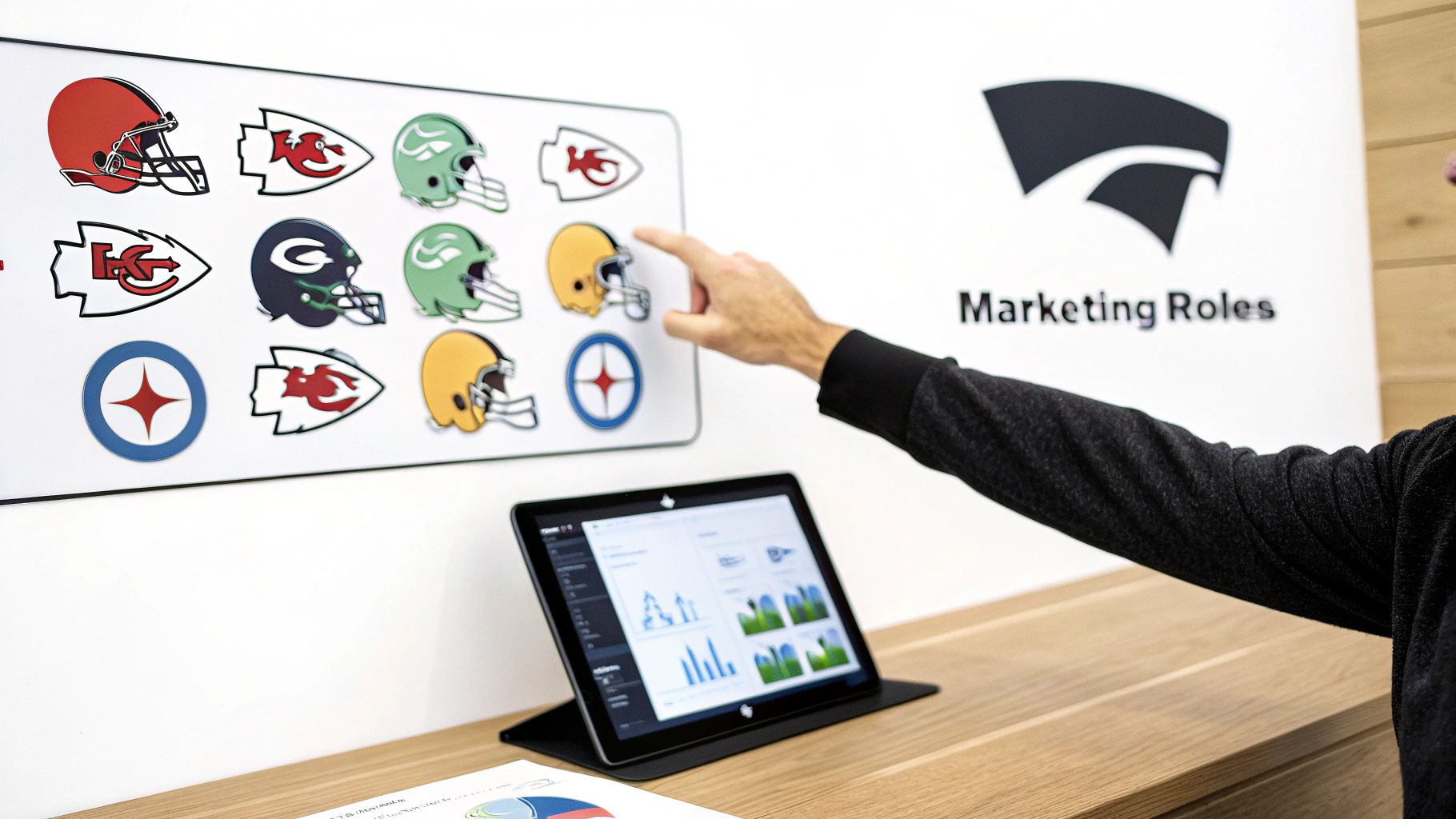
Before you can land a job in sports marketing, you need a solid map of the territory. The industry isn't just one big stadium; it's more like a sprawling city built around the games we love. This city has different districts—the teams, the brands, the media, the agencies—and each one offers a unique path for your career.
Figuring out which district you want to live and work in is the first step. Do you want to be right in the action with a team, or do you prefer helping a big brand connect with fans from the outside? Understanding these areas helps you find where your skills and passions fit best.
The Major Players in the Game
When people think of careers in sports marketing, their minds usually jump straight to working for a team. But that’s only one piece of the puzzle. The industry is a vast network of organizations all working together to create the experiences fans can't get enough of.
Let's break down the key sectors:
- Professional Teams and Leagues: This is the heart of the action. We're talking about the NFL, NBA, MLB, and their individual teams. Jobs here are all about building the team's brand, filling seats, managing sponsorships, and firing up the local fanbase.
- Brands and Corporations: Think Nike, Gatorade, and Coca-Cola. These giants pour billions into sports sponsorships, and their marketing teams are the masterminds behind it all. They create the ads, manage athlete endorsements, and run on-the-ground activations at big events.
- Media and Broadcasting Networks: Players like ESPN, FOX Sports, and Bleacher Report are the storytellers. Marketers in this space focus on boosting viewership, selling ad space, and creating the digital content that keeps fans glued to their screens long after the final whistle.
- Agencies: These are the specialized hired guns. Marketing agencies act as expert consultants for teams, leagues, and brands that need extra firepower. They might handle sponsorship sales, event management, or PR, giving you the chance to work with a diverse roster of clients.
The demand for sharp marketing minds is booming. The industry is expanding globally, and the race to capture fans' attention online is more intense than ever. According to Morgan Stanley Research, global sports industry sales have hit $521 billion and are growing at an average of 8% per year. That growth means more opportunities, especially if you have skills in sponsorship, content creation, or data analytics. You can learn more about the global sports industry's expansion and how it’s creating new career paths.
Common Sports Marketing Roles and Key Responsibilities
While the employers are different, the day-to-day work often falls into a few key roles. It's easy to think "sports marketing" is a single job, but it's really a collection of highly specialized positions. You have data analysts decoding fan behavior on one end and event managers creating unforgettable game-day experiences on the other.
Knowing the difference helps you zero in on what you actually want to do. Let's look at some of the most common careers in sports marketing and what they're all about.
| Job Title | Primary Responsibilities | Typical Employers |
|---|---|---|
| Sponsorship Manager | Securing partnerships with corporate sponsors, creating activation strategies, and ensuring all contract promises are kept to drive revenue. | Teams, Leagues, Agencies, Venues |
| Digital Content Creator | Producing awesome videos, graphics, and articles for social media, websites, and apps to build an online community and talk directly with fans. | Teams, Media Networks, Brands |
| Events Coordinator | Planning and running everything from game-day promotions and fan festivals to community events and sponsor pop-ups. It's all about logistics and on-site management. | Teams, Venues, Agencies |
| Marketing Analyst | Diving into the data to see how campaigns are performing, understanding who the fans are, and measuring the return on marketing spend to guide future decisions. | Teams, Brands, Media Networks |
| Public Relations Specialist | Managing the organization's public image, writing press releases, working with the media, and handling communications during major announcements or a crisis. | Teams, Leagues, Agencies, Athletes |
These roles are the gears that keep the entire sports marketing machine running. Whether you're a numbers person, a creative, or a people person, there's a spot for you somewhere in the lineup.
Developing the Skills for a Winning Career
Loving sports is a great start, but in the world of sports marketing, passion alone won't get you across the finish line. You need a solid playbook of skills that blends technical know-how with genuine people smarts.
Think of it like building a championship team. You need players with specific, powerful abilities (hard skills) just as much as you need communicators and leaders who make the whole team click (soft skills). Excelling in careers in sports marketing means you've mastered both. It’s the difference between being a good marketer and being an MVP who can analyze a spreadsheet and pitch a game-changing idea in a high-stakes meeting.
Mastering the Technical Hard Skills
Gut feelings don't drive decisions in modern sports—data does. Hard skills are the tangible, teachable abilities you’ll use every day to execute marketing strategies and, just as importantly, prove they worked.
Here are the three big ones you absolutely need to focus on:
- Data Analytics: This is non-negotiable. You’ll use analytics to understand who the fans are, track ticket sales, measure the ROI on a major sponsorship, and send the right message to the right person. Getting comfortable with tools like Google Analytics or data visualization software gives you a massive leg up.
- Digital Marketing and SEO: The game is played online now. From running laser-focused ad campaigns on social media to making sure the team’s website is the first thing fans see on Google, digital is king. You have to understand paid social, email marketing, and search engine optimization (SEO) to reach fans where they live.
- CRM Software: Think of Customer Relationship Management (CRM) platforms like Salesforce as the team’s ultimate digital rolodex. They hold all the fan data, helping you track every interaction, create segmented campaigns, and build the kind of loyalty that lasts a lifetime. Proficiency here is a huge selling point for employers.
Cultivating Essential Soft Skills
Hard skills will get you the interview, but soft skills will get you the job—and the promotion after that. These are the human elements of the job: how you collaborate, lead, and innovate. They’re often the tiebreaker when it comes to managing complex projects and moving up the ladder.
Let's say you're trying to land a huge sponsorship deal. Your data analysis (a hard skill) might point you to the perfect brand partner. But it's your ability to build a relationship, communicate a compelling vision, and negotiate the terms (all soft skills) that will actually get the contract signed.
Soft skills are the art of sports marketing. They’re about persuasion, creativity, and resilience—the same qualities that define the sports we love. They let you connect with colleagues, partners, and fans on a real, human level.
These are the soft skills that truly matter:
- Communication: Whether you’re drafting a press release, presenting a new campaign to the team owner, or handling a frustrated fan on social media, you have to be clear and persuasive.
- Creative Problem-Solving: The lead sponsor just pulled out. The game-day promotion is a flop. What do you do? Thinking on your feet and finding creative solutions is what separates the pros from the rookies.
- Negotiation: From locking in vendor contracts to finalizing an athlete's endorsement deal, your ability to negotiate has a direct and immediate impact on the organization's bottom line.
Education and Certifications That Count
A bachelor's degree in marketing, business, or communications is a common starting point, but what you can do often matters more than what your diploma says. Many pros also pursue a master’s in sports administration or management to dive deeper into the finance, law, and operational side of the industry.
Beyond a degree, industry-recognized certifications can make your resume jump to the top of the pile. Getting certified in Google Ads, HubSpot Inbound Marketing, or Salesforce shows you’re serious about your craft. It’s tangible proof you have the specific skills employers are looking for right now.
Building a Portfolio That Gets You Noticed
In sports marketing, your resume might get you in the door, but your portfolio is what closes the deal. It's one thing to say you have skills; it's another thing entirely to show them. Think of it as your personal highlight reel—tangible proof that you've got the strategic mind and creative chops to make a real impact.
This isn't just for designers anymore. For anyone serious about careers in sports marketing, a portfolio is where you turn theory into practice. It demonstrates you understand the game behind the game. The best part? You don’t need a long list of jobs to start building a killer one today.
Creating Projects Without Experience
Hiring managers are dying to see how you think. They want to know how you tackle problems, not just that you took a class on it. By creating your own projects that solve real-world marketing challenges, you show them exactly that. It proves you have initiative and a genuine passion for this stuff, and that goes a long way.
The key is to pick something you're actually excited about. Here are a few ideas to get you started:
- Mock Marketing Campaign: Pick a local minor league team or even a college athletic department and build a full marketing plan from the ground up. Lay out your target audience, create a sample social media content calendar, brainstorm a few cool sponsorship ideas, and define the KPIs you'd use to track success.
- Sponsorship Strategy Analysis: Take a big-time partnership—like Gatorade and the NFL or a team's jersey sponsor—and break it down. What’s working? What isn’t? Then, pitch three new, creative ways the brand could connect with fans and get more bang for their buck.
- Social Media Content Creation: Fire up Canva and create a week's worth of social media posts for your favorite team. Design the graphics, write the captions, and even script a short video concept. Make sure it all feels authentic to the team's brand voice.
Your portfolio's goal isn't just to look good; it's to tell a story about your skills. Each project should have a clear objective, a detailed process, and a summary of the hypothetical results, showing a hiring manager exactly how you'd approach their challenges.
Crafting a Winning Resume
Once your portfolio is ready to wow them, your resume needs to set the stage. A generic, one-size-fits-all resume is a one-way ticket to the "no" pile in a field this competitive. You need to speak the language of the sports business, which means focusing on achievements, not just job duties.
Ditch the passive language. Instead of saying you "were responsible for social media," say you "managed social media channels" or "developed engaging content." Even better, put a number on it. Metrics are your best friend because they provide undeniable proof of your value.
Seriously, which of these sounds more impressive?
- Posted updates to the team's Twitter account.
- Grew Twitter engagement by 25% over three months by implementing a new content strategy featuring behind-the-scenes player interviews.
It’s a no-brainer. The second one shows you don't just do tasks—you get results. Before you hit "send," it's always a good idea to get a second opinion. Running your resume through a tool built for the industry, like a sports industry resume analyzer, can give you instant feedback to make sure you’re hitting all the right notes.
Finally, tie it all together. A short, powerful summary at the top of your resume can connect your passion for sports with your professional skills. This is where you bridge the gap from fan to professional, making it clear you belong on their team.
Navigating Your Career Path and Salary
A career in sports marketing is a lot like a player's journey through the ranks. You start out as a rookie, learn the fundamentals, and with hard work and a bit of strategy, you can eventually become an all-star in a leadership role. Knowing what that path looks like is the first step to building a career that’s not just exciting, but sustainable.
You’ll likely break into the industry as a coordinator or assistant. Think of this as your rookie season. You’re the ultimate utility player, learning the business by supporting all kinds of marketing efforts. One day you might be scheduling social media posts, the next you're helping run a game-day giveaway or pulling data for a campaign report. It’s all about execution and soaking up experience.
From Coordinator to Manager
Once you've proven you can handle the fundamentals, you'll be ready to step up to a manager-level role, like a Marketing Manager or a Sponsorship Manager. Here, the game changes. You’re no longer just running the plays; you're starting to call them. You'll be the one developing campaign ideas, managing budgets, and analyzing what worked (and what didn't).
This is a huge step. You'll start leading a small team or overseeing a specific function, and your success is measured by the results of the projects you own. It's that critical point where you transition from a doer to a genuine leader.
Reaching Senior Leadership
The top tier includes senior roles like a Director of Marketing or even a VP. At this level, you’re not focused on the daily grind. You’re the head coach, setting the vision and designing the entire playbook for the seasons to come.
Your responsibilities here are big-picture:
- Setting Long-Term Goals: You'll define the organization's marketing direction for the next 3-5 years.
- Managing Large Teams: You’re in charge of entire departments, mentoring the next wave of talent.
- Controlling Major Budgets: You make the high-stakes calls on where to invest significant marketing dollars for the biggest return.
- Driving Revenue Growth: You are directly responsible for proving how marketing impacts the bottom line.
This climb is fueled by a few key things, which this visual breaks down perfectly.
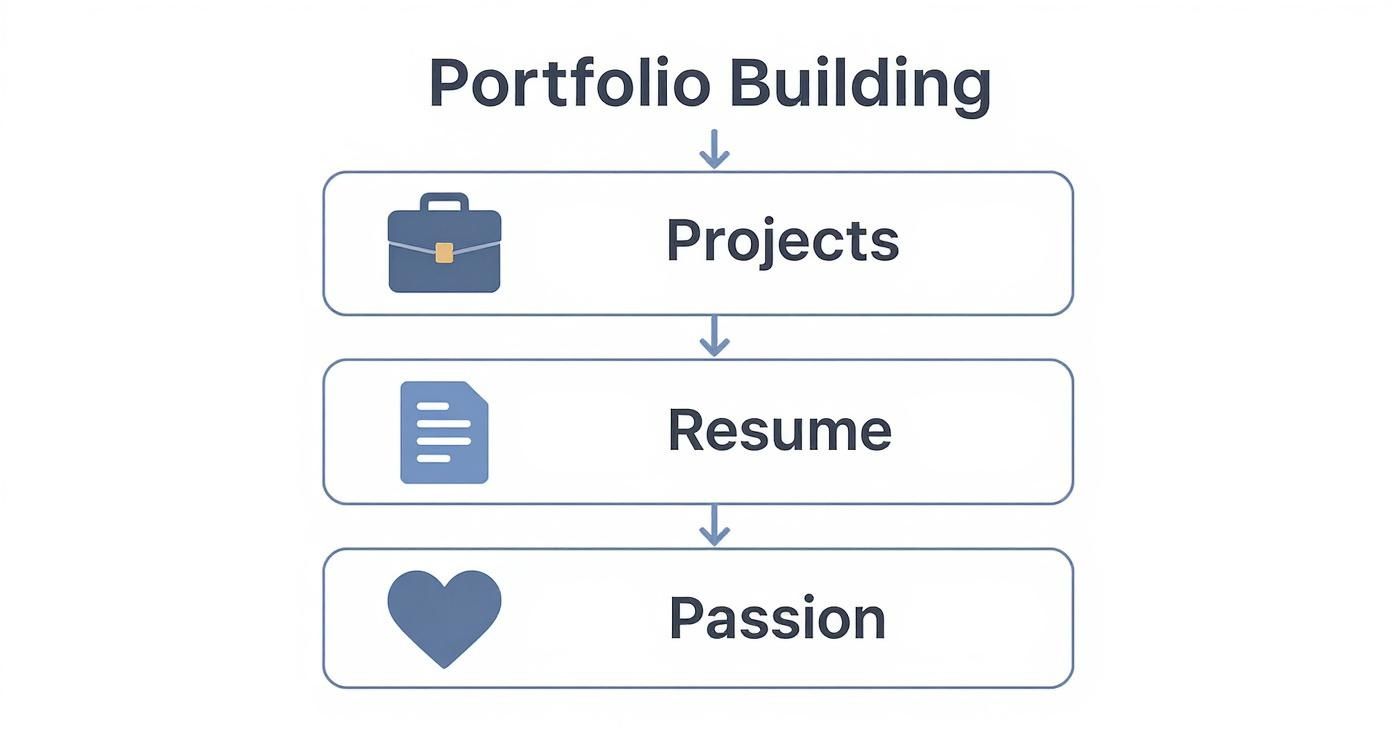
As you can see, a powerful career is built on a foundation of tangible projects, a resume that tells your story, and an undeniable passion for the game.
Understanding Salary Expectations
Of course, you want to know what you can earn along the way. To give you a clearer picture, I've put together a table outlining the typical career ladder and the salary ranges you can expect at each level.
Sports Marketing Salary and Career Progression
An overview of typical salary ranges and career advancement paths from entry-level to senior roles in the sports marketing industry.
| Career Level | Common Job Titles | Typical Salary Range (USD) |
|---|---|---|
| Entry-Level | Marketing Coordinator, Social Media Assistant, Sponsorship Assistant | $40,000 – $60,000 |
| Mid-Level | Marketing Manager, Brand Manager, Sponsorship Manager, Digital Marketing Specialist | $65,000 – $95,000 |
| Senior-Level | Director of Marketing, Senior Brand Manager, VP of Partnerships | $120,000+ |
As this table shows, the financial rewards grow substantially as you take on more strategic responsibility. Remember, these are general estimates. Your actual salary will depend on your role, experience, and especially your location. Big sports towns naturally come with bigger paychecks. For a real-time example, you can check out current marketing job salaries in New York to see how a major market affects compensation.
While entry-level roles provide a foundation, significant salary growth often begins at the manager level, where specialized skills in areas like digital marketing or sponsorship analytics command a premium.
The key takeaway is that while you start by building a foundation, the real earning potential kicks in as you prove your ability to drive strategy and deliver results. With dedication, a six-figure salary is a very achievable goal in this field.
Future-Proofing Your Sports Marketing Career

Staying ahead in sports marketing isn’t just about keeping up with the latest trends—it’s about seeing what’s coming around the corner. The skills that land you a job today are table stakes; the ones that will keep you in the game tomorrow are what really count. To build a career with staying power, you have to get a feel for where the industry is headed and start building the skills to meet those future demands before they become standard.
It’s time to look beyond the old playbooks. The future belongs to marketers who embrace the new ways fans are connecting with the games they love, from the rise of AI to the explosion of new leagues. The key is to be adaptable, curious, and always ready to learn.
The Digital Transformation of the Fan Experience
The modern fan experience doesn't start at the stadium gate anymore. It starts on a screen. This digital-first reality has completely changed the game for marketers, creating a huge demand for people who are experts in digital content, personalized engagement, and deep data analysis.
The global sports market is on track to hit $79.93 billion, and technology is the main driver behind that number. Streaming services and social media have created a nonstop need for content, meaning teams and brands need marketers who can tell compelling stories that grab fans' attention online. You can get a better sense of this by checking out these insights on how digital technologies are fueling the global sports market.
To stay relevant, you have to get comfortable with the tech that’s redefining how fans interact with sports.
- AI-Driven Personalization: Artificial intelligence is what allows teams to make every fan feel like a VIP. We're talking about customized ticket offers sent right to their phone, content suggestions they actually care about, and even dynamic ticket pricing based on their past behavior. Marketers who can work with AI to create these moments will be absolute game-changers.
- Immersive Technologies (AR/VR): Augmented and virtual reality are quickly moving from fun gimmicks to essential tools. Imagine a fan holding up their phone in the stands to see player stats pop up over the field in real-time. Or someone putting on a VR headset at home and feeling like they’re sitting courtside. Skills in creating these kinds of immersive experiences are going to be in high demand.
- Advanced Data Analytics: The amount of data we have on fan behavior is mind-boggling. The future of careers in sports marketing isn't just about collecting this data; it’s about being able to make sense of it. You need to be the person who can turn raw numbers into smart strategies that build stronger fan relationships and open up new ways to make money.
New Frontiers in Sports Entertainment
The very definition of "sports" is getting bigger, and that’s creating brand-new playgrounds for marketers. Two of the most exciting areas are women’s sports and esports, and both require a completely fresh marketing mindset.
Women’s leagues, from the WNBA to the NWSL, are seeing massive growth in both viewership and investment. This isn't a niche market anymore; it's a mainstream movement. Marketers who can build real, authentic connections with this passionate and expanding audience will be leading the charge in the years to come.
The most successful marketers of the next decade will be those who recognize that the fanbases for women's sports and esports are not just smaller versions of traditional sports audiences. They have unique cultures, values, and expectations that require a dedicated and authentic strategy.
At the same time, esports has gone from a niche subculture to a global entertainment giant, attracting a huge, young, and digitally-savvy audience. Marketing in this world means you have to genuinely understand gaming culture, how influencers work, and the communities on platforms like Twitch and Discord. The old-school sports marketing tactics just don't work here—you need to be authentic to earn respect.
By diving into these emerging areas, you’re not just future-proofing your career. You’re putting yourself in a position to shape the next chapter of sports entertainment.
Answering Your Top Questions About Sports Marketing
Trying to break into sports marketing can feel like you're learning an entirely new playbook. To get you game-ready, we've tackled some of the biggest questions we hear from aspiring pros, giving you the clear, direct answers you need to make your next move.
Think of this as your pre-game huddle—we're here to clear up the X's and O's so you can step onto the field with total confidence.
Do I Need to Be a Former Athlete to Work in Sports Marketing?
Absolutely not. This is probably the biggest myth in the entire industry. While you definitely need to have a genuine passion for sports, what employers really care about is your marketing expertise, business instincts, and ability to communicate.
Sports organizations are looking for people who can dig into fan behavior, make sense of campaign data, and ultimately drive business goals. Your talent for building a winning marketing strategy is what gets you hired, not your personal athletic record.
Your marketing skills are what get you in the door. Your passion for the game is what will help you thrive once you're inside.
What Is the Best Way to Get My First Internship?
Landing that first role in sports is all about hustle and a smart game plan. First, you need to network like crazy. Get on LinkedIn and connect with people in the industry, go to sports business events if you can, and never be shy about reaching out for a quick informational chat.
When you start applying, think bigger than just the major league teams.
- Collegiate Athletic Departments: Universities have big marketing operations and are always looking for interns to help out across their many sports programs.
- Minor League Teams: These organizations are fantastic for getting real, hands-on experience. The opportunities are often much more accessible, too.
- Marketing Agencies: A sports-focused agency gives you the chance to work on a wide variety of accounts and see different sides of the business.
And remember to customize your resume and portfolio for every single application. Showcasing specific projects and any results you can quantify is what will make your application jump to the top of the pile.
How Important Is Data Analytics in Sports Marketing Today?
Data isn't just a "nice-to-have" skill anymore—it’s now a core part of a sports marketer's toolkit. The old days of relying on gut feelings are over. Today, nearly every major decision is backed by hard data.
Marketers are using analytics for everything. We're talking about understanding fan demographics, personalizing the content you see on social media, and measuring the real return on investment (ROI) from a massive sponsorship deal.
Getting comfortable with tools like Google Analytics, CRM software, and data visualization platforms will make you a much stronger candidate. The real magic, though, is being able to take all those numbers and weave them into a compelling story that guides strategy. That’s a championship-level skill.
Ready to find your place on the team? GetSportJobs is your go-to source for the latest openings in the sports industry. Start exploring your future today at https://www.getsportjobs.com.