Coaching jobs near me: Find Local Roles and Land Your Next Opportunity
You've probably typed "coaching jobs near me" into a search bar more times than you can count, only to be met with a wall of generic, irrelevant listings. It's a frustrating cycle. But what if I told you that your next great coaching gig isn't on a national job board? It's probably right in your own backyard, hiding in plain sight.
The real heart of coaching beats in our communities—in the youth leagues, school teams, and local clubs that are the lifeblood of amateur sports.
Why Your Next Coaching Job Is Closer Than You Think
Let's get real for a second. It's easy to assume that all the good coaching jobs are high-profile, fiercely competitive positions that get blasted all over the internet. The truth is, many of the most rewarding roles are found through quiet connections and community roots. The demand for good coaches—people who are passionate and dedicated—has never been higher, especially for the developmental programs that truly shape young athletes.
This isn't just a hunch; the numbers back it up. The global sports coaching market was recently valued at over $8 billion and is on a steady climb. That growth isn't just happening at the pro level. It’s being fueled by parents, schools, and local organizations investing more in quality coaching for their kids. You can dig into the data on this industry growth from TechSci Research if you want to see the full picture.
The Untapped Local Market
Here’s the thing: many of the best local coaching jobs are never posted online at all. They’re filled through word-of-mouth, a recommendation from a fellow coach, or a casual conversation at a local sporting event.
Think about all the potential spots in your own town:
- Youth Sports Leagues: Local soccer, baseball, and basketball leagues are always looking for good coaches, both paid and volunteer.
- School Athletic Programs: Your local middle and high schools need a constant supply of assistant coaches and specialists.
- Private Clubs and Academies: Specialized facilities for tennis, swimming, or gymnastics are hotbeds for skilled instructors.
- Recreational Centers: Community centers run programs that simply can't exist without a reliable coaching staff.
The secret is to stop thinking like an online job applicant and start acting like a member of your local sports community. Showing up at a high school game or volunteering at a youth clinic will open more doors than sending out a hundred generic applications.
This guide is your playbook for doing just that. We’re moving past the obvious advice and giving you a step-by-step strategy to uncover these hidden roles, connect with the right people, and land one of those fulfilling coaching jobs near me. It's time to turn your local search into a local hire.
Smarter Ways To Search For Local Openings
Let's be honest, just typing "coaching jobs near me" into Google is a start, but it’s not a strategy. That approach usually just coughs up the big, national listings that everyone and their brother is applying to. It barely scratches the surface.
To find the real opportunities—the ones hidden in your own community—you have to get a little more clever and make the job boards do the heavy lifting for you.
Think Like A Hiring Manager
You need to stop thinking like a job seeker and start thinking like the person who writes the job description. What specific words would they use? Instead of a generic search, you want to use longer, more descriptive phrases that pinpoint the exact role.
This is where keyword modifiers become your secret weapon. They act like filters, slicing through the digital clutter to serve up only the most relevant gigs. It’s a small shift, but it makes a world of difference.
Try combinations like these:
- Sport + Age Group + Location: "U14 soccer coach Boston"
- Position Level + Sport + Location: "Assistant volleyball coach Suffolk County"
- Season + Sport + Location: "Summer basketball camp coach Chicago"
When you search with this level of detail, you’re not just finding jobs. You’re finding the right jobs that fit your skills and schedule, posted by local clubs and schools that need exactly what you offer.
A targeted search doesn't just save you time; it frames you as a specialist from the very first click. When your application is for a "part-time goalie coach" you found with a specific search, you instantly look more intentional than the person who mass-applies to every generic "coach" opening.
Let GetSportJobs Do The Scouting For You
The real pro move? Automate your search. Instead of refreshing job boards all day, you can set up smart, location-based alerts on a platform like https://getsportjobs.com/roles/coach. Think of it as your personal job scout, working 24/7 to bring the best local opportunities straight to your inbox.
This whole process is about being proactive, not passive. You identify the demand, build your playbook, and then go get hired.
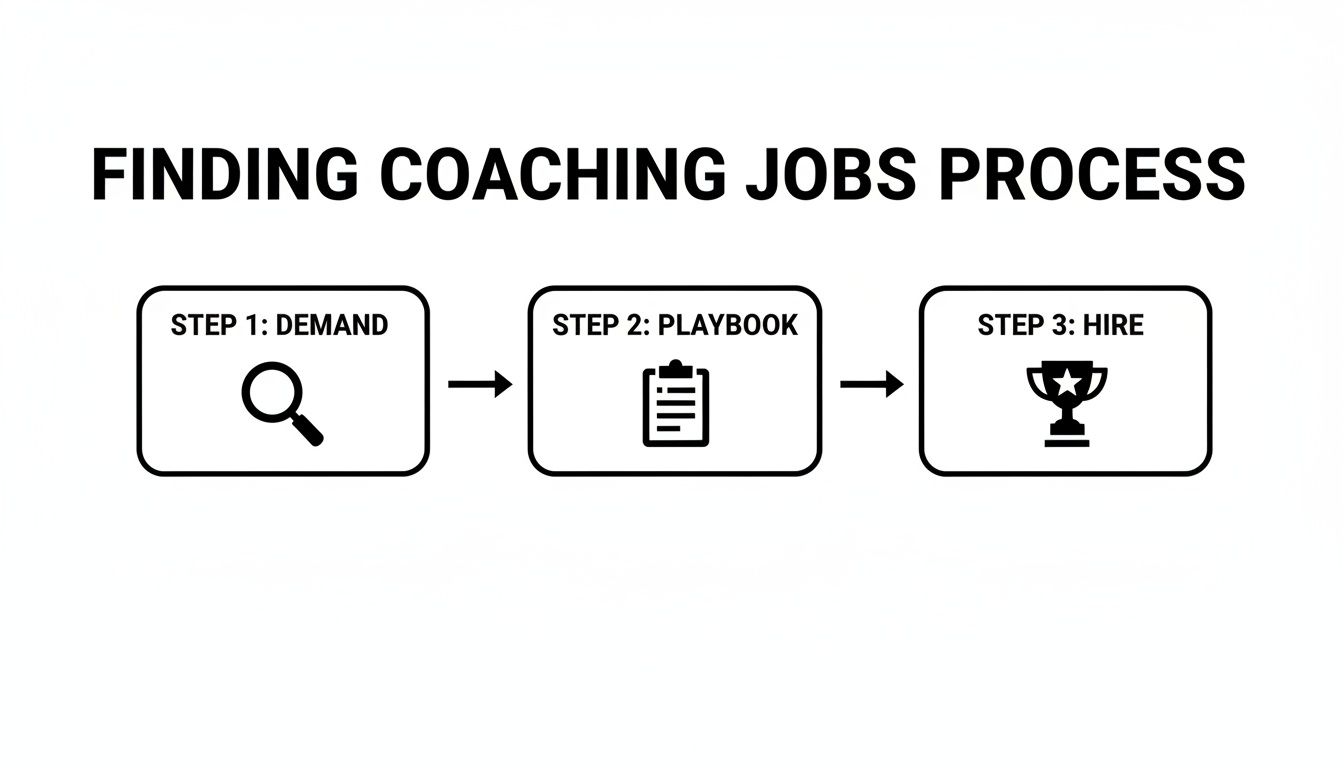
The idea is simple: a structured approach beats waiting around for the perfect job to magically appear every time. GetSportJobs is built for this, letting you zero in on jobs by sport, coaching level, and, most importantly, location.
To give you a clearer picture, here’s how a slight change in your search habits can dramatically improve your results.
Effective Search Strategies on GetSportJobs
| Search Tactic | General Approach | Optimized Approach on GetSportJobs |
|---|---|---|
| Location | Searching "USA" or a major state. | Using city, zip code, or "within 25 miles" filters. |
| Keywords | "Football Coach" | "High School Defensive Coordinator Football" |
| Job Alerts | A single, broad alert for "coaching." | Multiple, specific alerts for "Youth Soccer," "Varsity Basketball," etc. |
| Frequency | Manually checking the site once a week. | Letting daily email alerts bring curated jobs to you. |
As you can see, the optimized approach is all about precision. You're telling the platform exactly what you want, so you waste less time sifting through irrelevant posts and more time perfecting your applications for the jobs that truly matter.
And if you’re charting your own path as an independent coach, a lot of these same principles apply. Learning some strategies to get clients on platforms like Thumbtack can be a huge help, because it's all about defining your niche so the right people can find you. Combine specific searches with automated alerts, and you’ll stop chasing jobs and start letting the right ones come to you.
Craft a Resume That Speaks to the Home Team
When you're hunting for coaching jobs in your own backyard, your standard resume won't cut it. Sending out a generic, one-size-fits-all document is the quickest way to land in the rejection pile. Local hiring managers aren't just scanning for wins and losses; they’re looking for someone who gets the local sports scene, someone who can genuinely connect with the athletes, parents, and community.
Your resume needs to tell a story. It has to show them that you're not just another qualified applicant, but the right person for their program.
Translate Your Experience into Local Language
The trick is to frame your entire background through a local lens. Did you play for a nearby college? Maybe you coached a travel team that regularly faced the very school you're now applying to. These aren't just minor details—they're powerful connection points that a coach from three states away can't possibly have.
Don't just list your stats. Give them context that a local AD would instantly understand. This simple shift turns a dry resume into a compelling story about why you belong there.
Let’s look at a real-world example. Here’s how to rephrase a typical bullet point to make it resonate locally:
- Before: "Coached the varsity team to a 15-5 record in the 2023 season."
- After: "Led the varsity team to a 15-5 record, including a key victory over crosstown rival Northwood High, securing our first regional playoff berth in 5 years."
See the difference? The second version doesn't just state a fact; it demonstrates an understanding of local rivalries and what a specific win truly means to that community.
Your resume should answer the hiring manager's unasked question: "Does this person get us?" Highlighting your familiarity with local rivals, leagues, and community landmarks proves you already do.
Go Beyond Wins and Losses
A strong coaching record is obviously important, but your off-the-field involvement can be the real game-changer. Local schools and organizations want to hire people who are invested in the community, not just using the job as a temporary stepping stone.
Weave these kinds of details into your resume to show you're committed to the area:
- Volunteer Work: Mention that you volunteered at a local youth sports clinic or helped organize a charity 5K. This shows a genuine commitment to community building.
- Local Affiliations: Are you a member of a regional coaches association or have you attended local training seminars? Include it! It shows you're an active part of the area's sports ecosystem.
- School Connections: Highlighting your experience with feeder middle schools or youth leagues demonstrates strategic thinking and a long-term vision for the program.
To make sure all your application materials look sharp, consider using a free professional headshot generator for your online profiles. A polished image goes a long way in conveying professionalism.
Finally, before you hit send, get a second opinion. We're often too close to our own experience to spot weaknesses. After you’ve tailored your resume with these local details, run it through an analysis tool. GetSportJobs’ powerful resume analyzer is a great resource for an in-depth review to catch any weak spots and make sure your resume is primed to land that interview.
Build the Local Network That Unlocks Opportunities
Searching online for "coaching jobs near me" is a great starting point, but it's only half the battle. Here’s a little secret from years in the field: the best local coaching gigs often never see a job board. They're filled through word-of-mouth, quiet recommendations, and connections forged right there in the community.
This isn't about collecting business cards at some stuffy networking event. It’s about organically becoming a familiar, trusted face in your local sports scene. When people know you and respect your passion for the game, you'll be amazed at the doors that open.

Go Where the Game Is Played
You can't build a network from your couch. The most effective strategy is simple: show up. Be present where the coaches, athletic directors, and key parents are. Getting seen leads to conversations, and those conversations are what lead to real opportunities.
Think beyond the "apply now" button and try some of these real-world tactics:
- Volunteer at local tournaments. Seriously, just offer to help. Run a clock, keep score, help with setup. You'll be working shoulder-to-shoulder with the exact people you need to know.
- Attend high school games. Become a regular at games in your sport. After a big win, find the athletic director or one of the coaches and offer a genuine compliment. Something as simple as, "Coach, great game. I was really impressed with your team's discipline," can start a valuable relationship.
- Connect with coaches online. Find local coaching staff on LinkedIn or even X (formerly Twitter). Don't just follow them—engage. A thoughtful comment on a post about a new drill or a team win shows you're paying attention.
I know a coach who landed an assistant position because he struck up a conversation with the head coach at a local sporting goods store. They were both checking out the same training cones. That’s it. Being in the right place at the right time is no accident.
Become a Known Resource
Your mission is to build a reputation as someone who is knowledgeable, passionate, and deeply invested in the local community. You want to be the first person that comes to mind when an athletic director suddenly needs an assistant coach or a youth league is looking for a new leader.
And the demand is there. Recent employment data shows 329,257 people working in sports coaching roles across the US. What's more, the sector's growth rate jumped to 3.9% in just one year. This isn't some niche market; it's a thriving field, and local connections are its lifeblood. You can dig deeper into the hiring momentum in the sports coaching sector to see the trends for yourself.
When you invest in your local network, you stop waiting for job openings to appear. Instead, you position yourself to be the obvious solution when they do.
Ace the Interview by Proving You're a Community Fit
Getting the interview for a local coaching job is a huge win, but now the real work begins. Forget what you think you know about typical corporate interviews focused on metrics and past performance. A local coaching interview is really a test of something far more important: your community fit.
They’ve seen your resume. They already believe you can coach. What they need to find out now is if you belong.
Hiring managers for these roles—whether it's a high school athletic director or a youth league board—are looking for a leader who gets their unique culture, their values, and yes, even their biggest rivalries. They want someone who’s committed to developing young athletes as people, not just as players on a roster.
Prepare for the Questions That Really Matter
You’ll get the standard interview questions, of course. But the ones that truly make or break your chances will dig deep into your coaching philosophy and how well you understand their community.
Be ready for questions like:
- "How do you handle communicating with parents, especially when things get tough?"
- "What's your philosophy on balancing player development with the pressure to win games?"
- "Walk me through how you would support a student-athlete who is struggling with grades or personal issues."
These questions aren't about your playbook. They're designed to see if your core values line up with the program's vision for the future. They're looking for a community builder, not just a game-day strategist. To get a head start, check out this fantastic breakdown of common interview questions for a sports coach for a solid foundation.
"Your answers should consistently reflect a commitment to the town, not just the team. Frame your coaching philosophy around community values like integrity, resilience, and teamwork—qualities that resonate with parents and administrators alike."
Show You've Done Your Homework
The single best way to stand out is to walk in with genuine, specific knowledge about their program. This immediately proves you aren't just blasting out applications for any coaching job; you are interested in this one.
Before the interview, you should absolutely know:
- Who is their biggest local rival?
- Which middle schools or feeder programs are key to their success?
- Did the team have a major accomplishment or a tough loss last season?
Knowing these details allows you to have a much more meaningful conversation. Instead of a generic question like, "What are the team's goals?" you can ask something far more powerful. Try, "I saw you had a really strong showing against Northwood High last season. What are you hoping to build on from that momentum?"
This simple shift elevates the entire dynamic and shows you’re already invested.
The coaching world is growing fast. The number of professional coaches is projected to jump from 122,974 to nearly 194,000 in the next five years. That’s an incredible 9.6% compound annual growth rate, which means more competition for you. Showing you’re the perfect fit for the community isn't just a nice touch—it's your ultimate competitive advantage.
Your Top Questions About Local Coaching Jobs, Answered
When you start digging for "coaching jobs near me," a lot of questions pop up. It’s a world with its own rules, and it's easy to feel a bit lost. We've been there. So, let's cut through the noise and get you some straight answers to the questions we hear most often from coaches.
Think of this as your quick-reference guide to reinforce what we've covered and give you that extra boost of confidence.
What Are the Real Qualifications for Local Coaching Jobs?
This is the big one, and honestly, the answer is "it depends." It really does. Some highly competitive high school or travel club jobs might want specific credentials, like a certification from USA Football or a license from U.S. Soccer. But for many local gigs, what really matters is your experience and passion.
For most youth leagues or assistant coach roles, a background as a player and a natural ability to connect with kids is your golden ticket. That, and a clean background check—that part is almost always non-negotiable.
Don't screen yourself out just because you don't have a specific piece of paper. Focus on the value you offer. If you know the sport inside and out and genuinely want to mentor young athletes, that's often more valuable than any certification.
What's the Pay Like for Part-Time Coaching Jobs?
The pay for local coaching jobs is all over the map. You'll find everything from volunteer positions to pretty decent seasonal stipends. It all comes down to the organization, the sport, and how competitive the level is.
Here’s a general breakdown:
- Volunteer Roles: You'll see this a lot in rec leagues where parent coaches are the backbone of the organization.
- Small Stipends: Middle schools and smaller clubs often offer a stipend to cover your time and effort. This could be anything from a few hundred to a couple of thousand dollars for the season.
- Salaried Part-Time Positions: These are more common for high school varsity teams or elite private clubs. The pay here reflects the significant time commitment you're expected to make.
The key is to ask about compensation during the interview. No one will be surprised by the question. Even if it's a volunteer role, some places will reimburse you for things like gas or certification fees.
How Can I Find Jobs That Aren't Even Posted Online?
This is where the real magic happens. So many of the best local coaching gigs are filled by word-of-mouth before they ever hit a job board. This is why your local network is your most powerful tool.
You have to be visible. Show up to local games, offer to help out at a weekend clinic, or just introduce yourself to the athletic director at the local high school. When people in the local sports scene know who you are and see your passion, they'll think of you first when an opening comes up.
Also, don't sleep on networking with other coaches on a platform like LinkedIn. A simple, genuine message to a coach complimenting their team on a big win can be a great way to open a door. It all comes down to a simple truth: people hire people they know, like, and trust.
Can I Really Get a Coaching Job With No Prior Coaching Experience?
Absolutely, 100% yes. Every great coach started somewhere. Many programs are actively looking for assistant coaches who are hungry to learn and bring a new wave of energy. Your playing experience is a fantastic foundation to build on.
A good head coach will be happy to mentor you on the X's and O's of planning practices and managing a game. Your job is to show them you have the raw materials.
When you're applying, make sure to highlight your transferable skills:
- Leadership: Were you a team captain?
- Communication: Are you good at breaking down a complex skill so a 12-year-old can understand it?
- Enthusiasm: Do you genuinely love the sport and want to see young athletes succeed?
Frame your resume and your interview answers around your potential and your eagerness to learn. Your commitment to developing players can easily trump not having "Head Coach" on your resume yet.
We've put together a quick table to summarize these common questions.
| Frequently Asked Questions | |
|---|---|
| Question | Answer |
| What qualifications do I need? | Varies greatly. Experience as a player and good people skills are key for many local jobs. Formal certifications are more common for higher-level positions. A background check is almost always required. |
| How much do coaches get paid? | It ranges from volunteer roles to stipends ($500 - $2,000+ per season) to part-time salaries for high school or elite club jobs. Always ask about compensation during the interview. |
| How do I find unlisted jobs? | Networking is everything. Attend local games, volunteer, and connect with athletic directors and other coaches. Many of the best jobs are filled through word-of-mouth. |
| Can I coach without experience? | Yes. Start with an assistant coach role. Emphasize your playing background, leadership, communication skills, and passion for the sport. Show your willingness to learn from a head coach. |
Hopefully, these answers help clear things up and give you a solid game plan for landing your next coaching role right in your own community.
Ready to turn your passion into a position? GetSportJobs is the go-to platform for finding coaching opportunities, from local leagues to national programs. Stop searching and start applying to hundreds of listings today. Find your next coaching job on getsportjobs.com!