Land Entry Level Jobs in Sports Marketing
So, you love sports and you're fascinated by what goes on behind the scenes to create that incredible fan experience. What if you could turn that passion into a career? That’s exactly what an entry-level job in sports marketing offers—a chance to get in the game.
Your Starting Playbook for a Sports Marketing Career

Breaking into the sports industry isn't just about working for your favorite pro team, although that's certainly one path. The field is huge. You could be marketing for a global brand like Nike, a fast-paced agency handling multiple athlete accounts, or a major collegiate athletic department that operates like a Fortune 500 company.
Think of this guide as your personal playbook. We’re here to help you move from being a fan in the stands to a key player on the field. We'll break down what these starting roles actually look like day-to-day, what skills will get you noticed, and what kind of salary you can realistically expect.
This is about more than just landing a job. It's about launching a career that fuels your professional drive and your love of the game.
What to Expect in an Entry Level Role
Your first job is your training ground. It's where you'll learn the ropes—how to connect with a fanbase, how to promote a sold-out event, and how to build a brand that people get excited about. These initial positions are your chance to prove you belong and start making your way up.
You’ll see a lot of titles like Marketing Coordinator, Event Assistant, and Social Media Associate. These roles often involve working directly with teams, leagues, or sports apparel companies. The good news? This is a growing field. Data from job listings shows hundreds of these positions are open at any given time, perfect for someone with passion and hustle.
A great entry-level employee doesn't just complete tasks—they absorb everything. They learn how the business operates, how different departments collaborate on game day, and how marketing efforts translate into ticket sales and fan loyalty.
The Landscape of Opportunity
The sports industry is a multi-billion dollar machine, and marketing is the engine that keeps it connected to the fans. But to get started, you need to know where the action is happening.
To give you a clearer picture, most entry-level sports marketing jobs fall into one of a few key categories. The table below breaks down the most common titles you'll see, what they do, and who hires for them.
Common Entry Level Sports Marketing Jobs at a Glance
| Job Title | Primary Responsibility | Typical Employer |
|---|---|---|
| Marketing Coordinator | Supports the marketing team with campaigns, content creation, and administrative tasks. | Pro/College Teams, Brands |
| Event Assistant | Helps plan and execute game-day promotions, fan events, and community outreach. | Teams, Venues, Agencies |
| Social Media Associate | Manages social media channels, creates engaging content, and interacts with the fan community. | Teams, Agencies, Media Companies |
| Partnership Activation | Assists with fulfilling sponsorship agreements and ensuring brand partners get value. | Teams, Leagues, Agencies |
| Community Relations | Organizes player appearances, charity events, and youth programs to build local support. | Pro/College Teams |
These roles are your foot in the door, offering firsthand experience in different corners of the industry. You might find your passion lies in the electric atmosphere of live events or in the strategic world of corporate partnerships.
Ready to see what’s out there right now? You can explore a curated list of sports marketing roles to get a real-time view of the job market and see what teams and companies are hiring.
A Day in the Life of a Sports Marketer
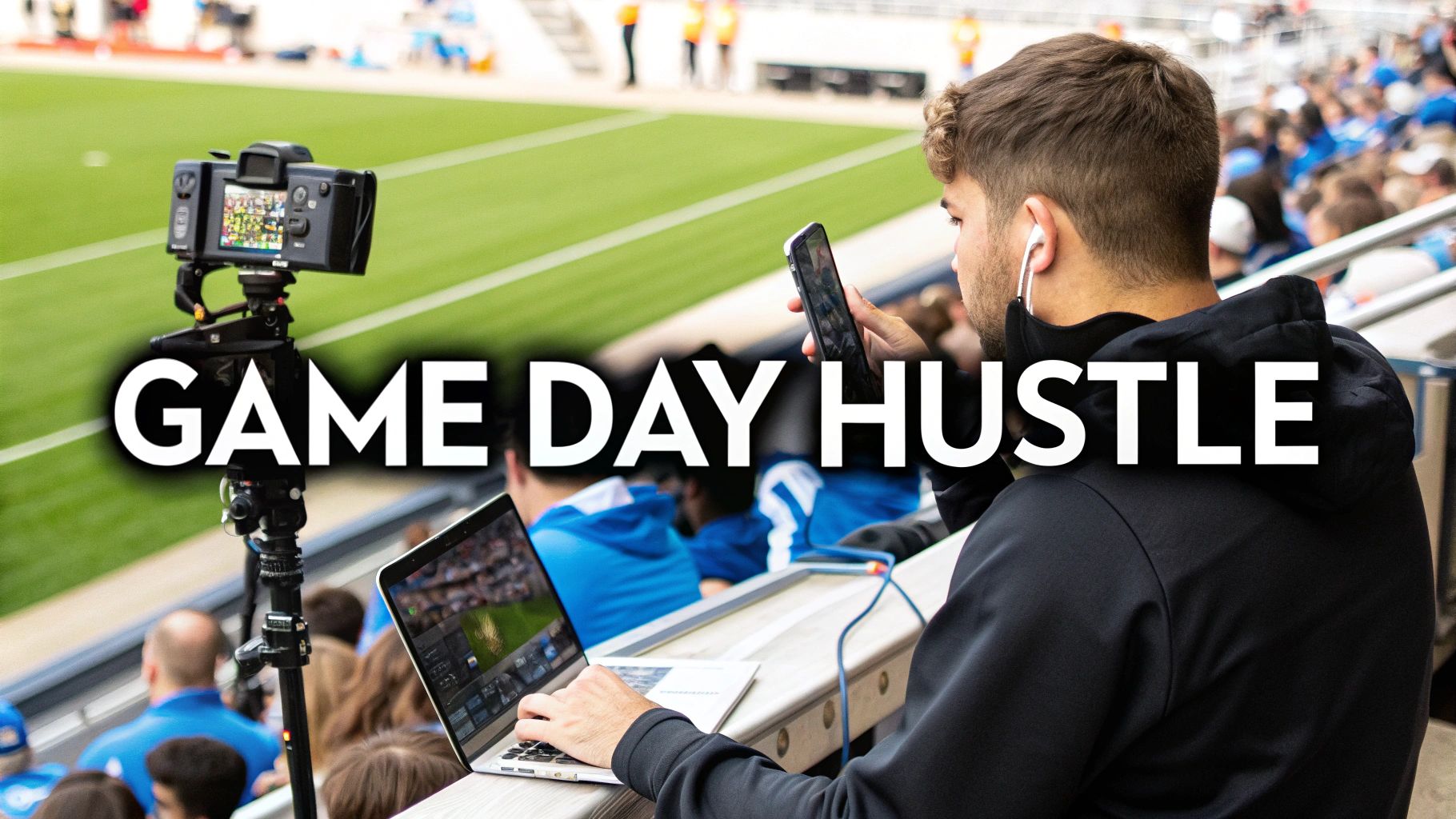
A job title on a resume only tells you so much. To really get a feel for entry level jobs in sports marketing, you have to picture yourself in the thick of it—navigating a world that's fast, loud, and where no two days are ever the same.
Forget the idea that it's all about VIP access and rubbing shoulders with athletes. The reality is built on pure hustle, a ton of creativity, and an obsession with connecting fans to the game. Your office might be a standard cubicle one day and the buzzing, chaotic concourse of a sold-out arena the next. In this industry, adaptability isn't just a nice-to-have skill; it's how you survive.
So, let's pull back the curtain and walk through a typical week in two of the most common entry-level roles. This will give you a real, tangible sense of the work and help you see where your own passions might fit in.
The Marketing Coordinator
Let's say it’s Monday morning. As a Marketing Coordinator for a pro basketball team, your week doesn't kick off with the roar of the crowd, but with the quiet hum of your laptop. You're digging into the analytics from last week’s email newsletter and notice something interesting: content featuring player interviews had a 15% higher click-through rate than the standard ticket promos.
That one piece of data shapes your next move. You immediately start drafting a new email campaign for an upcoming rivalry game, but this time you lead with an exclusive video clip of the team's star player. By Tuesday, you’re huddling with the graphics team to get assets for social media, making sure every post is perfectly branded and timed to build maximum hype.
Wednesday brings a different kind of collaboration. You’re in a meeting with the Community Relations department, brainstorming how to promote an upcoming youth basketball clinic. Your task is to spin up a digital flyer and a simple registration page, then schedule a series of posts across Instagram and Facebook to drive sign-ups from local families.
Come Friday, your focus shifts completely to the game itself. You're not just watching from the stands; you're on the ground, helping the events crew set up a fan photo booth or making sure the pre-game, on-court contest runs without a hitch. The final buzzer signals the end of the game for the fans, but you're still working—gathering testimonials and photos that will become content for next week.
The Sponsorship Activation Assistant
Now, let's switch gears. Imagine you're a Sponsorship Activation Assistant at a major sports agency. Your entire world revolves around making sure corporate partners get every ounce of value they paid for. On Monday, you’re on a call with a major beverage company, walking them through the nitty-gritty logistics for their sponsored "Fan Zone" at this weekend's big soccer match.
Later that day, you're putting the finishing touches on a detailed report for another partner, a local car dealership. This isn't just a spreadsheet; it's proof. You include photos of their stadium signage in action, screenshots of their logo on the team’s website, and metrics from a social media giveaway you helped run. This is how you show their investment is making a real impact.
Sponsorship activation is the art of bringing a brand partnership to life. It’s moving beyond a logo on a jersey to creating memorable experiences that connect a sponsor's brand directly with the passion of the fanbase.
By midweek, you’re deep in the weeds of planning. Your to-do list is a masterclass in multitasking:
- Coordinating Deliveries: Following up to confirm that 5,000 branded rally towels from a sponsor will arrive at the stadium on time for Saturday's game.
- Managing Guest Lists: Organizing VIP hospitality passes and parking for a group of executives coming in from a partnering tech firm.
- Content Approval: Firing off social media mock-ups to a brand manager, making sure you get their final sign-off before anything goes live.
When game day finally arrives, you're the brand's eyes and ears on-site. You’re doing a final walkthrough to ensure their banners are hung correctly, their product sampling tent is fully staffed, and that the fan they selected for the "Fan of the Game" prize actually gets their prize. It’s a hands-on, high-stakes role where being meticulously organized isn't just a good trait—it’s the whole job.
The Skills You Need to Make the Roster
Passion for the game is a great start, but it won't get you past the first-round interview for a competitive sports marketing job. Hiring managers are looking for a very specific mix of practical, technical skills and the right personal traits to handle the pressure.
Think of it like building a championship team. You need players who can execute the fundamentals flawlessly, but you also need communicators and leaders who can adapt when the game plan goes out the window. In sports marketing, you have to be both. This industry moves fast, and your skill set is your highlight reel—it's what shows you can contribute from day one.
Let’s break down what you actually need to get drafted.
Technical and Creative Skills
These are your "hard skills," the tangible things you know how to do. They're the foundation of your marketing playbook and the tools you'll use every single day to run campaigns, track results, and connect with the fanbase. In today's world, this almost always means having a solid grasp of the digital arena.
Here are the core competencies you need to be working on:
- Social Media Management: This is so much more than just posting. It means understanding the unique culture of platforms like Instagram, TikTok, and X (formerly Twitter) and knowing how to create content that speaks directly to your team’s specific audience.
- Content Creation: Getting comfortable with tools like Canva or the Adobe Creative Suite gives you a huge leg up. If you can quickly whip up a graphic for a game-day ticket offer or edit a short video highlight, you're immediately more valuable to the team.
- Email Marketing Platforms: Experience with a platform like Mailchimp or Constant Contact shows you know how to manage fan newsletters, send out ticket promotions, and build targeted campaigns that bring in money.
- Basic Analytics: You don't need to be a data wizard, but you absolutely have to be comfortable with numbers. Understanding key performance indicators (KPIs)—like engagement rates on a post or click-through rates on an email—proves you can actually measure whether your work is successful.
In sports marketing, data tells a story. A jump in social media engagement after a big win isn’t just a number; it’s proof that your real-time content strategy is connecting with fans and giving the front office a tangible return on investment.
Essential Soft Skills
Your technical abilities might get you the interview, but your soft skills are what will land you the job and help you succeed. The sports world is incredibly unpredictable. Game outcomes flip in an instant, event logistics change on a dime, and a PR crisis can erupt from a single tweet. How you handle that chaos is just as important as how well you know Mailchimp.
These traits are absolutely non-negotiable:
- Adaptability: A sudden rain delay might force you to scrap your entire game-day marketing plan and build a new one in ten minutes. The ability to pivot without panicking is what separates the pros from the amateurs.
- Communication: You'll be talking to everyone imaginable—fans, sponsors, athletes, and executives. You have to be a clear, confident, and professional communicator. It's the glue that holds all the moving parts together.
- Teamwork: Sports marketing is not a solo gig. You are constantly working with the sales department, the media relations team, and the operations crew. Showing you’re a reliable teammate who makes the whole group better is everything.
Mapping Your Salary and Career Growth
Getting your foot in the door is a huge accomplishment, but it's really just the first step. You need a clear picture of what you can earn and where your career can go from here. Think of your starting salary as the first rung on a ladder that could eventually lead to some seriously influential leadership roles in the sports world.
When it comes to compensation for entry level jobs in sports marketing, a few key things come into play. The size of the organization, the local cost of living, and the specific duties of the job all make a difference. It’s no surprise that a Marketing Coordinator for an NFL team in New York City will probably have a higher starting salary than someone with a similar title working for a minor league baseball team in a smaller town.
What to Expect on Your First Paycheck
So, what kind of numbers are we talking about? For most entry-level roles, you can expect a salary in the ballpark of $35,000 to $55,000 per year.
That's a pretty wide range, and it’s heavily influenced by your location. Big cities with major sports franchises tend to pay on the higher end of that scale. Take a major sports hub like Denver, for example. Recent job listings show that entry-level sports marketing and management positions there average between $40,000 and $50,000. You can dig into more specific salary data for sports marketing jobs in Denver on ZipRecruiter to get a feel for the market.
This infographic breaks down the different skills—foundational, creative, and people skills—that will directly boost your value and help you grow.
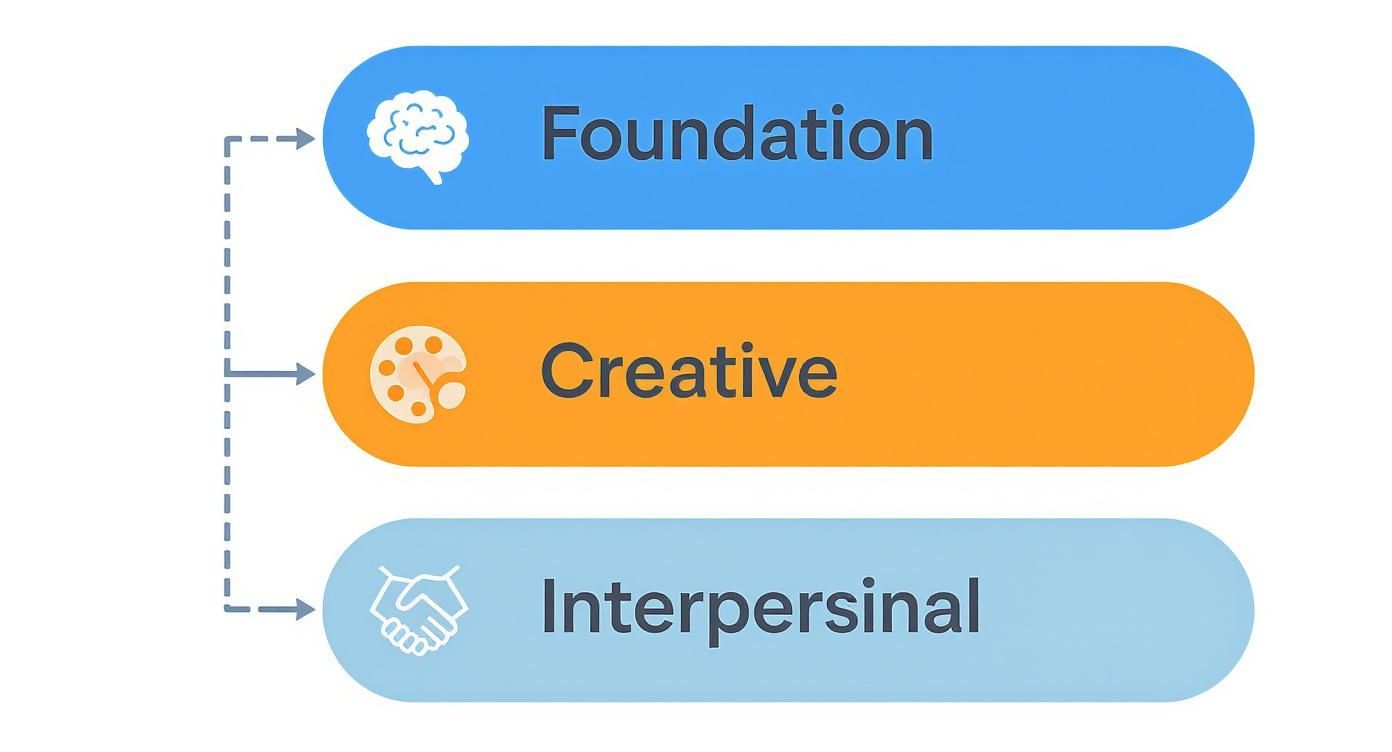
Becoming a pro across all three of these areas is what really puts your career on the fast track, moving you from an entry-level paycheck to a senior-level income.
Charting Your Career Trajectory
Your first job is your launchpad. After you’ve put in a few years and have some solid wins under your belt, a Marketing Coordinator can realistically start looking at a promotion to Marketing Manager. That's a significant jump that usually comes with more strategic duties, bigger campaigns, and maybe even a few junior team members to lead.
To give you a clearer idea of how this progression works, here’s a look at a typical career path in sports marketing.
A Potential Career Path in Sports Marketing
| Career Stage | Example Job Title | Typical Years of Experience | Key Responsibilities |
|---|---|---|---|
| Entry-Level | Marketing Coordinator | 0-2 years | Supporting campaigns, managing social media, event assistance. |
| Mid-Level | Marketing Manager | 3-5 years | Developing and executing campaigns, managing budgets, analyzing data. |
| Senior-Level | Director of Marketing | 5-10 years | Overseeing all marketing strategy, leading a team, managing brand partnerships. |
| Executive | VP of Marketing / CMO | 10+ years | Setting the organization's overall marketing vision, driving revenue growth. |
Each role builds on the one before it, equipping you with the skills and experience needed for the next big step.
Your career path in sports marketing is a marathon, not a sprint. Each role builds on the last, adding new skills and responsibilities that prepare you for the next level of leadership and earning potential.
From a manager role, the path often leads to a Director of Marketing position, where you're calling the shots on the entire marketing strategy for a team, a league, or a major brand. It's crucial to have this long-term perspective. It helps you see how the day-to-day grind of an entry-level job is actually laying the groundwork for a highly rewarding and impactful career.
Your Game Plan for Landing the Job

Knowing the roles is one thing, but actually landing one is a whole different ballgame. The competition for entry level jobs in sports marketing is fierce, so you need a solid strategy. Just firing off applications into the void and hoping for the best won't get you very far.
You have to be deliberate. Think of it like a marketing campaign where the product is you. Every single touchpoint, from your resume to your interview, needs to be crafted to make a memorable impression on hiring managers who are sifting through hundreds of applications.
Finding the Right Openings
You can start with the big, general job boards, but the real gold is usually found on platforms built specifically for the sports industry. This is where the teams, leagues, and brands you want to work for are actively looking for talent.
Going niche cuts through the clutter and puts you directly in front of the right people. Make these your go-to spots:
- Industry-Specific Job Boards: Websites like TeamWork Online and, of course, GetSportJobs are non-negotiable. They pull together listings from every corner of the sports world, from pro teams to college athletic departments.
- LinkedIn: Use it for more than just job hunting. Follow the organizations you’d love to work for, engage with their posts, and connect with their marketing staff and recruiters. It's a powerful tool for building your network while you search.
Crafting a Winning Resume and Cover Letter
Your resume isn’t just a dry list of responsibilities; it’s your personal highlight reel. And in the world of sports, numbers tell the story. Vague claims like "managed social media" are easy to ignore. You need to show your impact with cold, hard data.
For example, don't just say you "helped with an event." Instead, quantify it: "Assisted in executing a fan appreciation event for 5,000+ attendees, which helped drive a 15% increase in merchandise sales." Now that shows real value.
A killer resume might get your foot in the door, but a great cover letter is what tells your story. It’s your opportunity to connect your skills to the organization's goals and show them you're genuinely passionate about their brand.
Your cover letter needs to be the bridge between your experience and their mission. Do your homework. Find a specific marketing campaign they ran that you thought was brilliant. Talk about why it worked and how your skills could help create more successes like it. It proves you're not just looking for any job—you're looking for this job.
Before hitting 'send', it's always a good idea to get a second opinion. You can run your resume through a specialized sports industry resume analyzer to spot any weaknesses and make sure it’s optimized to get past the initial screening.
Standing Out in a Crowded Field
Passion is what separates you from the pack. Trust me, every single applicant is going to say they "love sports." You have to prove it.
- Tailor Every Single Application: A generic resume is the fastest way to get rejected. Tweak your resume and cover letter for each specific role, echoing the keywords and requirements you see in the job description.
- Show, Don't Just Tell: Did you volunteer for a local 5K? Do you run a fantasy league with a ridiculously detailed constitution? Have you ever written a blog breaking down your favorite team's ad campaigns? Highlight these things! They show initiative and a real-world connection to the industry.
- Network Like a Human: Forget just blindly adding people on LinkedIn. Reach out to folks in roles you're interested in and ask for a few minutes of their time for an informational interview. Your goal is to learn from their journey and build a real relationship, not just to ask for a job.
Building Your Future in the Sports Industry
So, you've got the playbook. You know the roles, the skills it takes to succeed, and the strategies to get your foot in the door of the sports marketing world. Let’s be real—breaking into this industry takes hustle, but it’s absolutely doable if you have the right game plan.
The great news is that the sports world is always changing and growing, which means new opportunities are constantly popping up for sharp, ambitious marketers like you. In fact, projections show the industry is set to add around 99,700 new entertainment and sports jobs each year. You can dig into the specifics of these projections from the U.S. Bureau of Labor Statistics.
This whole journey is about building a career you're genuinely passionate about. Every application you send, every interview you nail, and every connection you make is one step closer to that goal. Stay hungry and keep your eye on the prize.
Now it's time to put all this knowledge to work. Start tweaking that resume, hunting for openings, and reaching out to people in the industry. For more tips and career advice to keep you sharp, be sure to check out the resources on the GetSportJobs blog.
It’s your time to get in the game. Go build your future.
Got Questions? We've Got Answers
Stepping into the sports marketing world for the first time can feel a bit overwhelming. You’ve probably got a ton of questions floating around. Let's tackle some of the most common ones head-on.
Do I Really Need a Sports Marketing Degree?
Not necessarily. While a degree in sports management, marketing, or business definitely gives you a leg up, it's not the only ticket into the game. We see successful pros come from all sorts of backgrounds—communications, journalism, you name it.
What truly matters is having the right skills and a real, tangible passion for the industry. Honestly, hands-on experience from an internship, a volunteer gig, or even a relevant part-time job often speaks louder than the name of your major on your diploma. If you can prove you get marketing and know how to apply it to the world of sports, you’re in a great position.
Just How Hard Is It to Land That First Sports Job?
I won't sugarcoat it: it's competitive. You're up against thousands of other passionate people, all aiming for a handful of spots, especially with the big-name teams and brands. But it's absolutely not impossible.
The trick is to be smart and relentless. You have to build your network, get your hands dirty with internships, and customize every single application. So many people just blast out generic resumes and wonder why they don't hear back. You stand out by putting in the effort and showing a team or company exactly why you're the right fit for them.
A huge myth we need to bust: you do not have to be a former athlete to work in sports. Your business sense, creativity, and work ethic are what will make you a star in a marketing role.
Where Are the Best Places to Look for Jobs?
You can start with the big, general job sites, but your best move is to go where the industry lives. Use sports-specific job boards.
Think about it: these are the first places that teams, leagues, and brands post their openings because they know they'll find people who are serious about the industry. These niche sites cut through all the clutter and put you right in front of the right hiring managers. It's a game-changer for your job search.
Ready to stop scrolling and start making moves? GetSportJobs is the go-to job board for the entire sports industry. You'll find hundreds of current openings, from internships to your first full-time role, all in one spot. Your next big opportunity is right there. Find your sports marketing job today!