A Guide to Event Management in Sports
Ever wonder what makes a major sporting event truly epic? It’s more than just the incredible athletes or the nail-biting finishes. It’s the invisible, perfectly coordinated dance happening behind the scenes. That’s sports event management.
Think of it like this: the event manager is the head coach, not for a team on the field, but for the entire experience. They’re the ones drawing up the game plan that ensures every single element—from the first promotional tweet to the final clean-up—comes together flawlessly.
The Blueprint for Unforgettable Sporting Moments
At its heart, event management in sports is about transforming a simple contest into a full-blown spectacle. It’s the magic that ensures the stadium lights are on, the hot dogs are hot, the broadcast is seamless, and thousands of fans can get in and out safely. It’s not just about logistics; it’s about crafting an atmosphere that magnifies the raw emotion and drama of the game.
Picture the Super Bowl. The action on the gridiron is the star, of course. But the entire experience is shaped by a thousand moving parts: the marketing that builds months of hype, the halftime show that captivates millions, the intricate security measures, and the perfectly timed sponsor activations. That massive, complex puzzle is what sports event management solves.
More Than Just Game Day
A common misconception is that the work only happens on the day of the event. In reality, that’s just the final act. Great event management is a complete cycle that starts with months of strategic planning and ends with a deep dive into what went right and what could be better next time. The goals are always layered, aiming to satisfy a wide range of people.
For Athletes and Teams: The focus is on creating a professional, safe, and fair environment so they can compete at their peak without any distractions.
For Spectators: It’s all about delivering a fantastic and memorable experience, from the moment they think about buying a ticket to the final buzz as they head home.
For Sponsors and Partners: Success means delivering massive brand exposure and a real return on their investment, connecting them with an engaged and passionate audience.
For the Organization: The ultimate goal is to run a profitable event, strengthen the brand, and build a reputation that brings everyone back for more.
This strategic approach is precisely why the industry is booming. The global sports event market hit an estimated USD 452.8 billion in 2024 and is expected to climb to an incredible USD 687.7 billion by 2030. This growth is being driven by bigger sponsorship deals and new ways to engage fans digitally. You can explore the latest industry analysis to see how these trends are shaping the future.
A great sports event feels effortless to the spectator, but behind the scenes, it is a masterclass in precision, foresight, and relentless problem-solving. It's the ultimate team sport played off the field.
Ultimately, sports event management is the critical link between the passion of the game and the realities of business. It’s what makes an event not just exciting, but also financially successful and operationally sound, creating memories that last long after the final whistle blows.
The Sports Event Management Lifecycle
Every sporting event you’ve ever attended, whether it was a local 5K or the Super Bowl, followed a distinct journey. This is the event management lifecycle—a roadmap that takes a simple idea and transforms it into a full-blown, unforgettable experience. It’s not just about what happens on game day; it's a marathon of meticulous planning, flawless execution, and insightful analysis.
Think of it like building a house. You don't just start hammering nails. You start with a blueprint (planning), lay the foundation (operations), build the structure (execution), and then conduct a final inspection to see how you can build even better next time (analysis). Skipping a step can bring the whole project crashing down.
This lifecycle helps event managers wrangle the immense complexity of their job into a logical, step-by-step process.
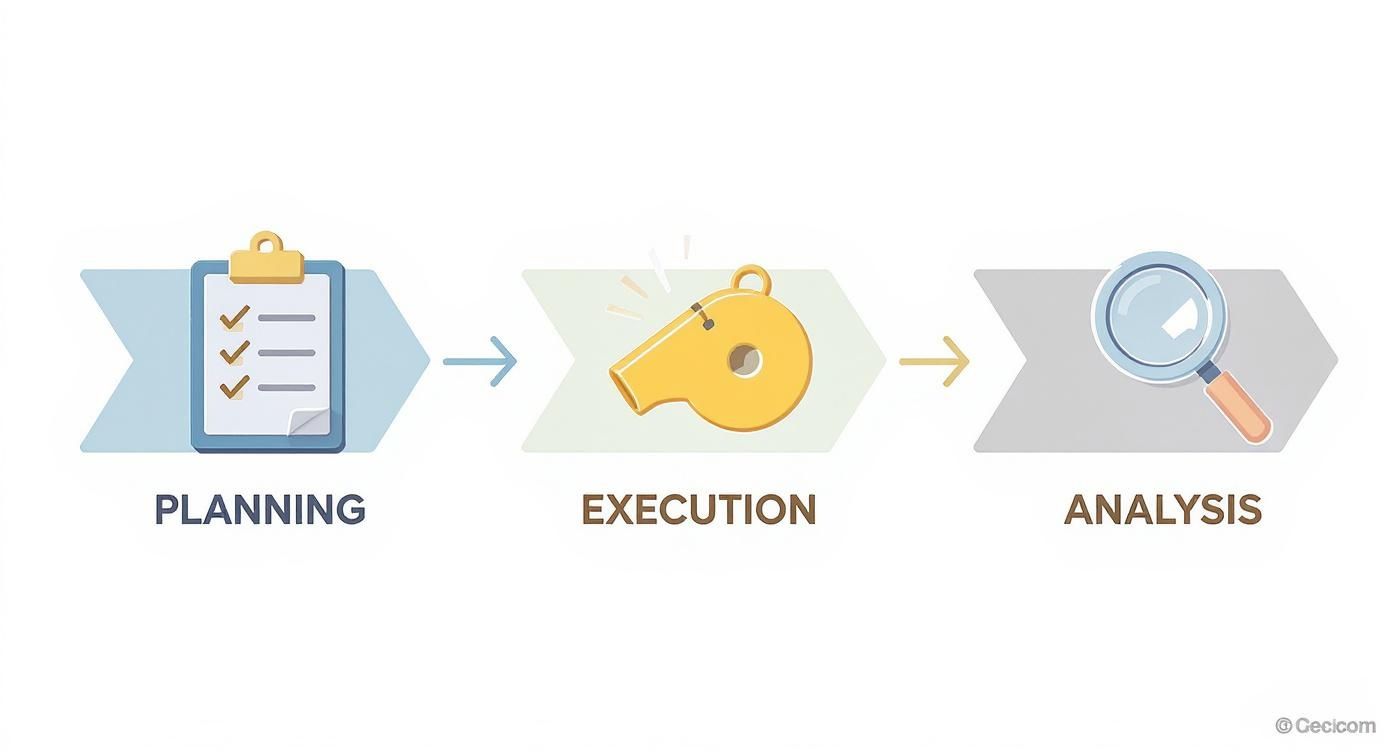
The infographic above breaks this down into three core stages, but for a deeper dive, most pros think in terms of five distinct phases. Each phase builds on the last, creating a powerful loop of experience and improvement that separates good events from great ones.
To give you a bird's-eye view, here's a quick breakdown of how these five phases flow together. Each stage has a clear goal and a specific set of jobs that need to get done before moving on to the next.
The Five Phases of Sports Event Management
| Phase | Key Activities | Primary Objective |
|---|---|---|
| 1. Conception & Strategic Planning | Define goals, set budget, select venue, create master timeline | To establish a clear vision and a solid, actionable blueprint for the event. |
| 2. Pre-Event Operations & Marketing | Secure sponsorships, launch promotional campaigns, hire staff & vendors | To build operational readiness and generate buzz to drive ticket sales and interest. |
| 3. On-Site Execution | Manage logistics, coordinate staff, handle crowd flow, solve real-time issues | To deliver a seamless and memorable live experience for all attendees and participants. |
| 4. Post-Event Wind-Down | Venue cleanup, financial reconciliation, thank stakeholders | To responsibly and professionally close out the event and fulfill all obligations. |
| 5. Analysis & Reporting | Collect feedback, analyze KPIs, create final report, document learnings | To measure success against original goals and gather data for future improvements. |
This table provides a high-level summary, but let's get into the nitty-gritty of what really happens in each phase.
Phase 1: Conception and Strategic Planning
This is where it all begins—the "what" and the "why." An idea for an event is born, and the team’s first job is to define what success actually looks like. Is the goal to sell out the stadium, raise money for a cause, or give a new sponsor massive brand exposure? The answer to that question dictates everything that follows.
This foundational stage is all about:
- Defining Objectives: Going beyond vague goals to set specific, measurable, achievable, relevant, and time-bound (SMART) targets.
- Budgeting: Crafting a detailed financial plan that accounts for every potential cost (venue, security, marketing) and every possible revenue stream (tickets, concessions, merchandise).
- Venue Selection: Finding and securing the perfect location that matches the event's size, vibe, and technical needs.
- Timeline Development: Creating a master schedule with critical deadlines, ensuring nothing falls through the cracks.
Without this solid groundwork, you’re just winging it. A well-thought-out strategic plan is the North Star that keeps the entire team aligned and moving in the same direction.
Phase 2: Pre-Event Operations and Marketing
With the blueprint set, it’s time to start building. This phase is all about turning those plans into action and, just as importantly, getting people excited. This is where the event starts to feel real to the outside world.
Marketing kicks into high gear here. You can have the best-planned event in history, but if no one knows about it, it's a failure. The sports event industry in North America is a beast, estimated to be worth around USD 105 billion in 2024, and that growth is fueled by smart digital marketing. If you want to dive deeper, you can explore more on this expanding market and its drivers.
During this busy period, the team is juggling:
- Sponsorship Acquisition: Pitching and securing partners whose brands are a natural fit for the event.
- Marketing and Promotion: Launching campaigns on social media, through email, and with media partners to build hype and sell tickets.
- Vendor and Staffing Coordination: Locking in contracts for everything from catering and security to merchandise and volunteers.
- Logistical Arrangements: Nailing down the details for athlete travel, accommodations, and equipment transport.
This phase is a constant balancing act between behind-the-scenes grunt work and public-facing promotion, all designed to set the stage for a spectacular show.
Phase 3: On-Site Execution
It’s game day. All the planning, emails, and meetings have led to this moment. The focus instantly shifts from long-term strategy to immediate, real-time problem-solving. The goal is simple: deliver a perfect experience for every single person, from the star athlete to the fan in the nosebleed seats.
Event day execution is controlled chaos. Success isn't about preventing problems—it's about anticipating them and having a system in place to solve them instantly and invisibly.
This is where a great team shines. They’re managing crowd flow, keeping the broadcast on schedule, coordinating with the press, and stamping out fires before anyone even smells smoke. A sudden downpour? A sound system failure? A seasoned event manager has a plan for that.
Phase 4: Post-Event Wind-Down
The final whistle has blown and the fans have gone home, but the job isn't done. The wind-down is a crucial, often overlooked, part of professional event management in sports. It’s about leaving things better than you found them and closing out the project cleanly.
Key tasks in this stage include:
- Venue Cleanup and Breakdown: Tearing down temporary stages, signage, and equipment, and ensuring the venue is spotless.
- Financial Reconciliation: Paying final invoices, processing payroll, and comparing the final numbers against the initial budget.
- Stakeholder Communication: Sending out a massive thank you to sponsors, volunteers, staff, and athletes, and delivering any promised post-event reports to partners.
A smooth wind-down protects your reputation and strengthens relationships, making it much easier to book that venue or sign that sponsor again next year.
Phase 5: Analysis and Reporting
This final phase is what separates the amateurs from the pros. It’s about stepping back and asking, "What did we learn?" By collecting and dissecting data from the event, you can uncover powerful insights that make every future event better.
The team will analyze survey feedback from fans and sponsors, dig into key performance indicators (KPIs) like ticket sales and social media reach, and compile everything into a comprehensive post-event report. This report isn't just a pat on the back; it's a tool for improvement. It ensures that the successes are repeatable and the mistakes are not. This cycle of doing, then learning, is the engine of excellence in sports event management.
Assembling Your Championship Event Team
Behind every unforgettable sporting event, there’s a team moving in perfect sync—just like a championship roster on the field. The success of anything from a local 5K to a professional playoff game hinges on having the right people in the right roles, all pulling in the same direction. Building this team isn't just about filling seats; it's about architecting an organization where every single role has a crystal-clear purpose.
An event's scale will always dictate the team's size, of course. A small community tournament might have one person wearing multiple hats, while a massive international competition will have entire departments for each function. But regardless of the headcount, a well-defined structure is what prevents chaos and ensures every last detail is owned by someone.
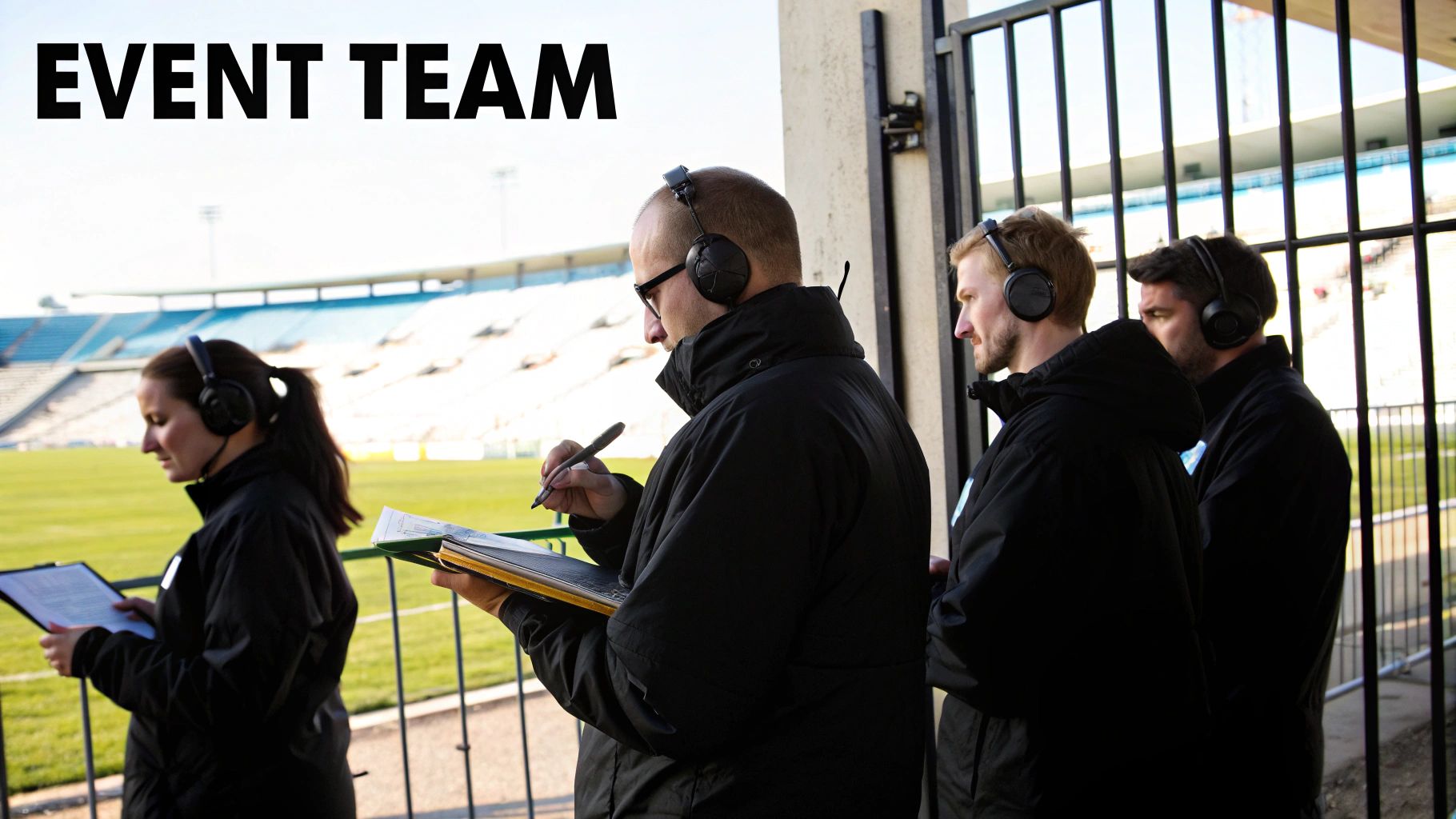
This kind of clarity is the true backbone of effective event management in sports. It’s what turns a frantic to-do list into a coordinated, strategic operation.
The Core Four Player Positions
Think of your event team’s structure like a starting lineup, with key players covering the most critical areas of the field. While dozens of other specialists and volunteers are absolutely vital, these four roles form the essential core of nearly every successful event.
The Head Coach (Event Director): This is the visionary, the leader who oversees the entire operation from conception to cleanup. They set the high-level strategy, manage the master budget, and are the final decision-maker. Their job is to keep the whole team focused on the event’s primary goals, ensuring the big picture never gets lost in the weeds.
The Quarterback (Operations Manager): The Ops Manager is the master of logistics. They are the on-the-ground commander responsible for everything tangible—venue setup, transport, equipment, staffing schedules, and safety protocols. This is the person who turns the director's vision into a functioning reality on game day.
The Hype Person (Marketing Coordinator): A fantastic event is useless if no one shows up. The Marketing Coordinator's entire mission is to build buzz, sell tickets, and get the audience excited. They run the social media campaigns, deal with the press, and create all the promotional materials that capture the energy of the event.
The Fundraiser (Sponsorship Manager): This individual is all about the commercial side of things. They identify, pitch, and lock down corporate sponsors to make sure revenue targets are hit. They also nurture those sponsor relationships to deliver on promised perks, like brand exposure and on-site activations, making sure every partner sees a great return.
Defining Roles for a Flawless Execution
Assigning clear responsibilities is what prevents game-day disasters. It’s that simple. When everyone knows exactly what they're accountable for, communication is sharper and problems get solved infinitely faster. The Operations Manager, for example, becomes the immediate go-to for any logistical hiccup, from a broken generator to a shortage of volunteers.
A team with ambiguous roles is like an offense with no playbook. Everyone might be talented, but without clear assignments, they’ll spend more time running into each other than moving the ball down the field.
This clarity needs to extend beyond the core team, too. For larger events, these four key roles often become department heads who oversee their own teams of specialists. The Operations Manager might lead a group that includes a Volunteer Coordinator, a Venue Manager, and a Head of Security. Diving into the specific duties within these areas reveals a ton of career paths, and you can learn more about these responsibilities in sports event operations jobs on GetSportJobs.
Building a Winning Team Culture
Finally, just assembling the talent is only half the battle. Fostering a culture of open communication and genuine collaboration is what makes a team truly great. This means regular check-in meetings, shared project management software, and established channels for quick updates are non-negotiable.
The best event teams operate with a shared sense of purpose and trust. The Marketing Coordinator has to know the logistical details from the Operations Manager to promote the event accurately. Likewise, the Sponsorship Manager must work hand-in-glove with the entire team to ensure partner activations are executed perfectly. This tight-knit connection is the secret sauce for creating the seamless, memorable experiences that define legendary sports events.
The Modern Sports Event Toolkit
In the fast-paced world of sports, a successful event manager has to be a master of many trades—part strategist, part logistician, and increasingly, part tech wizard. Pulling off a flawless event today takes more than just good planning; it requires a powerful combination of timeless human skills and the right digital tools.
This isn't just about having the latest software. It's about knowing how to blend genuine expertise with technological efficiency to create those unforgettable moments that fans talk about for years. We’ve moved far beyond the days of clipboards and walkie-talkies.
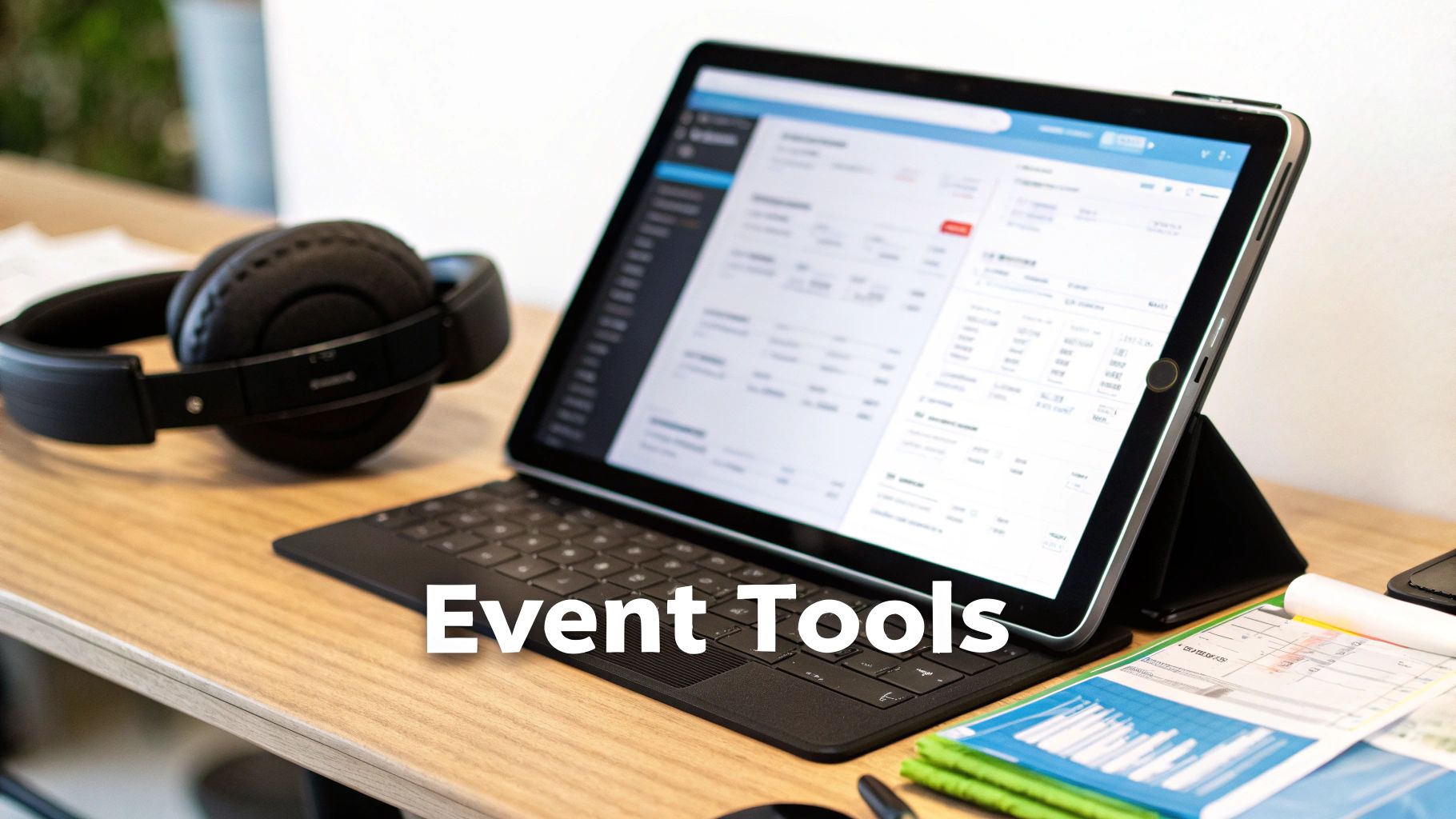
The best in the business understand that technology is a force multiplier. It amplifies their ability to plan, execute, and analyze, turning good events into legendary ones. Let’s break down the essentials every modern sports event manager needs in their corner.
Foundational Skills for Event Leadership
Before you even think about software, success starts with a rock-solid foundation of human skills. These are the abilities that allow a leader to navigate the complex, often chaotic, environment of a live sporting event.
Crisis Management: It’s not a matter of if something will go wrong, but when. The best managers stay cool under pressure, making decisive, clear-headed calls when the unexpected happens. Whether it's a sudden downpour or a scoreboard glitch, they have contingency plans ready and can guide their team through the storm.
Negotiation: Getting the best deals with venues, vendors, and sponsors is an art form, and it's absolutely critical for keeping the event on budget. Strong negotiation skills directly impact the bottom line, ensuring you get maximum value without cutting corners on quality.
Data-Driven Decision-Making: Gut feelings have their place, but today’s top managers rely on hard data. They use insights from ticket sales, fan surveys, and social media chatter to make smart, strategic choices on everything from ticket pricing to marketing campaigns.
These skills are irreplaceable. They form the strategic brain of the entire operation. But in today's world, they're supercharged by technology.
The Technology That Powers Modern Events
The right tech takes a manager's skills and turns them into scalable, efficient systems. This integration of digital tools is a huge reason the sports event market is booming, projected to grow at a CAGR of nearly 9.9% from 2025 to 2029. As you can see in the latest market research on sporting events, things like mobile payments and automated ticket scanning aren't just novelties—they're improving both operations and the fan experience.
Here are the key categories of technology you'll find in any modern event manager's arsenal:
Event Management Software: Think of platforms like Eventbrite or Cvent as the central nervous system for your event. They handle everything from registration and ticketing to volunteer scheduling, keeping all the moving parts in one place.
Customer Relationship Management (CRM) Systems: Tools like Salesforce or HubSpot are essential for managing relationships with fans, sponsors, and the media. A good CRM tracks every interaction, allowing your team to build real, long-term loyalty.
Digital Ticketing and Access Control: Mobile-first ticketing platforms do more than just get people in the door. They streamline entry, cut down on fraud, and collect incredibly valuable data about who is attending your event.
Communication and Project Management Tools: When the pressure is on, clear communication is everything. Apps like Slack, Asana, or Trello keep the entire team connected and on the same page, ensuring nothing falls through the cracks.
Technology doesn't replace a great event manager—it empowers one. The best tools in the hands of a skilled leader create a system that is both resilient and remarkably efficient.
This blend of old-school skill and new-school tech is the new standard. To see a practical example of how digital tools affect event promotion, you can get some great insights from our guide on meta tags analysis for sports websites, which demonstrates how technical details can have a big impact on visibility.
Essential Toolkit for Sports Event Managers
The real magic happens when you pair those core human skills with the right technology. This is where you see a huge jump in what's possible, elevating every single part of the event management process. The table below shows just how powerful this combination can be.
| Core Skill | Description | Supporting Technology Example |
|---|---|---|
| Strategic Planning | Developing the event's vision, goals, and master timeline from start to finish. | Project Management Software (e.g., Asana): Helps create detailed timelines, assign tasks, and track progress against key milestones for the entire team. |
| Budget Management | Meticulously tracking all expenses and revenue to ensure profitability. | Financial Software (e.g., QuickBooks): Automates expense tracking, invoice processing, and provides real-time financial dashboards to stay on budget. |
| Fan Engagement | Creating memorable and interactive experiences that build a loyal fanbase. | Social Media Management Tools (e.g., Hootsuite): Schedule posts, monitor fan conversations, and run engaging campaigns to build hype before and during the event. |
| Post-Event Analysis | Measuring the event’s success against its goals using concrete data. | Survey Tools (e.g., SurveyMonkey): Collect direct feedback from attendees and sponsors to generate reports on satisfaction and identify areas for improvement. |
By mastering both the foundational skills of leadership and the practical application of modern technology, an event manager can deliver a world-class experience that feels seamless, engaging, and professional. This dual expertise is what truly defines the modern toolkit for success in sports event management.
Launching Your Career in Sports Event Management
For so many of us, turning a passion for sports into an actual career is the dream. But breaking into a field as competitive as sports event management takes more than just being a fan. It requires a smart mix of education, real-world experience, and networking. Frankly, it’s not just about what you know; it’s about what you’ve done and who you know.
Think of this section as your roadmap. We’ll walk through the kind of education that builds a solid foundation, why hands-on experience is non-negotiable, and how to build a professional brand that will actually get you noticed by hiring managers.
Building Your Educational Foundation
A love for the game is a great start, but a formal education is what gives you the business know-how to actually succeed. Many universities now offer specialized degrees in Sport Management that teach you the language of the industry—from finance and marketing to ethics and law.
These programs are designed to pull back the curtain on how the sports business world really works. The coursework is packed with subjects that are vital for any aspiring event manager:
- Sport Finance: This is where you learn how to build and manage a budget, juggle revenue streams like sponsorships and ticket sales, and ultimately make sure an event is profitable.
- Event Planning and Logistics: You’ll get into the nitty-gritty of scheduling, venue selection, risk management, and how to coordinate all the moving parts of an event without a hitch.
- Marketing and Promotions: These classes are all about creating buzz. You’ll learn how to engage fans, sell tickets, and use both digital and traditional marketing to fill the seats.
Don’t just stop at a degree, though. Industry-specific certifications can give you a real advantage. Earning a credential like the Certified Meeting Professional (CMP) shows you’re serious about the profession and have a specialized skillset.
Gaining Invaluable Hands-On Experience
In this industry, a resume built on theory just won't cut it. Hiring managers need to see you can handle the chaos and pressure of a live event. This is where volunteering and internships become your secret weapon.
Look for opportunities everywhere. Local charity 5Ks, high school tournaments, collegiate athletic departments, minor league teams—they all need help. Every event, no matter how small, is a learning opportunity.
The best way to learn event management is by doing it. Every volunteer shift and every internship is a live-action classroom where you learn to anticipate problems and solve them on the fly.
This kind of hands-on work is critical. It allows you to:
- See the Lifecycle in Action: You'll watch firsthand as an event goes from a concept on a whiteboard to a full-blown production and finally to post-event breakdown.
- Develop Practical Skills: You’ll learn tangible skills that a textbook can’t teach, like setting up a registration desk under pressure, coordinating volunteers, or fixing a technical glitch a minute before doors open.
- Build Your Professional Network: Every single person you work with—from the event director to the other volunteers—is a new connection in your professional circle.
Crafting a Winning Job Application
Okay, so you’ve got the education and the experience. Now you have to sell it. Your resume and cover letter are your personal marketing campaign, and they need to be sharp, professional, and tailored to the exact role you want.
Start by framing your experiences as accomplishments. Don't just list what you did; show the impact you made. For example, instead of saying "Managed social media," try "Increased social media engagement by 30% during the event weekend through targeted content."
To find the best openings, skip the massive job sites and go straight to the source. Niche job boards that focus only on the sports industry are far more effective. Exploring the latest event management jobs in sports on GetSportJobs connects you directly with teams and organizations looking for people with your skills.
When you apply, don't forget to highlight your transferable skills. Experience in customer service or project management from outside the sports world is incredibly relevant. Emphasize your ability to communicate clearly, solve problems under pressure, and be a great team player. Nail the interview by letting your passion shine through, backing it up with solid examples from your experience, and showing you’re ready to hit the ground running.
Common Questions About Sports Event Management
Even the most detailed playbook can't prepare you for everything the world of sports events throws your way. It's a field filled with unique challenges and constantly shifting expectations. Whether you've been in the game for years or are just getting started, some questions always seem to come up.
Here are some straightforward answers to the questions we hear most often.
What Are the Biggest Challenges?
Every event manager, no matter the sport, runs into a similar set of high-stakes hurdles. The one that keeps most people up at night is budget management. Unexpected costs have a nasty habit of popping up, and it's a constant tightrope walk between delivering an incredible experience and not going into the red.
Then there's the massive responsibility of risk management. This is so much more than just having a first-aid tent. It's about planning for anything and everything that could go wrong—from a sudden thunderstorm and a power outage to a major security threat. A solid contingency plan is absolutely essential for keeping people safe and ensuring the event doesn't grind to a halt.
Finally, managing all the people involved is a huge piece of the puzzle. You're dealing with a large volunteer workforce, the sky-high expectations of athletes, the demands of sponsors, and the passion of the fans. Keeping everyone on the same page and motivated, especially in the controlled chaos of game day, requires crystal-clear communication and perfectly defined roles.
How Do You Measure Event Success?
In sports, success isn't just about the final score, and in event management, it's about much more than just ticket sales. A truly successful event is measured against a handful of Key Performance Indicators (KPIs) that you should have locked in way back in the planning phase.
These metrics give you the full picture of how things really went:
- Attendance and Revenue: Did you hit your numbers? This covers everything from total tickets sold to how much was spent on merchandise and concessions compared to your initial goals.
- Sponsorship ROI: You made promises to your partners, and now you have to prove you delivered. This is measured through things like media mentions, brand exposure, and data from their on-site activations.
- Fan Satisfaction: Sending out post-event surveys is non-negotiable. Happy fans come back, so high satisfaction scores are a powerful signal of a job well done.
- Media and Social Engagement: Tracking media coverage, social media chatter, and hashtag usage gives you a real sense of your event's buzz and cultural footprint.
The true measure of a great event isn't just profitability on the day, but the lasting impact it has on fans, the brand's reputation, and the likelihood of sponsors returning for the next one.
By digging into these KPIs, you can build a detailed post-event report that doesn't just justify the budget but also gives you a data-driven roadmap for making the next event even better. This is what separates the good event managers from the great ones.
What Is the Role of Sustainability?
Sustainability isn't just a buzzword anymore; it's a core expectation from fans, sponsors, and the communities that host our events. A "green" event is all about minimizing its environmental impact through smart, deliberate planning from start to finish. It’s also a fantastic way to build your brand’s reputation and connect with a more socially conscious crowd.
Bringing sustainability into your event usually involves a few key moves:
- Waste Reduction: This means setting up serious recycling and composting programs to keep as much trash as possible out of landfills.
- Responsible Sourcing: It’s about being intentional with your vendors. Think locally sourced food, merchandise made from sustainable materials, and eco-friendly signage.
- Energy and Water Conservation: Work with your venue to use energy-efficient lighting and find simple ways to promote water-saving measures.
- Promoting Green Transportation: Encourage fans to take public transit, carpool, or even bike to the event. Every car off the road helps reduce your carbon footprint.
Adopting these practices does more than just help the planet. It can be a magnet for sponsors looking to align their brands with positive environmental action, which can open up entirely new revenue streams while you build a legacy of responsibility.
Ready to find your place on a championship event team? GetSportJobs is the premier destination for connecting passionate professionals with the best opportunities in the sports industry. Explore hundreds of roles in event management, operations, marketing, and more. Start your search and land your dream job at https://www.getsportjobs.com.