How to Build Talent Pipeline: how to build talent pipeline to win top candidates
Building a talent pipeline is all about proactively finding, connecting with, and nurturing a pool of great candidates before you even have a job opening. It’s a strategic game-changer that turns the frantic scramble of recruiting into a steady, relationship-focused process. The result? You always have incredible people ready to jump in when the time is right.
Why Proactive Talent Pipelining Is No Longer Optional
Let's be real for a second. The old "post a job and pray for the best" approach is dead, especially in the hyper-competitive sports world. Waiting for a key role to open up before you even start looking is like waiting until kickoff to run drills. You're already losing.
Building a talent pipeline has gone from a "nice-to-have" HR project to a core strategy for survival. This isn't just about filling roles faster; it's about making your organization resilient enough to handle huge shifts in the job market. A reactive approach pretty much guarantees you’ll miss out on the best people, who are almost always snapped up by competitors who were thinking ahead.
Navigating the Great Skills Reshuffle
The modern workforce is constantly changing. Just think about this: by 2025, automation is expected to get rid of 85 million jobs while creating 97 million new ones. This isn't some far-off future; it's happening now. The skills that made a marketing manager a star five years ago are table stakes today.
This massive shift demands expertise in brand-new areas like data analytics, fan engagement tech, and sports sustainability. The problem is amplified when you consider that a staggering 76% of employers around the world say they're struggling to fill open roles. A proactive pipeline lets you get ahead of this by identifying and connecting with professionals who have these next-gen skills, building relationships long before your competition even thinks about writing a job description.
A talent pipeline isn't just a fancy spreadsheet of names. It’s a strategic asset that powers your growth, keeps hiring costs in check, and builds a workforce ready for whatever the future throws at it.
Moving From Transactional to Relational Recruiting
Traditional recruiting is a transaction. A job opens, you post it, you screen people, you interview, and you hire. The relationship usually stops right there, leaving you to start from zero every single time. It's wildly inefficient and expensive.
Proactive pipelining, on the other hand, is all about relationships. It’s about building a community of talented people who see your organization as a top place to work, even when they aren't looking for a new job. This shift in thinking is critical for anyone in sports industry recruiting roles.
Think about the difference:
- Constant Engagement: You’re not just spamming people with job alerts. You're sharing things they actually find valuable—a behind-the-scenes look at your team culture, insights from your leaders, or tips for their own career growth.
- Building Brand Advocates: When you treat potential candidates like people and offer them real value, they become your biggest fans. They'll be far more receptive when a role finally does open up and will be quick to refer great people from their own networks.
- Reduced Hiring Panic: With a warm pool of pre-vetted candidates you already know, that last-minute pressure to fill a seat vanishes. You can hire with confidence, knowing you’ve already built a connection and have a good sense of who they are.
This strategic pivot completely transforms your most important recruiting metrics. When you build a talent pipeline, you’re not just filling a job; you’re investing in the long-term stability and competitive edge of your organization.
Let's break down the core differences between the old way and the new way.
Reactive Hiring vs Proactive Pipeline Building
| Aspect | Reactive Hiring (Traditional) | Proactive Pipeline Building (Strategic) |
|---|---|---|
| Timing | Starts when a position becomes vacant. | An ongoing, continuous process. |
| Pace | Urgent, frantic, and often rushed. | Deliberate, strategic, and paced. |
| Candidate Pool | Limited to active job seekers who apply. | Diverse mix of active and passive candidates. |
| Relationship | Transactional and short-term. | Relational and long-term. |
| Cost-Per-Hire | Higher, due to agency fees and ad spend. | Lower, driven by internal sourcing. |
| Time-to-Fill | Longer, as search starts from scratch. | Shorter, with a warm pool of pre-vetted talent. |
| Quality of Hire | Often a compromise due to time pressure. | Higher, with more time for assessment and fit. |
| Employer Brand | Neutral or negative impact from poor experience. | Positive impact through consistent engagement. |
Ultimately, the choice is between constantly playing defense or getting on offense. A talent pipeline puts you in control, allowing you to build the dream team you need to win, season after season.
Your Strategic Sourcing and Attraction Blueprint
A world-class talent pipeline isn’t built when a job gets posted. It’s built long before. You have to shift from being a reactive sourcer—frantically scrolling through LinkedIn when a role opens up—to becoming a strategic talent magnet, constantly drawing the right people into your orbit.
First things first: stop guessing who you need. Sit down with your department leaders, whether it’s the Head of Marketing or the Director of Operations, and map out detailed talent personas. These go way beyond a simple job description. They're rich profiles of the people you’ll want to hire for critical roles down the road. What skills will they need in two years? What kind of experience truly sets someone apart in sports analytics? Where do they hang out online?
Answering these questions means you can stop fishing in the entire ocean and start targeting the specific ponds where top talent actually swims.
Crafting a Multi-Channel Sourcing Strategy
Relying on a single channel is a surefire way to end up with a shallow talent pool. A truly robust pipeline needs a diverse, multi-channel approach that meets potential candidates where they are. It’s time to think beyond the usual job boards and layer different tactics for maximum reach.
Here’s what a strong sourcing mix should include:
- Niche Professional Groups: Forget generic LinkedIn groups. Find the specific communities where your ideal candidates gather. This could be a dedicated Slack community for sports data scientists or a subreddit for event management pros.
- Virtual and In-Person Events: Industry conferences and virtual summits are goldmines. Your goal isn't just to collect business cards but to spot top speakers, highly engaged attendees, and the industry’s rising stars.
- A High-Powered Referral Engine: Don't just ask for referrals; build a program that actually works. Offer meaningful incentives, give regular updates on referred candidates, and make it ridiculously easy for your team to share opportunities.
This diagram shows just how much the game has changed—moving from old-school, document-based hiring to a much more dynamic, proactive talent discovery process.
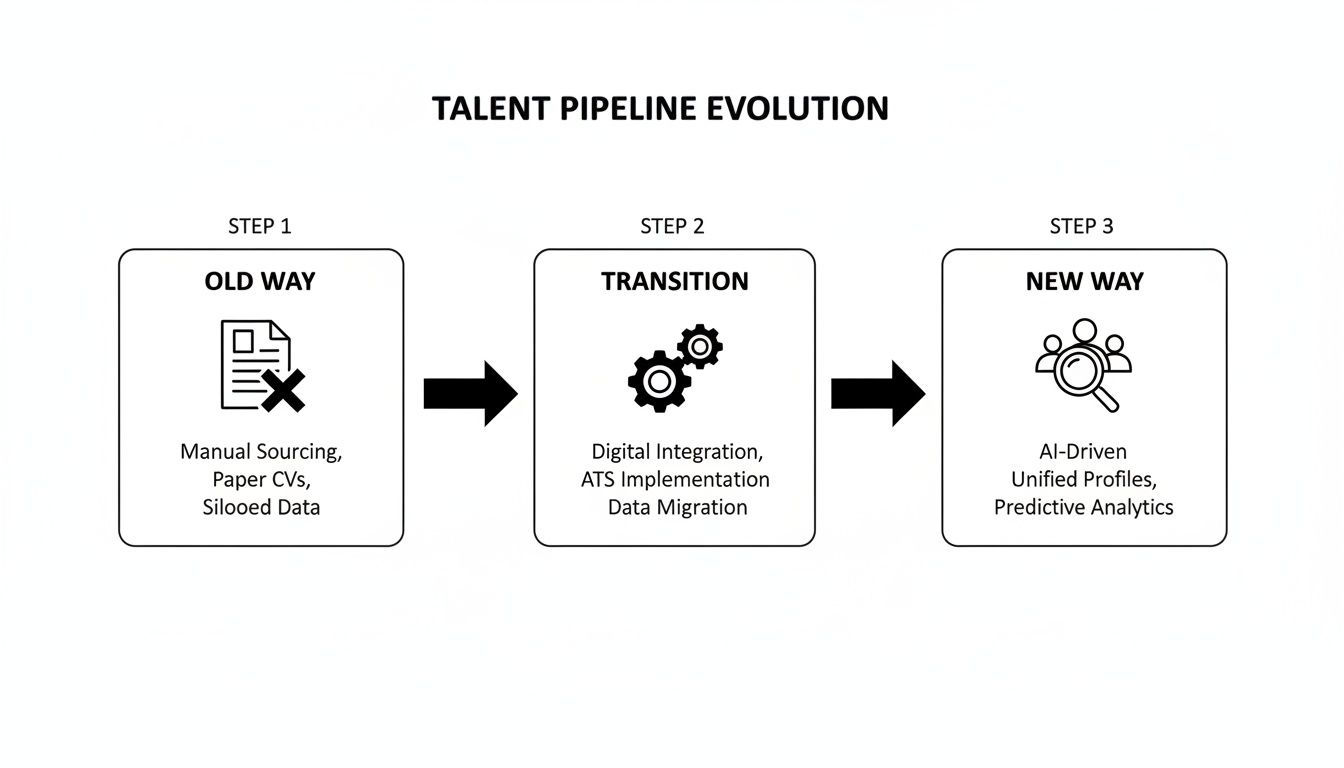
It’s a clear visual of the shift away from reactive paper-pushing toward a forward-looking strategy focused on identifying and engaging great people before you need them.
Talent Sourcing Channel Effectiveness Matrix
Choosing where to invest your time and budget is critical. Not all sourcing channels are created equal, especially when you're playing the long game of pipeline building. This matrix breaks down the common channels to help you decide where to focus your efforts.
| Sourcing Channel | Typical Cost | Candidate Quality | Engagement Speed |
|---|---|---|---|
| Employee Referrals | Low (Incentives) | High | Fast |
| Niche Job Boards | Medium | High | Medium |
| Industry Events | High | High | Fast |
| LinkedIn Recruiter | High | Medium-High | Medium |
| Social Media | Low-Medium | Variable | Slow |
| Campus Recruiting | Medium | High (Potential) | Slow |
Ultimately, a balanced approach is best. High-cost, high-quality channels like industry events can be supplemented with lower-cost, long-term plays like nurturing a strong social media presence.
Using Technology to Source Smarter
Your Applicant Tracking System (ATS) and Candidate Relationship Management (CRM) platforms are more than just digital filing cabinets. If you’re only using them to track active applicants, you’re missing the point. The real power is in using them proactively.
Don’t let your ATS become a resume graveyard. Turn it into a living, breathing talent ecosystem. Tag promising candidates who weren't the right fit for a past role but could be perfect for a future one. Set reminders to check in with them every few months.
This intentionality is what separates the great recruiting teams from the ones always playing catch-up. It's about knowing who you're looking for, where to find them, and how to attract them before you have an urgent need.
This proactive stance is especially critical with the growth in sports management job openings and the fierce competition for top talent. By building these connections early and consistently, you create a powerful advantage that pays off with every single hire.
Turning Passive Candidates Into Engaged Advocates
So you’ve identified a pool of potential candidates. That’s a great start, but it’s really only the first quarter of the game. The real work—and frankly, where I see most recruiting teams stumble—is in the nurturing phase. This is your chance to turn a passive name on a spreadsheet into an engaged advocate who thinks of you first when they’re ready for a new challenge.
This isn’t about just blasting out generic job alerts. That’s a surefire way to get ignored. True engagement is built on a foundation of genuine value and consistent, personalized communication. You need to shift your mindset from being just a "recruiter" to becoming a "content creator" and "community builder." Your goal is to build these relationships over time, so when a role finally opens up, the conversation is warm and familiar, not cold and transactional.

Create Content That Actually Connects
Your content is the lifeblood of your nurturing strategy. Forget the corporate jargon and sterile job descriptions nobody reads. Your audience wants authentic, valuable insights that can help them in their own careers, right now.
Think about what a top-tier sales director or a rising data analyst in the sports world actually cares about. It’s definitely not another generic "we're hiring" email clogging up their inbox.
Instead, focus your efforts on creating content that serves them.
- Industry Insights: Share an article written by your Head of Analytics about the future of fan data. This instantly positions your organization as a thought leader and gives candidates a real reason to pay attention.
- Behind-the-Scenes Looks: Post a short video tour of your new training facility or a day-in-the-life feature with a current employee. This makes your culture tangible and relatable in a way a job description never can.
- Career Growth Stories: Highlight an employee who started in an entry-level role and worked their way up. This showcases real, achievable opportunities for advancement and resonates deeply with ambitious professionals.
The key here is to give, give, and give some more before you ever ask for anything. This approach builds a ton of trust and keeps your brand top-of-mind in a positive way.
Use a Talent CRM for Personalized Outreach
Trying to manage all these relationships manually is a recipe for disaster. It’s just not possible at scale. This is where a Talent CRM (Candidate Relationship Management) system becomes your most valuable player. A good CRM lets you segment your talent pool and personalize your communication without spending your entire day writing individual emails.
For instance, you can create specific talent pools based on roles or skills. Imagine you have a segment for "Marketing and Fan Engagement" professionals. Instead of sending them a generic company newsletter, you could send a targeted email with a link to a recent podcast your CMO was featured on. Now that's relevant.
Your Talent CRM isn't just a database; it’s your central hub for relationship-building. Use it to track every interaction, set reminders for follow-ups, and automate simple touchpoints. This frees you up to focus on the high-impact conversations that really matter.
This level of personalization shows candidates you’ve been paying attention to who they are and what they care about. It demonstrates respect for their time and expertise, which is absolutely crucial when you're trying to engage passive talent who aren't even looking for a job.
Craft a Sustainable Nurturing Cadence
Consistency is everything. A one-off email every six months just won't cut it. You need a planned nurturing cadence that keeps you on their radar without becoming annoying.
A simple, effective rhythm could look something like this:
- Initial Connection (Day 1): A personalized message referencing how you found them or a mutual connection. The goal is simply to start a conversation, not to pitch a job.
- Value-Add Touchpoint (Month 1): Share a piece of relevant content, like an industry report or an invite to a webinar your company is hosting. Something useful.
- Low-Effort Check-In (Month 3): A quick note to see how things are going or to comment on a recent achievement they posted on LinkedIn. Keep it light.
- Repeat Value-Add (Month 5): Share another piece of valuable content or a story about a recent company success.
This slow-burn approach builds real rapport and establishes your organization as a credible and desirable place to work. It ensures that when you finally do have an opening, you're not starting from scratch. You're reaching out to someone who already knows, and hopefully respects, your brand.
It also sets the stage for a positive interaction if they move forward in the process. Having that pre-existing relationship makes the entire experience smoother, from the first call to the final interviews. For more on preparing candidates effectively, you can explore our comprehensive checklist for a successful interview process, which offers tips you can adapt for these nurturing conversations. By keeping candidates informed and engaged, you create a powerful advantage in the competitive quest for top talent.
Developing Your Internal Talent Goldmine
When you think about building a talent pipeline, it’s natural to immediately look outside the organization. But what if your next superstar is already on the payroll, just waiting for a chance to shine? Tapping into your internal workforce is often the quickest and most cost-effective way to fill critical roles.
Investing in your current employees is more than just a nice thing to do; it’s a killer business strategy. You already know their work ethic, their cultural fit, and their untapped potential. The real work is figuring out how to systematically spot and nurture that potential before you have a vacancy to fill.

Conducting a Proactive Skills Gap Analysis
To grow your people, you first need a clear picture of the skills you have versus the skills you’ll need down the road. This is where a skills gap analysis comes in—it’s your roadmap for development. It forces you to look past job titles and really see the underlying capabilities of your team.
This isn’t about flagging weaknesses. It’s about uncovering opportunities for growth and getting your workforce ready for what's next.
Start by mapping out the crucial competencies for key roles, not just for today but for the next two to three years. Then, assess your current team against that future-state map. This process will immediately show you where your biggest development opportunities are and where to put your training dollars.
Creating Clear and Compelling Career Paths
Let's be honest, vague promises of "advancement" don't cut it anymore. People are far more likely to stick around and grow with you when they see a clear, tangible path forward. You need to build transparent career lattices that show employees exactly how they can move up—and even sideways—across the organization.
Think about a junior ticket sales rep. Instead of leaving their future to chance, map it out:
- Year 1-2: Master the core sales role. Get them advanced training on CRM proficiency and next-level sales techniques.
- Year 3-4: Introduce opportunities to mentor new hires or lead small group sales campaigns. This is where they start building real leadership muscle.
- Year 5+: Now, a path to Senior Sales Manager or a cross-functional move into Corporate Partnerships doesn't just feel possible; it feels attainable.
When you structure growth like this, you show you're invested in their entire journey, not just their immediate output. That’s how a job becomes a career.
Investing in your people isn't an expense; it's the most reliable way to build a sustainable talent pipeline. It boosts morale, dramatically improves retention, and ensures you have a bench of qualified leaders ready to step up.
Building Effective Upskilling and Reskilling Programs
Once you’ve spotted the gaps and mapped the paths, you need to give your team the tools to get there. Upskilling and reskilling programs are absolutely essential for keeping your workforce competitive and filling those future roles from within.
This is especially critical in fast-moving fields. Take the AI talent shortage—it's a massive pipeline challenge, with demand outstripping supply by a staggering 3.2:1 ratio. In response, 89% of companies are now investing heavily in upskilling to build these skills in-house. It’s a clear signal that smart organizations are choosing to cultivate expertise rather than just buying it on the open market.
To get this right, you need to think about a holistic talent management strategy that weaves development into the bigger picture of attracting and keeping top performers.
Here are a few practical ways to structure those development opportunities:
- Micro-Learning Modules: Offer bite-sized, focused online courses on things like project management software or new digital marketing tools.
- Cross-Functional Projects: Temporarily assign employees to projects outside their home department. It's a fantastic way for them to build new skills and get a broader feel for the business.
- Mentorship Programs: Pair your high-potential folks with senior leaders who can offer real-world guidance, coaching, and career advice.
Making employee development a core part of your talent strategy creates a powerful internal engine that continuously feeds your organization with skilled, motivated, and loyal people. This internal goldmine is the foundation of any truly resilient and successful organization.
Measuring the Health of Your Talent Pipeline
You’ve put in the hard work to build a solid talent pipeline. But let’s be honest—how do you actually prove it’s working? If you can’t measure your pipeline's impact, you can’t make it better, and you certainly can’t justify the time and resources it takes to keep it going.
It's time to get serious about metrics. We need to move beyond just counting names in a database and start focusing on the key performance indicators (KPIs) that show real, tangible value. This is how you build a business case that turns recruiting from a cost center into a strategic weapon for your organization.
Key Performance Indicators That Actually Matter
When you start tracking pipeline health, it’s easy to get lost in a sea of data. Don’t. Instead, anchor your strategy to a few core metrics that directly link your pipelining efforts to the company's bottom line.
These are the numbers that will form the backbone of your reporting and show leadership the true return on your investment.
- Pipelined vs. Non-Pipelined Time-to-Fill: This is the big one. How many days does it take to fill a role with someone from your nurtured pool versus a candidate you had to find from scratch? A dramatic drop in time-to-fill is one of the clearest signs your proactive work is paying off.
- Cost-per-Hire Analysis: Run the numbers. Compare the cost of hiring a pipelined candidate (think minimal ad spend, zero agency fees) against a traditional hire. Presenting these hard savings makes a powerful financial case for your strategy.
- Source of Hire: Pinpoint exactly where your best hires are coming from. Are they from your nurtured pipeline, employee referrals, or active sourcing? Knowing this tells you exactly where to double down on your efforts.
Assessing the Quality of Your Pipeline Hires
Getting people in the door faster and cheaper is fantastic, but it's only half the story. If the quality isn't there, none of it matters. Measuring Quality-of-Hire is essential for proving that your pipeline delivers not just candidates, but the right candidates.
This can feel a bit subjective, but you can make it concrete. Start by looking at the performance review scores of your pipelined hires after their first 6-12 months. How do they stack up against their reactively-hired peers?
Also, keep a close eye on promotion rates and retention. If the people you sourced from your pipeline are staying longer and getting promoted faster, that's the ultimate proof you’ve made a great match.
Don’t just measure how quickly you fill seats. Measure the long-term impact of those hires on the business. A high-performing, long-tenured employee sourced from your pipeline delivers a far greater ROI than a quick hire who doesn't last.
Understanding why great people eventually move on is just as important. To get a better handle on this and refine your internal programs, it's worth exploring effective exit survey examples to gather feedback you can actually act on.
Building Your ROI Dashboard
Once you have these KPIs, you need to present them in a way that’s impossible to ignore. Use your ATS and CRM analytics to build a simple, visual dashboard that tells the story of your pipeline’s success. It doesn’t need to be fancy.
Often, a straightforward table comparing the key metrics side-by-side is all you need:
| Metric | Pipelined Hires | Reactive Hires |
|---|---|---|
| Average Time-to-Fill | 21 Days | 45 Days |
| Average Cost-per-Hire | $1,500 | $5,000 |
| First-Year Retention | 92% | 81% |
This kind of data-driven storytelling completely changes the conversation with leadership. You're no longer just talking about recruiting activities; you're demonstrating clear strategic value and proving that building a talent pipeline is one of the smartest investments your company can make.
Answering Your Top Talent Pipeline Questions
Look, even the best playbook runs into real-world problems. It's one thing to map out a strategy on paper, but it's another thing entirely when you're dealing with skeptical hiring managers and a budget that's... well, let's just say "tight."
Let’s tackle some of the most common questions that pop up when you start building a talent pipeline. Think of this as your field guide for overcoming those inevitable hurdles and keeping great candidates flowing your way.
How Do I Get Hiring Managers to Buy In?
Getting your hiring managers on board is often the single biggest challenge. They're underwater with their own projects, laser-focused on hitting their immediate goals, and often see pipelining as some fuzzy, "nice-to-have" HR initiative.
The secret? You have to speak their language. Frame the entire conversation around solving their problems.
- Solve for Speed: Bring up that one role that sat open for three months last year, causing their team to burn out. Then, explain how a pipeline of warm, pre-vetted candidates could have cut that hiring time in half.
- Solve for Quality: Remind them of that perfect candidate who got away because your hiring process dragged on too long. A pipeline means you're already talking to the best people before the job even exists, giving you a serious competitive advantage.
- Solve for Effort: Position the pipeline as a way to reduce their workload. Less time sifting through hundreds of random resumes means more time for them to focus on what really matters: choosing between a few fantastic, highly-qualified people.
Don't sell "talent pipelining." Sell a faster hiring process with better candidates. When a hiring manager sees how this makes their life easier and their team stronger, you'll have an ally, not a skeptic.
What’s the Best Technology to Use?
It's easy to get overwhelmed by all the shiny new recruiting tech out there. But you don't need a massive, expensive tech stack to build an effective pipeline. Honestly, the most important thing is to master the tools you already have.
Your foundation is your Applicant Tracking System (ATS) and a Talent CRM. While an ATS is built for managing active applicants for open roles, a CRM is designed for that long-term relationship building with passive candidates.
If you don't have a dedicated CRM, don't sweat it. You can usually rig your ATS to do the job. Just get creative with tags like "Future Marketing Lead" or "Warm Data Analyst" to segment your talent pools.
Ultimately, your tech should help you do three things well:
- Segment candidates into easy-to-manage pools.
- Automate simple check-ins and follow-up reminders.
- Track engagement so you know who's actually interested.
Start simple. A tool is only as good as the person using it. Master your current system for organizing and communicating with your talent pool before you even think about adding another platform.
Ready to build a winning team? At GetSportJobs, we connect top sports organizations with the talent they need to succeed. Post your job today and tap into a dedicated network of passionate sports professionals. Find your next great hire at https://www.getsportjobs.com.