Hr Jobs in Sport: Your Guide to Landing hr jobs in sport in the HR Industry

When you think of a sports organization, you probably picture the athletes, coaches, and maybe the general manager. But behind every successful team—both on and off the field—is a robust people operation. This is where HR comes in.
HR jobs in sport are all about managing the human talent that drives the entire organization, from player contract administration to shaping the culture in the front office. These roles have grown far beyond basic administrative tasks, becoming strategic business partnerships crucial for building a winning franchise.
The Strategic Rise of HR in the Sports Industry

Think of a championship team. While fans see the stars on the court or field, a powerful force is working behind the scenes to make it all click. That’s the modern Human Resources department. They’ve moved way past just handling payroll and paperwork.
Today, HR is the strategic architect of a sports organization's most valuable asset: its people.
In the high-stakes world of pro sports, where one bad contract or a disconnected front office can derail a franchise, HR pros are essential. They're not just administrators anymore; they're the ones building the culture, scouting executive talent, and advising leadership to ensure the whole organization runs like a finely tuned machine.
This shift has created a huge demand for sharp professionals who get both the principles of human resources and the unique, fast-paced rhythm of the sports world.
From Back Office to Strategic Partner
The growth of HR in sports perfectly mirrors the industry's own journey. As sports franchises blew up into multi-billion-dollar global brands, the need for sophisticated people management became obvious. It's no longer just about filling seats, but about building a sustainable, high-performing organization from the ground up.
This strategic importance is amplified by a growing focus on leveraging human resources analytics to make smarter decisions and actually measure the impact of people-focused initiatives.
This guide is your playbook for building a career in this exciting field. We’ll break down everything you need to know.
- Key HR Roles: We'll explore the different jobs available, from recruiting top talent to managing day-to-day people operations.
- Salary and Qualifications: Get a clear picture of what you can earn and the skills you'll need to land a job.
- Finding Opportunities: Discover where to find hr jobs in sport and, more importantly, how to get noticed.
- Application Strategy: Learn how to tailor your resume and crush the interview for a sports-focused role.
In the sports industry, culture isn’t just a buzzword—it’s a competitive advantage. Strategic HR is responsible for building, nurturing, and protecting that culture, directly influencing performance on and off the field.
Understanding The Key HR Roles In Sports
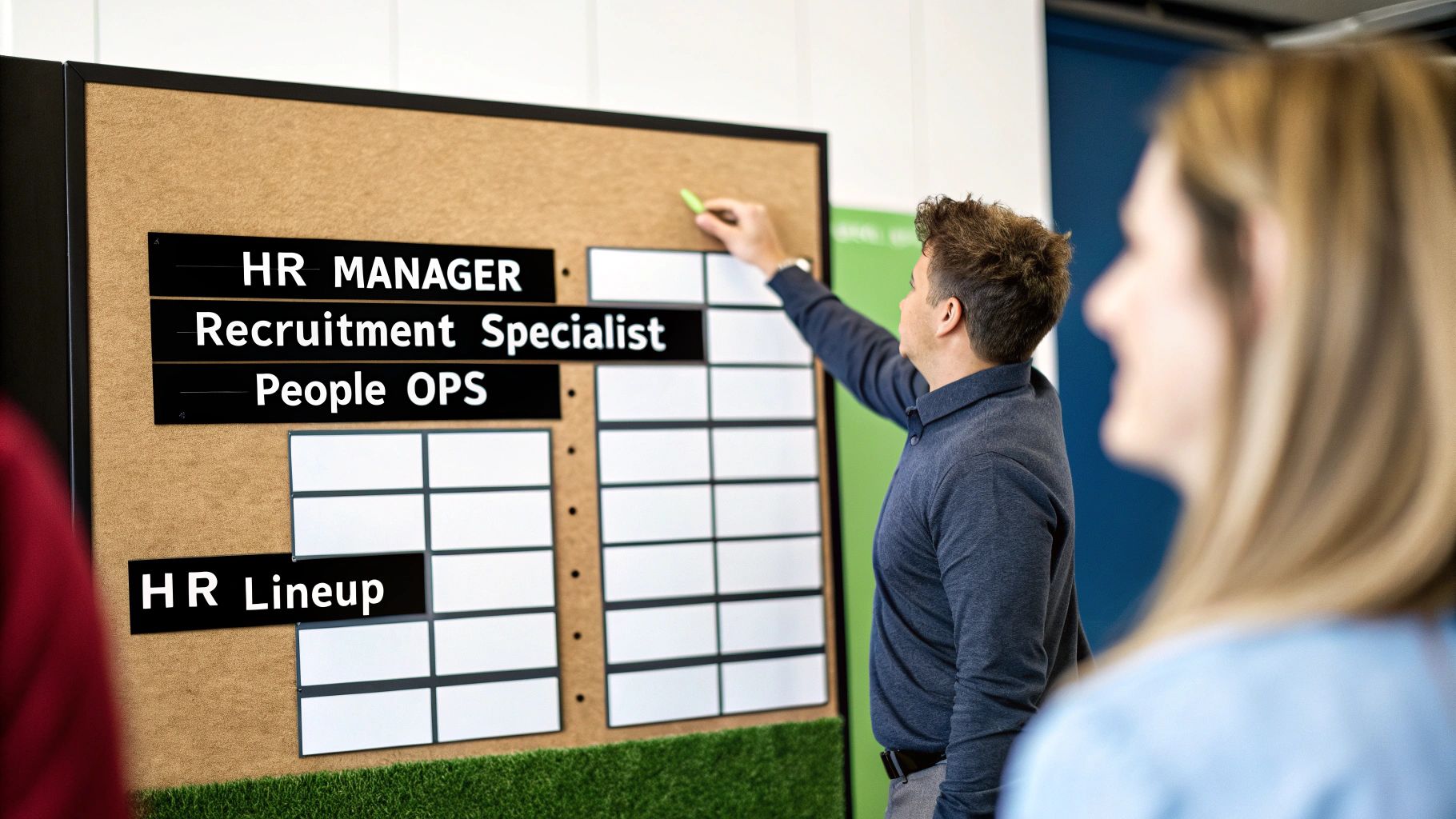
For every superstar athlete on the field, there's a whole team in the front office making sure the entire organization runs like a well-oiled machine. This is where Human Resources comes in. The best way to think about the HR department is as the coaching staff for the business side of the team—every person plays a critical part in building a winning culture.
Just like a football team has specialists for offense, defense, and special teams, a sports HR department is made up of different roles with very specific jobs. From scouting top-tier executives to managing the daily needs of every employee, these are the professionals who form the backbone of a sports organization. Getting a handle on these key positions is your first step toward finding your place in the world of HR jobs in sport.
To help you get a clearer picture, here’s a breakdown of the most common HR roles you'll find in sports organizations, what they focus on, and the skills you'll need to land the job.
Common HR Roles in Sports Organizations
| HR Role | Primary Focus | Key Skills & Qualifications |
|---|---|---|
| HR Manager / HRBP | Strategic oversight of all HR functions, aligning people strategy with business goals. | Leadership, strategic planning, employment law, conflict resolution, business acumen. A SHRM or HRCI certification is often preferred. |
| HR Generalist | Jack-of-all-trades handling day-to-day HR tasks like employee relations, benefits, and policy implementation. | Versatility, problem-solving, strong communication, administrative skills, knowledge of HR fundamentals. |
| Recruitment Specialist | Finding and hiring the best non-athlete talent for all departments within the organization. | Sourcing, interviewing, networking, negotiation skills. Experience with Applicant Tracking Systems (ATS) is a must. |
| Talent & Development Specialist | Designing and managing programs for employee training, skill development, and career progression. | Instructional design, program management, coaching, understanding of learning management systems (LMS). |
| People Operations Specialist | Improving the overall employee experience using technology, data, and process optimization. | Data analysis, tech-savvy, process improvement, project management, strong focus on employee engagement. |
| Payroll & Benefits Analyst | Managing all aspects of employee compensation, payroll, and benefits packages to ensure competitiveness. | Attention to detail, analytical skills, knowledge of payroll software and benefits regulations, financial acumen. |
Each of these roles is essential for building a high-performing organization that can compete both on and off the field. Now, let's dig a little deeper into how these roles function, using a team analogy.
The Head Coach And The Utility Player
At the heart of it all, you have the HR Manager or HR Business Partner. Think of this person as the Head Coach of the people strategy. They're responsible for the big picture, making sure all HR activities support the organization's main goals and acting as a key advisor to the leadership team. They don't just call the plays; they design the entire playbook.
Working right alongside them is the HR Generalist, who is like a team's most reliable utility player. This person handles a bit of everything—from employee relations and benefits questions to making sure company policies are followed. They are absolutely essential for keeping the day-to-day HR functions running smoothly. If you want to understand the wide scope of this role, it's worth checking out what an HR generalist actually does.
The Scouts And The Development Coaches
Every team needs great talent, and that’s where the scouts come in. A Recruitment Specialist (or Talent Acquisition Manager) is tasked with finding the absolute best off-field talent, whether it's a new data analyst or a seasoned marketing executive. They run the entire hiring process, from sourcing candidates to negotiating the final offer. Their mission is simple: build a championship-caliber front office.
But getting top talent in the door is just the beginning. The Talent & Development Specialist takes it from there. Their job is to create programs that help employees sharpen their skills and grow their careers within the organization.
Think of it this way: just like a player development coach helps an athlete perfect their game, a T&D specialist makes sure every employee has a clear path to get better and advance.
This focus on growing your own people is a huge factor in long-term success. You can see how teams are looking for these key players by exploring the various recruiting jobs in the sports industry available right now.
The Operations Crew That Keeps Everything Running
Finally, you have the specialists who make sure the entire operation is supported, organized, and compliant. These are the unsung heroes who keep the machine humming.
- People Operations Specialist: This is a more modern HR role focused on making the employee experience as great as it can be. They use technology, data, and smarter processes to ensure everyone has the tools they need to do their best work.
- Payroll & Benefits Analyst: These pros handle everything related to what people get paid and the perks they receive. They're constantly analyzing the market to make sure the organization’s compensation packages can attract and keep the best people.
- HR Coordinator: Often an entry-level role, the coordinator is the glue that holds the department together. They take care of administrative tasks, help out the other HR specialists, and are absolutely vital for keeping everything organized.
As sports becomes an even bigger global business, teams and leagues are investing heavily in these roles. They know that to compete for the best talent, they need to get serious about compensation, culture, and retention, making HR more important than ever.
Navigating Unique Challenges and Opportunities
Working an HR job in sport is like stepping into a totally different world. Forget your standard corporate 9-to-5; this industry runs on passion, high stakes, and an all-consuming desire to win. That unique energy creates a set of challenges—and incredibly rewarding opportunities—you just won't find anywhere else.
The job flows with the rhythm of the sports calendar, not a business week. Game days, draft nights, and trade deadlines create a pressure-cooker environment where HR pros have to be quick on their feet. Predictable schedules go out the window, as you'll often find yourself working evenings, weekends, and holidays, especially in-season. If you're resilient and adaptable, you'll thrive.
But for every challenge, there's a huge upside. In sports, HR isn't just a back-office function; you are a key part of the team's success. When you help build a strong front-office culture, recruit the best people, and keep everything running smoothly, you directly impact performance on the field.
Imagine building a development program that helps a new analytics hire become a key strategist behind a championship run. That’s the kind of tangible impact you can have. You're not just supporting a business; you're helping to build a legacy.
Managing The High-Stakes Environment
Let's be real: the sports industry is all about results. A bad season can trigger massive changes overnight, and everything you do is under the watchful eye of the media and the fans. For HR, this means you're constantly managing high-stress situations, handling sensitive employee issues in the public eye, and guiding the organization through change with a steady hand.
Crisis management is part of the job description. Whether you're dealing with a PR issue involving a staff member or mediating a conflict between departments, you have to be ready to act fast and keep your cool. Your job is to build a tough, resilient culture that can handle the emotional rollercoaster of a competitive season. This means being proactive about employee well-being and truly understanding the pressures everyone faces, from the ticket office to the C-suite.
The Recruitment Game Plan
Hiring in sports plays by its own rules. It's a hyper-competitive field, and attracting the right people takes a special kind of strategy. With turnover and retention always being major concerns, HR has to create an environment where top talent wants to come—and wants to stay. This is where looking at broader HR trends can give you an edge. For example, general research shows it takes an average of 44 days to fill a role and that 79% of employees want flexible work options. For more insights, check out these HR statistics and their strategic implications.
These kinds of stats highlight the unique puzzle of sports HR. Candidates are drawn in by their passion for the game and have high expectations, but the industry's demanding schedules can be a tough sell against the modern desire for work-life balance. The best HR professionals in this field figure out how to bridge that gap, creating a winning deal for both the organization and its people.
What It Takes: Qualifications, Certifications, and Salary Insights
So, what does it actually take to land an HR job in the sports world? It’s not just about loving the game; you need a solid foundation of education, the right professional skills, and a real feel for the industry's unique pulse. Think of it like a player's scouting report—your qualifications are the stats that get you noticed.
Most roles will expect a bachelor's degree as your starting point. Degrees in Business Administration, Human Resources Management, or even a dedicated Sports Management program are the most common paths. These give you the playbook on the essentials: employment law, organizational behavior, and the kind of strategic thinking every HR pro relies on daily.
But a degree is just the ticket to the game. To really stand out, you'll want to add some professional certifications to your name.
Getting Certified to Gain an Edge
Think of certifications as your all-star credentials. They're a clear signal to employers that you’ve mastered the core competencies of HR and are serious about your craft. They show you're not just qualified but also committed to staying on top of your game.
A few of the heavy hitters include:
- SHRM-CP (Certified Professional): This one comes from the Society for Human Resource Management (SHRM) and is a fantastic, widely recognized certification for those building their HR careers.
- SHRM-SCP (Senior Certified Professional): The next level up from SHRM, this is for seasoned pros ready to prove their chops in strategic leadership and policy.
- PHR (Professional in Human Resources): Another top-tier credential from the HR Certification Institute (HRCI), the PHR is a great way to validate your expertise in the operational side of HR.
As you build your resume, it's also smart to know the challenges you'll be tackling. The sports industry moves fast, and its HR metrics reflect that intensity.

That 44-day average time-to-hire shows you just how competitive and urgent recruiting can be. At the same time, with 79% of candidates wanting flexible work, you're constantly balancing the organization's need for speed with the modern workforce's expectations. That's the tightrope every sports HR pro walks.
What to Expect for Salary and Career Growth
Now for the big question: what can you expect to earn? Compensation in sports HR can vary quite a bit depending on the league, the size of the organization, and where it's located. But there's a pretty clear ladder to climb as you build experience.
To give you a clearer picture, here’s a breakdown of what you might expect at different stages of your career.
Estimated Salary Ranges for HR Jobs in Sport
A comparative look at potential salary bands for different HR roles within the sports industry, from entry-level to senior leadership.
| HR Role Level | Typical Experience | Estimated Annual Salary Range (USD) |
|---|---|---|
| Coordinator / Assistant | 0-2 years | $45,000 – $60,000 |
| Generalist / Specialist | 2-5 years | $65,000 – $90,000 |
| HR Manager / HRBP | 5-8+ years | $95,000 – $140,000+ |
| Director / Senior Leader | 10+ years | $150,000 – $220,000+ |
Keep in mind, these are general estimates. A role with a major league team in a big city will naturally pay more than one with a smaller minor league club. The key takeaway is that the growth potential is significant.
The real upside comes at the senior levels. As an HR Manager or HR Business Partner for a major team or a global sports brand, salaries pushing $140,000 or more are well within reach.
The career trajectory is there for the taking. Starting out as a coordinator and putting in the work can absolutely lead to a role as a Director of HR or even a Chief People Officer, where you’re the one calling the shots on people strategy for an entire franchise. That's the big league.
How to Find and Scout HR Job Opportunities
Finding the right HR job in sports isn't about casting a wide net and hoping for the best. It's about having a smart game plan and knowing exactly where to look. Forget sifting through thousands of irrelevant listings on massive, generic job sites. The real opportunities are found on platforms and in networks where the sports industry actually hangs out.
Your search should zero in on job boards built specifically for sports. These are the places where teams, leagues, and major sports brands post their openings first because they know they'll find people who truly get the industry. It's the most direct way to cut through the noise and connect with employers looking for your specific passion and skills.
Using Specialized Sports Job Boards
Think of niche job boards as your personal scouting department. They give you an inside look at openings you simply won't find on Indeed or Monster. For anyone serious about landing hr jobs in sport, platforms like GetSportJobs and TeamWork Online are absolutely essential. Setting up job alerts on these sites should be your first move.
Here's a glimpse of the GetSportJobs platform, which acts as a central hub for roles all across the sports world.
As you can see, you can immediately filter by category to make your search quick and effective. By creating a profile and setting up alerts for "Human Resources," you essentially put your job hunt on autopilot. To get a feel for what’s out there, check out our rundown of current sports management job openings and see what teams are hiring for right now.
Your Networking Playbook
Looking at job boards is just one piece of the puzzle. The sports industry is built on relationships, and making genuine connections can unlock doors that a resume alone never could. You have to get out there and network.
Think of LinkedIn as your digital stadium. Start by following the organizations you want to work for. Engage with their posts, and don't be afraid to connect with their HR managers, recruiters, or even team executives. A short, personalized note mentioning your shared interest in the industry can make a huge difference.
Finally, remember to go straight to the source. Many teams and leagues post jobs exclusively on their own websites. Create a "dream team" list of about 20 organizations and make it a habit to check their career pages once a week. This shows real initiative and ensures you won't miss out on an opportunity right in your target zone.
Crafting a Winning Resume and Interview Strategy

Getting into the sports industry is tough, and your application is your highlight reel. A generic, one-size-fits-all resume just won't cut it. To land HR jobs in sport, you need to show you can speak the industry's language and have a real passion for the game.
Think of your resume like a scouting report on yourself. Don't just list your past duties. Instead, translate your HR wins into terms a sports executive would appreciate. Your project management skills? That's "game plan execution." Employee engagement programs? You were "building team chemistry."
Every single bullet point needs to draw a clear line between your HR skills and how they contribute to winning, both on and off the field.
Tailoring Your Application Materials
Let’s be clear: you absolutely have to customize your resume and cover letter for every single job you apply for. It’s not a suggestion; it’s the price of admission. Study the job description and echo its language, focusing on hard numbers and results that prove you're built for a performance-driven culture.
- Quantify Your Wins: Instead of saying you improved retention, show it. "I decreased employee turnover by 15% after rolling out a new onboarding program." Numbers talk.
- Show Your Passion: Your cover letter is the perfect place to let your genuine enthusiasm shine through. Name the team or organization and explain why you want to be part of their specific mission.
- Beat the Bots: Most large sports organizations use Applicant Tracking Systems (ATS) to filter resumes. To make sure a human actually sees your application, you need to use the right keywords. A specialized resume analyzer tool for sports jobs can help you optimize your resume before you hit send.
Your resume gets you the interview; your interview gets you the job. It’s a two-stage process, and you have to crush both to land a role in this industry.
Once you’ve scored an interview, your next goal is to prove you're the right cultural fit. The sports world is incredibly fast-paced and operates under a microscope. You’ll get questions designed to test your resilience, adaptability, and how well you perform under pressure.
Come prepared with specific stories. Use the STAR method (Situation, Task, Action, Result) to clearly explain how you've navigated tough situations in the past. Remember, they aren't just looking for an HR person; they're scouting a new player for their front-office team.
Answering Your Top Questions About HR Careers in Sports
Jumping into the world of sports HR isn't like stepping into any other corporate office. It’s a unique, high-energy environment, and naturally, it comes with its own set of questions. Let's tackle some of the most common things people ask when they're looking to break into the field.
Is Previous Sports Industry Experience a Dealbreaker?
This is probably the number one question I hear, and the answer is a good one: no, not always. While you absolutely need to have a genuine passion for the sports world, teams and leagues are often more interested in your solid, transferable HR skills. Your background in recruiting, employee relations, or legal compliance from another industry is incredibly valuable.
The trick is learning to speak their language. You have to show them how your skills translate. Instead of just saying you managed a complex project, frame it as "executing a game plan." Talk about improving team morale as "building great locker room chemistry." It shows you get their world, even if you haven't worked in it before.
What’s the Biggest Myth About This Job?
Many people think working in sports HR is all glamour—hanging out with famous athletes and getting free tickets. The reality is that your focus is almost entirely on the hundreds of people who make the business run, from the ticket sales team and marketers to the finance and operations crews.
Another huge misconception is that the job is just about hiring and firing. It's so much more complex than that. A recent industry report revealed that 58% of sports HR departments find compliance to be a major struggle, and 31% say they just don't have the resources to keep up. You can dive deeper into these challenges by checking out the full findings on HR in the sports industry.
The real job of sports HR is to build the stable, compliant, and high-performing business that allows the team on the field—or the court, or the ice—to actually succeed.
How Important is Networking, Really?
In a small, tight-knit industry like sports, networking isn't just a good idea—it's everything. Honestly, many of the best HR jobs in sport get filled through word-of-mouth and personal connections before they ever show up on a public job board. Your single best strategy is to start building real relationships with people who are already on the inside.
Ready to find your spot on the team? GetSportJobs is the go-to place for the latest HR openings with pro teams, major leagues, and the biggest brands in sports. Kick off your search and find your next big play at GetSportJobs.com.