10 Key Categories of Interview Questions for Sports Coaches in 2025
Finding the right sports coach involves much more than just evaluating a winning record or tactical knowledge. It’s about hiring a leader, a mentor, and a culture-builder who can shape the future of your athletic program and the lives of your athletes. The interview process is your most powerful tool for uncovering a candidate's true philosophy, resilience, and potential. However, asking generic questions often elicits rehearsed, surface-level answers that fail to reveal the person behind the resume.
To truly understand who you are hiring, you need a strategic and comprehensive set of interview questions for sports coaches that probe into specific competencies and real-world scenarios. A well-designed interview moves beyond simple inquiries about past successes and delves into the how and why behind a coach's methods. To ensure consistency and fairness in your evaluation process, delving into structured interview questions examples can be highly beneficial, as it provides a framework for comparing candidates on an equal footing.
This ultimate guide provides a categorized question bank designed to do just that. We've organized essential questions across 10 critical areas, from player development and handling adversity to communication and cultural alignment. For hiring managers, this resource offers the tools to conduct a thorough, insightful interview that identifies the best fit for your organization. For coaching candidates, this is your roadmap to preparing thoughtful, evidence-based answers that authentically showcase your unique coaching identity. Let’s move past the basics and equip you to find the coach who will define your program's next chapter.
1. Coaching Philosophy and Approach
Understanding a candidate's coaching philosophy is the cornerstone of any effective interview process. It reveals their core beliefs, values, and the fundamental principles guiding their approach to player development, team dynamics, and competition. This line of questioning moves beyond tactical knowledge to uncover the "why" behind their coaching methods, ensuring their vision aligns with your organization's mission and long-term goals.
A well-defined philosophy provides a roadmap for how a coach handles everything from practice planning to managing adversity. It dictates how they communicate with athletes, build a positive team culture, and balance the dual priorities of winning and holistic player growth. Asking these foundational interview questions for sports coaches helps you predict how a candidate will perform under pressure and lead a team.
Sample Questions
- "Describe your coaching philosophy in three sentences or less." This question tests a candidate's ability to be clear and concise. A strong answer is articulate, value-driven, and easy to understand.
- "How do you balance the pressure to win with the need for individual player development?" This reveals their priorities. Look for answers that demonstrate a commitment to both, showcasing a strategy that fosters long-term growth without sacrificing competitive drive.
- "What are the three most important values you want to instill in your athletes, and how do you teach them?" This connects their philosophy to actionable behaviors. The best candidates will provide specific examples, such as teaching resilience through designated "adversity drills" in practice.
Interviewer's Guide
- Listen for Alignment: Does their philosophy match the specific needs of the position and the age group they would be coaching? A "win-at-all-costs" approach may be a poor fit for a developmental youth league.
- Probe for Examples: Don't let candidates get away with generic buzzwords like "hard work" or "teamwork." Ask for concrete examples of how they put their philosophy into action.
- Assess Authenticity: A genuine philosophy is consistent. Compare their answers to their coaching history and references to ensure their words match their past actions. To learn more about how a well-defined philosophy can shape your career, explore these insights on coaching roles at getsportjobs.com.
2. Experience and Track Record
While a strong philosophy is crucial, a candidate's tangible experience and proven track record provide the hard evidence of their capabilities. This category of questions delves into a coach's history, verifying their achievements, qualifications, and the measurable outcomes of their career. Evaluating this history is essential for understanding their ability to deliver results and manage programs at a level consistent with your organization's expectations.
A coach’s track record is more than just wins and losses; it’s a story of their progression, their impact on athlete advancement, and their ability to succeed in different environments. These interview questions for sports coaches are designed to validate the claims on a resume and uncover the context behind their successes and failures. This line of questioning helps hiring managers distinguish between candidates who have simply held a title and those who have genuinely made a lasting impact.
Sample Questions
- "Walk me through your coaching history. What was your most significant accomplishment at each position?" This open-ended question allows the candidate to highlight what they deem most important, revealing their values and providing a narrative of their career progression.
- "How many athletes have you helped advance to the next level (e.g., college, professional), and what role did you play in their development?" This measures a coach's direct impact on player growth. A strong answer will include specific examples of mentorship, skill development, and networking on behalf of their athletes.
- "Can you describe your experience coaching in both a rebuilding phase and with an established, successful program?" This question assesses adaptability. The best candidates can articulate the different strategies required for each scenario, from talent identification in a rebuild to managing high expectations in a winning culture.
Interviewer's Guide
- Verify Everything: Don't take claims at face value. Use references and public records to confirm coaching records, championships, and credentials. The context you gain is invaluable.
- Ask for Context: A 20-win season means one thing with a team of all-stars and another with an underdog roster. Ask about the resources, talent level, and challenges they faced to truly understand their achievements.
- Assess Recency: While past success is important, prioritize recent performance. The sport evolves quickly, and a candidate's methods and success from a decade ago may no longer be relevant. To see how to best present this information, review these tips for crafting a powerful coaching cover letter.
3. Player Development and Athlete Management
A coach's ability to develop talent and manage athletes is the engine that drives team success. This category of questions assesses their pedagogical skills, their capacity to provide individual attention, and their adaptability to diverse personalities and learning styles. It moves beyond X's and O's to evaluate how a candidate identifies potential, supports struggling players, and nurtures elite performers to reach their peak.
Effective athlete management is about creating an environment where every player feels valued and has a clear path for improvement. These interview questions for sports coaches are designed to uncover a candidate's specific strategies for skill acquisition, motivation, and handling the complex human dynamics of a team. A great coach is fundamentally a great teacher, and these questions reveal their teaching prowess.
Sample Questions
- "How do you tailor your coaching methods to accommodate different learning styles on your team?" This question tests their understanding of pedagogy. Look for answers that mention visual, auditory, and kinesthetic coaching techniques, such as using whiteboards, verbal cues, and hands-on demonstrations.
- "Describe your process for developing an underperforming athlete versus a high-achieving one." This reveals their ability to differentiate instruction. Strong candidates will detail a plan that includes goal setting, specific feedback, and confidence-building for the struggling player, while challenging the star with advanced concepts and leadership roles.
- "Tell me about a time a player was struggling with confidence. What steps did you take to help them?" This probes their emotional intelligence and mentorship skills. The best answers will provide a specific, real-world example of how they used targeted feedback, one-on-one meetings, and positive reinforcement to rebuild an athlete's self-belief.
Interviewer's Guide
- Request Measurable Outcomes: When a candidate describes helping a player, ask for the results. Did the player's stats improve? Did they earn a starting spot? Concrete outcomes demonstrate impact.
- Inquire About Modern Tools: Ask if they use video analysis software, performance tracking apps, or other modern technologies in their development process. This shows a commitment to staying current with coaching best practices.
- Balance Team and Individual Needs: Probe how they manage the delicate balance of running a team practice while still providing necessary individual attention. A skilled coach will have systems in place, such as position-specific drills or small group work, to achieve both.
4. Leadership and Team Dynamics
A coach's tactical knowledge is only as effective as their ability to lead and unite a team. This category of questions assesses a candidate's interpersonal skills, emotional intelligence, and capacity to build a cohesive, high-performing unit. It delves into how they manage conflict, motivate diverse personalities, and establish a clear team hierarchy, providing a crucial window into their leadership style and its potential impact on team culture.
Effective leadership extends beyond game day speeches; it is demonstrated in daily interactions, disciplinary decisions, and the ability to inspire trust among athletes and staff. By asking targeted interview questions for sports coaches about leadership, you can evaluate a candidate’s ability to handle the complex human dynamics that define a team's success or failure, both on and off the field.
Sample Questions
- "Describe a time you had to make a difficult personnel decision that was unpopular with the team. How did you handle it?" This behavioral question reveals a candidate's decision-making process under pressure and their communication skills. A strong answer will detail the situation, their rationale, and how they managed team morale afterward.
- "How do you handle conflict between two key players?" This assesses their mediation and problem-solving abilities. Look for candidates who promote open communication and focus on team goals over individual disputes, rather than ignoring the issue or simply punishing both parties.
- "Tell me about a leadership failure you experienced and what you learned from it." This question gauges self-awareness, humility, and a commitment to growth. The best candidates will take ownership of their mistake and clearly articulate how the experience changed their approach.
Interviewer's Guide
- Use the STAR Method: Structure behavioral questions around Situation, Task, Action, and Result (STAR). This framework encourages candidates to provide specific, detailed examples rather than vague, theoretical answers.
- Assess Emotional Intelligence: Pay attention to how the candidate talks about motivating different types of athletes, from the star player to the benchwarmer. Do they demonstrate empathy and an understanding of individual needs?
- Look for Consistency: A leader's actions must align with their stated values. Ask how they establish team rules and follow up with questions about how they enforce them, ensuring their approach is fair and consistent.
5. Communication and Teaching Skills
A coach's tactical genius is wasted if they cannot effectively teach it to their players. This area of questioning assesses a candidate's ability to translate complex strategies into understandable instruction, provide constructive feedback, and adapt their communication style for various audiences, including athletes, parents, and staff. Strong communication is the bridge between a coach's vision and the team's execution on the field or court.
These interview questions for sports coaches are designed to reveal a candidate’s clarity, patience, and versatility as a teacher. The ability to connect with different learning styles, deliver criticism that motivates instead of discourates, and manage stakeholder expectations is what separates good coaches from great ones. This skill set is critical for building trust, accelerating player development, and fostering a cohesive team environment.
Sample Questions
- "Explain a complex play or strategy to me as if I were a brand-new player." This is a practical test of their ability to simplify information. Look for clear, step-by-step instructions and the avoidance of jargon.
- "How do you provide feedback to a star player who is underperforming versus a developing player who is struggling?" This reveals their adaptability and emotional intelligence. A strong answer will demonstrate a nuanced approach tailored to the individual athlete's personality and experience level.
- "Describe how you use video or other technological tools to teach and correct mistakes." This question evaluates their modern coaching toolkit. The best candidates will detail a specific process, such as using telestration on film to highlight positioning errors or analytics to show performance trends.
Interviewer's Guide
- Look for Versatility: Can they communicate effectively one-on-one, in a group setting, and with non-player stakeholders like parents? Their ability to adjust their message and tone is key.
- Probe for Feedback Specifics: Don't accept generic answers like "I give constructive criticism." Ask them to describe the exact wording they might use in a specific scenario to understand their feedback style.
- Assess Teaching Methods: Great coaches are great teachers. Do they rely on multiple methods (verbal, visual, kinesthetic) to reach all learners on their team? This shows a sophisticated understanding of player development. To further sharpen your own ability to articulate your skills, you can find valuable advice on how to improve interview skills.
6. Handling Adversity and Problem-Solving
A coach's true character is often revealed not during winning streaks, but in moments of adversity. Evaluating how a candidate handles pressure, setbacks, and unexpected challenges is crucial for understanding their resilience, adaptability, and leadership. These interview questions for sports coaches are designed to uncover their problem-solving skills and their ability to maintain team morale when things go wrong, from a key player's injury to a tough losing streak.
How a coach navigates difficult circumstances says a lot about their emotional intelligence and strategic thinking. An effective leader can turn a negative situation into a learning opportunity, fostering grit and unity within the team. This line of questioning helps identify candidates who remain composed, think creatively under pressure, and can inspire a team to persevere through challenges, which is a hallmark of great coaching.
Sample Questions
- "Tell me about your worst season as a coach and what you learned from it." This question probes for self-awareness and the ability to learn from failure. A strong answer will focus on accountability and actionable changes made, not on blaming external factors.
- "How do you handle a prolonged losing streak to keep team morale high?" This assesses a candidate's ability to lead and motivate when results are poor. Look for specific strategies like refocusing on process-oriented goals, celebrating small victories, or adjusting communication styles.
- "Describe a time you had to manage a team with significant resource or budget constraints. What was your approach?" This reveals their resourcefulness and creativity. Top candidates will discuss how they maximized available assets and found innovative solutions without compromising the team's development or competitiveness.
Interviewer's Guide
- Focus on the Response, Not the Problem: The adversity itself is less important than how the coach responded. Listen for evidence of a calm, analytical, and proactive approach rather than a reactive or emotional one.
- Look for Growth: Did the setback lead to tangible learning and improvement? A great coach uses challenges to refine their philosophy, tactics, or communication methods for future success.
- Assess Emotional Regulation: Pay attention to their tone and language when describing difficult situations. Do they demonstrate composure and a positive outlook, or do they sound defeated or frustrated? The former is essential for leading a team through tough times.
7. Player Welfare, Health, and Safety
A coach's duty of care extends far beyond the scoreboard. In today's athletic landscape, a deep commitment to player welfare, health, and safety is non-negotiable. This line of questioning assesses a candidate's proactive approach to injury prevention, concussion protocols, mental health support, and creating a physically and emotionally safe environment. It reveals their understanding of modern sports science and their dedication to the long-term well-being of their athletes.
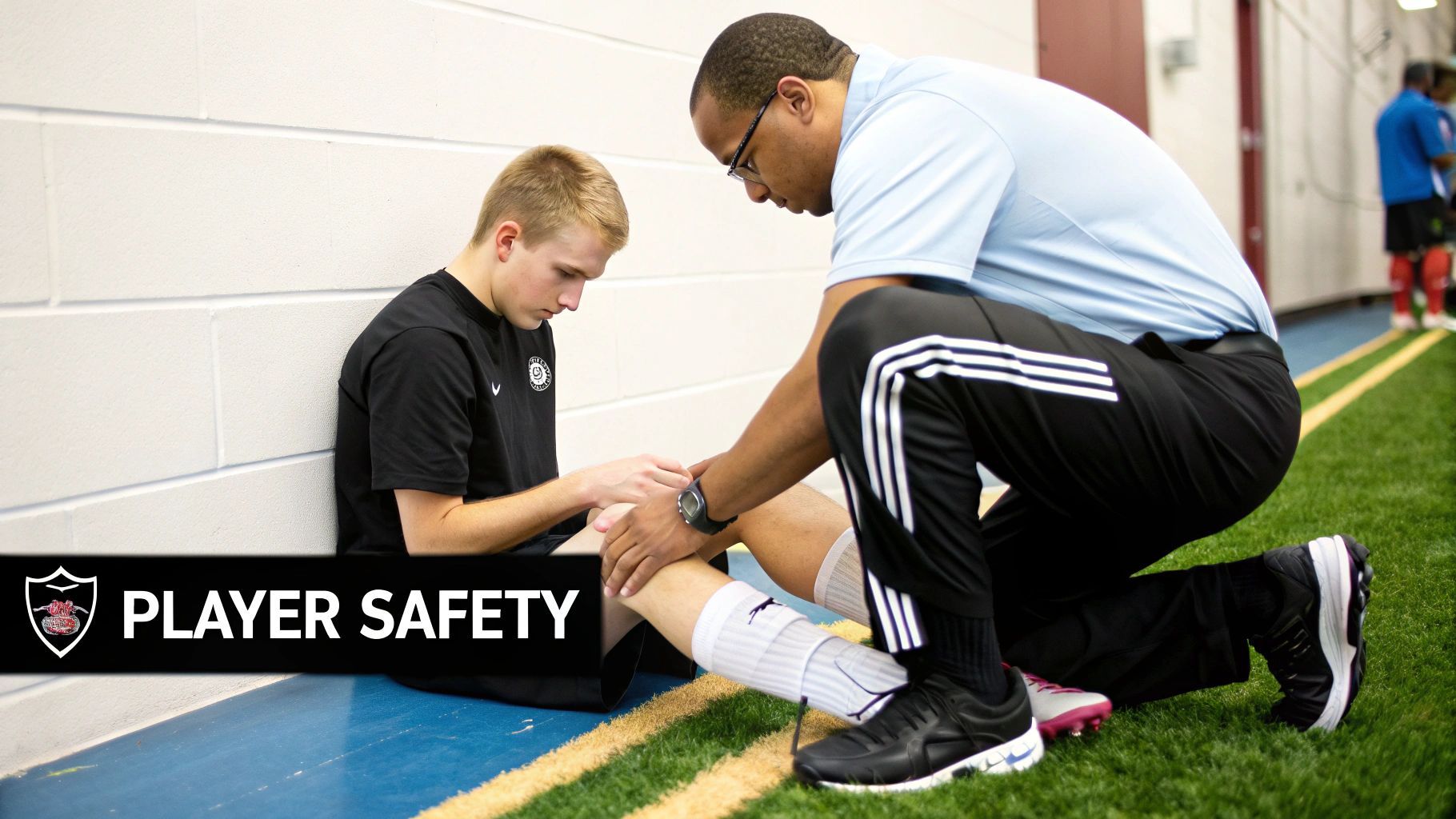
Asking detailed interview questions for sports coaches on this topic helps verify that a candidate possesses the technical knowledge and empathetic approach required to manage modern athletes. A coach who prioritizes safety builds trust, fosters resilience, and ultimately enables players to perform at their peak sustainably. This focus is crucial for mitigating risks and upholding the organization's ethical responsibilities.
Sample Questions
- "How do you approach injury prevention and recovery within your training program?" This question probes their practical strategies. Look for answers that mention dynamic warm-ups, proper cool-downs, strength and conditioning integration, and individualized recovery plans.
- "Describe your process for managing an athlete's training load to prevent overuse injuries." This tests their understanding of periodization and athlete monitoring. Strong candidates will discuss tracking metrics, enforcing rest days, and communicating with athletes about fatigue.
- "How do you support the mental health and well-being of your athletes?" This is a critical question about a coach's holistic approach. A great answer will include creating an open-door policy, destigmatizing mental health, and knowing when to refer athletes to professional resources.
- "Walk me through your procedure if you suspect an athlete has a concussion." This is a direct test of safety protocol knowledge. The only correct answer is to immediately remove the athlete from play and refer them to a qualified medical professional, following established return-to-play guidelines.
Interviewer's Guide
- Verify Certifications: Ask about current certifications in first aid, CPR, and any sport-specific safety training. This provides tangible proof of their commitment and preparedness.
- Probe for Collaboration: Inquire about their experience working with athletic trainers, team doctors, and sports psychologists. A collaborative mindset is essential for comprehensive athlete care.
- Assess Proactive Systems: A top-tier coach doesn't just react to injuries; they prevent them. To proactively manage potential risks and ensure the well-being of athletes, coaches can benefit from understanding the principles behind creating a robust Health and Safety Management System. Ask how they would implement such a system.
8. Recruiting and Retention
A coach's ability to attract and retain talented athletes is a direct indicator of program health and sustainability. Effective recruiting builds the foundation of a competitive team, while strong retention proves the coach has created a positive, growth-oriented environment where players want to stay. This line of questioning evaluates a candidate's strategic vision for roster management and their ability to build a program with a lasting reputation.
These interview questions for sports coaches are crucial for assessing how a candidate identifies talent, communicates their program's value, and fosters loyalty. A coach who excels in this area is not just a tactician but also a program builder, marketer, and relationship manager. Their answers will reveal their long-term planning skills and their understanding of what makes a program truly desirable to top athletes.
Sample Questions
- "How do you identify and evaluate potential recruits that fit both the team's skill needs and its culture?" This question assesses their scouting methodology. A strong answer will detail a multi-faceted approach, including watching game film, attending events, speaking with previous coaches, and evaluating character.
- "What is your strategy for retaining key players and what does your program’s retention rate tell you?" This probes their ability to maintain a strong roster. Look for candidates who can cite specific retention rates and connect them to concrete actions, like conducting exit interviews, fostering strong team bonds, or providing clear development pathways.
- "How do you build a program's reputation to make it a top destination for athletes?" This gauges their marketing and communication skills. The best answers will go beyond on-field success, mentioning community engagement, social media presence, and strong relationships with feeder programs or high schools.
Interviewer's Guide
- Request Data: Ask for specifics. Inquire about their track record, such as the number of athletes they've successfully recruited who went on to be major contributors, or data on player retention year over year.
- Align Strategy with Level: A collegiate coach's recruiting strategy will differ vastly from a youth club coach's. Ensure their methods and network are appropriate for the position they are applying for.
- Probe Relationship-Building Skills: Recruiting and retention are built on trust. Ask for examples of how they’ve built and maintained relationships with athletes, parents, and community stakeholders. A coach’s ability to connect is a key predictor of success in this area.
9. Professional Development and Continuous Learning
The landscape of sports is constantly evolving, driven by advancements in sports science, technology, and coaching methodologies. A coach’s commitment to professional development reveals their dedication to excellence and their ability to adapt. This line of questioning assesses whether a candidate is a lifelong learner who actively seeks out new knowledge or one who relies on outdated practices.
A coach dedicated to continuous learning brings fresh perspectives and evidence-based strategies to your program. They are more likely to optimize athlete performance, improve safety protocols, and build a dynamic, modern training environment. Asking targeted interview questions for sports coaches about their learning habits helps identify candidates who are proactive, curious, and invested in their own growth, which directly translates to the growth of their athletes.
Sample Questions
- "How do you stay current with the latest coaching methods and sports science research?" This question gauges their learning process. Look for specific sources like peer-reviewed journals, national coaching association clinics (e.g., USA Football, NSCA), or mentorship networks.
- "Tell me about a recent change you made to your coaching approach based on something new you learned." This tests for practical application. A strong answer will detail the "before and after," explaining the new concept they learned and how they successfully integrated it into their training or strategy.
- "What coaching certifications have you earned, and which ones do you plan to pursue next?" This reveals their level of formal commitment to their craft. It also provides insight into their career ambitions and areas they have identified for personal improvement.
Interviewer's Guide
- Verify Credentials: Always independently verify any certifications or degrees mentioned. Reputable organizations like the International Sports Sciences Association (ISSA) or national governing bodies for specific sports offer directories or verification services.
- Probe for Application: Don't just accept a list of attended clinics. Ask for specific takeaways and how that new knowledge was implemented. "What's one drill you added to practice after attending the XYZ conference?"
- Assess Genuine Curiosity: Is their learning driven by a genuine passion for coaching, or is it just about padding a resume? Inquire about books they've read, podcasts they follow, or even coaching failures that led to a search for better methods.
10. Alignment with Organizational Values and Culture Fit
Hiring a coach who is a strong cultural fit is just as critical as hiring one with tactical expertise. A coach's alignment with your organization's mission, values, and operational realities dictates their long-term success and satisfaction. This line of questioning moves beyond on-field strategy to assess whether a candidate's work style, expectations, and personal values will complement and enhance your existing program culture.
Assessing for fit helps prevent the friction that arises when a coach’s expectations clash with the organization’s resources, competitive goals, or community standards. These interview questions for sports coaches are designed to uncover potential misalignments early, ensuring the person you hire can thrive within your specific environment and contribute positively from day one. It's about finding a partner, not just filling a position.
Sample Questions
- "What specifically about our organization and this program attracted you to this role?" This question reveals how much research the candidate has done. A strong answer will go beyond the job description, referencing the team's history, the school's academic reputation, or specific community values.
- "Our program's mission is [State Mission Statement]. How does your coaching philosophy and experience align with that?" This directly tests for compatibility. Look for candidates who can provide concrete examples from their past that demonstrate their commitment to similar values.
- "How do you plan to contribute to our community beyond your coaching duties?" This is crucial for roles with public-facing or community engagement expectations. It gauges their willingness to be a true ambassador for the program.
Interviewer's Guide
- Be Transparent: Before the interview, provide the candidate with clear information about your organization's mission, values, and the realistic constraints of the role, such as budget or facility limitations.
- Probe Their Motivations: If the candidate is currently employed, ask why they are looking to leave their position. Their reasons can offer valuable insight into what they seek in a new environment and what might cause dissatisfaction.
- Listen for 'We' vs. 'I': Pay attention to how they talk about past experiences. A candidate who consistently uses "we" when discussing team achievements often demonstrates a collaborative, team-first mindset that is key to a positive culture.
10-Point Sports Coach Interview Comparison
| Category | Implementation Complexity 🔄 | Resource Requirements ⚡ | Expected Outcomes 📊⭐ | Ideal Use Cases 💡 | Key Advantages ⭐ |
|---|---|---|---|---|---|
| Coaching Philosophy and Approach | Medium — qualitative, needs probing | Low–Medium — interview time, references | 📊⭐ Cultural alignment; predicts development vs. win focus | Hiring head/assistant coaches; long-term program builds | Reveals authentic coaching identity and fit |
| Experience and Track Record | Low — largely verifiable metrics | Medium — record checks, references, data | 📊⭐ Objective evidence of success; measurable achievements | All coaching roles; positions needing proven results | Verifiable performance and competitive level indicator |
| Player Development and Athlete Management | Medium–High — case examples & athlete feedback | Medium — player refs, development plans, metrics | 📊⭐ Improved retention; measurable skill progression | Youth/academy, S&C, skill-development specialists | Predicts long-term player growth; demonstrates EI |
| Leadership and Team Dynamics | High — behavioral assessment, 360 feedback | Medium — stakeholder interviews, references | 📊⭐ Stronger cohesion; better staff retention and decision-making | Head coaches, program directors, leadership roles | Direct impact on culture and high-pressure decisions |
| Communication and Teaching Skills | Medium — practical demonstrations useful | Low–Medium — sample sessions, video evidence | 📊⭐ Clearer instruction; faster player comprehension | All coaching roles; technical and youth coaches | Improves performance via clarity; strengthens stakeholder relations |
| Handling Adversity and Problem‑Solving | Medium — scenario/behavioral focus | Low–Medium — interviews, reference checks | 📊⭐ Resilience; program stability during crises | Rebuilding programs; turnaround coaches; senior hires | Shows adaptability and learning from setbacks |
| Player Welfare, Health, and Safety | Medium — protocol knowledge and certifications | Medium — medical partnerships, monitoring systems | 📊⭐ Reduced injury risk; higher retention; lower liability | All levels, youth programs, athletic trainers | Creates sustainable, evidence-based safety culture |
| Recruiting and Retention | Medium–High — network & metrics evaluation | High — recruiting budget, relationships, travel | 📊⭐ Strong talent pipeline; program sustainability | Collegiate/club head coaches, academy directors | Directly affects competitive success and growth |
| Professional Development and Continuous Learning | Low — credential and learning-history review | Low–Medium — courses, conferences, time | 📊⭐ Adoption of modern methods; coachability | High-performance coaches; technical specialists | Keeps practices current; reduces stagnation risk |
| Alignment with Organizational Values and Culture Fit | Medium — in-depth values exploration | Low — job briefings, interviews, refs | 📊⭐ Better tenure; fewer conflicts; clearer expectations | All hires, program directors, career changers | Predicts job satisfaction and long-term compatibility |
Assembling Your Championship Team: Next Steps in the Hiring Process
Navigating the hiring process for a new coach is much like preparing for a championship season. It requires a meticulous game plan, a deep understanding of your team's needs, and a commitment to finding the right leader to execute the vision. The extensive list of interview questions for sports coaches provided in this guide is your playbook, designed to move beyond surface-level qualifications and uncover the core attributes that define exceptional coaching.
By thoughtfully selecting and adapting questions from each of the ten critical categories, you can build a holistic picture of every candidate. You're not just hiring a tactician; you are entrusting an individual with the development, well-being, and success of your athletes. This process is about finding a true partner for your organization.
From Questions to Conviction: Key Takeaways
The most effective interviews are structured yet dynamic conversations. Remember that your goal is to evaluate competency across a spectrum of essential coaching domains.
- Go Beyond the Resume: A winning record is important, but the "how" and "why" behind it are more telling. Use behavioral and situational questions to understand a candidate's philosophy on player development, leadership style, and problem-solving abilities under pressure.
- Culture is a Non-Negotiable: A coach is a primary culture-setter. Questions about their alignment with organizational values, approach to team dynamics, and commitment to player welfare are not just a formality; they are crucial for ensuring long-term fit and program stability.
- Communication is the Linchpin: A coach's ability to teach, motivate, and connect with athletes, parents, and staff is paramount. Prioritize assessing their communication skills through targeted prompts about delivering feedback, managing conflict, and fostering an inclusive environment.
Actionable Next Steps for a Winning Hire
Armed with this comprehensive question bank, your next steps are to refine your process and execute it with precision. A structured approach ensures fairness, consistency, and a more accurate final decision.
- Develop a Scorecard: Create a simple rubric based on the key coaching categories. This allows you to objectively score each candidate's responses during the interview, making post-interview comparisons more data-driven and less reliant on memory or gut feeling alone.
- Incorporate Practical Scenarios: Move beyond hypotheticals. Present candidates with a real-world challenge your program has faced. Ask them to walk you through how they would handle it, from initial assessment to final resolution. This provides invaluable insight into their critical thinking and problem-solving capabilities.
- Conduct Thorough Reference Checks: Don't treat this as a simple box-checking exercise. Use your interview insights to ask targeted follow-up questions to references. For example, you could ask a former athletic director, "The candidate mentioned a time they had to manage a conflict between two star players. Could you share your perspective on how they handled that situation?"
Pro-Tip for Candidates: As a coach preparing for an interview, don't just memorize answers. Reflect on these question categories and prepare specific, detailed examples from your own experience that demonstrate your skills and philosophy in action. The STAR method (Situation, Task, Action, Result) is an excellent framework for structuring your responses.
Ultimately, the right coach can transform a program, inspire a generation of athletes, and become a cornerstone of your organization's success. The effort invested in a rigorous, well-planned interview process is one of the most significant investments you can make. By using these targeted interview questions for sports coaches, you are setting the stage not just for a successful hire, but for a future filled with growth, achievement, and victory.
Ready to find the coaching talent that will elevate your program? Post your job opening on GetSportJobs, the premier career platform dedicated to the sports industry. Connect with a dedicated community of qualified and passionate coaches who are actively looking for their next great opportunity.