Your Guide to Jobs in Sports Management
When you think about a career in sports, what comes to mind? Most people picture the athletes on the field or the coaches on the sidelines. But behind every team, every league, and every major sporting event is a massive business operation. That’s where sports management jobs come in.
These are the roles that make the entire sports world go 'round. From managing a star athlete's career and marketing a team to organizing a championship tournament, these professionals handle the business side of the game. They are the strategic minds working behind the scenes, ensuring everything runs like a well-oiled machine.
What Is a Sports Management Job Really Like?

It’s easy to romanticize working in sports, but the day-to-day reality is less about being a superfan and more about being a sharp business professional.
Think of your favorite team as a major corporation. The players are the product, but there's a huge corporate structure making it all possible. The people in sports management jobs are the executives, marketers, accountants, and logisticians in that corporation. They're the ones who transform incredible athletic talent into a sustainable and profitable entertainment enterprise.
Without them, the lights in the stadium wouldn't turn on, sponsorships would dry up, and the games we love just couldn't happen on the scale they do today.
The Core Pillars of the Industry
To get a real handle on the field, it helps to see it as a few key business functions. While job titles can vary and responsibilities often overlap, most sports management careers are built on one of these core pillars.
- Athlete Representation: This is all about guiding an athlete's career. Think agents negotiating multi-million dollar contracts, securing big-brand endorsements, and managing everything from public relations to financial planning.
- Event and Facility Operations: These are the logistics gurus who make game day happen. They manage the stadium, coordinate armies of event staff, and ensure every fan has a safe and amazing experience.
- Marketing and Promotions: This is the creative side of the business, responsible for filling seats and building a passionate fan base. These teams create ad campaigns, run social media, design merchandise, and sell sponsorships.
- Finance and Administration: Just like any other business, sports is all about the bottom line. This pillar involves managing massive budgets, analyzing revenue from ticket sales and TV deals, and handling complex player payrolls.
These pillars don't operate in a vacuum—they're completely intertwined. A new ticket promotion from the marketing team directly affects the finance department's revenue forecast. A blockbuster contract negotiated by an agent impacts the team's entire budget for years to come.
A Symphony of Skills and Roles
At its heart, sports management is a team sport of its own. The agent who signs a star player is counting on the marketing department to turn them into a household name. The event manager planning the Super Bowl is relying on the finance team to manage the budget and the sponsorship team to help fund it.
This constant collaboration creates an incredibly dynamic and fast-paced environment where sharp business skills, great communication, and a genuine passion for the game all come together. In the sections ahead, we’ll dive deeper into the specific job titles, salaries, and career paths that bring this exciting world to life.
Exploring Top Sports Management Careers

It’s one thing to understand the different sectors of the sports industry, but it’s another to see where you might actually fit in. The world of jobs in sports management is incredibly diverse, with roles perfect for sharp negotiators, creative marketers, meticulous planners, and strategic visionaries alike.
So, let's pull back the curtain and look at what people in these roles really do day-to-day. Getting a feel for the actual responsibilities will help you see where your own talents and passions could lead.
Common Sports Management Roles and Key Responsibilities
To give you a clearer picture, here’s a quick breakdown of some of the most common roles you'll find in the sports management world. This table highlights what each job entails and the skills you'll need to succeed.
| Job Title | Primary Responsibilities | Essential Skills |
|---|---|---|
| Sports Agent | Represents athletes in contract negotiations, secures endorsements, and manages public relations. | Negotiation, Networking, Sales, Financial Acumen |
| Athletic Director (AD) | Oversees an entire athletic department (college/high school), including budget management, hiring coaches, and ensuring NCAA/league compliance. | Leadership, Strategic Planning, Budgeting, Compliance |
| Sports Marketing Manager | Develops and executes marketing campaigns to promote teams, events, or brands. Manages sponsorships, advertising, and fan engagement. | Marketing Strategy, Digital Marketing, Creativity, Analytics |
| Event Coordinator | Plans and executes sporting events from start to finish, managing logistics, vendors, volunteers, and ticketing. | Organization, Project Management, Problem-Solving, Communication |
| Facilities Manager | Manages the operations and maintenance of a sports venue like a stadium or arena. Oversees safety, groundskeeping, and technology. | Operations Management, Technical Knowledge, Safety Compliance |
| Scout / Recruiter | Identifies and evaluates athletic talent for professional teams or college programs. | Talent Evaluation, Communication, Relationship Building |
These roles are just the beginning, of course. Each one is a gateway to a dynamic career where no two days are quite the same. Now, let's dig a little deeper into a few of these key positions.
The Power Players: Sports Agents and Athletic Directors
At the very top of the industry, some roles carry immense influence over athletes' careers and the fate of entire organizations. These are high-stakes, high-reward positions that demand a masterful blend of business savvy, sharp communication, and deep industry connections.
Sports Agent
Think of a sports agent as an athlete's business partner, chief advocate, and career strategist all rolled into one. Their most visible task is negotiating massive contracts, but that's just the tip of the iceberg.
- Securing Endorsements: They are constantly pitching their clients to brands, working to land lucrative sponsorship deals that build an athlete’s income and public profile.
- Managing Finances: Many agents work closely with financial advisors to help their clients manage their earnings, make smart investments, and plan for a future after sports.
- Public Relations: They are the gatekeepers, helping to shape their client’s public image by managing media requests and coaching them through public appearances.
Athletic Director (AD)
If an agent is a CEO for an athlete, an Athletic Director is the CEO for an entire university or high school athletics department. Their focus isn't on a single player but on the overall health and success of every sports program under their watch.
An AD’s job is massive. They hire coaches, manage multi-million dollar budgets, and ensure the entire department complies with complex regulations from bodies like the NCAA. They are the visionaries steering the ship, constantly balancing the drive for competitive success with the need for academic integrity and financial stability.
The Architects of Experience: Event Coordinators and Facilities Managers
Behind every thrilling game and unforgettable championship is a team of professionals who make it all happen seamlessly. These are the organizers, the problem-solvers, and the logistical wizards who live and breathe operational excellence.
Sports Event Coordinator
Picture a major tournament or a city-wide marathon. The event coordinator is the mastermind pulling all the strings. They handle everything from booking the venue and managing ticketing to coordinating with security, vendors, and an army of volunteers.
This role is a fast-paced puzzle of scheduling, budgeting, and putting out fires on the fly. A great event coordinator makes sure the entire fan experience—from the parking lot to the final whistle—is smooth and memorable.
Facilities Manager
While the event coordinator handles the action, the facilities manager is in charge of the stage itself: the stadium, arena, or sports complex. Their mission is to ensure the venue is safe, fully operational, and ready to host thousands of people.
This means managing complex maintenance schedules, overseeing groundskeeping crews, upgrading critical tech like scoreboards and sound systems, and making sure the entire facility is up to code. They are the guardians of the venue, creating a world-class environment for athletes and fans. You can explore various sports management roles here to get a better sense of how these operational jobs compare to others.
The career outlook in sports management is promising. According to the U.S. Bureau of Labor Statistics, the field offers strong earning potential across different specializations. For example, marketing managers in sports can earn a median salary of $161,030, while facilities managers average around $104,690. Even agents see a healthy median of $96,310. The industry is also growing steadily, with a projected 6.6% increase in jobs for sports marketing managers by 2031, signaling a healthy and expanding market.
Building the Right Skills for a Sports Career
A passion for the game is a fantastic starting point, but it won’t get you the job alone. Landing a great role in sports management requires a specific toolkit—think of it like a general manager building a championship roster. You need the right mix of education, hands-on abilities, and people skills to truly compete.
Employers aren't just looking for another fan. They need a professional who understands the business of sports and can add real value to their bottom line. That means proving you have the training and skills to sell tickets, run a tight ship, and build a winning brand.
The Educational Playbook
Your education is your foundation. While there isn't one "correct" degree, some programs are built to give you a serious leg up in the sports world. The path you choose really depends on where you want to go in your career.
Bachelor’s in Sports Management: This is the most direct route. These programs give you a 360-degree view of the industry, covering everything from sports law and marketing to facility management and finance. It’s the perfect launchpad for most entry-level roles.
Related Business Degrees: Don't have a sports-specific degree? No problem. A background in business, marketing, or finance can be just as powerful. The trick is to pair that business acumen with sports-focused internships or volunteer gigs to prove you're committed to the industry.
Master's Degree (MBA or M.S. in Sports Administration): If you're aiming for the big leagues—think Athletic Director or a senior marketing executive—a master's degree can be a game-changer. These advanced programs dive deep into the high-level strategy, leadership, and complex financial models that drive the entire sports ecosystem.
Getting a master's isn't just about adding another line to your resume; it's about specializing. It tells employers you’ve invested in becoming an expert on the business of sports and are ready to handle senior-level challenges.
Developing Non-Negotiable Skills
Your degree might get you an interview, but your skills will get you the job and help you advance. The most successful people in jobs in sports management have a healthy balance of hard skills (what you can do) and soft skills (how you do it).
Critical Hard Skills
These are the teachable, technical abilities that hiring managers are actively searching for on resumes. They're the practical tools you'll use every single day.
- Data Analysis: Modern sports organizations are powered by data. You need to be able to look at ticket sales reports, fan engagement stats, and player performance metrics and turn them into smart business decisions.
- Contract Negotiation & Sports Law: Understanding the fine print on player contracts, sponsorship deals, and media rights is absolutely critical, especially if you're working as an agent or in a high-level administrative role.
- Digital Marketing & Social Media Management: A team’s connection with its fans is its lifeblood. Knowing how to run a social media campaign, create engaging content, and manage digital ads isn't just a bonus anymore—it's a core requirement for marketing jobs.
- Budgeting & Financial Planning: Whether you're in charge of a small department's budget or the finances for an entire stadium, solid financial skills are essential to keeping things running smoothly.
Essential Soft Skills
These are the interpersonal skills that dictate how well you work with others. In an industry built on relationships, they're every bit as important as your technical know-how.
- Communication & Public Relations: You have to be able to pitch an idea to your boss, negotiate with a sponsor, or manage the message during a PR crisis. Clear communication is everything.
- Leadership & Teamwork: The sports world is the ultimate team environment. You have to prove you can lead a project, inspire your colleagues, and work well with all kinds of different personalities.
- Problem-Solving: Things go wrong. A lot. The power might go out on game day, or a star player gets traded unexpectedly. Your ability to think on your feet and come up with a solution is invaluable.
- Networking: Building real, genuine professional relationships is how you move up in this industry. More often than not, your next big opportunity will come from someone you know.
Before you start firing off applications, it’s a smart move to see how your resume stacks up. Using a professional sports-focused resume analyzer can give you a clear, objective look at your strengths and show you exactly where you can improve.
Mapping Your Career Path and Earning Potential
A career in sports management isn't a quick sprint to the finish line. It's more of a marathon, with different stages that demand new skills and offer bigger responsibilities—and, of course, better pay. If you want to make it from an entry-level spot to a leadership role, you need to understand what that progression looks like.
Think of it like working your way up the stadium. You start on the ground floor, maybe in the ticket office, learning the ropes. With time and hard work, you gradually climb higher, eventually reaching the executive skybox where you're calling the shots and seeing the whole picture.
And what a picture it is. The global sports market is absolutely booming, with projections showing it could hit a staggering $614.1 billion by 2026. This isn't just growth; it's an explosion of opportunity. We're talking about an estimated 60,600 new sports management jobs popping up by 2029, especially in hot areas like data analytics, digital marketing, and event management. As new leagues form and fan bases grow, the need for smart, capable leaders has never been higher. You can dig deeper into these trends and what's driving them over at AlphaGamma.
The Career Ladder: From Entry-Level to Mid-Career
Your journey will most likely kick off in an entry-level role. This is where you pay your dues, absorb everything you can, and prove you have what it takes. These jobs are the foundation of your entire career.
Entry-Level Roles (0-3 years): You'll see titles like Marketing Assistant, Ticket Sales Representative, or Operations Intern. The pay is usually modest, landing somewhere in the $40,000 to $60,000 range, but the hands-on experience is priceless. Your job is to support your team and execute the game plan.
Mid-Career Roles (4-10 years): Once you've proven your value, you’ll step up into coordinator or manager roles—think Event Manager, Sponsorship Coordinator, or even a Junior Agent. At this stage, you're trusted with more responsibility, managing small teams or key projects and starting to influence strategy. Your salary will reflect this, typically climbing into the $60,000 to $90,000 range.
This progression is fueled by a blend of education, hard skills, and the all-important soft skills that help you navigate the industry.
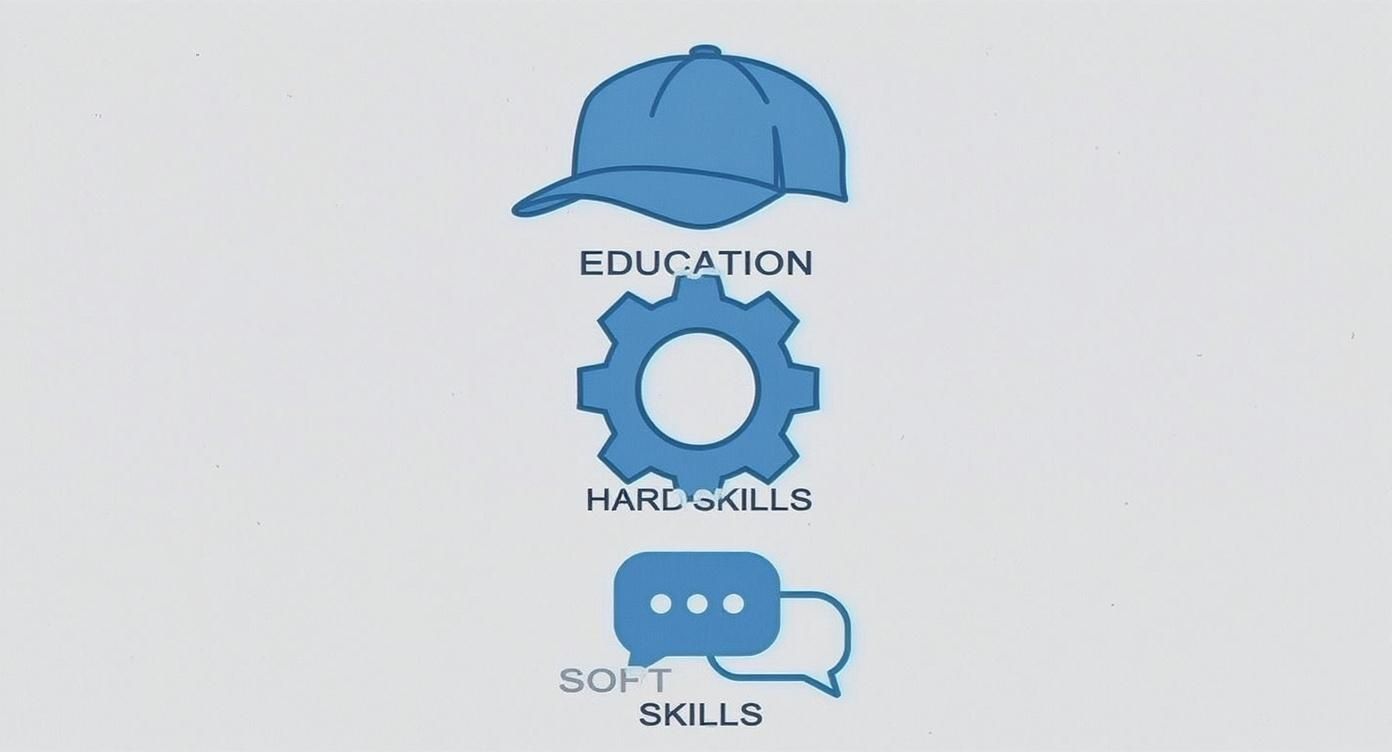
As the visual above shows, a solid education is your launchpad. From there, you build the technical (hard) skills and the people (soft) skills you need to keep climbing.
Reaching the Executive Level
The top tier of jobs in sports management is a different ballgame altogether. Here, you shift from managing projects to steering the entire ship. Getting here takes years of dedication, a powerful network, and a track record that speaks for itself.
At the executive level, your job is no longer just about doing the work—it's about setting the vision. You're responsible for the long-term health and profitability of your department or the entire organization.
These senior and executive roles come with massive responsibilities, and the compensation reflects that.
Senior-Level Roles (10+ years): This is where you become a Director or Vice President of a department, like a Director of Marketing or VP of Operations. You’re now a key decision-maker, managing big teams and even bigger budgets. Earning potential often jumps well past $100,000, with many roles commanding much more depending on the organization.
Executive Roles: At the very top, you have positions like Chief Marketing Officer (CMO), General Manager (GM), or Athletic Director (AD). These are the leaders who shape the future of a franchise, league, or university athletic program. Salaries can range from $150,000 to well into the millions, heavily influenced by the organization's revenue and on-field success.
Your career path is a direct result of your hard work, your constant learning, and your ability to build genuine relationships. The road from intern to executive is a long one, but for those with passion and resilience, it’s a clear and achievable goal.
How to Break Into the Sports Industry
https://www.youtube.com/embed/d0flX64CJs4
So, you know the roles and you've started building the right skills. Great. Now for the hard part: actually getting your foot in the door. The sports world is incredibly competitive, and frankly, passion alone isn't enough to make you stand out from the crowd. Breaking in requires a smart, strategic playbook that goes way beyond just clicking "apply" on job boards.
Think of yourself as a talent scout. You can't just wander into the stadium on game day and expect to discover the next superstar. You have to be in the right places, talking to the right people, and knowing exactly what you're looking for. This section is your guide to doing just that.
Gain Hands-On Experience
Theory is one thing, but nothing impresses a hiring manager more than actual, real-world experience. Internships and volunteer gigs are the non-negotiable price of admission to this industry. They give you the kind of practical skills and connections you simply can't learn in a classroom.
And don't get fixated on the big professional leagues right away. Some of the best, most impactful experience is found elsewhere.
- Collegiate Athletic Departments: Your local college or university is a goldmine. Seriously. Offer to help with game-day operations, sell tickets, or run social media for any of their teams.
- Minor League or Amateur Teams: These smaller organizations usually run on lean staffs. That's a huge plus for you, because it means you'll get to wear multiple hats and gain a much broader range of experience than you would anywhere else.
- Major Sporting Events: When a marathon, golf tournament, or big championship rolls into town, they need an army of volunteers to pull it off. Sign up. You'll learn the complex logistics of large-scale event management from the inside.
This kind of work is your chance to build a reputation for being reliable and hardworking before you even land your first full-time job.
Network Authentically
In sports, it's often said that who you know is as important as what you know. But let's be clear: "networking" isn't about collecting business cards or spamming people with generic LinkedIn requests. It’s about building genuine relationships with people.
Your goal is to become a resource, not just another person asking for a job.
Think of your network as your personal advisory board. These are the people who will offer advice, provide introductions, and alert you to opportunities you'd never find on your own. Cultivate these relationships with care and respect.
The best way to do this? Focus on giving value first. Share an article you think a contact would find interesting, congratulate them on a recent win, or offer to help with a project if you have a skill they need. This simple shift turns a cold contact into a warm professional connection.
Tailor Your Application Materials
Every single resume and cover letter you send out needs to be a direct pitch, custom-built for that specific role and organization. A generic, one-size-fits-all application is the fastest ticket to the "no" pile. Hiring managers need to see that you've done your homework and actually understand what they're looking for.
Here’s how to make your application impossible to ignore:
- Speak Their Language: Look closely at the job description and mirror the keywords and phrases in your resume. If they want someone with "fan engagement" experience, make sure those exact words are front and center in your experience section.
- Highlight Relevant Results: Don't just list what you did; show what you accomplished. Instead of saying, "Managed social media," try this: "Grew Instagram followers by 25% in six months through a targeted content strategy." Numbers talk.
- Show Your Passion in the Cover Letter: Your resume proves you have the skills. Your cover letter shows you have the heart. Use it to tell a quick story about why you're fired up about their team or their organization specifically.
The good news is that the demand for talented people is growing. The U.S. is projected to see about 108,900 new sports-related job openings every year from 2023 to 2033. This isn't just a local trend; the industry is expanding globally, creating a bigger need for skilled managers. To see who's hiring, you can browse a list of top sports companies and start your research. This growth makes it more important than ever to position yourself as a can't-miss candidate, and you can learn more about the global trends in sports employment to find where the best opportunities are emerging.
Frequently Asked Questions About Sports Management Jobs
Thinking about a career in sports management can bring up a lot of questions. It’s a competitive world, and it's smart to get a clear picture before you jump in. Let's tackle some of the most common questions I hear from people trying to break into the industry.
Do I Have to Be a Former Athlete?
This is easily the biggest misconception out there. The answer is a clear and simple no. While having played sports can certainly give you a helpful perspective, it's not the golden ticket everyone thinks it is.
Frankly, teams and leagues are businesses first. They need sharp marketers, savvy financial minds, and detail-obsessed event coordinators. Your ability to build a winning sponsorship proposal or analyze fan demographic data will always be more valuable than your stats from back in the day.
What’s the Hardest Part of Breaking Into the Industry?
Without a doubt, it’s the competition. The passion for sports runs deep, which means you’re not just competing against a few other people for a job—you’re up against a stadium's worth of applicants for every single opening.
Getting noticed requires a game plan. You can't just be a fan; you have to be a professional.
- Get Real Experience: Internships and volunteer work aren't just resume-builders; they're essential. This is where you prove you can handle the work.
- Build Your Network: It's not just about what you know, but who knows you. Genuine connections can open doors to jobs that never even get posted publicly.
The toughest hurdle isn’t proving your love for the game. It’s proving you have the business skills to make a real impact. Organizations hire professionals who add value, not just fans who want a front-row seat.
Which Areas of Sports Management Are Growing the Fastest?
The sports industry is always changing, but right now, a couple of areas are absolutely exploding. If you focus your skills here, you’ll give yourself a serious advantage.
Sports analytics is on fire. Teams are digging into data for everything—not just player performance, but business decisions, too. If you can translate numbers into strategies for selling more tickets, boosting fan engagement, or proving ROI to sponsors, you will be in extremely high demand.
The other major growth area is digital marketing and content creation. Teams are global brands now, and they need pros who can craft a compelling story online. From social media managers to video producers, these roles are popping up everywhere as organizations fight for fans' attention. This is where you’ll see many of the newest jobs in sports management emerge.
Ready to turn your passion into a profession? GetSportJobs is the ultimate playbook for finding your next role in the sports industry. Start exploring hundreds of opportunities today at https://www.getsportjobs.com.