How to Land a Sports Lawyer Job
A sports lawyer job is so much more than what you see in the movies. Forget the dramatic courtroom showdowns; this role is really about being the strategic legal and business mind behind the scenes of the sports world. These pros are the essential support system for athletes, teams, and leagues, handling everything from nine-figure player contracts to complex sponsorship deals and navigating a maze of regulations. It's a career that demands a potent mix of sharp legal skill and a genuine passion for the business of sports.
What a Sports Lawyer Actually Does
If you're picturing an agent yelling "Show me the money!" into a phone, you've got the wrong idea. The reality of a sports lawyer job is closer to being the chief operating officer for a client's entire career. They’re the trusted advisors who protect and grow brands in an industry worth billions.
Think of it this way: a coach draws up the plays for the game, while a sports lawyer designs the legal and financial game plan that lets an athlete, team, or organization thrive off the field. This isn't about knowing one small part of the law; it's about mastering several and knowing how they all connect.
The Strategic Backbone of Sports
The day-to-day life of a sports lawyer is rarely predictable. Their responsibilities are incredibly diverse, shifting with client needs, the time of year, and the latest headlines.
Here are some of the core functions they handle:
- Contract Negotiation: This is the big one. They draft, review, and negotiate everything from player contracts and mega-endorsement deals with brands like Nike or Adidas to simple appearance agreements.
- Intellectual Property Management: They are the guardians of a brand. They protect valuable assets like team logos, an athlete’s personal brand, and catchphrases by securing trademarks and copyrights.
- Regulatory Compliance: Every sport has a rulebook, and it’s a thick one. Sports lawyers ensure their clients play by the rules set by leagues (like the NFL or NBA), players' associations, and global bodies like the IOC or FIFA.
- Dispute Resolution: When conflicts arise, they step in. This could mean representing a player in a salary arbitration hearing, appealing a suspension, or defending against a doping allegation.
A great sports lawyer has to wear multiple hats. They're part negotiator, part brand strategist, part crisis manager, and part business advisor—all rolled into one. Their mission is to build a fortress of legal and financial security so their clients can just focus on competing.
This unique blend of duties makes the sports lawyer job one of the most dynamic and demanding careers out there. You need more than just a law degree; you need a sharp business sense and the ability to stay cool under pressure in one of the most passionate industries on the planet.
The Core Responsibilities in Sports Law
A sports lawyer's world is a high-stakes arena where billion-dollar deals and career-defining disputes are just another Tuesday. Their work isn't one-dimensional; it splits neatly into two main camps: transactional work (making the deals) and dispute resolution (handling the fallout). Think of them as the architects and the firefighters of the sports industry.
Transactional lawyers are the ones building the legal scaffolding behind the business of sports. They're in the room for everything, from a star quarterback's record-setting contract to a league's massive multi-year media rights agreement. Their job is all about being proactive—they structure deals to protect their clients and squeeze every ounce of value out of a negotiation.
This side of the job requires an almost obsessive attention to detail and the ability to see around corners. You're not just getting a signature on a piece of paper; you're trying to spot potential conflicts five years down the road and shut them down before they ever happen.
Transactional and Advisory Roles
At its heart, a transactional sports lawyer’s job is to make business happen and secure opportunities. They're the dealmakers, the strategists, and the protectors of their client's brand and bank account. No two days are the same, and the stakes are always high.
Their core duties often include:
- Contract Negotiation and Drafting: This is the bread and butter. Lawyers spend countless hours hammering out player contracts, coaching agreements, and complex endorsement deals to get the best possible terms for their clients.
- Intellectual Property Protection: They are the guardians of a team's logo, an athlete's catchphrase, or a broadcaster's exclusive rights. These trademarks and copyrights are massive revenue generators and need fierce protection.
- Corporate and Finance Structuring: This is where the big-picture deals happen—advising on the sale of a franchise, financing a new stadium, or structuring investment deals that keep sports organizations running.
This infographic breaks down how a sports lawyer serves as the strategic backbone for an athlete or organization, juggling contracts, regulations, and trademarks all at once.
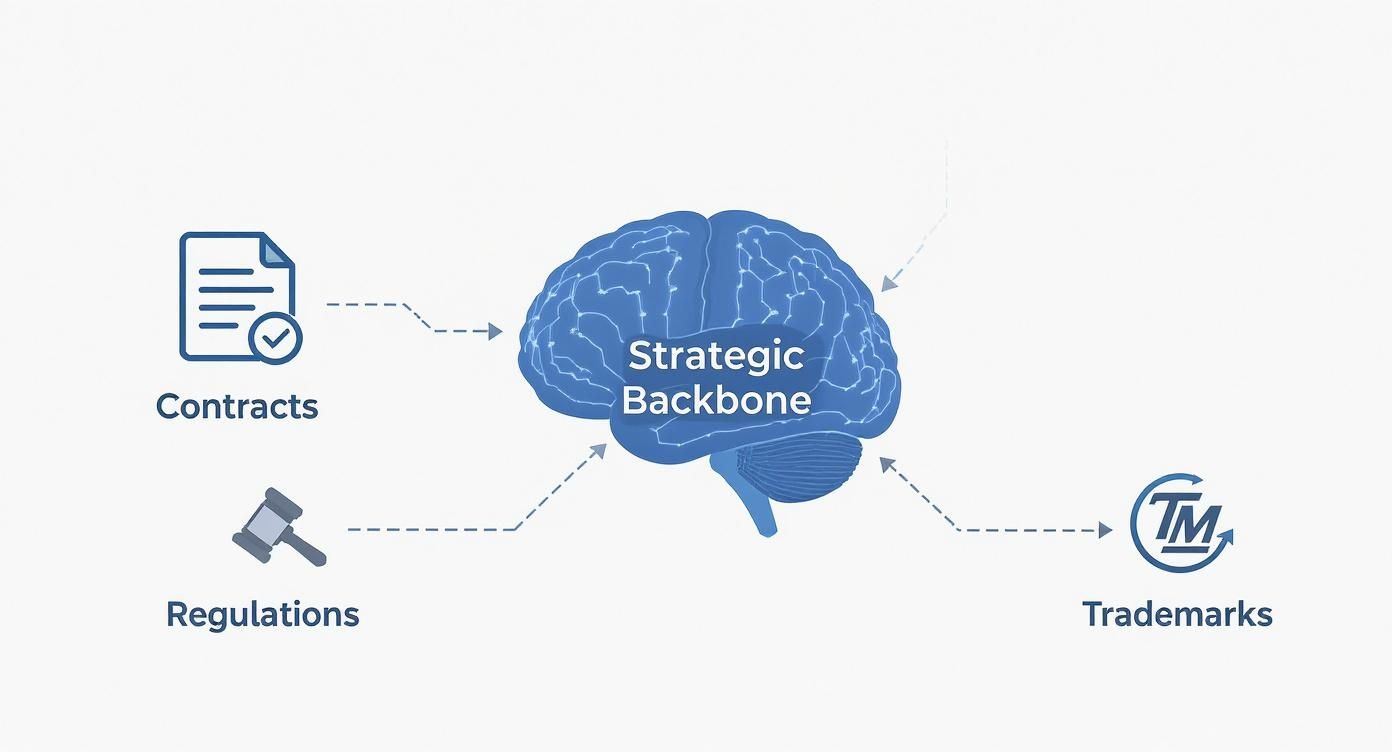
It really shows how success in this role means mastering all these connected areas to offer your client total protection.
Dispute Resolution and Emerging Specializations
When a deal goes south or a rule gets broken, the dispute resolution lawyer gets the call. This is the reactive side of the job—the part that involves stepping into the ring to defend a client when things get contentious. It could be an agent representing a player in a tense salary arbitration hearing or a lawyer defending an athlete accused of an anti-doping violation.
The role is no longer confined to traditional contracts. Modern sports lawyers are pioneering new legal frontiers, from establishing equal pay agreements in women's sports to navigating the complex world of Name, Image, and Likeness (NIL) rights for college athletes.
The field is constantly evolving to keep up with the game. Today's sports lawyers are tackling everything from international anti-doping cases and cybersecurity threats to the legal implications of AI in sports. Women's sports, in particular, has become a huge growth area, with lawyers busy structuring new revenue models and groundbreaking sponsorship deals for female athletes, teams, and leagues.
Building Your Skillset for Success

Before you can even think about landing a top-tier sports lawyer job, you have to build the right foundation. This isn't a career you just fall into because you love sports. It’s built on a bedrock of serious academic work and a very specific set of skills. The journey always starts with the non-negotiables that open the door to any legal career.
Every aspiring sports lawyer has to run the same educational gauntlet. First, a bachelor's degree in any field, followed by a three-year Juris Doctor (J.D.) from an accredited law school. The final, crucial step is passing a state bar exam, which is what officially grants you the license to practice law.
Beyond the Basics: Essential Legal Knowledge
While a general J.D. gets you in the door, strategic specialization during law school is what gives you a real competitive edge. Think of it like a rookie athlete focusing on specific drills to prepare for the pros. The courses you choose can directly prepare you for the day-to-day challenges of a sports lawyer.
To make yourself a standout candidate, you'll want to dive deep into subjects that form the core of sports law:
- Contract Law: This is your bread and butter. You'll be living and breathing contracts, drafting and negotiating everything from massive player deals to stadium naming rights.
- Intellectual Property (IP) Law: Protecting a team's logo or an athlete's personal brand is huge. Understanding trademarks and copyrights isn't just a bonus; it's critical.
- Antitrust Law: This might sound dry, but it's key to navigating the complex world of league structures, media rights, and player restraints.
- Labor Law: Absolutely essential for handling collective bargaining agreements (CBAs) and managing disputes between players' unions and the leagues.
The Soft Skills That Win Championships
Legal knowledge gets you in the game, but it's your soft skills that will determine whether you become a star player. A sports lawyer has to be more than a walking, talking legal encyclopedia. You need to be a masterful communicator, a razor-sharp negotiator, and a trusted advisor. These are the abilities that separate a good lawyer from a great one.
The most effective sports lawyers blend legal precision with commercial awareness. They understand that a contract isn't just a legal document—it's a business tool that can define a client's career, brand, and financial future.
Mastering skills like negotiation and clear communication allows you to build real trust with high-profile athletes, team executives, and corporate sponsors. It’s about being able to translate dense legal jargon into actionable advice that helps your clients make smart decisions, often under intense pressure.
Mapping Key Skills to Sports Lawyer Responsibilities
So, how do these skills actually play out on the job? The table below connects the dots, showing you exactly how essential skills are applied in the real-world scenarios you’ll face every day. Think of it as a roadmap for what it really takes to succeed.
| Essential Skill | How It's Applied in a Sports Lawyer Job | Example Scenario |
|---|---|---|
| Negotiation | Securing favorable terms in player contracts, endorsement deals, and media rights agreements. | Arguing for a higher bonus structure in a quarterback's contract based on performance incentives. |
| Communication | Clearly explaining complex legal risks to athletes, agents, and team management. | Advising a rookie athlete on the long-term implications of their first major endorsement deal. |
| Analytical Skills | Identifying potential legal issues in league bylaws or new regulations like NIL policies. | Analyzing a new collective bargaining agreement to determine its financial impact on a client. |
| Business Acumen | Understanding the commercial drivers of the sports industry to provide strategic advice. | Structuring a sponsorship agreement that aligns with a team's brand and long-term revenue goals. |
As you can see, the job is a dynamic mix of legal expertise and practical business sense. Developing this blend of hard and soft skills is what will ultimately set you apart and put you on the path to a thriving career in sports law.
Who Hires Sports Lawyers and How Much They Pay
The job title “sports lawyer” sounds specific, but where you actually work can shape your career in dramatically different ways. This isn't just one single career track; it's a whole network of paths that can lead you anywhere from a powerhouse law firm to the front office of a pro team. Figuring out which environment fits you best is the first step.
The most traditional route, and often the one with the steepest learning curve, is at a large law firm. What used to be a niche practice area is now a core part of many top-tier firms. They're the ones behind the curtain on the biggest deals in sports—think stadium financing, league expansion, and those massive, multi-billion-dollar media rights agreements. The hours are long and the work is intense, but it’s an incredible training ground for navigating complex legal and business problems. This field has exploded over the past 20 years, with firms like Skadden, Arps, Slate, Meagher & Flom LLP consistently at the top of the rankings.
Where You Can Work
Once you look past the big law firms, you’ll find a ton of different employers, each with its own culture, day-to-day responsibilities, and career path.
- Boutique Sports Law Firms: These are smaller, highly specialized firms. They focus on a specific niche, like representing athletes or handling anti-doping cases, and offer a chance to get your hands dirty with meaningful work from day one.
- In-House Legal Teams: Every major league (NFL, NBA, MLB), players’ union (NFLPA, NBPA), and even individual teams have their own lawyers on staff. In these roles, you’re not an outside consultant; you’re embedded in the organization, tackling everything from player contracts to everyday compliance issues.
- Sports Agencies and Brands: Think of major agencies like Wasserman or brands like Nike and Under Armour. They all need sharp legal minds to manage athlete contracts, negotiate endorsement deals, and protect their trademarks and patents.
Understanding Your Earning Potential
Let’s talk money. Salaries in sports law are all over the map, depending heavily on who you work for, where you’re located, and how much experience you have under your belt. Your paycheck is often a direct reflection of the value you bring to the table, whether that's finalizing a huge sponsorship deal or protecting a team's logo.
People often assume every sports lawyer is rolling in cash like Jerry Maguire. While the top partners at elite firms or the agents for superstar athletes certainly earn a fortune, most salaries are far more realistic. The real prize is getting to build a career where law meets a multi-billion-dollar industry you're passionate about.
An entry-level associate just starting at a law firm can expect to make somewhere in the $100,000 to $225,000 range, with the bigger firms in major cities paying at the top end. Once you have 5-10 years of experience, you could be earning $250,000 to $500,000+, especially if you move into a senior in-house role. And for the top dogs? A general counsel for a major league or a senior partner at a firm can pull in well into the high six or even seven figures.
Ready to see what’s out there? You can explore a variety of current sports law job openings to get a feel for the market.
Your Game Plan for Breaking Into Sports Law

Getting your first sports lawyer job isn't about just having a law degree; it’s about having a game plan. Breaking into this competitive, tight-knit industry really comes down to three things: getting your hands dirty with real experience, building a rock-solid network, and putting together a resume that shows you understand the business of sports. It's not about luck. It's about strategy.
The absolute most important piece of the puzzle is practical experience. Sure, your law school knowledge is the foundation, but employers need to see you can actually apply it in the real world. Think of internships as your training ground. This is where you'll get a feel for the day-to-day rhythm of sports law—from drafting player agreements and researching compliance issues to just seeing how a legal department really works inside a team, league, or agency.
Secure Impactful Internships
Relevant experience isn’t just a nice-to-have; it's a must. It shows you're serious about this path and gives you real skills to talk about when you finally get in the interview room.
Here's how to chase down those opportunities:
- Target Specific Organizations: Don't just spray and pray. Pinpoint the teams, agencies, or leagues that actually excite you. A great starting point is to explore the career pages of various sports law employers to see who’s actively looking.
- Leverage Law School Resources: Your school's career services office is a goldmine. They often have established relationships and can connect you with sports law clinics or externship programs. Harvard’s Sports Law Clinic, for instance, has placed students directly with teams like the Milwaukee Brewers and Miami Dolphins.
- Think Outside the Box: Experience doesn’t always mean working for a major league team. You can gain incredibly valuable insights by working for a university athletic department, a minor league club, or even a sports tech startup.
Build Your Professional Network
The sports industry is built on relationships. Plain and simple. Your network will become your single most valuable asset, and you need to start building it from the moment you step into law school. Every conversation is a chance to learn something and make a connection that could one day lead to your first sports lawyer job.
One of the biggest mistakes aspiring lawyers make is waiting until they need a job to start networking. You want to build genuine relationships over time, not pop up asking for favors from people who don't know you. Be someone who offers value, asks smart questions, and is worth remembering.
Get yourself to industry events, conferences, and even webinars held by groups like the New York State Bar Association’s EASL Section. When you connect with people on LinkedIn, don't just send a generic request. Personalize it. Mention a recent deal their company worked on or an article they wrote. This small touch shows you’ve done your homework and are truly interested in what they do, making you stand out from the crowd.
How to Find and Secure Your First Job
Alright, you've done the work. Your legal skills are sharp, you've started making connections, and now it's game time. Finding that first sports lawyer job isn't just about sending out applications; it's a strategic campaign that requires targeting the right places and speaking the right language.
Forget casting a wide net on giant, generic job boards. Your best bet is to focus on specialized platforms where the real opportunities live. Sites like GetSportJobs are built for this. Beyond that, get into the habit of checking the career pages of major law firms with sports practices, the leagues themselves (think NBA, NFL, MLS), and top-tier sports agencies. That’s where you’ll find the gold.
Crafting Your Application
Your resume and cover letter are your highlight reel. They can't just be a dry list of legal credentials. They need to tell a compelling story about why you belong in the business of sports.
Your Resume: Connect the dots for the hiring manager. Instead of a generic bullet point like "drafted contracts," get specific: "Drafted and reviewed vendor agreements for a Division I collegiate athletic department." Numbers are your friend—quantify your impact whenever you can.
Your Cover Letter: This is where you let your passion and industry knowledge shine. Don't just say you're a fan. Show you understand their world, whether it's the complexities of NIL regulations or the nuances of securing a new stadium naming rights deal.
You have to prove you’re a lawyer who gets the business side of the game. The sports world is booming—the North American sports sponsorship market alone is on track to hit $115 billion by 2025. This explosive growth means they need lawyers who can navigate complex deals and protect their bottom line. Frame your skills around how you can contribute to that commercial success. PwC has some great insights on this industry growth if you want to dig deeper.
Nailing the Interview
Think of the interview as your final tryout. They already know you can handle the law books; now they need to see if you can think like a strategic partner. Expect questions that go beyond legal theory. They'll want to know how you'd handle a PR crisis for a star athlete or how you'd structure an endorsement deal to maximize revenue for everyone involved.
This is your moment to prove you're more than just a lawyer—you're an advisor. Before you even hit 'send' on that application, give yourself an edge. Run your resume and cover letter through a tool designed for the sports industry to make sure you’re hitting all the right notes.
You can analyze and improve your application materials with our dedicated sports industry resume analyzer.
Common Questions About a Sports Law Career
As you start seriously thinking about a career as a sports lawyer, a few questions always seem to pop up. Let's tackle some of the most common ones head-on so you can move forward with a clear game plan.
Getting straight answers now will help you focus your energy where it counts in this incredibly competitive—but equally rewarding—field.
Do I Need a Special Sports Law Degree?
This is probably the biggest question on everyone's mind. The short answer? No. While some law schools offer specialized sports law certificates or even an LL.M., they are not a strict requirement to break into the industry.
Your foundation is, and always will be, a strong Juris Doctor (J.D.) program. Excelling in core classes like contracts, intellectual property, and labor law is what really matters. What truly makes a difference and sets you apart is getting practical, hands-on experience through internships with teams, leagues, or agencies. A specialization can signal your passion, but employers will almost always choose relevant experience over a certificate.
What Is a Typical Career Path?
There's no single, straight line to becoming a sports lawyer. It's often a winding road. That said, a very common and effective route starts at a law firm, usually in a corporate, litigation, or labor and employment practice group. This is where you cut your teeth, build fundamental legal skills, and try to get your hands on any sports-related cases that come through the door.
After putting in a few years and building that solid legal foundation, many lawyers then make a strategic jump. They might move to an in-house counsel role with a league like the NFL, a specific team, or a players’ association. Others find their home at a boutique sports law firm or a major sports agency. The key takeaway is to become a rock-solid lawyer first, then pivot into the sports world.
Your passion for sports is an asset, but your legal skill is the product. Employers hire you to be a sharp legal and business advisor first and a fan second. A deep understanding of the industry's commercial drivers is far more valuable than knowing player stats.
How Important Is It to Be a Big Sports Fan?
Let's be real—most people drawn to this field are huge sports fans. That passion is a great motivator and certainly helps you understand the industry's culture. But it's not a substitute for legal competence. Your love for the game has to be balanced with professional objectivity and a sharp business mind.
At the end of the day, teams and leagues are hiring you for your legal expertise, not your ability to recall the 1998 draft class. What’s far more critical is a genuine understanding of the business of sports—its revenue streams, regulatory hurdles, and key commercial players. Let your passion fuel your drive to master the industry's complex legal and business landscape.
Ready to make your move? GetSportJobs is your ultimate playbook for finding the best opportunities in the sports industry.