How to Get a Job in Sports and Build Your Career
How to Get a Job in Sports and Build Your Career
Getting a job in sports isn't about luck; it's about having a solid game plan. You need to pinpoint your target role, get your hands dirty with real-world experience through internships or volunteering, and network like your career depends on it (because it does). This mindset is what turns a passionate fan into a front-office professional.
Navigating the Modern Sports Industry Landscape
Breaking into the sports world means looking far beyond the players on the field. This industry is a massive business, and it's powered by thousands of people in roles you've probably never even considered—from data analysts setting ticket prices to community relations coordinators managing a team's local image. Your first move isn't just blasting out resumes; it's figuring out where you truly fit in this complex ecosystem.
The sheer scale of the industry means there's a constant demand for new talent. The global sports market is expected to surge to $635.4 billion by 2029. That kind of growth creates thousands of new jobs every single year in marketing, operations, media, and analytics. In fact, the workforce just blew past 400,000 employees, with 29,000 new jobs added in the last year alone.
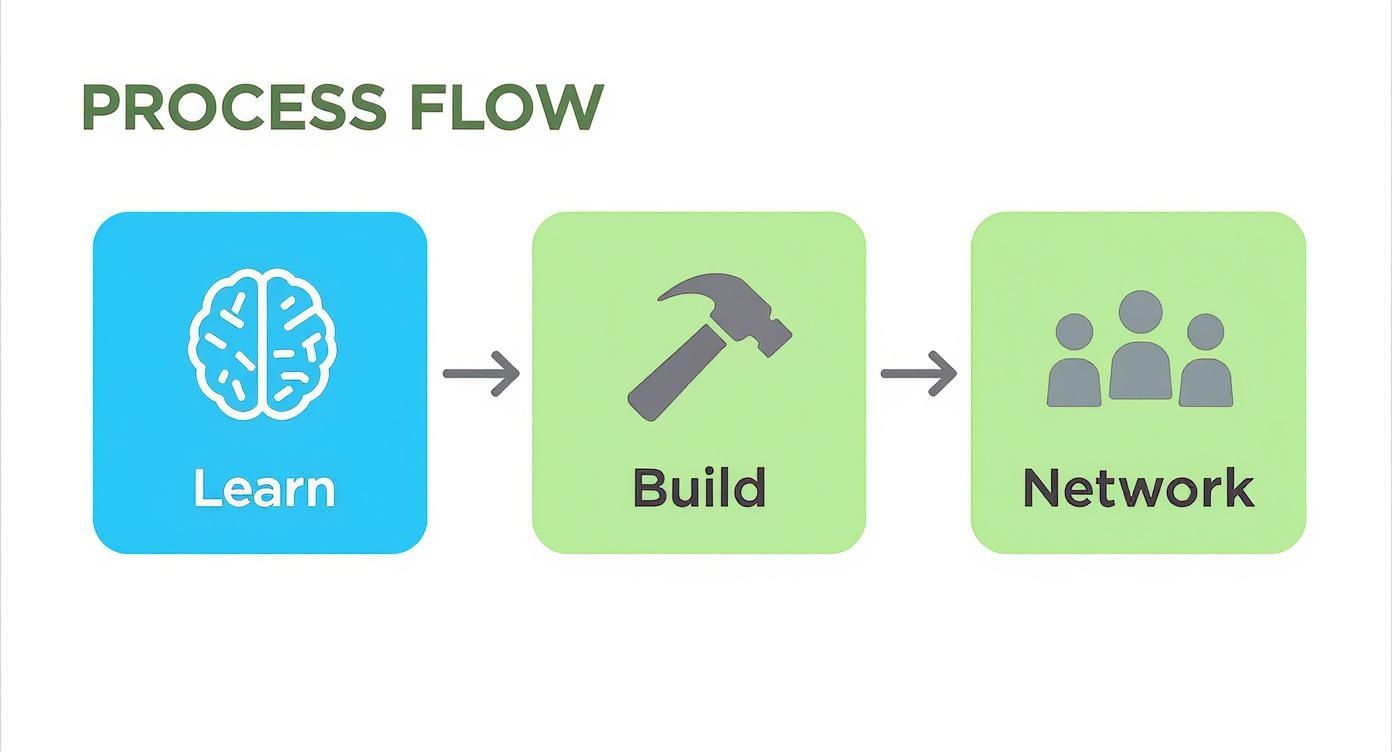
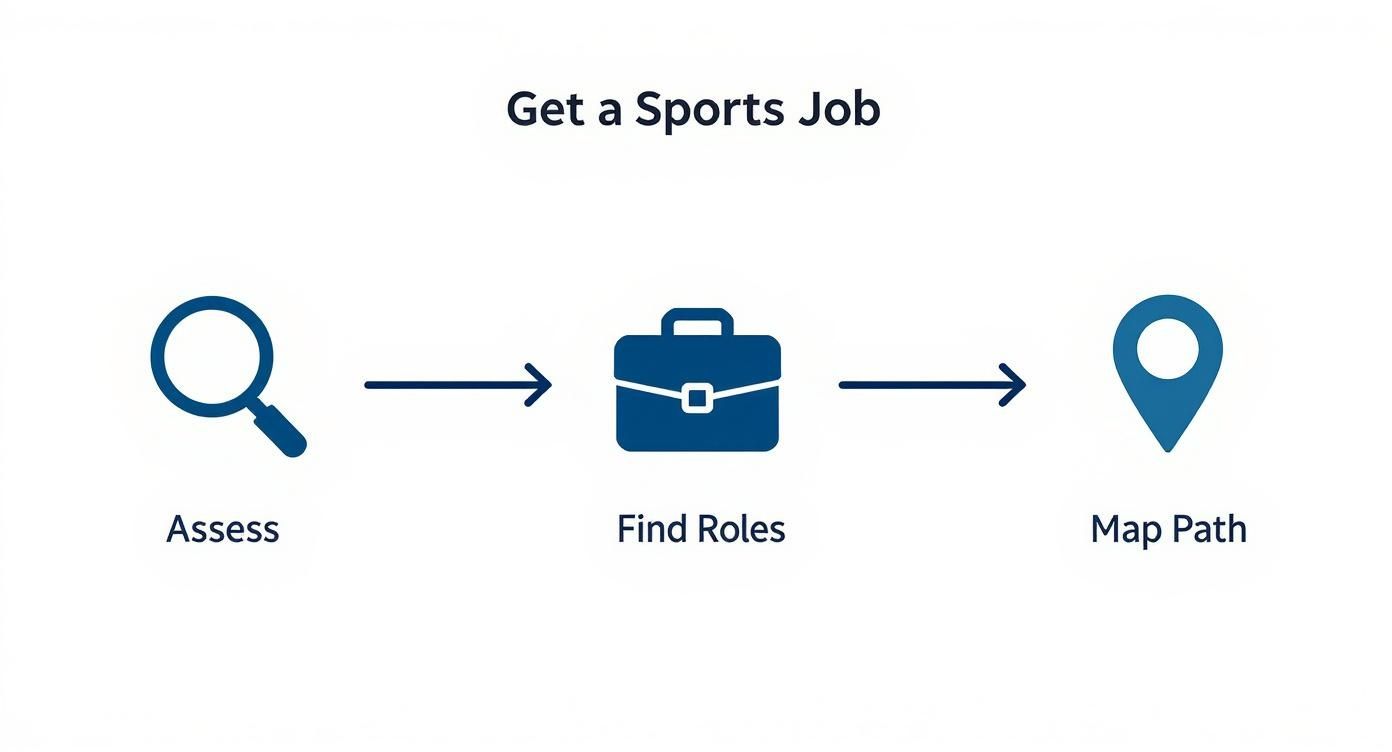
This chart breaks down the foundational steps to kickstart your job search.
The biggest takeaway here? A successful job hunt starts with some serious self-assessment before you even look at a single job posting. It's all about making your search targeted and smart.
Identifying Your Niche
You can't land a job if you don't know what jobs are out there. The sports industry is made up of several key sectors, and each one demands a different skillset. So, what actually gets you excited?
If you're all about storytelling and getting fans hyped, a job in a team's content or social media department could be a perfect fit. If you're a numbers wizard who sees patterns everywhere, sports analytics is calling your name.
To get you started, here's a quick rundown of where you might find your footing in the wide world of sports.
Key Sports Industry Sectors and Entry-Level Roles
| Industry Sector | Description | Example Entry-Level Roles |
|---|---|---|
| Professional Teams & Leagues | Organizations like the NFL, NBA, MLB, NHL, and MLS. This is the most visible part of the industry. | Ticket Sales Representative, Marketing Coordinator, Community Relations Assistant, Gameday Operations Crew |
| Collegiate Athletics | University athletic departments (NCAA, NAIA) that operate like small businesses. | Academic Support Assistant, Compliance Intern, Marketing & Promotions Assistant, Equipment Manager |
| Sports Media & Broadcasting | The companies that create and distribute sports content, like ESPN and Fox Sports. | Production Assistant, Social Media Coordinator, Content Researcher, Broadcast Logger |
| Agencies & Marketing Firms | Businesses that handle athlete representation, corporate sponsorships, and event promotions. | Client Services Coordinator, Partnership Activation Assistant, Event Operations Intern, Account Coordinator |
Getting familiar with these sectors is the first step toward finding your place within them.
Mapping Your Path from Fan to Professional
Once you've zeroed in on a few sectors that feel right, it's time to map out a realistic path to get there. This means taking an honest look at your current skills and experience. Don't sweat it if you don't have direct sports experience yet—many skills are transferable.
Did you work in retail? That's a fantastic foundation for a ticket sales role. Managed your college club's budget? That's valuable experience for an operations job.
Your goal is to connect the dots between what you've done and what the sports industry needs. It's not about having the "perfect" background, but about demonstrating passion, a strong work ethic, and the ability to learn quickly.
Start digging into entry-level job descriptions in your target area. What software do they mention over and over? What are the core responsibilities? This will show you exactly where your skill gaps are. From there, you can build a plan to fill them, whether that means taking an online course, volunteering for a local tournament, or landing an internship.
A great way to get a feel for this is to browse the different types of sports companies out there. See who they are and what kinds of roles they post. This kind of groundwork turns your job search from a wish into a strategic mission.
Crafting a Resume That Gets You in the Game
Think of your resume not as a boring list of past jobs, but as your personal highlight reel. To break into the sports world, it needs to tell a compelling story about your skills, your drive, and what you bring to the table. Hiring managers in this industry are swamped; they might spend just a few seconds on your resume. You have to make it count.
The secret? Stop just listing responsibilities. You need to show your achievements, and the best way to do that is with hard numbers. This small shift in perspective is often what separates a resume that gets tossed from one that lands an interview.
Quantify Your Impact with Metrics
Every single bullet point on your resume should answer the hiring manager's silent question: "So what?" Instead of saying you "managed social media," prove you were good at it. The sports industry is built on data—from player stats to ticket sales—and your resume needs to show you speak that language.
Don't worry if your experience isn't directly in sports yet. The key is to translate what you've done into skills that matter for the role you want.
Here's how to turn bland descriptions into powerful, metric-driven accomplishments:
Instead of: "Posted on the company's social media accounts."
Try: "Grew Instagram follower count by 15% in six months by creating consistent content and launching targeted fan engagement campaigns."
Instead of: "Helped organize a campus event."
Try: "Co-managed a $5,000 budget for a university fundraiser, coordinating 10 vendors and drawing over 300 attendees."
Instead of: "Responsible for customer service."
Try: "Resolved 25+ customer inquiries daily with a 95% satisfaction rating, building strong communication and problem-solving skills."
This approach does more than just list tasks; it proves you're a results-driver. It shows you understand how your work contributes to bigger goals, which is exactly what teams and organizations are looking for.
Tailoring Your Resume for Specific Roles
A generic, one-size-fits-all resume is a one-way ticket to the "no" pile. For every single job you apply for, you need to tweak your resume to match that specific role. No, you don't have to rewrite it from scratch every time, but a few strategic adjustments can make all the difference.
Start by dissecting the job description. What skills and qualifications are they highlighting? Pull out those keywords and make sure they appear on your resume, especially in your skills section and experience bullet points.
Pro Tip: If a job description for a sports marketing coordinator mentions "sponsorship activation" and "fan engagement" five times, your resume better have those exact phrases. This simple trick not only helps you get past the initial automated screening (ATS) but also instantly tells the hiring manager, "I'm the right fit."
If you're still figuring out which direction to go, it's a great idea to see what skills are in demand. For instance, browsing through a list of sports marketing job opportunities gives you a real-time look at what employers are searching for. Use that intel to build your resume around the skills that actually matter.
The Power of a Simple Digital Portfolio
In a sea of qualified applicants, a digital portfolio is your ace in the hole. It's nothing more than a simple website or even a polished PDF that brings your resume to life. This is your chance to show, not just tell, what you can do.
Your portfolio doesn't need to be some award-winning design project. It just needs to be professional, easy to navigate, and full of proof that you have the skills.
So, what should you put in it?
- Project Examples: If you're a writer, show off your articles. If you're in marketing, include campaign graphics, social media content, or analytics reports.
- Case Studies: Tell a quick story about a project you worked on. What was the goal? What did you do? And what were the results? Use visuals and data to back it up.
- An "About Me" Page: Give them a glimpse of your personality. Talk about why you're passionate about sports and what you're aiming for in your career.
Just dropping a link to your portfolio at the top of your resume can be the tiebreaker that lands you the interview. It shows you're willing to go the extra mile and gives them concrete proof that you're ready for the role.
Building Your Network in the Sports World

It's one of the oldest truths in any competitive field, and it's especially true in sports: you have to know people. But let's be clear—networking isn't about collecting contacts like trading cards. It's about building genuine relationships. Forget blindly spamming connection requests on LinkedIn. To get a real job in sports, you need a strategy built on authentic engagement and providing value first.
You have to shift your mindset from "What can you do for me?" to "How can I learn from you?" People in this industry are incredibly busy, but most are more than willing to help someone who shows genuine curiosity and respect for their time. Your goal is to become a familiar, trusted name, not just another random applicant in a digital pile.
Mastering Digital Networking Platforms
These days, your professional network almost always starts online. Platforms like LinkedIn and X (formerly Twitter) are your digital keys to the front office, but only if you use them the right way. The name of the game is quality over quantity.
Start by overhauling your LinkedIn profile so it screams your career goals. Your headline can't just be "Student." Make it something like, "Aspiring Sports Marketing Coordinator | Passionate about Fan Engagement." That immediately signals your intent and focus to anyone who lands on your page.
From there, your focus needs to be on strategic engagement, not just passive scrolling.
- Follow Key People and Organizations: Identify 10-15 professionals in roles you admire and follow the teams, leagues, and agencies you're targeting. Pay close attention to what they post, share, and talk about.
- Engage with Their Content: Don't just hit "like" and move on. Leave a thoughtful comment that actually adds to the conversation. If a marketing director shares an article about a new sponsorship deal, comment on what you found insightful about that partnership.
- Share Relevant Content: Post articles, your own insights, or thoughts about current trends in the sports business. This positions you as someone who is actively engaged with the industry, not just someone with their hand out.
This kind of consistent, thoughtful activity makes your name recognizable long before you ever ask for anything.
The Art of the Informational Interview
Once you've established a bit of a digital presence, it's time for the informational interview. This is your secret weapon. It's a low-pressure, 15-20 minute chat where you are only asking for advice, not a job. I can't stress this enough: it's the single most effective way to build a real connection.
When you're ready to reach out, send a personalized connection request.
Here's a template that works: "Hi [Name], I've been following your work in community relations with the [Team Name] and was really impressed by the [Specific Program] you launched. As someone passionate about breaking into the sports industry, I'd be grateful for 15 minutes of your time to hear about your career path and any advice you might have."
See how that's specific, complimentary, and respectful of their time? Once they accept, follow up right away to schedule a brief call. During the conversation, have smart questions ready about their journey, the challenges they faced, and what skills they see as most valuable today.
And here's the most important part. Always, always end the call by asking, "Is there anyone else you think it would be valuable for me to speak with?" This one question can turn a single great conversation into a whole chain of new connections.
Maximizing In-Person Opportunities
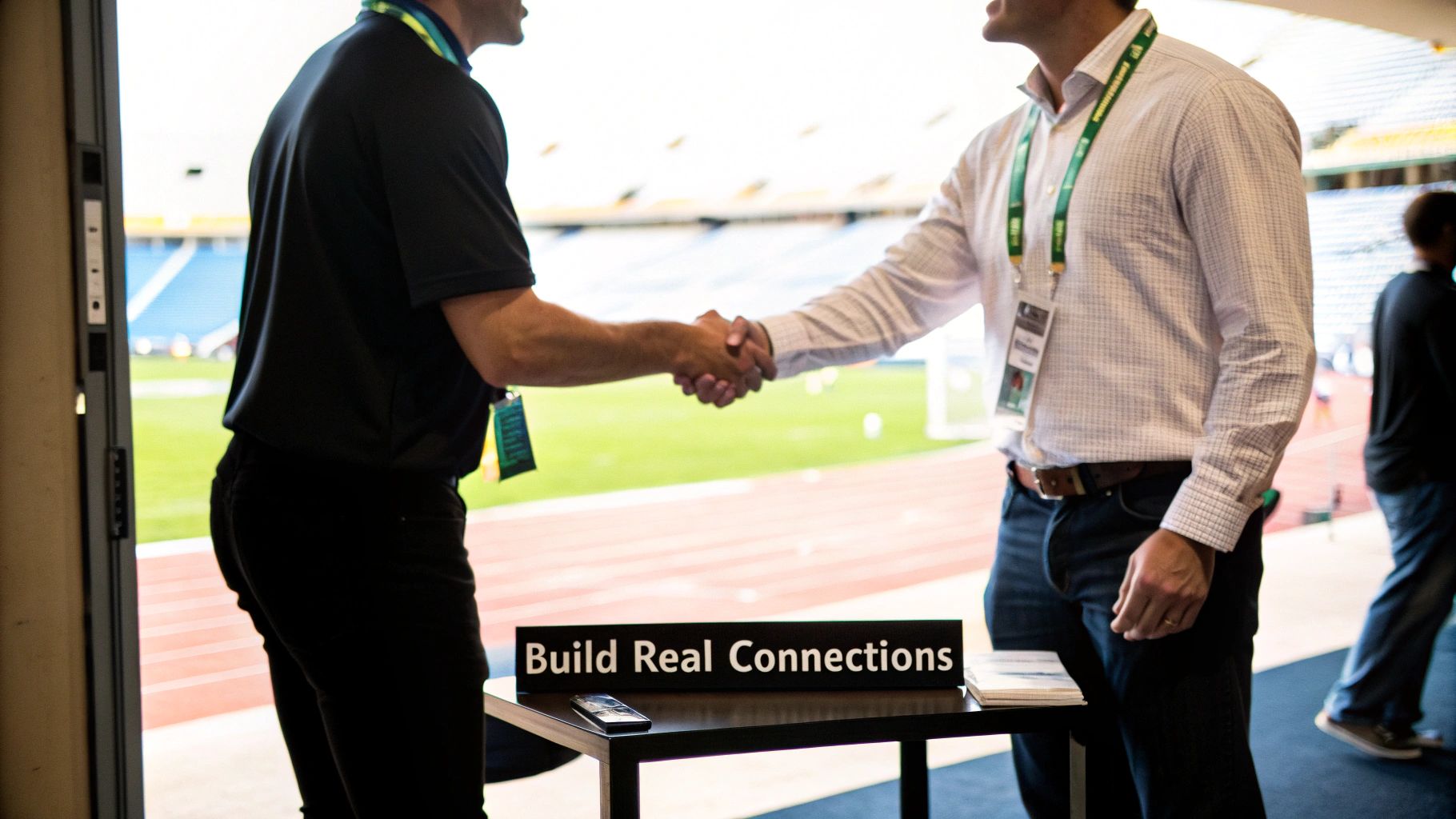
While digital networking is crucial, nothing completely replaces face-to-face interaction. Sports conferences, team-hosted career fairs, and even local industry panels are absolute goldmines for making a lasting impression.
Your goal at these events isn't to hand out 100 resumes. It's to have three to five meaningful conversations. Don't just rush up to people. Approach speakers after their panels or introduce yourself to recruiters at their booths.
Instead of leading with, "I'm looking for a job," start a real conversation. Ask them about their role or a specific project their team is working on. After a few minutes of genuine chat, you can then say, "I'm really interested in this side of the business. Would it be okay if I connected with you on LinkedIn to stay in touch?"
This simple shift transforms a cold handshake into a warm connection, making your name actually stand out when you follow up. Building these relationships takes time and a lot of effort, but they are the true foundation of a successful career in the sports world.
Gaining Experience That Hiring Managers Value
Let's be blunt: in the sports industry, real-world experience is everything. A sharp resume and a solid network can open doors, but it's your hands-on experience that proves you belong in this fast-paced world. Hiring managers aren't looking for another fan; they want people who've already proven they can do the work.
This is where you collect the stories you'll tell in an interview. Experience isn't just a bullet point on a resume—it's your proof of work. It shows you understand the grind behind the gameday glamour, whether that's setting up an event at 5 a.m. or crunching sponsorship data late at night.
The Power of Internships
Think of an internship as your all-access pass. It's the single best way to test-drive a career, build skills that matter, and meet the people who can hire you later. Most pro teams, college athletic departments, and sports marketing agencies have internship programs designed to pipeline talent directly into full-time roles.
Finding the right internship requires the same focus as a job hunt. Don't just blast your resume everywhere. Instead, target organizations that match your career goals and tailor your application to show how you can contribute, even while you're learning.
Once you're in, your goal is to become indispensable.
- Look for More Work: Always be asking, "What else can I help with?" Initiative is the quickest way to earn trust and get bigger projects.
- Act Like It's a Long-Term Interview: Because it is. The people you work with every day are your future references, mentors, and colleagues.
- Network Across Departments: Make it a point to meet people outside your immediate team. Understanding how the whole organization works makes you a much smarter and more valuable employee.
The objective isn't just to finish the internship; it's to leave them wondering how they ever managed without you.
Why Volunteering is a Secret Weapon
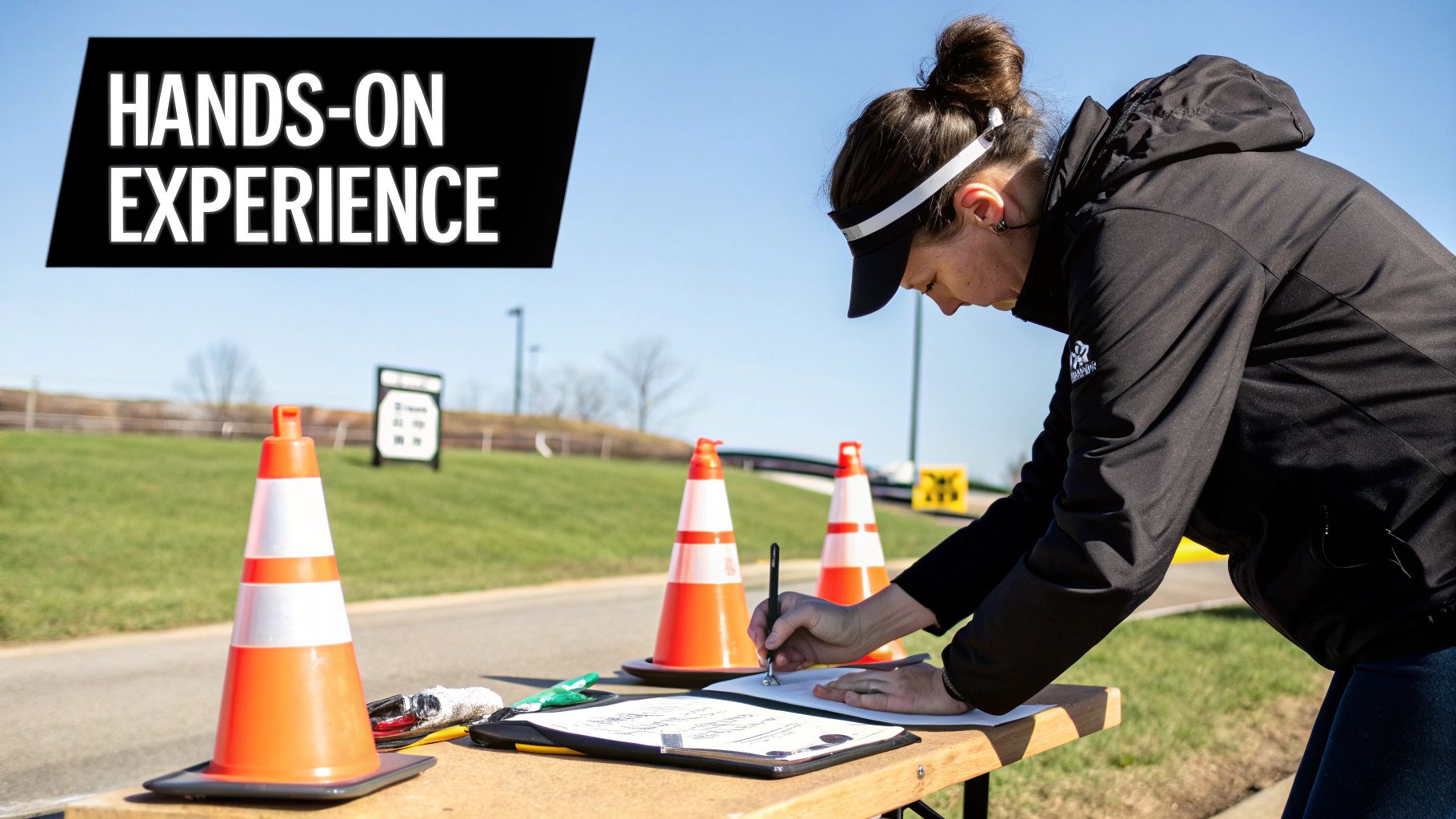
Internships get a lot of attention, but don't sleep on volunteering. It's a powerful and often overlooked strategy. Opportunities are everywhere—local 5K races, youth sports leagues, and even massive events like the Super Bowl or a PGA Tour stop. These roles are often easier to land than a formal internship and the payoff can be huge.
Volunteering screams passion. It tells a hiring manager you're willing to show up and work hard just for the love of the game. That's a compelling story to tell.
Volunteering isn't just about what you do; it's about what it says about you. It proves your commitment to the industry beyond a paycheck and shows you're a team player ready to contribute at any level.
Plus, these events are goldmines for networking. You're working side-by-side with industry pros in a more casual setting, which is perfect for building real connections that can lead to job leads or mentorship down the road.
The timing couldn't be better. The sports industry is booming, and this growth is creating more entry points than ever. In the UK alone, sports and fitness jobs have jumped by 20% since 2021. And these aren't just any jobs—nearly 40% of sports employees in the EU have high educational qualifications, showing a demand for skilled professionals. You can learn more about the growing global sports job market to understand the trends.
Getting relevant experience now puts you in the perfect position to ride this wave of opportunity.
How to Find and Apply for Sports Jobs
You've polished your resume and started making some key connections. Now it's time for the real work: turning all that preparation into actual applications. This is where strategy is everything.
Knowing where to look is half the battle. Just blasting your resume across massive, all-purpose job boards is the quickest way to get lost in the shuffle. The goal isn't to cast a wide net; it's to use a targeted, high-impact approach that gets you noticed.
To do that, you need to go where the sports industry actually hires.
Finding Opportunities on Niche Job Boards
Forget the giant job aggregators for a minute. While they have their place, the real action for sports careers happens on specialized job boards. These platforms are built for the industry, which means the listings are more relevant and you're competing against a more focused pool of candidates. I always tell people to make sites like TeamWork Online and the NCAA Market part of their daily routine.
A platform like GetSportJobs is another incredibly powerful tool because it cuts through the noise. It brings together roles from pro leagues, college athletic departments, and sports agencies, all in one clean interface.
The real advantage of these sites is the ability to search with precision. You can filter by role, league, or location, making it much easier to find openings that are a genuine fit.
To get the most out of these platforms, don't just browse. Be proactive.
- Set Up Alerts: Create saved searches for your dream roles (e.g., "Social Media Coordinator," "Chicago") and turn on email notifications. This puts you at the front of the line when a new job is posted.
- Complete Your Profile: Treat your profile on these sites like a mini-resume. Fill it out completely with a professional headshot and your tailored resume. Recruiters actively search these databases for candidates, so a complete profile makes you discoverable.
A great way to start is by exploring the different kinds of full-time sports jobs available. This will give you a real-time sense of what skills are in demand right now.
Uncovering Hidden Opportunities
Here's a secret not everyone knows: not every job makes it to a job board. Many of the best opportunities are posted exclusively on an organization's own website first. This is the "hidden" job market, and tapping into it can give you a serious edge.
Start by creating a target list of 20-30 organizations you'd kill to work for. Think teams, leagues, agencies, and college athletic departments. Bookmark their "Careers" or "Jobs" pages and get into the habit of checking them once a week. This simple, proactive step shows a level of initiative that mass-applying never will.
Your job search shouldn't be passive. Actively seeking out opportunities directly from the source demonstrates a level of interest that mass-applying on big job boards simply can't convey.
And the good news? The industry is growing. The U.S. Bureau of Labor Statistics projects that entertainment and sports jobs will see steady growth, with an estimated 99,700 openings each year from 2024 to 2034. This isn't just from new jobs being created, but also from the need to replace workers who move on or retire. You can dig into the official projections for sports careers to learn more.
Crafting an Application That Stands Out
Once you've found the right role, the final piece of the puzzle is an application that demands attention. Your cover letter is your most important tool here. A generic, copy-and-paste letter is an instant dealbreaker for almost any hiring manager.
Think of your cover letter as a direct response to the job description.
- Address a Real Person: Do a little digging on LinkedIn to find the hiring manager's name. "Dear [Hiring Manager's Name]" is infinitely more powerful than "To Whom It May Concern."
- Start with a Strong Hook: Your opening paragraph needs to grab their attention. State the specific role you're applying for and share your genuine excitement and a key reason why you're a perfect fit.
- Connect the Dots for Them: Use the body of the letter to draw clear, direct lines between your experience and the needs they've listed in the job description. Don't just list what you did; tell a quick story about how you used a specific skill to get a result.
By combining a smart, targeted search with a customized application, you stop being just another name in a stack of resumes and become a candidate they need to talk to.
Got Questions About Breaking Into Sports? I've Got Answers.
Trying to land a job in the sports world can feel like you're trying to crack a secret code. You know you've got the passion, but the path forward isn't always clear. Over the years, I've heard the same questions pop up time and time again from people just like you.
Let's cut through the noise. Here's some real talk on the questions that are probably on your mind.
"Do I Really Need a Sports Management Degree?"
This is the big one, and I have good news for you: not necessarily. A sports management degree can give you a great foundation and an initial network, but it's far from the only way in. Honestly, it's not even the best way for many roles.
Hiring managers are looking for what you can do, not just what you studied. I've seen candidates with business degrees and a solid sales internship with a minor league team blow sports management grads with no practical experience out of the water.
Your degree should align with the job you want to do within sports. Think of it this way:
- Want to work in ticket sales or corporate partnerships? A Business or Sales degree is perfect.
- Dream of running a team's social media or creating content? A Marketing or Communications degree is your ticket.
- Fascinated by the numbers side of the game? A Data Science or Analytics degree is in ridiculously high demand.
At the end of the day, your hands-on experience and proven skills will always carry more weight than the title on your diploma.
"What Skills Will Actually Get Me Hired?"
The industry has changed. It's not just about knowing the game anymore; it's a data-driven, content-heavy business. If you want to be a top-tier candidate, you need to bring some serious hard skills to the table.
Focus on building a toolkit that makes you immediately valuable. Forget the fluff—these are the skills I see listed in job descriptions every single day, from the minor leagues to the majors.
The new MVPs in the front office are the people who can analyze data, create killer digital content, and drive revenue. Get good at these, and teams will notice.
Three areas stand out above all others:
- Data Analytics: This isn't just for the "moneyball" nerds anymore. It's everywhere. Teams use data to price tickets, understand their fans, and evaluate players. Getting comfortable with Excel, SQL, or a visualization tool like Tableau makes you a huge asset.
- Digital Marketing & Content Creation: Every team is now a media company. Can you run a social media campaign? Can you shoot and edit a quick video for TikTok? Do you know your way around the Adobe Creative Suite? These skills are non-negotiable for connecting with modern fans.
- Sales & Sponsorship: Money makes the sports world go 'round. Whether it's selling season tickets, luxury suites, or huge corporate sponsorships, the ability to generate revenue is the most direct path to success. Experience with a CRM like Salesforce and a knack for building relationships will always be in demand.
"How Important Is It to Be Willing to Relocate?"
I'll be blunt: for your first or second job, it's a game-changer. Being flexible on your location can fast-track your entire career.
While some roles have gone remote, the vast majority of jobs in sports—especially at the entry level—are tied to a specific city. Teams, leagues, and colleges have physical locations, and they need people on the ground. If you only search for jobs in your current city, you're looking at a tiny fraction of the available opportunities.
Being open to moving shows you're serious. It might mean starting out in a smaller market you'd never considered, but that experience is what gets you the job with your dream team in a big city later on. It's a short-term trade-off for a massive long-term payoff.
Ready to put this advice into action? GetSportJobs is where you'll find hundreds of the latest openings from pro teams, college athletic departments, and top sports brands, all in one spot. Stop dreaming and start searching. Your future in sports is waiting for you at https://www.getsportjobs.com.