How to Improve Interview Skills for the Sports Industry
A standout interview performance doesn't just happen. It's built on a solid foundation of research, analysis, and self-awareness long before you ever shake hands or log into the Zoom call. Getting this part right shows you're not just another fan—you're a professional who understands the business of sports.
Build Your Foundation Before the First Question
An interview isn't a pop quiz. It’s your chance to show how you think strategically and how you fit into their organization. I've seen too many candidates walk in armed only with their passion for the team or the game. That’s a huge missed opportunity.
Hiring managers in sports expect you to be a fan. That’s the baseline. What they actually hire for is business acumen and the ability to help them hit their targets.
Building this foundation transforms you from a hopeful applicant into a potential strategic partner. It’s the difference between saying, "I've always loved this team," and explaining, "I noticed your recent youth engagement initiative, and my experience in community outreach directly aligns with scaling that program." One is fluff; the other proves you've done your homework and can add value from day one.
The whole process really boils down to three core actions: deep research, breaking down the job description, and crafting your personal narrative.
This is the exact process flow you should follow. It's about starting with the big picture, narrowing it down to the specifics of the role, and then fitting your own story into that frame.
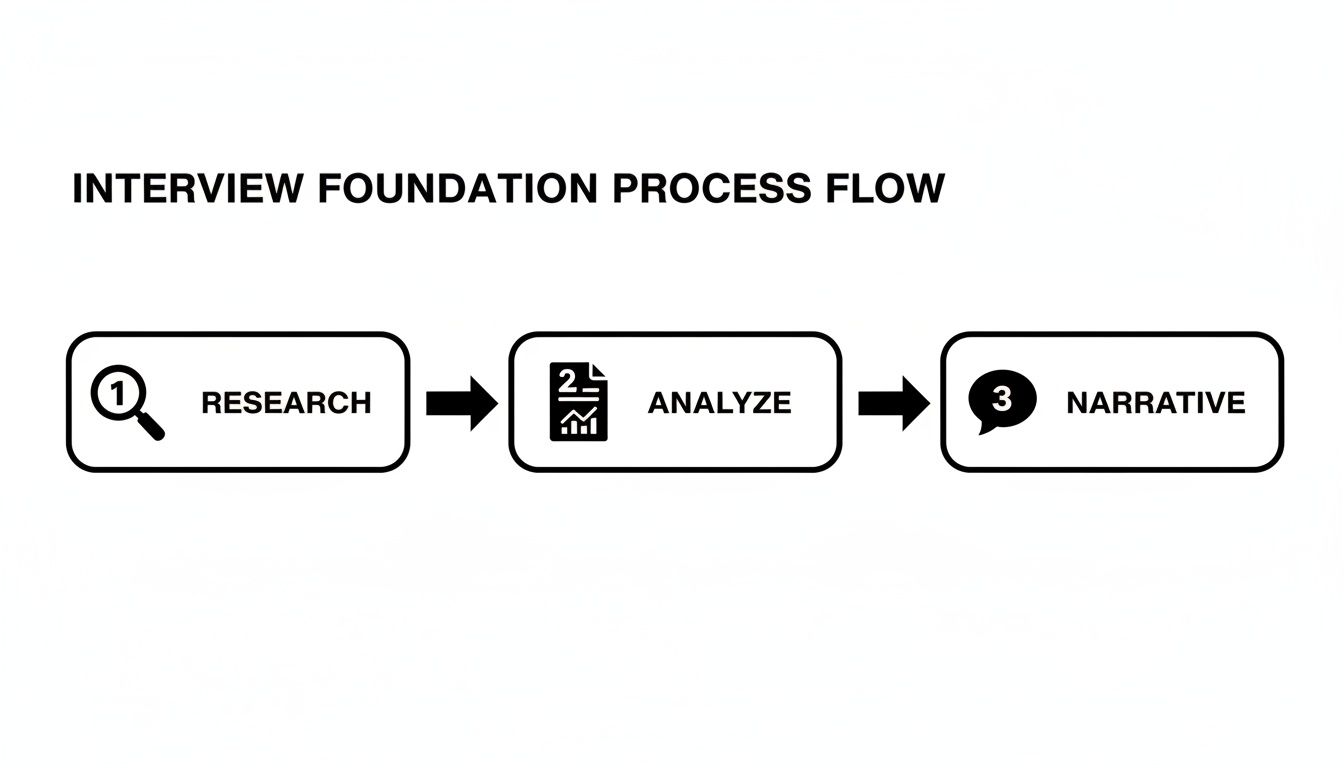
As you can see, it's a logical progression: understand the company (Research), connect its needs to the role (Analyze), and then frame your experience as the perfect solution (Narrative).
Dive Deep Into the Organization
Knowing the team's record or star players is surface-level stuff. Everyone knows that. Real preparation means digging into the organization as a business. You need to go beyond the fan-facing website and explore their corporate side.
Start by hunting for these key pieces of intel:
- Recent Business Moves: Have they announced a new sponsorship deal? A stadium renovation project? A new community partnership? Knowing this shows you’re plugged into their business strategy.
- Key Personnel: Who runs the department you’re applying to? Look them up on LinkedIn. See where they've worked and what they've accomplished.
- Competitive Landscape: Who are their main rivals, both on and off the field? Think about other teams, but also other entertainment options fighting for fans' time and money.
- Public Statements: Read recent press releases or watch interviews with team executives. They often reveal the organization's biggest priorities, challenges, and future goals.
"Your goal is to connect your skills to their current reality. If a team's CEO just gave an interview about expanding their international brand presence, your experience in global marketing suddenly becomes a critical talking point, not just a line on your resume."
Deconstruct the Job Description
The job description is your cheat sheet. It’s a road map telling you exactly what the hiring manager wants. Don't just skim it—dissect it. Print it out, grab a highlighter, and mark up the key skills, responsibilities, and required qualifications.
For every single point you highlight, ask yourself: “When have I successfully done this?” Come up with a specific example for each. This simple exercise maps your experience directly to their needs. If the description asks for "strong project management skills," you better have a story ready about a project you led from start to finish. Knowing how to present these accomplishments is key, and our guide on https://getsportjobs.com/blog/sports-on-resume can help you frame them perfectly.
Craft Your Core Narrative
Finally, you need to pull it all together into a compelling story about yourself. Why this role? Why this team? Why now? Your core narrative should be the thread that connects your personal passion for sports with the tangible business goals of the company.
For example, let's say you're interviewing for a ticket sales role with a minor league baseball team. Your story isn't just, "I love baseball." It’s something more like this: “I grew up coming to these games and saw firsthand how strong community partnerships created a loyal fanbase. All of my sales experience has been focused on building those same kinds of genuine relationships, which I know is the key to driving ticket revenue and ensuring long-term growth here.”
That narrative is authentic, memorable, and laser-focused on the business. Being able to deliver that story smoothly is crucial, which is why learning how to improve conversation skills is a vital step in preparing for any interview. It's about connecting with the interviewer, not just reciting facts.
How to Craft Compelling Answers With the STAR Method

It’s one thing to know you’ve done great work. It's another thing entirely to communicate it clearly when you're in the hot seat. This is exactly where many talented people stumble in an interview, losing the hiring manager in a long, rambling story.
To fix this, you need a framework. The best one out there is the STAR method. It’s a simple but incredibly powerful way to structure your answers to behavioral questions—those classic "Tell me about a time when..." prompts. It forces you to be clear, concise, and focused on what really matters: your impact.
Breaking Down the STAR Framework
STAR is an acronym that gives your story a beginning, a middle, and an end. Each part plays a specific role in painting a complete picture for the interviewer.
- S - Situation: Quickly set the scene. What was the challenge or the context? Keep this short and sweet—just enough detail for them to understand the stakes.
- T - Task: What was your specific goal or responsibility? This clarifies your role and what you were expected to deliver.
- A - Action: This is the heart of your story. Describe the specific steps you took to handle the task. Focus on your personal contributions and use strong, active verbs.
- R - Result: What happened because of your actions? This is where you prove your value. Whenever possible, use hard numbers, percentages, or concrete outcomes to quantify your success.
Using this structure keeps you from getting sidetracked and makes sure you hit the points that hiring managers are listening for. It’s not just a nice-to-have; it's a fundamental part of a modern interview strategy.
A great STAR story doesn't just list your job duties. It tells a story of your impact. It transforms a past experience into concrete proof of your problem-solving skills and your value to a team.
This isn't just a trend. Today, a huge 72% of companies use structured interviews to keep the hiring process fair and consistent. That means they're often scoring your answers against a checklist, and a sharp STAR response gives them everything they need to check off the boxes for "competent," "clear," and "results-oriented."
Putting STAR Into Practice in the Sports World
Let's make this real. Imagine you're interviewing for a Community Relations Manager role and the interviewer asks: “Tell me about a time you had to manage a challenging event with a tight deadline.”
A weak answer sounds like this: "We had a charity event that was tough to organize, but it all worked out." It's vague and forgettable.
Now, let's use the STAR method to build a powerful response.
STAR Method Breakdown for a Sports Industry Role
The table below shows how to turn that weak answer into a compelling story that showcases your skills in a sports-specific context.
| STAR Component | Guiding Question | Example Answer (Marketing Manager) |
|---|---|---|
| Situation | What was the context? | "Our team's primary charity partner unexpectedly pulled out of our annual fundraising gala just three weeks before the event, leaving us with a $25,000 fundraising gap and no central theme." |
| Task | What was your goal? | "My task was to find a new local charity partner, rebrand the event, and execute a new promotional strategy to ensure we still met our attendance and fundraising targets." |
| Action | What steps did you take? | "I immediately researched and vetted three local youth sports charities, presenting a compelling case for a new partnership to my director. Once approved, I led a cross-functional team to create a new 'Future All-Stars' event theme, launching a targeted social media campaign and securing coverage on two local news stations." |
| Result | What was the outcome? | "The revamped event sold out, exceeding our original attendance goal by 15%. We not only closed the $25,000 gap but raised over $35,000 for the new partner, and post-event surveys showed a 95% positive sentiment score from attendees." |
See the difference? This answer is specific, full of action, and proves your worth with solid numbers. It’s a memorable story that directly highlights your crisis management and strategic thinking skills. And to make sure you're just as prepared for the big day, run through our checklist for interview prep to cover all your bases.
Build Your Own STAR Story Library
The trick is not to come up with these stories on the spot. You should walk into every interview with a library of go-to examples.
- Dissect the Job Description: Pull out the top 5-7 skills they mention, like leadership, problem-solving, or data analysis.
- Match Skills to Stories: For each skill, brainstorm at least two real-world examples from your career where you demonstrated it.
- Write and Rehearse: Write out each story using the STAR framework. Then, practice saying them out loud until they feel natural—not like you’re reading from a script.
Having these stories locked and loaded gives you the confidence to handle almost any behavioral question they throw at you. It’s one of the most effective things you can do to sharpen your interview skills.
Mastering the Dynamics of Virtual and In--Person Interviews
Whether you’re logging into a video call or walking into an office, the setting of your interview dramatically shapes the impression you leave. Knowing how to shine in both digital and physical rooms isn't just a bonus anymore; it's a core requirement. Success is less about what you say and more about how effectively you land your message in each specific context.

This dual-format world isn't going anywhere. Since 2020, virtual interviews have become a staple of the hiring process. In fact, up to 86% of organizations now use them, meaning that if your remote setup isn't sharp, you’re already behind the competition. You can get a better handle on these interview statistics and trends to see just how common this has become.
Excelling in the Virtual Arena
Think of a virtual interview as a performance. Your screen is the stage, and every element of your setup influences how your professionalism comes across. Just checking your internet connection isn't enough.
First, take command of your environment. Find a quiet spot with a clean, professional background—a simple bookshelf or a neutral wall beats a cluttered room every time. Make sure you won't be interrupted by pets, roommates, or deliveries.
Next, dial in your technical presentation. Your camera needs to be at eye level. If that means stacking a few books under your laptop, do it. This creates a much more direct and engaging line of sight. And don't forget lighting! A light source in front of you prevents you from looking like a silhouette. A cheap ring light can make a world of difference here.
Your goal on camera is to project engagement. Sit up straight, lean slightly forward, and use hand gestures as you normally would. Consciously smiling and nodding while the interviewer speaks shows you're actively listening and present in the conversation.
Projecting Confidence In Person
When you're meeting face-to-face, the interview starts the moment you walk through the door. Everything from your outfit to your handshake sets the tone long before you answer a single question.
For sports industry roles, the dress code can range from a full suit to business casual. Do your homework on the company culture. A sports tech startup will likely have a more relaxed vibe than the front office of a major league team. When in doubt, it’s always better to be slightly overdressed than too casual.
Your body language speaks volumes. Practice a firm handshake (no one likes a limp fish), maintain good eye contact, and sit with an open, confident posture. Try to ditch nervous habits like tapping your foot or clicking a pen. All these small details add up to create an image of a calm, collected professional who can handle the pressure.
Drills to Sharpen Your Delivery
No matter the format, how you communicate is everything. The good news is you can actively train your delivery with a few simple exercises to make it more impactful.
- Vocal Warm-Ups: Before hopping on a call or heading out the door, do some vocal exercises. Reciting tongue twisters or just reading a paragraph aloud helps you enunciate clearly and avoid a monotone delivery. It’s all about projecting energy.
- The Three-Second Pause: Record yourself answering a common question like, "Tell me about yourself." When you play it back, count how many times you use filler words like "um," "uh," or "like." Practice replacing those with a short, silent pause. It makes you sound far more thoughtful and articulate.
- Active Listening Practice: The next time you're talking with a friend, make a point to summarize what they said before you respond. Saying something like, "So, what I'm hearing is..." not only confirms you understood them but also builds rapport by showing you're genuinely locked in.
When you master the logistics of both settings and deliberately practice your delivery, you get all the distractions out of the way. That's when your qualifications, personality, and hard-earned preparation can truly take center stage.
Using Mock Interviews for Purposeful Practice

Confidence under pressure isn’t something you just have; it’s a skill you build through smart, deliberate practice. This is exactly where mock interviews come in, transforming them from a chore into your most powerful training tool. They help you bridge the gap between knowing your answers and being able to deliver them with poise when it actually matters.
The point here isn't just mindless rehearsal. It's about creating a safe space to fail, get honest feedback, and polish your approach. A well-run mock interview builds the muscle memory you'll lean on in a high-stakes situation, turning abstract prep work into real, tangible improvement.
Setting Up a High-Impact Practice Session
Who you practice with makes a huge difference. Every partner brings a unique perspective, so try to mix it up to get a complete picture of how you're coming across. The most important thing is finding someone who will give you blunt, constructive feedback.
You’ve got a few solid options for a practice partner:
- A Trusted Mentor or Colleague: This is usually your best bet. Someone who gets the industry and your specific role can provide sharp, relevant feedback that you just can't get anywhere else.
- A Peer or Friend: Great for working on your delivery and getting comfortable. Ask them to watch for things like your body language, tone, and how clearly you’re explaining your stories.
- Online AI Tools: Some platforms are designed specifically for interview practice and can give you instant, data-driven insights on your pacing, use of filler words, and even eye contact.
Once you’ve got a partner lined up, treat the session like it's the real deal. Dress the part, find a quiet spot without distractions, and have your resume handy. The closer you can get to the real thing, the more you'll get out of it.
A mock interview is your scrimmage before the championship game. It’s where you test your plays, identify weaknesses, and build the confidence to execute flawlessly when it counts. Don’t just go through the motions—practice with purpose.
Tailoring Questions for Sports Industry Roles
Generic interview questions are a fine warm-up, but to really prepare, you need to dig into the specifics of the sports world. Make sure your practice partner is ready to ask questions that test your understanding of the industry's unique landscape. This is a non-negotiable step for anyone serious about how to improve interview skills for a sports career.
Here are a few examples of questions tailored for common roles in the industry. Ask your mock interviewer to sprinkle these in with the usual behavioral questions.
Role-Specific Practice Questions
- For a Marketing Role: "Our fan attendance has been flat for two seasons. Walk me through the first 90 days of your plan to re-engage our local community."
- For an Operations Role: "Describe a time you had to manage a major logistical issue on game day. What was the problem, how did you solve it, and what was the outcome?"
- For an Analytics Role: "How would you use ticketing and merchandise data to identify a new revenue stream for our organization?"
- For a Sales Role: "Our corporate sponsorship renewal rate is at 75%. How would you approach a conversation with a long-term partner who is hesitant to renew their contract?"
Questions like these force you to apply your skills directly to the business of sports, which is precisely what a hiring manager wants to see.
Gathering and Implementing Feedback
The most valuable part of a mock interview happens after the last question is answered. This is where you get the raw material for real improvement. Don't just nod along to the feedback—actively seek it out and put it into action.
Structure the feedback session so it's truly useful. Ask your partner to rate you on a few key areas:
- Clarity of STAR Stories: Were your examples easy to follow? Did they land with a clear, impactful result?
- Confidence and Body Language: Did you look and sound professional? Was your eye contact steady?
- Use of Filler Words: How often did you lean on "um," "uh," or "like" as a crutch?
- Industry Knowledge: Did your answers prove you actually understand the sports business?
If you can, record the session (with permission, of course). Watching yourself on video is an incredibly powerful—and sometimes humbling—way to spot nervous habits or weak answers you didn't even know you had. From there, pick one or two things to fix at a time. This cycle of practice, feedback, and refinement is the single fastest way to build interview skills that stick.
Navigating Follow-Ups and Salary Negotiations
The interview doesn't really end when you walk out the door or click "Leave Meeting." The final stretch—the follow-up and any negotiation—is your last chance to make a great impression and seal the deal. Skipping these steps can unintentionally send the wrong message.
This part of the process is all about striking a balance. You want to show you're still interested without coming across as desperate. Nailing this shows the hiring team you respect their time while also being a confident advocate for your own career.
Writing a Compelling Thank-You Note
Sending a well-crafted thank-you email is non-negotiable. It’s your chance to get back in front of the hiring manager with a final reminder of why you’re the right person for the job, right as they're making their decision.
To make your note stand out, go beyond the generic templates. A simple, effective structure works best:
- Make a Personal Connection: Bring up something specific and interesting from your conversation. Did you connect over a particular team’s new marketing campaign? Or maybe you discussed a unique challenge facing their department? Mentioning it shows you were actively listening.
- Reiterate Your Value: Briefly tie one of your key skills back to a problem or goal they mentioned. For example, "I really enjoyed our discussion about expanding fan engagement, and it made me even more excited about how my background in community outreach could help drive that initiative."
- Show Genuine Enthusiasm: End with a clear, professional line about your continued interest in the role and the company.
Try to send this email within 24 hours of your interview. Promptness matters. It shows you’re organized and eager.
"Your thank-you note is your final sales pitch. It’s a strategic touchpoint that reinforces you weren't just answering questions, but actively listening and thinking about how you can solve their specific problems."
What to Do When You Haven’t Heard Back
The waiting game is tough. But how you handle the silence says a lot about your professionalism. If the timeline the interviewer gave you comes and goes, it's completely fine to send a polite, brief check-in email.
Keep it short and positive. Something simple like, "I hope you’re having a great week. I'm just checking in on the timeline for the [Job Title] position, as I remain very interested in the opportunity to join your team," is perfect. It’s a gentle nudge that keeps you top-of-mind without being pushy.
Handling the Job Offer and Salary Discussion
Getting the offer is a huge win, but don't pop the champagne just yet. Now you shift from candidate to negotiator. The first thing to do is express your thanks and ask for the offer in writing. It's also smart to ask for a reasonable amount of time to review it—usually 24-48 hours is standard.
Before you even think about negotiating, you have to know what you're worth. Research salary ranges for similar roles in the sports industry, making sure to consider your experience and the job's location. Websites like Glassdoor or industry-specific salary reports can give you a solid baseline.
When it's time to talk numbers, frame your counteroffer around the value you bring, not just a number you want. You could say, "Based on my research and my experience in [Specific Skill] that we discussed, I believe a salary of [Your Number] more accurately reflects the value I can bring to this role." This approach is confident, backed by data, and focused on a win-win outcome.
This is a critical skill, similar to what's needed for major contract deals, which is something we explore in our guide on how to become a sports agent.
Always be ready to back up your request with the skills and results you've already proven. By handling this final stage with a clear strategy, you not only improve your odds of getting a better offer but also prove you’re the poised, capable professional they’re looking for.
Answering Common Sports Industry Interview Questions
Every candidate, no matter how prepared, can get thrown by a tough question. How you handle those moments is what really shows an interviewer you can think on your feet and stay cool under pressure. It's a huge part of standing out.
Let's walk through a few of the classic questions that come up in sports industry interviews and break down exactly how to answer them with confidence.
How Many Mock Interviews Should I Do?
Forget a magic number; aim for 3-5 quality mock interviews. The goal here is progress, not just repetition.
Your first run-through is your baseline. This is where you'll spot the big things—maybe your stories ramble, or you're using "um" and "like" as a crutch. The next few sessions are for drilling down on those specific weaknesses. Your final practice should feel as real as possible to lock in that muscle memory and boost your confidence before game day.
The real key? Get brutally honest feedback every single time and actually use it. If you're not improving with each session, you're just wasting your time.
What Is the Biggest Mistake People Make?
Hands down, the most common mistake is leading with your fandom. The hiring manager assumes you're a fan—that’s table stakes. What they really need to know is how your skills will help them win on the business side.
They want to see a professional, not just another person in a jersey.
Instead of saying, "I've been a lifelong fan," connect that passion to a business outcome. Try something like, "My lifelong passion for this team gives me a deep understanding of what our fans want, which I can use to build more effective marketing campaigns." Always, always tie your passion back to tangible value.
Acing a high-stakes interview requires more than just preparation; it demands a certain level of composure and focus. To excel in these situations, you can learn valuable insights from principles of mental toughness for athletes to stay sharp and perform your best when it counts.
How Do I Answer 'What Is Your Greatest Weakness'?
This question isn't a trap; it's a test of your self-awareness. They want to see if you're honest and committed to getting better.
Avoid the cliché answers like "I'm a perfectionist" or "I work too hard." They see right through that. Instead, choose a real, but fixable, weakness and frame it as a growth opportunity.
A great answer has three simple parts:
- Name the Weakness: Be direct. "In the past, I sometimes got bogged down in the small details early in a project, which occasionally slowed our initial momentum."
- Show How You're Fixing It: This shows you're proactive. "I've started using a project management framework that forces me to prioritize the big-ticket items first and delegate smaller tasks."
- Share a Positive Result: Prove it's working. "As a result, my recent projects have gotten off the ground much faster, and I can focus my attention on the strategic vision."
This formula shows you're humble, a problem-solver, and dedicated to improving—three things every top sports organization is looking for.
Ready to find your next role in the sports industry? GetSportJobs is the go-to platform for discovering career opportunities with teams, leagues, and brands. Start exploring today at https://www.getsportjobs.com.