Your Ultimate Guide to Landing Jobs with Sports Teams
When you think about working for a sports team, what comes to mind? For most people, it's the players on the field or the coaches on the sideline. But that's just the tip of the iceberg.
Let's bust that myth right now. Professional sports teams are full-blown businesses, often with hundreds of people working behind the scenes in roles from data scientists to social media managers. These organizations are packed with opportunities across every department imaginable, making it a surprisingly accessible industry for people with all kinds of skills.
The Expanding World of Professional Sports Careers

It’s easy to focus on what happens during the game, but the real action—and the biggest career growth—is happening off the field. The best way to think of a modern sports team isn't as an athletic club, but as a dynamic, mid-sized corporation. It has divisions for marketing, finance, technology, sales, and customer service, all working together to support a single, powerful brand.
What caused this shift? A perfect storm of data, global broadcast deals, and the non-stop fan demand for fresh content. Teams aren't just trying to win championships anymore; they're fighting for your attention, sponsorship dollars, and lifelong loyalty in a very crowded entertainment market. That kind of competition needs a sharp, sophisticated business operation run by genuine experts.
The Modern Team Structure
Gone are the days when a handful of people ran the entire front office. The sheer size of today's teams speaks volumes about how much the industry has grown.
By the 2024–25 season, it became standard for major professional sports franchises to employ anywhere from 150 to 600 full-time staff members just for non-playing roles. That's a huge leap from the 50–150 people you would have found in similar positions just two decades ago. You can read more about the sports market’s impressive expansion and what it means for anyone looking to break in.
This growth has opened up a whole new world of career paths. To help you get your bearings, let's look at the core business units that make up a modern team.
To give you a clearer picture, here’s a quick breakdown of the main departments you'll find inside almost any professional sports organization today.
Overview of Key Departments in a Modern Sports Team
| Department | Core Function | Example Roles |
|---|---|---|
| Business Operations | Drives revenue and manages the financial health of the team. | Ticket Sales Rep, Partnership Manager, Accountant |
| Media & Content | Creates and distributes all team-related content to engage fans. | Social Media Coordinator, Video Producer, Graphic Designer |
| Performance & Analytics | Uses data to improve on-field performance and business strategy. | Data Analyst, Sports Scientist, Video Scout |
| Fan & Community | Builds fan loyalty through events, outreach, and game-day fun. | Community Relations Manager, Events Coordinator |
| Team Operations | Manages the day-to-day logistics for players and coaching staff. | Equipment Manager, Travel Coordinator, Player Relations |
| Venue Operations | Ensures the stadium or arena runs smoothly for all events. | Facilities Manager, Head of Security, Guest Services Lead |
As you can see, the roles are incredibly diverse and cover nearly every professional discipline.
The key takeaway is this: Your professional skills, whether in marketing, data analysis, or event planning, are directly transferable to the world of sports. The industry needs talented people to run the business, and you don't need to have been a star athlete to qualify.
Exploring the Core Job Categories Inside a Team

If you want to land a job with a sports team, you first need to get a feel for how they're structured on the inside. Don't think of a franchise as one giant organization; it's really a collection of specialized departments, each with its own critical role to play. While every team has its own quirks, most front office jobs fall into four main buckets that work together to drive success both on and off the field.
Getting a handle on these four pillars is the key to figuring out where your skills and passions fit into the bigger picture. Let's break down each area so you can get a clear map of the career landscape.
Business Operations: The Revenue Engine
This is the financial heart of the team. The business operations department is responsible for bringing in the money that pays player salaries, funds stadium upgrades, and basically keeps the lights on. If you have a knack for sales, marketing, or finance, this is where you can make a massive difference. These roles are all about turning fan passion into a profitable business.
Take a Sponsorship Sales Manager, for instance. Think of them as a strategic matchmaker, connecting the team’s brand with corporate partners looking to reach a loyal, fired-up audience. They’re out there building relationships and negotiating major deals to get brands like a local car dealership or a national beverage company seen everywhere from jerseys to digital ads.
Other crucial jobs in this area include:
- Ticket Sales Representatives: Often the first point of contact for fans, they are absolutely essential for filling the stands on game day.
- Marketing Managers: These are the people creating the campaigns that grow the fanbase, promote big games, and drive merchandise sales.
- Accountants and Financial Analysts: They’re the ones managing the budgets, forecasting revenue, and making sure the team stays in the black.
Performance and Analytics: The Competitive Edge
Welcome to the modern era of sports, where data is king. The performance and analytics department is the team’s brain trust, constantly looking for a competitive advantage hidden in the numbers. If you come from a STEM background—science, technology, engineering, or math—this is where you’ll feel right at home.
A Sports Data Analyst is like a modern-day detective, sifting through mountains of player and game data to uncover hidden patterns. They might analyze shot charts to pinpoint an opponent's weakness or use biometric data from wearables to help prevent player injuries. Their insights directly influence coaching strategies and player scouting, making their work fundamental to winning.
This department is also home to roles like:
- Sports Scientists: They focus on player health, nutrition, and conditioning to squeeze every ounce of potential out of athletes and help them build long, healthy careers.
- Video Coordinators: These folks break down game film frame-by-frame, giving coaches and players detailed reports on tactics and opponent tendencies.
The core mission of the performance and analytics team is simple but profound: to replace guesswork with evidence. They use objective data to make smarter, faster decisions that can be the difference between winning and losing a championship.
Media and Content: The Storytellers
In a world where fans crave 24/7 access to their favorite teams, the media and content department is the official voice. These are the storytellers, creating and sharing engaging content that connects the team with its audience on every platform imaginable. If you’re a creative, a sharp writer, or live and breathe digital media, this is your arena.
A Social Media Manager, for example, does so much more than just post score updates. They are the architects of the team’s entire digital personality. They create memes, produce behind-the-scenes videos, and run interactive polls to keep millions of followers hooked. Their work builds a vibrant community and keeps the team part of the daily conversation.
This creative hub also includes key jobs like:
- Video Producers and Editors: They create everything from the hype videos you see on the jumbotron to in-depth player documentaries for the team’s YouTube channel.
- Graphic Designers: These are the visual wizards who shape the team's identity across all marketing materials, from social media posts to season ticket designs.
- Public Relations Coordinators: They manage relationships with the press, write official announcements, and line up player interviews.
Community and Fan Engagement: The Heartbeat
Finally, the community and fan engagement department is all about building and strengthening the bond between the team and its supporters. These roles are focused on creating a loyal fanbase that lasts for generations. This area is perfect for people-persons who thrive on planning events, building relationships, and doing public outreach.
A Community Relations Manager takes the team’s impact far beyond the stadium walls. They organize youth sports clinics, player appearances at charity events, and partnerships with local non-profits, cementing the team’s roots in its city. This work builds incredible goodwill and long-term loyalty—two assets that are absolutely priceless for any sports organization.
The Rise of Data-Driven Sports Careers
Welcome to the 'Moneyball' era of sports—an age where winning isn't just about raw talent and intuition anymore. Today, the sharpest minds in the front office are using technology and data to uncover every possible competitive edge. This evolution has sparked a huge demand for professionals with sharp quantitative and technical skills, creating a whole new world of data-driven jobs with sports teams.
If your background is in STEM, computer science, or analytics, your skills have never been more valuable to a sports team. Think of a modern data scientist as the new-age scout. Instead of relying only on a keen eye, they build predictive models to forecast a player's potential, spot undervalued talent in the draft, and even fine-tune in-game strategies. Their work is fundamentally changing how rosters are built and games are won.
The Technology Powering Modern Teams
The sports world has become a playground for incredible technologies. We've moved far beyond basic spreadsheets; teams now use sophisticated tools that generate mountains of data. This information is the raw material that data-focused professionals use to extract game-changing insights.
This new wave of roles is built on technologies like:
- Wearable Sensors: Tiny devices worn by athletes track everything from heart rate and acceleration to sleep patterns and muscle load. This data helps sports scientists prevent injuries and make sure players are in peak physical condition.
- Video Analysis Software: Advanced software can automatically track every player's movement on the court or field. Video analysts use this to break down plays, evaluate formations, and scout opponents with stunning detail.
- Predictive Analytics Platforms: These are complex systems that crunch historical data to make forecasts. They might help a general manager decide which free agent to sign or assist a coach in figuring out the probability of a play succeeding.
These tools are creating a new category of jobs that sit right at the intersection of sports and technology. A Sports Technology Manager, for instance, is responsible for managing and integrating all these systems, ensuring the coaching staff and front office have the best information at their fingertips.
Why Quantitative Skills Are a Grand Slam
The demand for these roles isn't just a passing trend; it's a fundamental shift in the sports industry. Sports technology and performance roles have become a major source of new jobs, with performance-analytics and sports-tech segments growing by double digits every year.
Industry research estimates the broader sports technology ecosystem employed over 400,000 people in 2025, adding more than 29,000 workers year-over-year. Even more impressive, subsegments like performance analytics show annual growth rates above 16%, employing roughly 70,000 people worldwide.
This explosion in data-focused careers means teams are actively recruiting people who can turn numbers into a winning strategy. Performance analysis, a rapidly growing data-driven field, often involves the systematic observation, measurement, and interpretation of human motion, which you can learn more about in this guide to the analysis of movements in sports.
The core idea is simple: every action in a game creates a data point. The teams that can collect, interpret, and act on that data the fastest will have a sustained advantage over their rivals.
Key Roles in Sports Analytics and Tech
If you get excited by the idea of using data to influence the outcome of a game, several high-impact roles could be a perfect fit. These positions demand a unique blend of analytical rigor and a deep love for the sport.
- Performance Analyst: This pro dives deep into player performance data from wearables and video. Their goal is to help coaches optimize training loads, reduce injury risk, and prepare players for the intense physical demands of competition.
- Quantitative Analyst (Quant): Often working on the business or team-building side, a quant uses statistical modeling to evaluate player contracts, manage the salary cap, and inform critical scouting and draft decisions.
- Video Scout: This role merges traditional scouting with modern tech. Video scouts analyze hours of footage to identify tactical patterns, evaluate potential recruits, and prepare detailed reports for the coaching staff.
These jobs with sports teams are no longer niche positions; they are essential parts of any modern front office. If you're ready to explore this path, our complete guide on how to get into sports analytics offers a detailed roadmap to starting your career.
Your Step-By-Step Plan to Getting Hired
Landing a job with a sports team isn't just about sending in an application; it's about executing a smart, deliberate game plan. Think of your job search like an athlete’s season. You have to train in the offseason, perform during the regular season, and deliver when the pressure is on.
This is your playbook. Let's walk through the essential steps to get you from the training ground to opening day.
Build Your Foundation with Education and Experience
Your journey starts long before you ever click "apply." The first step is building a rock-solid profile with the right mix of education and, more importantly, hands-on experience. A sports management degree is an obvious path, but don't discount degrees in business, marketing, finance, or data science. These are often in high demand for more specialized roles.
But what really moves the needle is practical experience. Internships are the single best way to get your foot in the door. They give you real skills, a peek behind the curtain of how a team operates, and connections that can last a lifetime. Don't sleep on volunteer roles, either. Helping out at a local minor league game or in a college athletic department gives you the kind of real-world stories that hiring managers love to hear.
Think of your experience as your personal highlight reel. It’s not just about what you know from a textbook; it’s about what you’ve actually done. A successful event you helped run is worth more than a perfect GPA.
Craft a Winning Resume and Cover Letter
Your resume is your personal scouting report. It needs to be sharp, to the point, and tailored for the team you’re applying to. Generic resumes that could be for any old corporation just won't cut it here. Sports industry hiring managers are looking for relevant skills and proof that you understand the business of sports.
Focus on results you can measure. Instead of saying you "helped with ticket sales," try something like, "Contributed to a campaign that sold over 500 new season ticket packages." Weave in industry keywords that match the job description, whether that's "sponsorship activation," "fan engagement," or "data analysis." If you need some inspiration, checking out sports management resume examples can show you exactly how to frame your accomplishments.
Your cover letter is where you let your personality shine. Tell a story that connects your background to the team’s recent successes or its community mission. Make it clear you're not just looking for any job—you want this job, with this team.
Data and analytics, for instance, are huge right now. Teams are always looking for people who can turn numbers into wins.
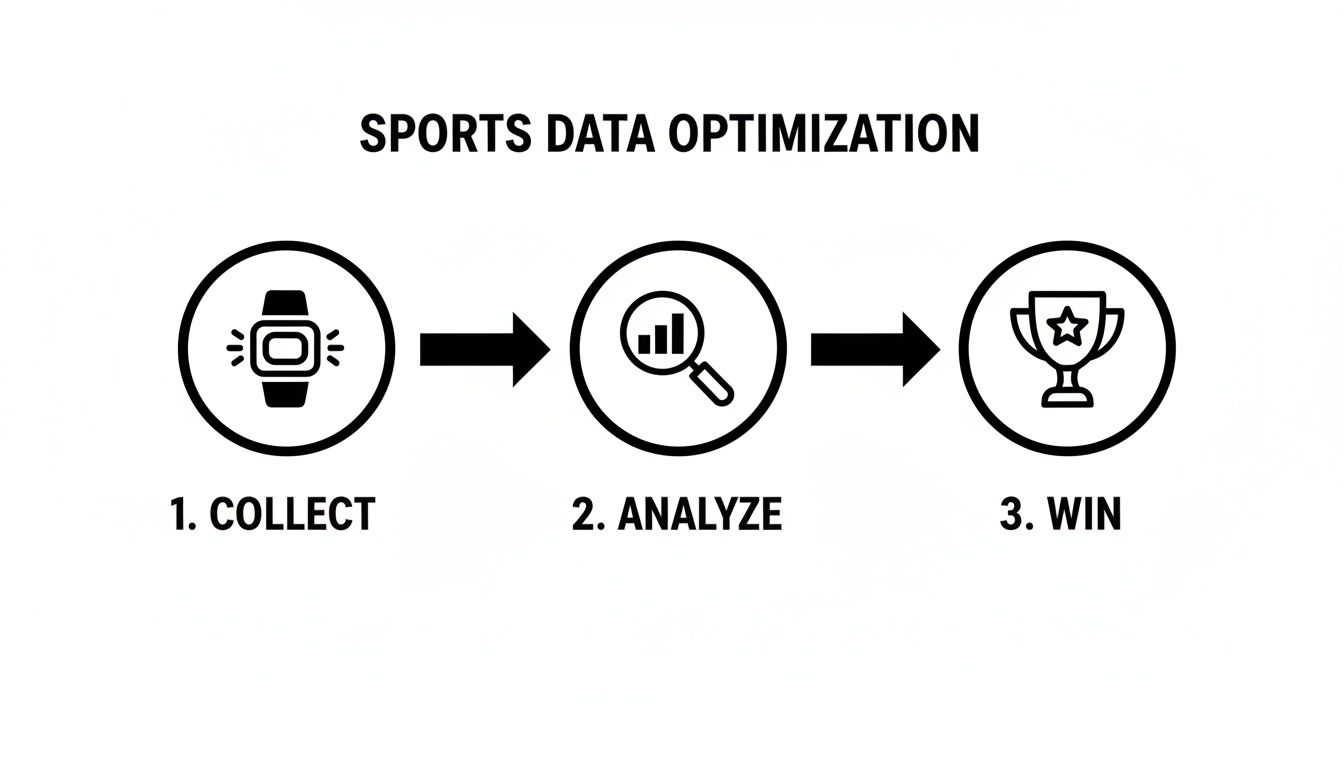
This process—collecting data, analyzing it for an edge, and using it to win—is a perfect example of where the industry is heading and where new talent is desperately needed.
Master the Art of Networking
Let’s be honest: the sports world runs on relationships. It's a notoriously tight-knit industry, and many of the best jobs are filled through referrals before they ever hit a public job board. Building genuine connections isn’t just a good idea; it's absolutely essential.
Start with your LinkedIn profile. Make it look professional, then connect with people at the teams you’re targeting. Engage with their posts. When you reach out, don't just ask for a job—ask for advice. A simple 15-minute informational interview can give you incredible insight and, more importantly, put you on their radar.
It's also a huge advantage to understand how modern recruiters source candidates. If you know what they're looking for, you can position yourself to be found.
Get out there. Go to industry conferences, join sports business forums online, and tap into your university's alumni network. Every single conversation is a chance to learn something and leave a good impression.
Nail the Interview Process
When you finally land that interview, it's showtime. Preparation is what separates the pros from the amateurs. Deep-dive into the team's recent performance (both on and off the field), know who the key executives are, and understand their main business challenges.
Be ready for the classic questions:
- Why do you want to work in sports?
- Why this team, specifically?
- Tell me about a time you had to overcome a challenge as part of a team.
- What's the next big thing in sports marketing/analytics/etc.?
Your answers should be a perfect blend of your skills, your experience, and your genuine passion. Have a few smart questions of your own ready to go—it shows you’ve done your homework. And always, always send a thank-you note afterward. It’s a small, professional touch that keeps you top of mind.
Where to Find Open Jobs with Sports Teams
Knowing where to look is half the battle. In the hyper-competitive world of sports, you can’t just toss your resume onto a massive, generic job board and hope for the best. You'll get lost in a sea of irrelevant listings.
To actually get traction, you need to go where the industry lives and breathes. Think of it like fishing: you'll have a lot more luck casting your line in a well-stocked lake than in a random puddle. Your job search needs that same focused approach.
Niche Sports Job Boards
This is your starting point. Specialized job boards are the central marketplaces for sports careers. Teams, leagues, and agencies post here specifically because they know they'll find people who are serious about the industry, not just casual browsers.
Two of the biggest players you need to know are:
- TeamWork Online: This is the undisputed giant in the space. You'll find everything from entry-level internships to C-suite executive roles posted here by teams across every major and minor league.
- Jobs in Sports: Another fantastic, comprehensive resource that pulls together a huge number of openings. They cover professional teams, college athletics, and major sports brands.
The key to using these sites is to be proactive. Don't just scroll endlessly. Set up specific job alerts for keywords like "Partnership Activation," "Ticket Sales," or "Scouting Assistant" paired with your target leagues. This turns your search from a chore into a system that delivers opportunities right to your inbox.
Official League and Team Websites
While job boards are great for casting a wide net, some of the best opportunities pop up on team websites first. Many organizations post new roles on their own career pages for a few days before sending them out to the bigger platforms.
Checking these sites directly can give you a massive head start on the competition.
Pro Tip: Go bookmark the career pages for your top 10 dream teams. While you're at it, do the same for the main league sites like the NFL, NBA, MLB, NHL, and MLS. Make it a weekly habit to check them so you can be one of the first to apply.
This direct approach does more than just get you in early. It shows genuine initiative and a specific interest in that team, not just any team. When you mention in your cover letter that you found the job on their site, it sends a powerful message that you’re truly invested in their organization.
Putting It All Together for Your Search
The smartest job search strategy blends these two methods. Use the big niche boards for discovery and to get a feel for the market, and use the official team sites for targeted, high-priority applications. As you start digging in, you might also find our guide on current sports management job openings useful to see what roles are hot right now.
By focusing your time and energy on these high-value channels, you'll stop sifting through noise and start finding real, relevant jobs with sports teams. It's this strategic mindset that will put you ahead of the pack and on the path to landing that role you've been dreaming of.
Building a Long-Term Career in Sports
Getting your foot in the door is a huge win, but it’s really just the opening kickoff. Building a lasting, fulfilling career in sports means committing to growth long after you’ve landed that first job.
This industry never sits still. It’s always being reshaped by new technology, evolving fan demands, and smarter business strategies. To keep up and stay valuable, you have to treat yourself like a student for life.
That means hunting down professional development courses, showing up at industry workshops, and keeping a close eye on the latest trends in your niche. Whether it's a new analytics software or a different approach to fan engagement, your expertise is your most important asset. Think of it like an athlete's training schedule—you can't stay on top of your game without putting in the reps.
Charting Your Career Trajectory
One of the best things about working in sports is the potential to move up. An entry-level role is rarely a dead end; it's a launchpad. Your first position gives you an incredible view from the ground floor, helping you build connections and see how all the different departments sync up to make game day happen.
This hands-on experience opens up some incredible career paths. For instance:
- An entry-level Ticket Sales Representative can climb the ladder to become a Director of Business Development, managing major corporate accounts.
- A junior Performance Analyst might eventually run the entire analytics department, influencing key roster and game-day decisions.
- A Social Media Coordinator could grow into a Head of Digital Content, shaping the team’s voice and brand for millions of fans online.
These moves are possible when you combine great work with a clear vision for your future. As you gain more experience, carving out a specialty can make you indispensable. Becoming the go-to expert in something specific—like digital ticketing, sponsorship activation, or player wellness analytics—turns you from just another employee into a crucial part of the team.
Sustaining a career in sports means being realistic about the demands. The hours are long, the pace is fast, and the pressure to win is always on. But if you thrive in that kind of high-energy environment, the reward of contributing to something you love is second to none.
The job market is hungry for this kind of energy. The U.S. Bureau of Labor Statistics projects about 99,700 openings each year in entertainment and sports occupations through 2034. This is driven by both industry growth and the need to replace workers who move on or retire, which points to a steady demand for skilled people. You can discover more about sports career projections on BLS.gov.
It’s this unique mix of passion and opportunity that makes jobs with sports teams so incredibly rewarding.
Your Questions Answered: Breaking Into the Sports Industry
Chasing a career in sports can feel like navigating a maze. It’s natural to have questions, so let’s clear up a few of the most common ones you'll encounter on your journey.
Is a Sports Management Degree a Must-Have?
Honestly, not necessarily. While a sports management degree can give you a great foundation and a relevant network, it's definitely not the only way in.
Think of a pro sports team like any other major corporation. They need accountants, marketers, data analysts, HR specialists, and social media gurus. A degree in finance or communications, paired with a genuine passion for the industry and some hands-on experience (like an internship), can be just as powerful—sometimes even more so. What really matters is showing you have the right skills and understand the unique pulse of the sports world.
What’s the Best Job to Get My Foot in the Door?
If you ask ten industry veterans this question, nine of them will probably give you the same answer: ticket sales. It's the classic training ground for a reason.
Starting in sales teaches you the lifeblood of the organization—how it makes money. It forces you to learn the business inside and out, build relationships across departments, and provides a clear, measurable path for advancement. Success in sales can open doors to almost any other business-side department, from corporate partnerships to marketing.
How Big a Deal Is Networking, Really?
It’s everything. I can’t stress this enough: the sports industry is built on relationships. It's smaller and more tight-knit than you might think, and a huge number of jobs are filled through referrals long before they ever get posted online.
Building real, authentic connections isn't just a "nice-to-have" strategy; it's essential. Here are a few practical ways to get started:
- Ask for Advice, Not a Job: Reach out to people on LinkedIn and ask for 15 minutes of their time for an informational interview. People are often happy to share their story and offer guidance.
- Work for Free (Strategically): Internships and volunteer gigs are your backstage pass. They let you prove your work ethic and build a network of people who will vouch for you.
- Show Up: Go to industry conferences, team-hosted networking events, or local sports business meetups. Face-to-face connections still make the biggest impact.
Think of networking as the single most effective way to get your resume moved from the giant "maybe" pile to the short "must-interview" list.
Ready to make your move? GetSportJobs is the leading job board dedicated entirely to the sports industry, connecting passionate people like you with incredible opportunities. Start exploring jobs with sports teams today and turn your dream into a career.