How to Land Sports Internships Near Me A Practical Guide
Let's be real—breaking into the sports industry is tough.It’s a competitive field, but a solid local internship can be the exact thing that gets your foot in the door. This guide is all about getting past the fluff and giving you a practical game plan for finding and landing those sports internships near me, turning your passion into a legitimate career path.
Your Playbook For Finding Local Sports Internships
Having big ambitions is great, but starting your search close to home is one of the smartest moves you can make to get real, hands-on experience. The world of sports is so much bigger than just the major leagues. Believe it or not, there are countless opportunities hiding right in your own community, just waiting for someone with your drive to find them.
This playbook is your guide to digging up those hidden gems. It’s packed with actionable advice and insider tips to help you lock down a position that doesn’t just look good on a resume but actually builds your network and your skills.
Why Local Internships Matter
Focusing your search on "sports internships near me" is about more than just an easy commute. Local internships are a golden opportunity to make a real impact and start building a name for yourself within a smaller, more connected network. You’re not just another intern in a massive corporate program.
Instead, you can become a key player on a smaller team. This could be with a college athletics department, a minor league baseball club, or a local sports nonprofit. These kinds of organizations often give their interns a wider range of responsibilities, which translates into a much richer learning experience for you.
A great local internship gives you a serious leg up. You get to build a strong professional network right in your own backyard, gain diverse hands-on experience, and show a real commitment to the community sports scene—all things that future employers love to see.
Expanding Your Search Horizon
To find the best opportunities, you’ve got to think outside the big-league box. While interning for a pro team is an awesome goal, some of the most valuable experiences are found in places you might not have considered.
Keep an eye out for these hidden gems in your area:
- Collegiate Athletics: Your local college or university is a goldmine. Their athletic departments need help with everything from game-day operations and marketing to media relations and ticketing.
- Minor League & Semi-Pro Teams: These teams offer an incredible behind-the-scenes look at how a sports franchise runs on a smaller budget. You’ll get an unfiltered view of the business side of sports.
- Youth Sports Organizations: Think local leagues, travel clubs, and sports-focused nonprofits. They’re always looking for help with event planning, coaching support, and community outreach.
- Sports Venues & Facilities: Arenas, stadiums, and even large fitness complexes need interns for event management, facility operations, and sales.
Using GetSportJobs to Pinpoint Local Opportunities
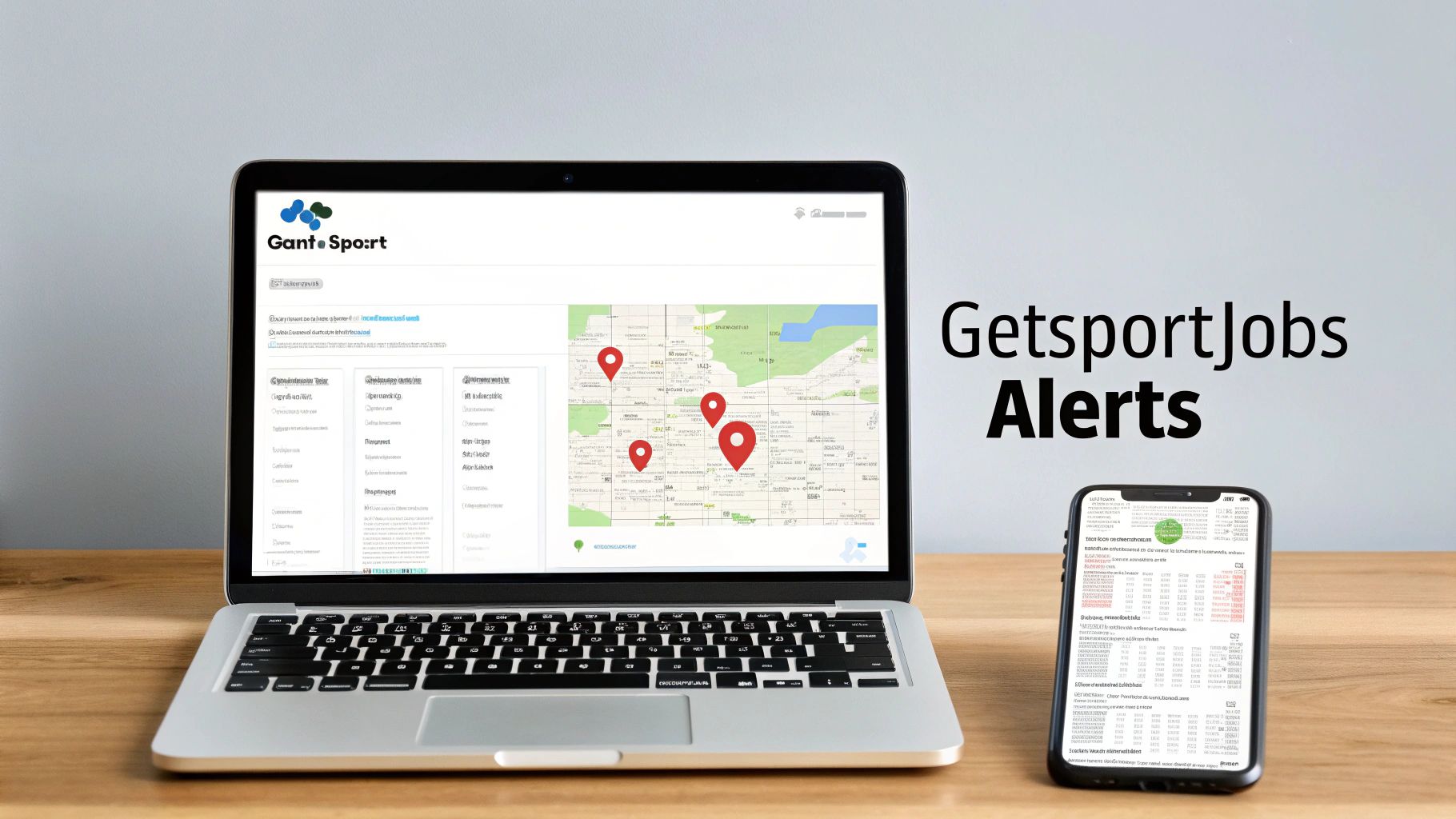
Let's be honest, scrolling through massive, generic job boards can feel like you're shouting into the void. That's why a specialized platform like GetSportJobs is your best bet. Think of it less as a listing site and more as your personal internship scout. The trick is to stop browsing casually and start using its features with a clear strategy to find those hidden-gem sports internships near me.
Before you even start searching, make sure your profile is sharp. It’s the very first impression a hiring manager gets. Instead of a bland summary, get specific. Are you fired up about community engagement for a minor league baseball team? Or maybe you're all about game-day analytics for a college hoops program? Details like that make you memorable.
Remember, you're not the only one looking. With roughly 21.5% of all U.S. college students—that’s about 4.17 million people—doing an internship each year, standing out is everything. A targeted profile is your first move to get ahead of the pack for the best local roles.
Mastering the Search Filters
Here’s where you really gain an edge. The power of a platform like this is in its advanced search filters, but most people barely scratch the surface. Just typing in your city isn’t enough. You have to get inside the head of a hiring manager and use every tool available.
For instance, if you're in a big city like Denver and want to work for a pro team, you can filter by "Professional Sports" and set a tight radius around the city. But if you're in a smaller town, you might need to think broader. Widen your search to include "Collegiate Athletics" or "Youth Sports" within a 50-mile radius. You’d be surprised what you can find at nearby universities or community sports complexes.
To really dial in your search, it helps to see how each filter works together.
Optimizing Your GetSportJobs Search Filters
This table is a quick reference for using the platform's features to run a smarter, more targeted internship search.
| Feature | Actionable Tip | Why It Works |
|---|---|---|
| Location Radius | Start narrow (10-15 miles) in a big city; go wider (30-50 miles) in a smaller town or rural area. | This balances opportunity with a realistic commute, showing you relevant local roles without overwhelming you. |
| Job Function | Instead of "Internship," search for specific functions like "Marketing," "Operations," or "Sales." | You'll find roles that might not use the word "intern" in the title but are perfect entry-level opportunities. |
| Category | Layer categories like "Collegiate Athletics" or "Professional Sports" on top of your other filters. | This narrows the field to the exact part of the industry you're passionate about, eliminating noise from other sectors. |
| Keywords | Use Boolean searches like "social media" AND "intern" or "game day" NOT "sales." | This gives you precise control, letting you include essential skills while excluding roles that don't fit your goals. |
By mastering these filters, you're not just searching; you're actively curating your results.
Your goal is to make the platform work for you. By combining specific keywords with layered filters, you stop wasting time scrolling through irrelevant listings and start seeing only the high-potential local internships that match your career goals.
Setting Up Smart Job Alerts
Once you've perfected your search formula, it's time to put it on autopilot. Setting up targeted job alerts is an absolute must if you're serious about snagging a great local spot. Don't just set one generic alert and call it a day.
Get specific and create several. Try this approach:
- Alert 1: "Marketing Internship" within 15 miles of your ZIP code.
- Alert 2: "Game Day Operations" + "Collegiate Athletics" within 30 miles.
- Alert 3: "Community Relations Intern" for your entire state, which can help catch roles with traveling teams or regional offices.
These alerts bring fresh, relevant openings right to your inbox, giving you a crucial head start. And while you’re at it, subscribe to the weekly newsletter. It gives you a great overview of the market, showing you who’s hiring and what skills are trending. This two-pronged approach ensures you’re both actively hunting for sports internships near me and passively keeping an eye on the bigger picture. A few minutes of setup now will save you from ever missing out on that perfect opportunity.
Building Your Network Beyond the Sidelines
Let's be honest: not every great opportunity begins with a job post. Some of the best sports internships near me come from a conversation, a referral, or just knowing the right person. This means your network isn't just a nice-to-have; it's one of your most powerful tools for breaking into the industry.
The truth is, many roles get filled through word-of-mouth long before they ever see the light of day on a job board. That's why getting out there and connecting with people is an absolute must.
And you don't have to imagine stuffy, formal career fairs. Real, effective networking often happens in much more casual, authentic settings. The global sports market is absolutely massive—we're talking $521 billion in sales and growing at 8% a year. When you build connections, you're tapping directly into this expanding world right in your own backyard. You can dive deeper into this growth with Morgan Stanley Research's report on the global sports industry.
Tap Into Your University's Alumni Network
Your university's alumni network is a goldmine. Seriously. These are people who have walked the same halls, maybe even taken the same classes, and they're often incredibly open to helping out a fellow alum.
A great starting point is LinkedIn's alumni search tool. Use it to find graduates now working for the local teams, agencies, or university athletic departments you're targeting.
When you reach out, the key is to not immediately ask for an internship. That can come off as transactional. Instead, frame your message as a simple request for advice.
- Be brief and personal: Mention your shared university and point to something specific about their career path that caught your eye.
- Have a clear ask: Request a quick, 15-minute "informational interview" to hear about their journey and experiences.
- Respect their time: Always acknowledge their busy schedule and make it clear you're flexible.
This approach feels genuine and opens the door for a real conversation, which is far more impactful than just another resume in a pile. A single chat like this can put you on their radar for openings down the road.
Networking isn't about collecting contacts; it's about building relationships. A well-placed connection can provide invaluable advice, introduce you to key decision-makers, and advocate for you when an unlisted opportunity arises.
Turn Local Games Into Networking Events
Going to local sporting events—whether it's minor league baseball or a college soccer match—can be about more than just cheering on the home team. Think of these games as laid-back networking opportunities.
Get there a little early. Strike up conversations with ushers, ticket takers, or the folks working the merchandise stands. Many of them are part-time employees or even interns themselves, and they can give you a real, ground-level perspective on the organization.
Keep an eye out for team staff wearing polos or jackets and find a natural moment to introduce yourself. Keep it cool and casual. Something as simple as, "You all are putting on a great event tonight. I'm a student hoping to get into sports operations myself," is a perfect way to start a conversation.
The goal here is just to build a little familiarity and show your genuine passion for the industry. For more tips on breaking into the field, check out our guide on how to get into sports.
Crafting a Resume That Speaks the Language of Sports
Sending a generic resume for a sports internship is a rookie mistake. It’s like sending a scout to watch the wrong game—you're completely missing the mark. The sports industry has its own language and its own rules, and your application needs to show you're already on the inside track. This isn’t just about listing your old jobs; it’s about translating your experience into skills that a hiring manager for a team, league, or athletic department will actually care about.
A lot of aspiring pros think they’re out of the running if they haven't worked in sports before. That's just not true. The skills you picked up working retail, waiting tables, or leading a campus club are incredibly valuable—if you know how to frame them. Your job is to connect the dots for the recruiter and show them you’re more than just a fan.
The real secret is combining a sharp resume with smart networking. Getting out there and meeting people is how you find the unlisted openings and get your resume to the top of the pile.
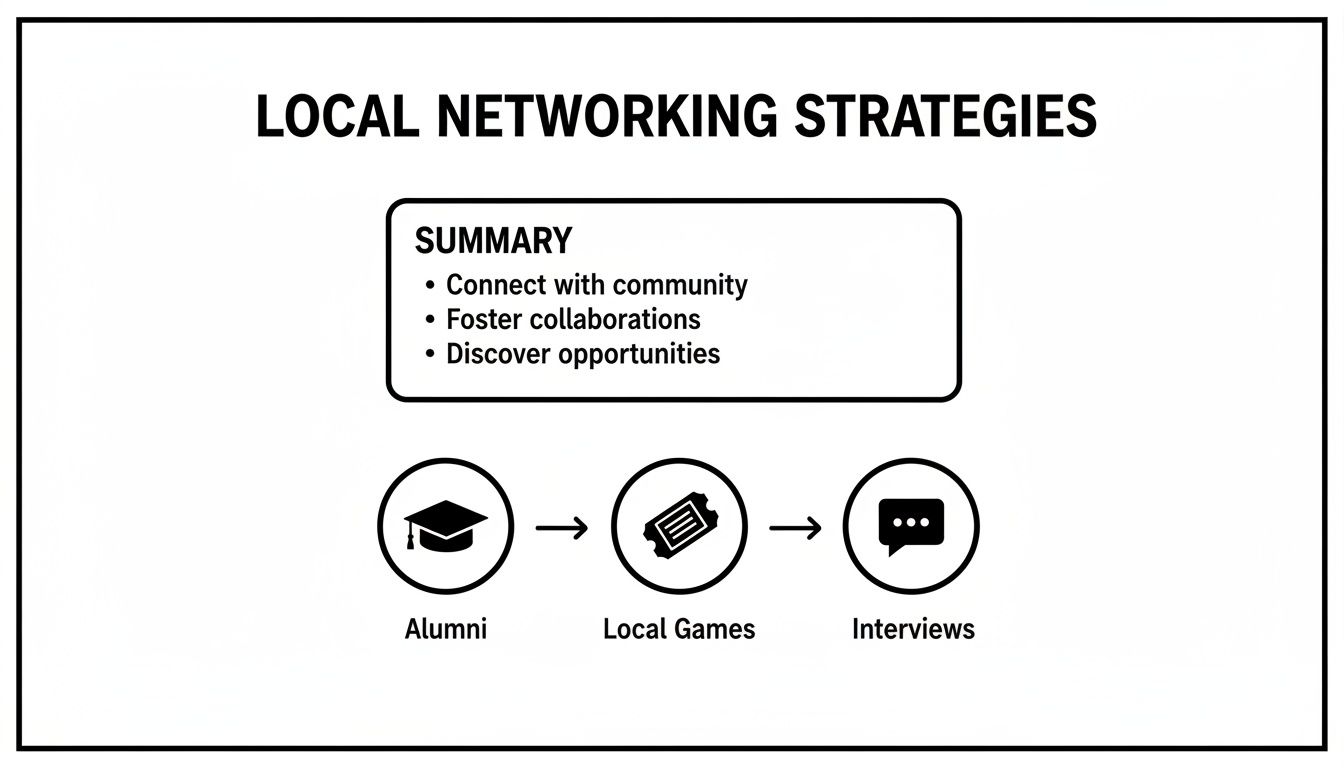
Think of it this way: every local connection you make, whether it's through an alumni event or just chatting with an usher at a game, builds a web of potential leads for your internship search.
Translate Your Experience for the Sports World
Take a hard look at what you actually did in your past jobs. Did you have to calm down an angry customer at the coffee shop? That’s direct experience with fan relations and problem-solving under pressure. Did you help your manager set up a new clothing display at the mall? You've got hands-on experience in event setup and merchandise presentation.
It's all about reframing what you've done into language that clicks with a sports organization.
Translating Your Experience for a Sports Resume
| Your Generic Experience | How to Frame It for Sports | Example Bullet Point |
|---|---|---|
| Retail Cashier | Fan Engagement & Transactions | "Processed high-volume ticket and merchandise sales with a focus on creating a positive fan experience." |
| Restaurant Host | Event & Crowd Flow Management | "Managed guest seating and wait times in a fast-paced environment, ensuring efficient front-gate operations." |
| Campus Tour Guide | Brand Ambassadorship & PR | "Served as a brand ambassador, leading promotional tours and engaging prospective stakeholders with compelling stories." |
| Server/Bartender | VIP & Hospitality Services | "Delivered premium hospitality services to diverse clientele, anticipating needs to enhance guest satisfaction." |
See the difference? This small but powerful shift shows you understand how your background fits into their world.
For an even deeper dive, you can run your resume through our specialized resume analyzer. It’s built to catch these kinds of things and give you personalized feedback.
Write a Cover Letter That Tells a Story
Your resume gives them the facts, but your cover letter is where you make a real connection. This is your shot to let your personality and genuine passion for the game—and the business—shine through.
A great cover letter is never just a rehash of your resume or a generic "I'm a hard worker and a huge fan." It tells a story that connects your specific skills to their specific organization.
Did the team just run a brilliant marketing campaign you loved? Mention it. Did they host a community event that resonated with you? Talk about it. Then, explain why it caught your eye and how your skills could help them do even more of that great work.
A powerful cover letter proves you've done your homework. Mentioning a team's recent community partnership or a sold-out promotional night shows you're not just applying for any sports internship—you're applying for this one because you see a specific way to add value.
That level of detail makes it clear you're an engaged, observant candidate who is already thinking like part of the team. It turns your application from just another piece of paper into a real conversation starter, which is exactly what you need to land it on the "yes" pile.
Acing the Interview and Landing the Offer
Getting that email confirming an interview is a huge win. You've made it past the resume screen. Now, the real work begins. This is your chance to show them you’re more than just a fan with a decent GPA; you’re a future pro who can thrive in the high-stakes, fast-paced world of sports.
The key to a great interview is anticipating what's coming. Sports interviews almost always blend two types of questions: behavioral (what you did) and situational (what you would do). They want to see how you’ve handled things in the past and how you’d react to challenges on the fly.
Nailing the Common Questions
Hiring managers in sports aren't just looking for right answers. They want to see your thought process, how you handle pressure, and if you can work as part of a team when things get chaotic.
Many roles in this industry, from marketing to operations, demand the ability to analyze information quickly. It's a huge advantage to develop strong analytical skills no matter which department you're aiming for.
Get ready for prompts like these:
- Behavioral: "Tell me about a time you had to deal with a difficult customer or fan." They're not looking for a dramatic story; they want to see empathy and a clear problem-solving process.
- Situational: "Imagine a key piece of equipment for a fan giveaway fails right before the gates open. What's your first move?" This is all about testing your ability to adapt under pressure and think on your feet.
The absolute best way to structure your answers is by using the STAR method: Situation, Task, Action, Result. Briefly set the scene, explain your specific goal, detail what you did, and then—most importantly—share the positive outcome. It keeps your stories concise and powerful.
Turn the Tables: Questions You Should Ask
Remember, an interview isn’t an interrogation. It’s a conversation. Asking smart, thoughtful questions shows you've done your homework and are seriously considering if this is the right place for you. You're interviewing them, too.
Don't just sit there and nod. Come prepared with a few questions of your own.
- "What does a typical game day look like for an intern in this role?"
- "What's the biggest challenge your interns usually face in the first few weeks?"
- "How does this internship support the department's bigger goals for the season?"
- "Looking back, what traits have your most successful interns all shared?"
Questions like these prove you’re thinking ahead and are genuinely eager to contribute from day one.
The Follow-Up That Closes the Deal
Your job isn't over when the interview ends. A prompt, professional follow-up is non-negotiable. It’s a simple step that so many people forget, and it can genuinely make the difference.
Send a thank-you email within 24 hours. Keep it brief and to the point. Make sure to reference something specific you discussed—it helps jog their memory and shows you were actually listening. A quick note reiterating your excitement for the role can be the final touch that pushes you ahead of other candidates and helps you secure that offer.
Your Top Sports Internship Questions, Answered
When you're trying to find sports internships near me, a few questions always seem to pop up. Getting straight answers can be the difference between spinning your wheels and confidently taking the next step. Let's dig into some of the most common things aspiring sports pros ask.
This isn't about generic advice; it's about giving you the practical, real-world insights you need to get ahead.
Should I Really Take an Unpaid Internship?
Ah, the age-old question. The honest answer? It really depends. An unpaid internship can be an incredible way to get your foot in the door, especially if it's with a dream organization or offers experience you can't get anywhere else. But you have to be realistic about your own situation.
Before you jump at an offer, ask yourself some tough questions:
- Can I actually afford this? Don't forget to factor in gas, parking, maybe a new shirt or two, and what you're losing by not working a paid job.
- Am I getting college credit? If you can knock out academic requirements, that adds a ton of value.
- What will I actually be doing? Make sure you're getting real, hands-on experience, not just making coffee runs.
A great unpaid internship is a fair trade: your hard work and time in exchange for skills, a killer resume builder, and connections that can launch your career. If that balance feels off, it’s perfectly okay to hold out for a paid role.
When Is the Best Time to Apply?
In sports, timing is everything. The same goes for internship applications. The best time to apply usually lines up with the off-season of the sport you're interested in.
Think about it this way: organizations need to get their interns hired and trained 3-4 months before the season chaos begins. That means if you want a summer baseball internship, you should be looking in February. Eyeing a fall football gig? Start your search in early summer.
Here’s a rough calendar to keep in your back pocket:
- Summer Gigs (MLB, MLS, etc.): Start your search in January and have applications in by March.
- Fall Gigs (NFL, College Football): Kick off the hunt in May and aim to apply by July.
- Spring Gigs (NBA, NHL, College Basketball): Your search should start in October, with a final application deadline around December.
This is exactly why setting up job alerts ahead of time is a game-changer. You won't miss those narrow windows.
What if I Don't Live Near a Pro Team?
This is a super common worry, but it's not the dealbreaker you think it is. The sports industry is way bigger than just the major leagues. I guarantee your local area has opportunities you haven't even thought of.
You just have to broaden your perspective. Start looking into:
- College Athletic Departments: Every single college has one, and they need help with everything from marketing and ticketing to event operations.
- Minor League or Semi-Pro Teams: These are gold mines for hands-on experience. You’ll likely wear more hats and get more responsibility than you would at a massive pro team.
- Youth Sports Organizations: Think about local travel leagues, large sports complexes, and non-profits that use sports for good.
- Sports Marketing Agencies: Many smaller, local agencies manage partnerships and promotions for regional brands and teams.
Honestly, not living in a major sports city can be a huge plus. The competition is often less fierce, giving you a much better shot at landing a role where you can truly make an impact.
How Can I Stand Out With No Sports Experience?
Let’s be clear: passion is great, but it won’t get you the job. Transferable skills will. You don’t need to have "Director of Operations" from another team on your resume; you just need to be smart about framing the experience you do have.
Stop thinking about your past jobs literally and start translating your skills.
Worked in retail? That’s customer service, sales, and inventory management.
Helped plan a campus philanthropy event? You've got event management, logistics, and fundraising experience.
The trick is to connect the dots for the hiring manager. Show them you understand the business of sports, not just the game on the field. That’s how you prove you're a serious candidate, not just another fan who wants to be close to the action.
Ready to stop searching and start applying? GetSportJobs is your ultimate resource for finding the best sports internships in your area. Start your search on GetSportJobs today and take the first step toward your dream career.