Your Guide to Event Management for Sports Careers
So, you're interested in sports event management. Think of it as being the director of a blockbuster movie. You’re the one coordinating every single detail, from the first spark of an idea all the way through to creating an unforgettable experience for the athletes, the sponsors, and every fan in the stands.
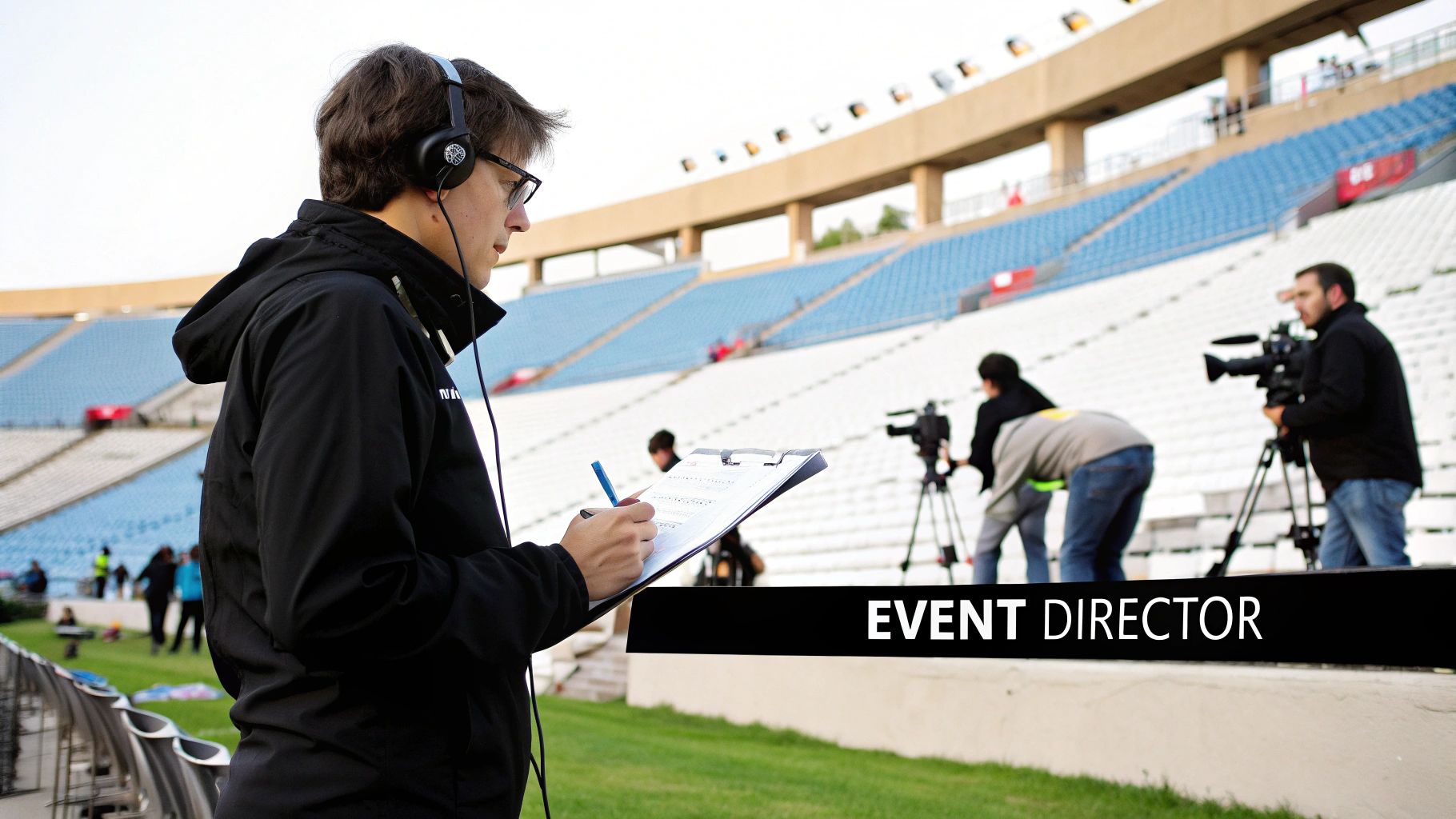
What Exactly Is Sports Event Management?
At its heart, sports event management is the art of turning an athletic competition into a seamless, engaging spectacle. It goes way beyond just setting up a field and keeping score. The pros in this field are the master orchestrators, the ones handling every behind-the-scenes task that makes game day actually happen.
This job is a unique blend of logistical precision, creative flair, and sharp business sense. The work is incredibly varied, too. One week you might be organizing a local charity 5K, and the next you could be working on a global championship broadcast to millions. But no matter the scale, the goal is always the same: create a safe and memorable event for everyone.
The Engine of the Sports Industry
Event managers are the operational engine that powers the entire sports world. They’re the ones juggling all the critical tasks that ensure an event runs smoothly, from the opening whistle to the final horn. Without their expertise, the games we love simply couldn't go on.
What does that look like day-to-day? Here are a few key responsibilities:
- Strategic Planning: This is about defining the "why." Are you trying to raise funds for a cause, boost a brand's visibility, or simply sell out the stadium?
- Budgeting and Finance: You'll create and stick to a detailed budget, hunt down sponsorships, and keep a close eye on every dollar coming in and going out.
- Logistical Coordination: This is the nitty-gritty—booking the venue, arranging team transportation, managing equipment rentals, and coordinating with dozens of vendors.
- Marketing and Promotion: It's your job to build the hype, develop campaigns to attract fans, sell tickets, and get people excited for the event.
Sports event management is the critical link between the athletes on the field and the fans in the stands. It’s the meticulous work that ensures the passion of the game is matched by a flawless spectator experience.
A Rapidly Expanding Field
The demand for skilled professionals in event management for sports is growing like crazy. This isn't just some niche career path; it's a massive global industry. To get a practical feel for this, check out these creative strategies for sports event fundraising, which show these principles in action at the grassroots level.
The global sports event market has absolutely exploded. It recently hit a staggering USD 452.8 billion and is projected to climb to USD 687.7 billion by 2030. This boom is being driven by huge sponsorship deals, new ways of engaging fans digitally, and massive investments in high-tech stadiums. This growth translates directly into more jobs and bigger opportunities for anyone looking to break into the field.
Finding Your Role in the Sports Event Ecosystem
When you think about putting on a major sports event, it’s easy to picture one person at the top calling all the shots. But that’s not really how it works. The reality is more like a championship-winning team—it’s never just about the star player. You have coaches, trainers, strategists, and scouts all working in lockstep. The same goes for event management for sports, where every single position is essential to pulling off a flawless event.
The great thing is, this variety opens up a ton of different career paths. Whether you're a meticulous planner who loves a good spreadsheet, a tough negotiator, or a creative marketing mind, there’s a spot for you. You could be managing a multimillion-dollar budget one day and coordinating hundreds of volunteers the next.
And the industry is booming. In the United States alone, athletic event organizing has grown into a $4.8 billion market. It's expanded at an incredible 16.3% compound annual rate over the last five years, largely thanks to the huge return to sports after the pandemic.
Common Career Paths and What They Do
Let’s get into the weeds and look at some of the most common roles you'll find. While they all demand a passion for creating amazing live experiences, each one requires a unique set of skills. Knowing the difference can help you figure out exactly where you fit in.
On-the-Ground Execution Roles
These are the people who make things happen—the ones who turn a plan on paper into a living, breathing event.
Event Coordinator Think of the Event Coordinator as the swiss-army knife of the event team. This is often an entry-level role, but it's where you learn the ropes by doing a little bit of everything. They handle the daily administrative and logistical tasks that keep the whole operation from grinding to a halt.
A typical day might involve fielding calls from vendors, updating event schedules, helping with volunteer check-in, or doing a quick inventory count on merchandise. It's ground-zero training, and you get a firsthand look at every moving part.
Operations Manager If the Event Director is the architect drawing the blueprint, the Operations Manager is the master builder who constructs the entire thing. This role is all about logistics, logistics, logistics. They are obsessed with the details of execution, from the venue layout and security plans to transportation and tech setup.
An Operations Manager is the person who makes sure the stadium lights come on at the right time, the security team is perfectly positioned, and every fan has a smooth experience from the moment they park their car to the final whistle. They bring the event's physical world to life.
Their job is to solve problems before they happen. They negotiate with vendors for everything from barricades to hot dog buns, map out detailed risk management plans, and orchestrate the flow of people to prevent frustrating bottlenecks.
Strategic and Business-Focused Roles
Behind the scenes of every great event are the people driving the business strategy. These roles focus on the money, the marketing, and the relationships that make it all possible.
Sponsorship Director Let's be honest: sponsorships are the financial lifeblood for most sporting events. The Sponsorship Director is the one who goes out and secures that funding. They identify potential corporate partners, build compelling proposals showing a clear ROI, and negotiate the deals that pay the bills.
It’s a role built on relationships. They spend their days pitching, negotiating contracts, and then making absolutely sure every sponsor gets the visibility and value they were promised on game day.
Marketing Manager What good is an amazing event if no one shows up? The Marketing Manager’s job is to build the hype and sell the tickets. They develop the entire promotional game plan, using everything from social media campaigns and email newsletters to traditional ads and PR.
They are professional storytellers, finding creative ways to get fans excited, emotionally invested, and ready to buy a ticket.
Below is a quick breakdown of some common jobs you’ll find in sports event management.
Common Sports Event Management Job Titles and Core Duties
| Job Title | Primary Responsibilities | Essential Skills |
|---|---|---|
| Event Coordinator | Handles administrative tasks, vendor communication, on-site logistics, and supports the event team. | Organization, multitasking, communication, problem-solving. |
| Operations Manager | Manages all on-site logistics, including venue setup, security, transportation, and technical production. | Project management, vendor negotiation, risk management, attention to detail. |
| Sponsorship Director | Secures and manages corporate sponsorships, negotiates contracts, and ensures partner deliverables are met. | Sales, relationship building, negotiation, strategic planning. |
| Marketing Manager | Develops and executes marketing campaigns to drive ticket sales and build event awareness. | Digital marketing, brand management, data analysis, creativity. |
| Volunteer Coordinator | Recruits, trains, and manages the volunteer workforce essential for large-scale events. | Leadership, communication, scheduling, people management. |
Understanding these distinct roles is the first step toward mapping out your own career. When you're ready, you can start exploring the latest event management job openings to see which one feels like the right fit for you.
Building Your Essential Event Management Skillset
To really make it in sports event management, you need more than just a love for the game. You need to master the tools and, just as importantly, the temperament to pull off a flawless event.
Think of it like a pro athlete's training. They need raw physical strength—their hard skills—but they also need the mental game to perform when the pressure is on. That’s their soft skills. To build a career that stands out, you need a healthy mix of both. It's this combination that separates the good event coordinators from the truly great ones.
Mastering the Hard Skills
Hard skills are your bread and butter—the practical, teachable abilities you need to get the job done. These are the things you can list on a resume and prove you can do. For sports events, these skills are the foundation of a smooth, on-time, and on-budget operation.
For example, you absolutely have to be comfortable with project management software. Tools like Asana, Trello, or Monday.com become your command center for tracking the thousands of moving parts, from securing city permits to timing vendor arrivals. Without that digital backbone, things can get chaotic, fast.
Here are some of the most critical hard skills you'll need to develop:
- Budget Management: You've got to be a pro at creating, tracking, and sticking to complex budgets. This means forecasting ticket revenue, negotiating with suppliers, and keeping a close eye on every dollar spent.
- Contract Negotiation: The ability to dissect and negotiate contracts with venues, sponsors, and vendors is a must. One poorly written clause can create huge financial or legal headaches down the road.
- Logistical Planning: This is the nitty-gritty of making things happen. It's about creating site maps, managing equipment rentals, and even understanding the critical emergency exit signage requirements to keep everyone safe and compliant.
- Marketing and Promotion: You need to know how to sell tickets and build buzz. This involves running social media campaigns, using digital marketing tools, and creating promotional materials that get fans excited.
Cultivating Winning Soft Skills
Hard skills might get your foot in the door, but it’s the soft skills that will make you a star. These are the personality-driven traits that define how you lead a team, solve problems, and handle the intense pressure of game day. They're harder to teach but are every bit as important as any technical know-how.
The best event managers are masters of controlled chaos. They possess an unwavering calmness that allows them to make clear, decisive choices when everything around them is unpredictable. This grace under pressure is their most valuable asset.
Adaptability is another big one. Let's be real: no event ever goes exactly according to plan. A sudden thunderstorm, a jumbotron malfunction, or a last-minute team cancellation will force you to think on your feet and pivot without panicking. Your ability to adjust the game plan on the fly is what separates a disaster from a memorable success.
The Value of Certifications and Education
While nothing beats hands-on experience, formal education and certifications can give you a serious leg up. A degree in Sports Management, Hospitality, or Business provides a solid understanding of the principles that guide the industry.
Beyond that, professional certifications prove you’re committed to your career and that you've mastered a certain level of expertise. Earning a designation like the Certified Sports Event Executive (CSEE) tells employers you have a deep, proven understanding of the field's complexities. It’s a powerful credential that can make all the difference when you're up for the best jobs.
Mastering the Sports Event Planning Timeline
Pulling off a major sporting event is a lot like producing a blockbuster movie. It’s a massive undertaking with thousands of moving parts that all have to come together perfectly on a single day. The secret isn't just about hard work; it's about following a meticulously planned timeline that starts long before the first fan ever walks through the gate.
This process is what turns an ambitious idea into a flawless spectacle. Let's walk through the typical lifecycle of event management for sports, using a major collegiate championship as our real-world example. Breaking it down step-by-step makes the complex art of event management a much clearer, more actionable process.
The Long Game: One Year Out
The clock officially starts ticking a full year—sometimes even more—before game day. This initial phase is all about laying the strategic groundwork. Think of it as the pre-production stage, where you define the vision for the event and lock in the most critical pieces.
During this time, the event team is laser-focused on the big-picture items that require long lead times. Securing the right venue, for example, is a top priority, as premier locations are often booked years in advance. This is also when the initial budget gets drafted, creating the financial blueprint that will guide every single decision from here on out.
Key activities in this phase include:
- Defining Event Goals: Are we trying to maximize ticket revenue, deliver exceptional value for sponsors, or create an unforgettable fan experience? The answer shapes everything.
- Securing the Venue: Negotiating and signing the contract for the stadium or arena that will host the championship.
- Initial Budget Creation: Developing a comprehensive budget that maps out all anticipated expenses and potential revenue streams.
- Sponsorship Outreach: Identifying potential corporate partners and starting the conversations to secure foundational funding.
The Mid-Range Push: Six Months to Go
As the event gets closer, the focus shifts from high-level strategy to detailed operational planning. At the six-month mark, the team moves into a full-on execution mindset. The blueprint is done; now it’s time to start building.
This is when marketing campaigns really begin to take shape. The team starts creating promotional materials, building out the event website, and mapping out a social media strategy to generate some early buzz. At the same time, logistical arrangements become a major priority, involving everything from coordinating with local authorities to planning for team travel.
At this stage, an event manager's role is a lot like an air traffic controller's. You're not just managing one plan; you're coordinating dozens of independent flight paths—vendors, marketing, and operations—to ensure they all land smoothly and right on schedule.
The Final Sprint: Three Months to Game Day
The last 90 days are an intense period of finalizing details and fine-tuning everything. This is when all the planning crystallizes into concrete, on-the-ground action. The pace quickens dramatically as the team scrambles to ensure every single detail is accounted for.
Volunteer recruitment and training go into high gear, making sure a well-prepared workforce is ready for game day. Final arrangements are made for everything from security and medical services to catering and merchandise sales. The marketing campaign hits its peak, driving ticket sales and maximizing media exposure.
This journey shows how a successful career in event management is built by layering practical experience on top of a solid educational foundation.
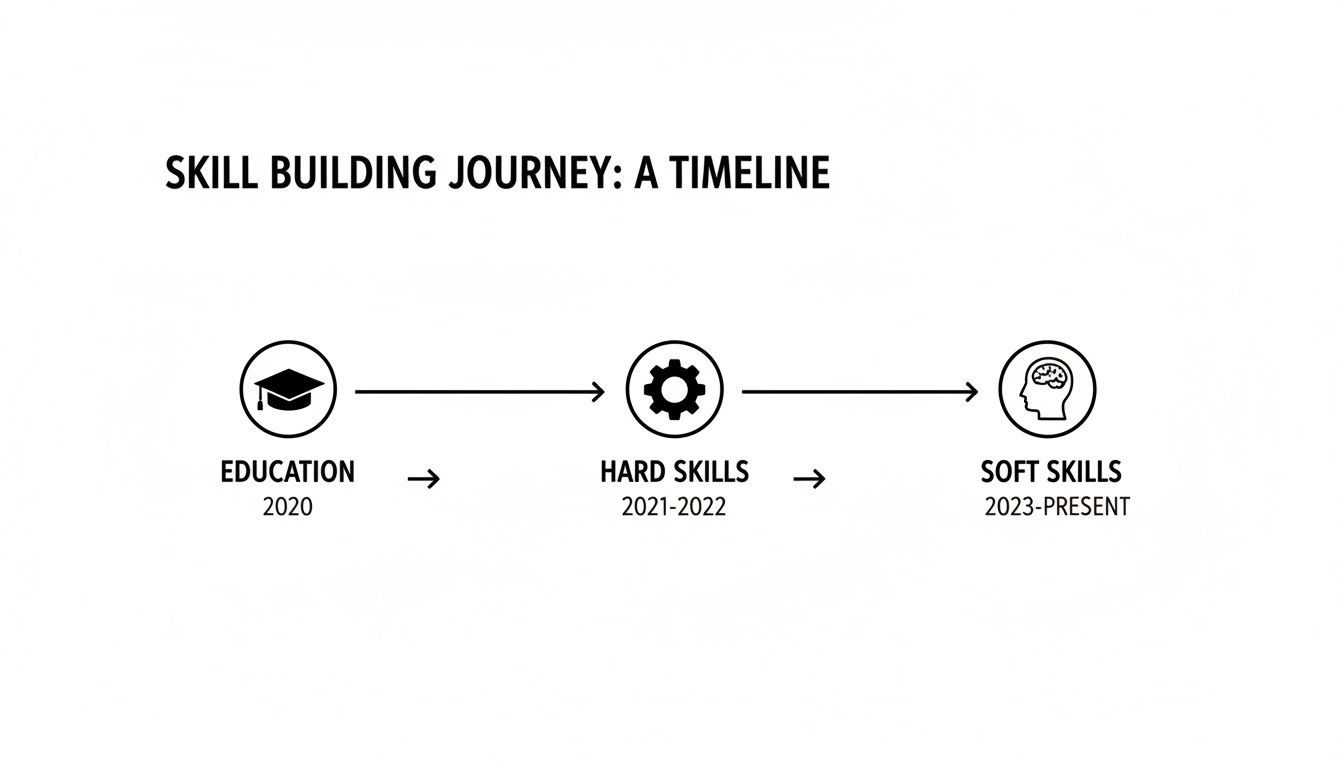
As you can see, while formal education provides the starting point, true mastery comes from blending practical hard skills with essential soft skills like communication and problem-solving.
The Post-Event Wrap-Up
Believe it or not, the work isn’t over when the final whistle blows. The post-event phase is critical for measuring success, fulfilling obligations, and planning for the future. This is where you prove the event’s value and gather the insights you need to make the next one even better.
Key post-event tasks include:
- Financial Reconciliation: Meticulously combing through all invoices and payments to close out the budget and calculate the final profit or loss.
- Sponsor Reporting: Delivering comprehensive reports to sponsors, showing them exactly what exposure and value they received from their investment.
- Feedback Collection: Surveying fans, athletes, and volunteers to gather crucial data on what worked and, just as importantly, what can be improved.
- Team Debrief: Holding a thorough review session with the entire event team to document lessons learned and identify best practices for future events.
Your Career Path and Salary: What to Expect
Think of a career in sports event management like climbing the ranks from a rookie to a seasoned pro. You'll start with foundational roles, learning the ins and outs on the ground floor. As you gain experience, you’ll step into bigger positions with more responsibility, strategic control, and, of course, a bigger paycheck.
This path isn’t always a straight line, but there’s a common progression. Most people start with hands-on, entry-level jobs and work their way up to senior leadership roles where they’re calling the shots for a whole team, league, or organization.
From Entry-Level to Event Director
Your career will most likely begin right in the thick of it, giving you the kind of real-world experience you can't get anywhere else.
Event Assistant or Coordinator: This is the classic starting point. You're the ultimate utility player, juggling everything from talking to vendors and scheduling volunteers to handling on-site logistics. Expect a salary in the $40,000 to $55,000 range, which can vary based on your city and whether you're at a non-profit or a pro league.
Event Manager: With a few years under your belt, you can step up to Event Manager. Now you're taking ownership of entire events or specific areas like ticketing or VIP hospitality. You'll have more say in the strategy, and your salary will reflect that, typically falling between $55,000 and $75,000.
Director of Events: At this senior level, you’re the head coach. You’re overseeing the entire event schedule, managing a team, handling major budgets, and shaping the long-term vision. It's a high-stakes job with compensation to match, often from $80,000 to $120,000+.
The journey from Coordinator to Director is all about expanding your focus. You go from doing the tasks, to managing the project, to finally leading the entire strategy. Every step up the ladder demands a sharper understanding of the business of sports.
What Shapes Your Salary?
Your job title isn't the only thing that determines your paycheck. A few key factors have a major impact on how much you can earn in sports event management. Knowing what they are can help you negotiate better and make smarter career moves. For a wider view of industry roles, check out our guide to careers in sports management for more context.
Where you live matters. A job in a major city with several pro teams—think New York or Los Angeles—will almost always pay more than the same role in a smaller market. It comes down to the cost of living and higher demand.
The type of organization you work for is another huge piece of the puzzle.
- Professional Leagues (NFL, NBA, MLB): With massive revenue streams, these leagues generally offer the highest salaries in the business.
- Collegiate Athletics (NCAA): Big-time programs in Power Five conferences can offer pay that's competitive with the pros. Smaller schools and divisions, however, will have more modest compensation.
- Non-Profits and Amateur Sports: Groups like national governing bodies or community charities usually operate on tighter budgets, and their salaries reflect that.
Finally, the size and scope of your events make a difference. The person pulling the strings for a Super Bowl or a World Cup is going to earn a lot more than someone running local tournaments. The more complex the event and the bigger the crowd, the greater the reward.
Your Playbook for Breaking Into the Industry

Trying to break into sports event management can feel like you're a rookie trying to make the final cut for a pro team. It’s a competitive field that demands serious dedication, but the right game plan will put you on the path to success. The secret? A smart mix of education and, more importantly, a ton of real-world, get-your-hands-dirty experience.
Think of it like this: your degree is the official rulebook, but internships and volunteer gigs are the scrimmages and practice drills where you actually learn to play the game. You absolutely need both to win. This is your action plan for landing that first—or next—role in the electrifying world of event management for sports.
Building Your Foundation with Education and Experience
While a degree in Sports Management, Business, or Hospitality can give you a leg up, it’s not the only way onto the field. What hiring managers really want to see is that you can get things done. If you studied something else, you can absolutely bridge that gap with practical experience.
Volunteering is one of the best and most overlooked ways to get your foot in the door. Local 5K runs, university athletic departments, and community sports leagues are almost always looking for an extra set of hands. These are goldmines for learning logistics, managing crowds, and thinking on your feet.
Every single event you work, whether you get paid for it or not, adds a crucial line to your resume and a new contact to your network. It’s solid proof that you understand the hustle required behind the curtain.
Internships take you a step further, dropping you into a structured role within a professional organization. You’ll see firsthand how budgets are made, marketing plans are executed, and operations are run, all while building relationships with seasoned pros. This is where classroom theory becomes a career-making skill set.
Crafting a Resume That Gets Noticed
Your resume is your personal highlight reel. It has to grab a recruiter’s attention in just a few seconds by showing off your most relevant skills and accomplishments. Don’t just list your duties—frame them as achievements with real, measurable results.
- Instead of: "Helped with event setup."
- Try: "Coordinated logistics for a 5,000-attendee marathon, managing 30+ volunteers to ensure a seamless race day experience."
Learn to translate your skills from other jobs into the language of sports. Managed a retail store? You know budget management and staff scheduling. Worked in customer service? You’ve got experience in fan engagement and conflict resolution. For more advice on this, check out our guide on the realities of working at events.
Be sure to highlight any experience you have with sponsorships—it's a massive part of the business. The global sports sponsorship market is on track to hit $115 billion, growing at a blistering 8.7% rate. Showing you understand this financial engine proves you see the big picture. You can dig into more data on the booming sporting events market on Technavio.com.
Networking and Finding Opportunities
The sports world runs on relationships. Everyone you meet, from the person volunteering next to you to the event director, is a potential connection who could open a door for you later on. Make it a point to attend industry conferences, connect with people on LinkedIn, and follow up with the contacts you make during your internships.
When you're ready to start your job search, specialized platforms are the way to go. General job boards are a firehose of information, but a dedicated resource like GetSportJobs helps you find exactly what you’re looking for.
Here’s how to make it work for you:
- Set Up Targeted Alerts: Create alerts for keywords like "Event Coordinator" or "Game Day Operations" in the cities you’re interested in. You’ll get the best new openings sent right to you.
- Refine Your Profile: Your GetSportJobs profile is your digital resume. Keep it polished and updated with your latest experience to catch the eye of recruiters.
- Explore Different Sectors: Don't just look in one place. Search for roles in pro leagues, college athletics, and even with major brands that have their own sports marketing teams.
By combining a solid education with tons of practical experience and strategic networking, you’re building an unbeatable playbook. The opportunities are out there, just waiting for someone with your drive and preparation to grab them.
Common Questions About Sports Event Management Careers
Jumping into a new career always brings up a lot of questions. And when you're talking about the fast-paced world of sports event management, getting straight answers can help you make the right moves. Let's tackle some of the most common things people ask when they're trying to break into this field.
What Entry-Level Jobs Should I Look For?
The best way to get your foot in the door is by finding roles that throw you right into the action. You want hands-on experience, and you want it fast.
Keep an eye out for titles like "Event Operations Intern," "Game Day Staff," or "Marketing Assistant" at a team, league, or venue. These jobs are your bootcamp—they'll teach you the nuts and bolts of logistics, guest services, and how a live event really works from the ground up.
And don't sleep on volunteering. Seriously. Working at local 5Ks, university games, or community tournaments is a fantastic way to build your resume and meet people. It shows you're passionate and not afraid to roll up your sleeves.
Do I Need a Specific Degree to Get Hired?
A degree in Sports Management or Hospitality definitely gives you a leg up, but it's not the be-all and end-all. In this business, what you've done often carries more weight than what your diploma says. If your degree is in something else, you can absolutely still be a standout candidate.
The trick is to make up for it with tons of internships, volunteer hours, and relevant certifications. Earning a credential like the Certified Sports Event Executive (CSEE) shows employers you're serious and have a proven level of knowledge they can count on.
The most successful people in sports events are almost always the ones who mix formal education with a relentless drive for real-world experience. You really need both to make it to the top.
What Is the Biggest Challenge in This Field?
That’s an easy one: learning to master the unpredictable. No matter how perfect your plan is, you can't stop a sudden thunderstorm, a ticketing system from crashing, or a last-minute security concern. Game day is a living, breathing thing.
The best event managers don't just survive in this chaos—they thrive in it. They are phenomenal problem-solvers who can stay cool when everything is hitting the fan. More importantly, they always have a Plan B, C, and D ready to go. This job isn't just about planning for what you expect; it's about preparing for everything you don't.
How Important Is Networking for My Career?
Let me be blunt: networking isn't just important in sports, it's everything. This is a surprisingly small, tight-knit world. A huge number of the best jobs never even get posted publicly—they’re filled through referrals and who you know. Your network is, without a doubt, your single most valuable career asset.
So, be intentional about building it. Go to industry conferences. Connect with people on LinkedIn. When you’re interning or volunteering, make it a point to build real relationships. Every person you meet is a potential colleague, mentor, or the person who might hire you for your dream job someday. The connections you build now are what will open doors for you later.
Ready to turn your passion into a profession? GetSportJobs is the go-to platform for finding your next role in the sports industry. Explore hundreds of openings in event management and beyond. Start your search on GetSportJobs today!