Your Guide to Sports and Event Management Jobs
Ever felt the buzz of a stadium during a final-second shot or the shared energy of a city marathon? Behind every one of those moments, there's a team of dedicated professionals in sports and event management jobs. This isn't about being a spectator; it's about being the mastermind who orchestrates the entire experience, from the first ticket sale to the final whistle.
The Thrilling World of Sports and Event Management
Think of a sports event manager as the conductor of a massive orchestra. Your job is to make sure every single instrument—from logistics and marketing to fan safety and sponsor relations—plays in perfect harmony to create an unforgettable performance. It's a career that perfectly blends a love for the game with the sharp skills of a strategic planner, transforming simple competitions into epic spectacles.
To really get a feel for the mechanics behind the magic, it’s helpful to understand the fundamentals. This article on What Is Event Management? A Complete Guide to Success is a great primer that breaks down the core principles. In the sports world, those same principles are scaled up for everything from a local charity 5K to a global tournament.
Here's a quick look at what a career in this field entails.
Sports and Event Management Career Snapshot
| Key Aspect | Description |
|---|---|
| Industry Focus | Planning, coordinating, and executing live athletic events. |
| Core Function | Combines logistics, marketing, and business management. |
| Environment | Fast-paced, dynamic, and often requires work on nights/weekends. |
| Key Traits | Organization, communication, problem-solving, and passion for sports. |
| Growth Potential | Strong, with opportunities in professional leagues, college athletics, and more. |
Ultimately, this career is about creating memorable experiences that connect people through the power of sports.
What Does a Career in This Field Involve?
At its heart, sports and event management is about bringing a competition to life through meticulous planning and flawless execution. The work is dynamic, demanding, and incredibly rewarding. You’re not just putting on a game; you’re building an entire ecosystem that brings together teams, brands, and passionate fans.
The day-to-day can look very different, but it often boils down to a few key areas:
- Strategic Planning: This is the big-picture stuff. You'll define the event's goals, create detailed timelines, and make sure every decision pushes toward the organization's vision.
- Logistics and Operations: This is where the magic happens behind the scenes. Think venue selection, negotiating with vendors, and coordinating schedules for everyone from the star athletes to the setup crew.
- Marketing and Promotion: It's your job to build the hype. You’ll be driving ticket sales, creating compelling ad campaigns, and working with media partners to get the word out.
- Stakeholder Engagement: A huge part of the role is managing relationships. You’ll constantly be communicating with sponsors, community leaders, vendors, and sports officials to keep everyone on the same page.
The demand for professionals who can deliver outstanding live experiences is at an all-time high. This isn't just a career driven by passion; it’s a strategic move into a sector with significant financial backing and long-term potential.
In the end, it’s all about turning an athletic contest into an event that leaves a lasting impression. This guide will take you through the landscape of these careers, showing you the diverse opportunities and pathways available in this rapidly growing industry.
What's Driving the Boom in Sports and Event Management?
If you think a career in sports and event management is just a niche passion, think again. This industry is an absolute powerhouse, and the demand for sharp, skilled professionals is skyrocketing. We're not just talking about a fleeting trend; this is a global market experiencing explosive, sustained growth.
But what's really fueling this fire? It’s more than just the love of the game. The industry is a massive economic engine, powered by huge investments, changing fan expectations, and new technology that's constantly creating fresh career paths.
Think of it this way: at the heart of it all, you have the events themselves—the World Cup, the Super Bowl, or even a local 5K race. But surrounding them is a whole ecosystem of interconnected industries: media broadcasting, corporate sponsorships, merchandise, and digital tech. They all pour money and resources back into the events, creating a cycle that demands more and more talented people to manage all the moving pieces.
The Money Behind the Magic
Let's get down to brass tacks. Several major economic forces are pushing the sports event market forward, making jobs in this field more stable and diverse than ever. These aren't just temporary blips; they're fundamental shifts in how the world engages with sports. Getting a handle on these drivers is your first step toward building a successful career here.
Here are the three big ones:
- Massive Media Rights Deals: Broadcasting rights for major sports leagues are now worth billions. This river of cash flows directly into organizations, allowing them to build better stadiums, pay bigger salaries, and produce more spectacular events—all of which require expert management.
- The Power of Corporate Sponsorship: Brands are desperate to connect with loyal, passionate fan bases. They pump huge sums into sponsorships for that visibility, creating a whole category of jobs for professionals who can build and manage these critical partnerships.
- A Truly Global Game: From the NFL playing in Germany to the explosion of cricket leagues worldwide, sports are crossing borders like never before. This global expansion creates a constant need for managers who can handle international logistics and navigate different cultures.
This isn't just "fun money." This is serious, consistent financial backing that turns a passion for sports into a real, strategic career. It’s proof that the industry has the resources to keep growing and innovating, which translates directly into more jobs.
How Technology is Changing the Game (Literally)
Technology isn't just a nice-to-have anymore; it’s at the very center of the modern sports experience. From the convenience of mobile ticketing and in-stadium apps to mind-blowing virtual reality experiences, tech is completely reshaping how fans interact with their favorite teams.
This digital shift has carved out entirely new career paths within sports management. Suddenly, there’s a massive need for people who can manage complex event software, analyze fan data to personalize experiences, and integrate digital sponsorship campaigns.
Take the global Sports Event Management System market as a prime example. It’s projected to hit $765.1 million by 2025 and is expected to grow at an annual rate of 11.3% through 2033. That growth isn't just a number; it represents a huge demand for specialists in software, data, and systems integration. You can see the full breakdown by exploring the research on sports event management systems.
It's no longer just about convenience. Technology is about creating personalized, immersive experiences that keep fans coming back for more. If you can bridge the gap between sports and tech, you'll be one of the most valuable people in the room.
It's Not Just a Big League World Anymore
The sports landscape is also getting wider and more interesting. The meteoric rise of esports, for example, has created a brand-new, multi-billion-dollar industry that needs the exact same level of professional management as any major sports league. Esports tournaments now sell out arenas, draw millions of online viewers, and land huge sponsorship deals.
This has opened up a parallel job market for event managers, marketers, and operations coordinators who get the unique culture of competitive gaming.
At the same time, niche sports like pickleball, drone racing, and obstacle course races are blowing up. Each of these fast-growing communities needs pros to organize their tournaments, manage their leagues, and build their brands from the ground up. The big takeaway? Opportunities in sports and event management are no longer limited to a handful of major sports, giving you more ways than ever to get your foot in the door.
Exploring Key Roles and Responsibilities
When you hear “sports and event management,” what comes to mind? For many, it’s a single, all-encompassing job title. But the reality is a whole world of specialized careers, each playing a crucial part in pulling off a successful event.
Think of a huge music festival or a championship game like an intricate stage production. You have the crew building the set (Operations), the promoters selling tickets (Marketing), and the deal-makers securing funding (Sales). Each role is different, but they all work together to make the magic happen.
For instance, an entry-level Event Coordinator might be the person on the ground with a clipboard and a headset, making sure food vendors for a marathon are set up correctly. On the other end of the spectrum, a senior Director of Marketing for an NBA team is likely crafting a multi-million dollar campaign to sell out the entire arena for a season. This section will walk you through what these jobs actually look like day-to-day.
The chart below shows the major forces driving the growth in this field, which is why so many different kinds of jobs exist and continue to be created.
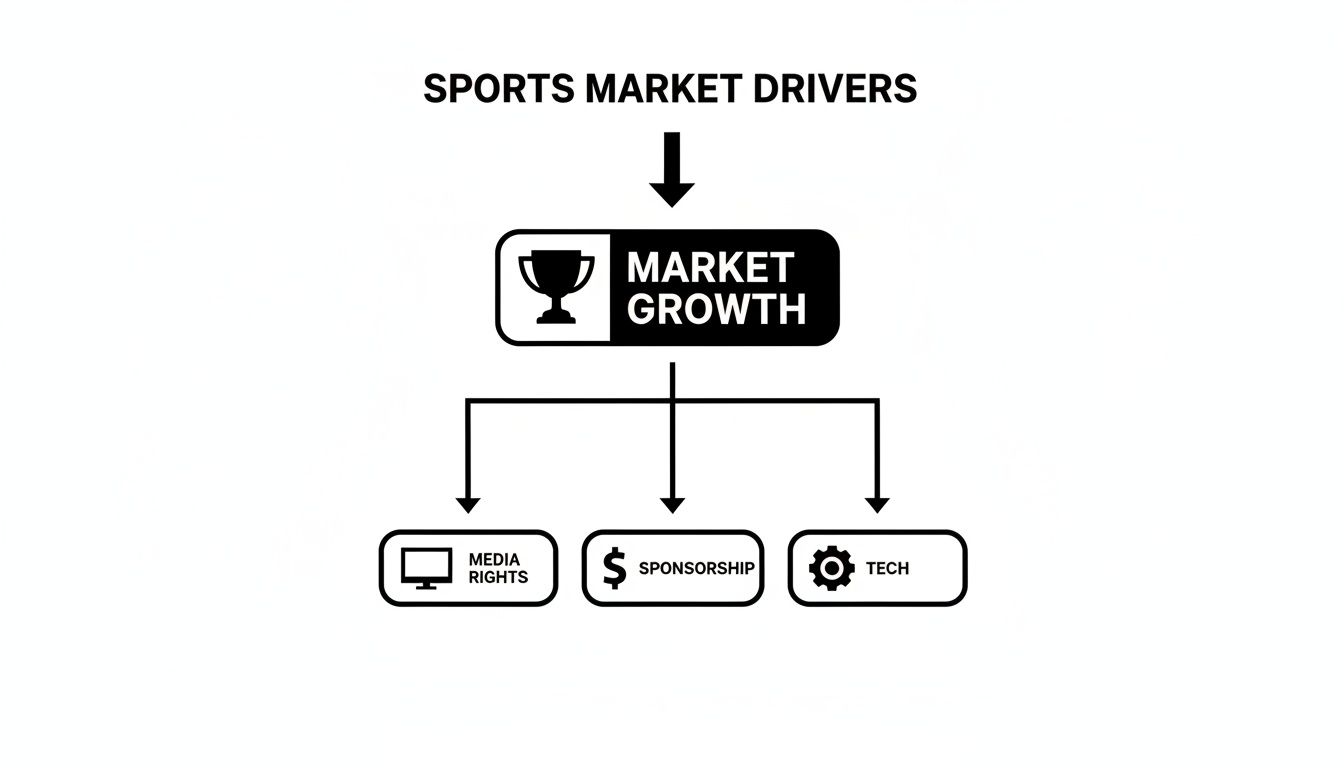
As you can see, things like media rights, corporate sponsorships, and new technology aren't just buzzwords—they are the economic engines creating more opportunities for professionals like you.
Operations And Logistics Roles
This is where the rubber meets the road. Operations is the backbone of any live event, and the people in these roles are the ultimate planners, problem-solvers, and doers. They’re the ones making sure the lights come on, the sound system works, and thousands of fans can get in and out of the venue safely.
If you love a good checklist and can stay cool under pressure, this is your zone. It’s a hands-on field where you don’t just make the plan; you live it on game day, ready to tackle any curveball that comes your way.
Here are a few common titles you’ll see:
- Event Coordinator: Usually an entry-level position where you’ll support senior managers by coordinating with vendors, helping with attendee registration, and handling on-the-ground tasks.
- Facility Operations Manager: This role is all about the venue itself. You’re in charge of everything from building maintenance and staffing to ensuring the stadium is ready and safe for every single event.
- Director of Operations: A high-level leadership role overseeing the entire logistical side of an event or even an entire athletic organization. This involves managing big budgets, leading large teams, and setting long-term operational goals.
A huge piece of the operations puzzle is safety. A skilled manager knows that arranging for top-notch security for event hire is non-negotiable, covering everything from crowd management to emergency action plans.
Marketing And Communications Roles
If the Operations team builds the stage, the Marketing team fills the seats. These roles are perfect for natural storytellers and brand champions who know how to build excitement and connect with fans. Their main job is to create buzz, drive ticket sales, and shape the public perception of the team or event.
In today’s world, sports marketing is so much more than just ads. It’s about building a loyal community, keeping fans engaged all year long, and creating a brand that people connect with on a personal level.
To succeed here, you need a mix of creative flair and analytical thinking. One day you might be brainstorming a viral social media campaign, and the next you’ll be digging into data to figure out what really motivates your fanbase. With the US sports event market projected to hit $208.1 million by 2030, skilled marketers are the ones who will help organizations capture a piece of that pie.
Sales and Partnership Roles
Simply put, sales roles are the revenue engine of the sports industry. These are the people who bring in the money that makes everything else possible, whether through ticket sales, high-dollar sponsorships, or corporate hospitality packages. This is a fast-paced field for driven, persuasive people who thrive on building relationships.
Success here is crystal clear—it’s all about the numbers. Did you hit your ticket sales target? Did you land that huge brand as a title sponsor? It’s an electric environment for anyone motivated by chasing and hitting big goals.
- Ticket Sales Representative: This is a classic entry point into the business side of sports. You'll be on the phone and in meetings, selling everything from season tickets to group packages.
- Corporate Partnerships Manager: This job is about building relationships with businesses to secure sponsorships. You'll create custom proposals showing brands how they can benefit from partnering with your event or team.
- Director of Business Development: A senior-level strategist focused on finding new streams of revenue. They are the ones negotiating the biggest deals and shaping the organization's long-term financial health.
Getting a handle on these different career tracks is the first step toward finding your place in this exciting industry. A great way to see what's out there is to browse current sports and event management jobs and see which types of responsibilities jump out at you.
Mastering the Essential Skills for Success
To really make a mark in the world of sports and event management jobs, you need more than just a love for the game. Think of the best athletes—they aren't just good at one thing. They have a whole range of skills that makes them versatile and reliable. That's exactly what employers are looking for in this field.
This isn't just about passion. It's about execution. While a degree in sports management gives you a fantastic head start, it’s the practical skills you bring to the table—both the technical stuff and how you handle people—that will make you stand out from the crowd.

The Technical Toolkit: Hard Skills You Need
Let’s start with the hard skills. These are the teachable, hands-on abilities you absolutely must have. They're the foundation of your work—the tools you'll use every single day to bring an event to life. Without them, even the most brilliant ideas are just that: ideas.
These are the skills you can prove with certifications, coursework, or direct experience. They show a hiring manager you can jump in and handle the concrete tasks from day one.
Here are the non-negotiables for your toolkit:
- Budget and Financial Management: At the end of the day, every event is a business. You have to be comfortable building a budget from scratch, tracking every penny, negotiating with vendors to keep costs down, and analyzing the numbers to see if you turned a profit.
- Contract Negotiation and Analysis: From booking the stadium to signing a title sponsor, your job involves a lot of agreements. The ability to hash out favorable terms and actually understand the fine print is critical to protecting your organization.
- Risk Assessment and Management: What happens if a freak thunderstorm rolls in? Or if there's a medical emergency in the crowd? You need to be the one who has already thought through these scenarios, created solid backup plans, and made sure everything is up to code.
- Proficiency with Event Software: Modern events are powered by tech. Knowing your way around project management tools like Asana or Trello, plus various registration and ticketing platforms, isn't a bonus anymore—it's a baseline expectation.
The People Factor: Unbeatable Soft Skills
If hard skills get your foot in the door, soft skills are what will make you thrive once you're inside. These are all about how you work with others, lead a team, and react when things inevitably go sideways. Honestly, this is often the tie-breaker between two equally qualified candidates.
This industry is built on relationships and high-stakes moments. Your ability to connect with people and keep a level head is what separates a good event manager from a truly great one.
No event goes exactly as planned. The ability to stay calm, quickly assess a situation, and find workable solutions sets outstanding sports event managers apart. Employers want people who can think on their feet and turn potential problems into great experiences.
Here’s what you need to cultivate:
- Grace Under Pressure: The sound system cuts out two minutes before the national anthem. A key vendor is stuck in traffic. This is where you shine. Staying calm, focused, and decisive inspires confidence in your entire team.
- Exceptional Communication: You are the central hub. That means you need to be crystal clear when explaining goals to your crew, giving updates to stakeholders, or talking to the media.
- Creative Problem-Solving: The best in the business don't just follow a checklist. They see problems coming and find clever ways to solve them on the fly. It's all about being adaptable.
- Leadership and Teamwork: Whether you're in charge of a hundred volunteers or collaborating with other department heads, you have to know how to motivate people and get everyone pulling in the same direction.
When you bring this full package of hard and soft skills, you’re not just a planner; you’re a leader. You show employers you can handle the logistics and the people, making you the kind of candidate they can't afford to pass up.
How to Gain Experience and Enter the Field
It’s the classic career catch-22: you can't get a job without experience, but you can't get experience without a job. This can feel like a massive roadblock, especially in a field as competitive as this one.
But here’s the secret: landing one of the many rewarding sports and event management jobs is absolutely possible. You just need to get strategic and start seeing "experience" as more than just a paid position. Every opportunity is a building block.
Think of yourself as an up-and-coming athlete. You don't just magically appear on draft day. You put in the years training, playing in smaller leagues, and proving you have the drive long before a pro team even knows your name. It’s time to start your training.
The Power of Volunteering and Internships
For anyone serious about a career in sports and events, volunteering and internships aren't just resume boosters—they're essential. This is your training ground. It’s where you learn the playbook, meet the right people, and build a track record that proves you’re committed to the game.
And these chances are everywhere once you start looking.
Your local charity 5K, a community youth soccer tournament, even your own university’s athletic department—they all rely on a small army of people to make things happen. Signing up gives you a front-row seat to the organized chaos, teaching you the real-world nuts and bolts of registration, crowd management, and thinking on your feet.
Internships, which you can often find with minor league teams or collegiate programs, take it to the next level. You’ll be immersed in the daily grind, seeing firsthand how the business side of sports actually works.
More than just bullet points on a resume, these experiences give you powerful stories to tell in an interview.
It’s one thing to say you're a good communicator. It’s another to talk about the time you successfully wrangled 50 volunteers at a marathon finish line. That real-world proof is what gets a hiring manager's attention.
Building Your Network and Portfolio
Networking isn't about schmoozing at a conference and handing out business cards. It’s about building real relationships with people who can offer advice, mentor you, and eventually, point you toward job openings. Start by connecting with local event managers or finding alumni from your school who are already in the industry.
And as you go, document everything. Your portfolio is your highlight reel, proving what you can do even before you have a full-time job title.
- Create Event Plans: Did you volunteer for a project? Put together a post-event report detailing what worked and what you'd do differently next time.
- Showcase Your Work: With permission, take photos of events you've helped run. Show your involvement in the setup, the event itself, and the breakdown.
- Document Your Contributions: Keep a running log of every single one of your responsibilities and achievements, no matter how small they seem.
This kind of proactive work shows employers you have the initiative and organizational mind they’re looking for. For a deeper dive, check out our guide on how to get into sports management.
The good news is that the industry is booming. In the U.S. alone, the Athletic Event Organizers sector is on track to become a $4.8 billion market by 2025. That growth, fired up by a 16.3% compound annual growth rate since 2020, means thousands of organizations need talented people to plan and run their events. You can see more data on this thriving market on IBISWorld. Getting these early experiences now puts you in the perfect position to grab those opportunities.
Where to Find the Best Job Opportunities
Finding a great job in sports and event management is all about looking in the right places. Just tossing your resume onto massive, generic job boards is a bit like a shot in the dark—you might get lucky, but it's not a real strategy. The trick is to go where the industry actually hangs out and where top employers are actively looking for talent.
Forget scrolling endlessly through Indeed or Monster. Your first move should be to focus on industry-specific job boards. Think of these as the digital locker rooms where pro teams, leagues, and major event companies post their most critical openings. They filter out all the irrelevant noise and connect you straight to the good stuff.
Niche Job Boards for the Win
The best opportunities almost always live on platforms built exclusively for the sports world. These sites are curated for people just like you, which means every single listing is worth your time.
- TeamWork Online: This is a real powerhouse in sports recruiting. You'll find listings from just about everyone, including major league teams, their minor league affiliates, and university athletic departments.
- The NCAA Market: If you're drawn to college sports, this is your home base. It's the official job board for the NCAA, packed with roles in administration, coaching, and event operations at schools all over the country.
- Front Office Sports: FOS is famous for its industry news, but don’t sleep on its job board. It’s a magnet for high-quality listings from some of the biggest names in the sports business.
The people who land the best jobs don't just apply for them; they live and breathe the industry. Using these niche boards is the first step—it shows you’re an insider, not just another applicant in the pile.
The Power of Your Network
While job boards are a fantastic tool, you've probably heard that many of the best roles are filled through connections. It's true. This is where getting smart about networking on platforms like LinkedIn really pays off. It’s not just about creating a profile; it's about actively building relationships.
Start by following the teams and companies you'd love to work for. Don't just be a silent follower—engage with their posts and connect with people in roles you want one day. A quick, personalized note mentioning a recent company win or a shared interest can open doors that a generic application never will.
And don't forget about industry conferences, even the virtual ones. They’re goldmines for meeting decision-makers and hearing about openings that haven't even been posted yet.
For a closer look at what's out there right now, check out our list of current sports management job openings to see exactly what top employers are searching for.
Common Questions About Sports and Event Management Careers
Jumping into any new career brings up a ton of questions. Let's tackle some of the most common ones I hear about working in sports and event management, so you can move forward with confidence.
| Question | Answer |
|---|---|
| Do I really need a sports management degree? | Not always, but it helps. A specific degree gives you a solid foundation in the business side of sports and great networking opportunities. That said, plenty of pros break in with other degrees by proving their worth through real-world experience. If you don't have the degree, a killer portfolio of internships and volunteer work can absolutely get your foot in the door. |
| What's the work-life balance actually like? | Forget the 9-to-5 grind. This career is all about the event schedule, which means nights, weekends, and holidays are often your busiest times. The weeks leading up to a major event can be intense, with long hours becoming the norm. The trade-off? You’re at the heart of the action, and no two days are ever the same. |
| Is this job as stressful as it sounds? | In a word, yes. You're juggling massive budgets, coordinating countless moving parts, and dealing with last-minute crises—all while thousands of people are counting on you for a seamless experience. It’s high-pressure, for sure. But the most successful people in this field thrive on that energy. They are masters of organization, have a Plan B for everything, and know how to lead a team through the chaos. The adrenaline rush of pulling off a flawless event is what makes it all worthwhile. |
Hopefully, that clears a few things up! Getting answers to these kinds of questions is a huge part of figuring out if this is the right path for you.
Ready to find your place in this exciting industry? GetSportJobs is the premier job board dedicated to connecting talented professionals like you with top employers in the sports world. Start exploring opportunities today at https://www.getsportjobs.com.