Sports Event Management Jobs: Your Path to Exciting Sports Careers
At its core, a sports event management job is all about the planning, organization, and flawless execution of sporting events. Whether it's a local 5K run or a global championship, these roles are the true backbone of the sports industry. They demand a perfect mix of logistical genius and a deep love for the game to create unforgettable moments for fans and athletes.
What a Career in Sports Event Management Really Looks Like
Think of an event manager as the conductor of an orchestra. Their job is to bring hundreds, sometimes thousands, of moving parts together—athletes, vendors, staff, lighting, security, ticketing—and make them all work in perfect harmony to produce a single, incredible performance. Instead of violins and cellos, your instruments are thousands of roaring fans, elite athletes, and a massive stadium.
An event manager doesn't just show up to watch the game; they are the architect behind it. They are the unseen force making sure everything runs like clockwork, from the second the first ticket is sold to long after the lights go out. It's a role that requires a sharp business mind and an adrenaline-fueled passion for sports.
The Scale of the Game
The world of sports events is huge and incredibly varied. You might start your career organizing a community charity run, where success is all about smooth race-day logistics and getting locals involved. With more experience under your belt, you could find yourself running a regional college basketball tournament, juggling the needs of multiple universities, broadcasters, and venue staff.
A career in sports event management is about creating the stage where unforgettable moments happen. You are the architect of the fan experience, the guardian of athlete welfare, and the master of behind-the-scenes execution.
The career path can eventually lead to orchestrating massive international spectacles like the Olympics or the FIFA World Cup, where you’re dealing with multi-million-dollar budgets and global partners. To get a real sense of the possibilities, it’s worth looking at the various types of sporting events you might manage, as each one brings its own unique set of challenges and rewards.
Beyond the Sidelines
This isn't just a job about what happens on game day. It's a highly strategic field that touches on every single corner of the sports business. Professionals in these jobs are neck-deep in:
- Financial Planning: Building and sticking to budgets, landing sponsorships, and making sure the event turns a profit.
- Marketing and Promotion: Creating buzz, driving ticket sales, and building a dedicated fanbase with smart campaigns.
- Logistical Coordination: Juggling everything from booking the venue and arranging security to managing transportation and vendors.
- Athlete and Team Relations: Making sure athletes and their teams have everything they need to compete at their peak, including travel, lodging, and scheduling.
This career truly blends the structured world of business with the thrilling, unpredictable nature of live sports. If you're trying to see where this role fits in the bigger picture, exploring other careers in sports management can show you how all these different jobs connect. It’s the perfect map for turning your passion into a profession.
Decoding the Core Roles in Sports Event Management
To really get a handle on sports event management jobs, you have to look past the generic title of "manager." Think of it more like an event's command crew, where each person plays a specialized, critical role. Every position is a key player on the team, and if even one person fumbles their playbook, the whole event can stumble.
Let's break down some of the most common job titles. Don't just see them as labels; think of them as specific missions. By understanding what each role actually does day-to-day, you can start to see where your own skills and passions might fit best in this fast-paced world.
The diagram below really nails how a central Event Manager acts as the hub, coordinating all the key pillars of a successful sports event.
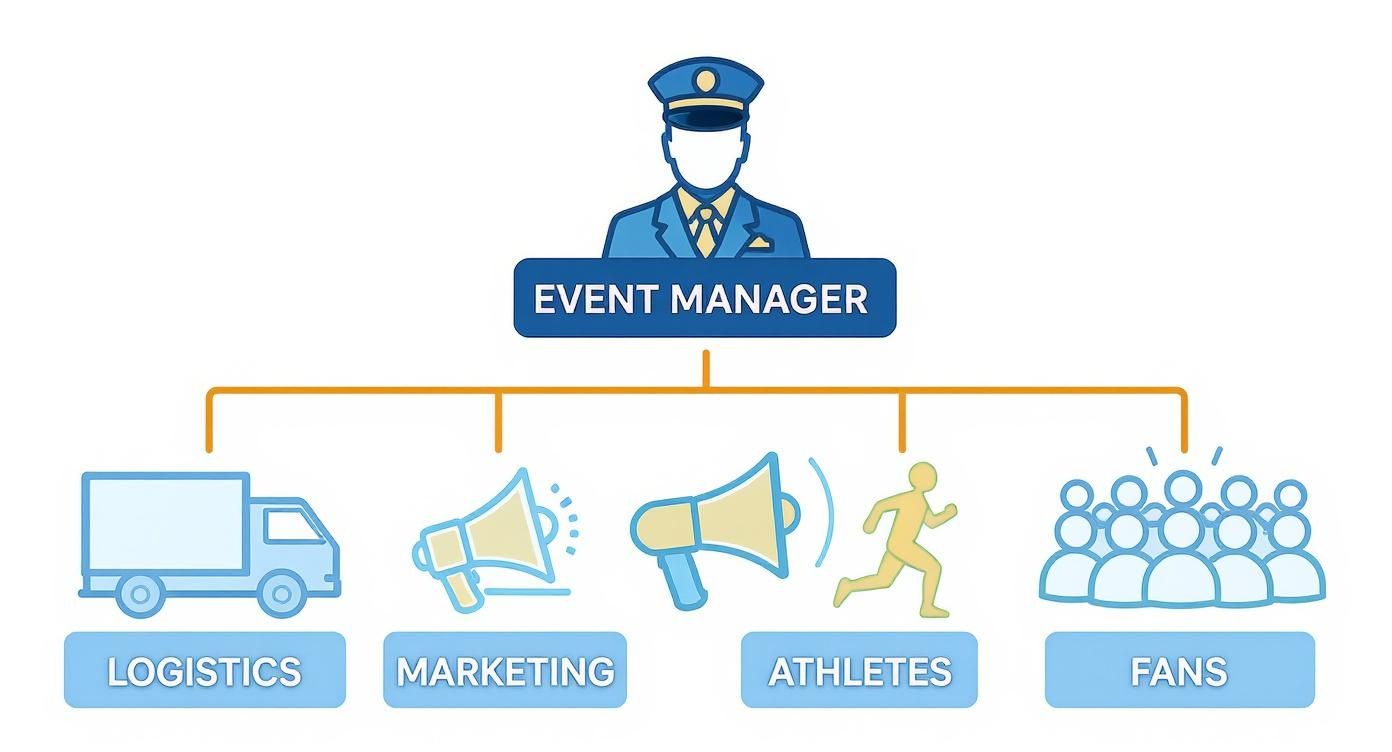
As you can see, the manager's job is to keep logistics, marketing, athlete relations, and the fan experience all running in perfect harmony.
Common Job Titles and Key Duties in Sports Event Management
To give you a clearer picture, here’s a practical look at some of the most common roles you'll find, what they’re responsible for, and the kinds of events they typically work on.
| Job Title | Core Responsibilities | Example Event Focus |
|---|---|---|
| Event Coordinator | Manages day-to-day logistics, vendor communication, volunteer schedules, and on-site problem-solving. They are the hands-on implementers of the event plan. | Local 5K charity run, collegiate basketball tournament, regional youth soccer championship. |
| Operations Manager | Oversees the entire logistical framework, including venue setup, security, transportation, and emergency planning. Focuses on the "how" of the event. | City marathon, professional golf tournament (e.g., PGA Tour event), multi-day music and sports festival. |
| Marketing Director | Develops and executes strategies to drive ticket sales, build brand awareness, and engage fans through advertising, social media, and PR. | A new professional team's season launch, a major international competition (like the World Cup), a championship boxing match. |
| Sponsorship Manager | Secures funding by building and managing partnerships with corporate sponsors. They identify, negotiate, and activate brand deals. | Professional league games (NFL, NBA), action sports competitions (X Games), major tennis opens (like the US Open). |
These roles are just the beginning, but they represent the core functions that make any sports event come to life. Each one requires a unique mix of skills, from meticulous planning to creative salesmanship.
The On-the-Ground Strategist: Event Coordinator
The Event Coordinator is the ultimate boots-on-the-ground problem solver. They live in the details, translating the big-picture strategy into real-world action and acting as the vital link between the plan and what’s actually happening on site. Their job is a constant whirlwind of communication and execution.
For instance, at a major tennis tournament, the Event Coordinator is the one making sure player shuttles run on time, volunteers are where they need to be, and the catering is set up correctly. If a credential machine goes down, they're the first person getting the call. It's a foundational yet demanding role, with a median salary sitting around $57,000.
The Master of Logistics: Operations Manager
While the coordinator is managing the immediate tasks, the Operations Manager is the one who designed the entire logistical machine in the first place. They are the architects of the event's physical world, ensuring everything from the venue layout and crowd flow to security protocols runs like clockwork. Their work starts months, sometimes even years, ahead of game day.
Picture organizing a city marathon. The Operations Manager is the person who maps out the entire 26.2-mile course, works with city officials to get roads closed, plans for medical tents at every mile, and develops a rock-solid emergency response plan. They are responsible for the very bones of the event. This high level of responsibility is why Operations Managers often command salaries averaging between $70,000 and $117,000.
The Hype Builder: Marketing Director
An event isn't a success if nobody knows about it, and that’s precisely where the Marketing Director shines. This role is all about crafting a compelling story that sells tickets, builds an unforgettable brand, and gets fans excited. They are in charge of advertising, social media campaigns, public relations, and media partnerships.
Think about a new pro soccer team's home opener. The Marketing Director would be orchestrating a multi-channel campaign to create buzz, from targeted social ads aimed at local sports fans to collaborating with influencers and setting up press events with star players. Their mission is to pack the stadium and build a loyal fanbase from day one. Salaries here often start around $75,000 for specialists and can exceed $150,000 for directors at major organizations. Our guide on event management in sports takes a deeper look at how these marketing efforts fit into the grand scheme.
The Deal Maker: Sponsorship Manager
Last but certainly not least, the Sponsorship Manager is the financial engine that powers the event. Their job is to identify, negotiate, and secure partnerships with corporate brands that provide the funding needed to make it all happen. This requires a sharp mix of sales skills, relationship building, and creative vision.
A Sponsorship Manager doesn't just sell ad space; they build strategic alliances. They find the perfect brand whose identity aligns with the event's audience, creating a partnership that feels authentic and valuable to everyone involved.
Take a professional surfing competition, for example. The Sponsorship Manager might forge a partnership with a sustainable sunscreen company or an off-road vehicle brand. They’d then bring that sponsorship to life through on-site branding, digital content, and fan experiences that benefit both the event and the partner. It's a highly skilled role, and the pay reflects that, with Corporate Partnerships Managers earning an average of over $157,000.
Building Your Skillset for a Winning Career

It takes more than just a passion for the game to land a top job in sports event management. Success really comes down to having a balanced toolkit of practical abilities and the right personal qualities.
Think of it like a star athlete. They need raw talent, for sure, but they also need the mental grit to perform under pressure. In this field, you absolutely need both to win. We can split this essential toolkit into two buckets: hard skills and soft skills.
Mastering the Technical Playbook: Hard Skills
Hard skills are the concrete, teachable abilities you can list on your resume—the "what you can do." They're the strategic plays you learn through school and on-the-job experience, allowing you to manage the logistics, finances, and all the moving parts of an event.
Without these, even the most brilliant event concept will never get off the ground. These skills are what turn a vision into a flawlessly executed reality.
Here are the key hard skills you need in your arsenal:
- Budgeting and Financial Forecasting: This means you can build a detailed budget, track every dollar spent, and project revenue from things like ticket sales and sponsorships. It’s all about making sure the event is financially successful.
- Logistics and Operations Planning: This is the art of coordinating every single physical piece of the puzzle—from picking the venue and organizing security to managing transportation and vendors.
- Project Management Software: You have to be comfortable with tools like Asana, Trello, or other event-specific software. It’s non-negotiable for keeping tasks, timelines, and your team on the same page.
- Contract Negotiation: You’ll need to confidently negotiate with vendors, sponsors, and venues to get good terms that protect your event and your budget.
- Risk Management: This is a huge one. It involves spotting potential problems before they happen—anything from bad weather to a power outage—and having a solid backup plan ready to go.
The demand for people with these skills is only getting bigger. The Athletic Event Organizers sector in the U.S. is on track to hit a market size of $4.8 billion in 2025, after some major growth over the last five years.
Excelling Under Pressure: Essential Soft Skills
While hard skills might get you an interview, it’s your soft skills that will make you truly great at this job. They are all about "how you do it."
Imagine a huge thunderstorm rolls in an hour before your outdoor charity 5K. Your technical plan is suddenly at risk. If you can't stay calm, communicate clearly with your crew, and make smart decisions on the fly, it doesn't matter how great your spreadsheet is. This is where soft skills save the day.
Soft skills are the game-changers in event management. They’re your ability to lead, adapt, and solve problems when the carefully laid plans inevitably go off-script.
These interpersonal skills are what separate a good event manager from a great one. They’re the secret sauce to building strong teams and creating a seamless experience for everyone, from the athletes to the fans in the stands.
Here are the essential soft skills to work on:
- Adaptability: The ability to pivot quickly when things go wrong is probably the single most important trait you can have.
- Leadership: You have to be able to inspire and guide a diverse team of staff, volunteers, and vendors, often when everyone is feeling the pressure.
- Problem-Solving: This is all about thinking on your feet to find creative solutions for the countless little fires that pop up on event day.
- Communication: Clear, direct communication is everything. It keeps your stakeholders, your team, and the attendees informed and feeling confident.
Going beyond what’s taught in a classroom and understanding the real event management skills honed through experience is what will truly set you apart. Learning to read a room, de-escalate a tense situation, and keep your cool when chaos hits is invaluable. Building both your hard and soft skills is the best strategy for a long and successful career in sports event management.
Navigating Salaries and Career Growth
Let's talk about the two things on every job seeker's mind: what you can earn and where your career can go. A job in sports event management isn’t just a one-off gig; it's a ladder. With every step up, you take on more responsibility and, you guessed it, a bigger paycheck. Your path will be shaped by your experience, the kind of organization you work for, and even your zip code.
The good news? This industry is booming, which means more rungs are being added to that ladder all the time. The United States sports event market is a massive force in this growth, with revenues expected to jump from around USD 150 million in 2024 to more than USD 208 million by 2030. You can dig into the full industry projections to get a better sense of just how fast things are moving.
Charting Your Career Trajectory
Most people in sports events follow a pretty well-worn path, moving from hands-on, in-the-weeds work to big-picture strategic planning. It’s a natural progression that lets you master the fundamentals before you start calling the shots.
- Event Assistant/Intern: This is where just about everyone gets their start. You’ll be the go-to person for entry-level tasks, helping coordinators and learning the nuts and bolts of how an event comes to life.
- Event Coordinator: Once you've got some experience under your belt, you'll move into a coordinator role. This is where you get to own specific pieces of the puzzle, like running the volunteer program or being the main point of contact for vendors.
- Event Manager: As a manager, the whole show is yours. You're in charge of planning and pulling off entire events—managing the budget, hitting deadlines, and overseeing the work of your team.
- Senior Manager/Director: At the top, your focus shifts from execution to strategy. You might manage a whole calendar of events, lead larger teams, and decide the long-term vision for your organization's live experiences.
This isn't just about getting a fancier title. It's about growing your scope from managing tasks, to managing people, to ultimately managing a vision.
What to Expect for Your Paycheck
Salaries in this field are all over the map, but the basic rule holds true: the more experience and responsibility you have, the more you make. Entry-level roles get your foot in the door, but the real earning potential kicks in as you climb.
Here’s a rough sketch of what you might earn at different stages, based on industry data:
| Career Stage | Typical Job Title | Average Salary Range |
|---|---|---|
| Entry-Level | Event Assistant, Intern | $35,000 - $50,000 |
| Mid-Level | Event Coordinator | $50,000 - $65,000 |
| Experienced | Event Manager, Operations Manager | $65,000 - $90,000+ |
| Senior/Executive | Director of Events | $90,000 - $150,000+ |
Keep in mind, these are just averages. Your actual salary depends on a ton of factors—the size and reputation of your employer, the city you're in, and your own track record of success.
An Event Manager for a major league team in New York City is going to have a very different pay stub than someone with the same title at a small-town nonprofit. It's just reality. Specializing in high-value areas like corporate sponsorships can also bump you into a higher bracket. Thinking about these variables as you plan your career can help you maximize what you take home in this incredibly exciting field.
Your Action Plan for Breaking into the Industry

Knowing the roles and skills is one thing, but turning that knowledge into a job offer is the real game. This is your playbook for turning ambition into a tangible opportunity.
Breaking into the competitive world of sports event management requires a smart, proactive strategy. You need to show not just what you've done, but what you can achieve. It’s all about building a narrative that proves you belong, even if your experience isn't from a major league team.
Craft a Resume That Tells a Story
Your resume isn’t just a list of past duties; it's your highlight reel. Hiring managers in sports are looking for people who deliver results, so every single bullet point needs to scream impact. Ditch the passive descriptions of your responsibilities and focus on what you actually accomplished.
This is especially critical if your experience comes from volunteering, part-time jobs, or even college projects. You have to think like a marketer and sell your achievements. Frame every task in terms of its outcome and value.
A great resume doesn't just list tasks; it quantifies achievements. It transforms "Helped with event setup" into "Contributed to a seamless event experience for 500+ attendees by managing logistics and volunteer coordination."
The key is to translate your experience into the language of event management. Whether you organized a fundraiser, managed a retail team, or planned a campus activity, you’ve developed skills that are directly transferable.
For example, a job in retail teaches you customer service and how to manage crowd flow—both essential for guest relations. Running a student club involves budgeting and coordinating people, which is the very core of what an Event Coordinator does. By connecting these dots, you make it easy for a hiring manager to see your potential.
Translating Your Experience into a Standout Resume
It can be tough to see how a "regular" job fits into the sports world. The table below shows how to reframe common experiences to catch a recruiter's eye.
| Your Experience | How to Frame It for Sports Events |
|---|---|
| Organized a campus club event. | "Managed the end-to-end planning and execution of a campus event for 200+ students, overseeing a $2,500 budget and coordinating with three external vendors." |
| Worked as a restaurant host. | "Excelled in a high-pressure environment, managing guest flow and wait times to ensure a positive experience for up to 150 patrons per night." |
| Volunteered at a local 5K race. | "Supported race day operations by managing a water station for 1,000+ runners, ensuring timely setup and efficient distribution of resources." |
See the difference? It’s all about focusing on numbers and results.
Get Invaluable Experience Through Internships and Volunteering
In the sports industry, who you know and what you've done often matter more than what your degree says. Internships and volunteer roles are the single best way to build both your resume and your network. They are your ticket inside the ropes.
Volunteering at a local marathon or a charity golf tournament puts you side-by-side with industry professionals. It’s a low-pressure way to demonstrate your work ethic, ask smart questions, and make genuine connections. These are the people who can offer advice, provide a reference, or even tell you about an unlisted job opening.
An internship isn’t just about getting coffee. It's an extended interview where you can prove your value and absorb everything about the industry—from the lingo to the logistics.
Many full-time hires in sports start as interns who simply made themselves indispensable. Treat every opportunity, paid or unpaid, as a chance to prove you belong. For a deeper look into the realities of this on-the-ground work, check out our guide on what it's like working at events.
Ace the Interview and Land the Job
Once you secure an interview, your goal is to prove you're not just a fan—you're a problem-solver who understands the business of sports. Be ready for questions that test your logistical thinking, adaptability, and genuine passion.
Common Interview Questions to Prepare For:
- "Describe a time you had to solve an unexpected problem under pressure." They want to know you can stay calm and think on your feet when plans go sideways. Use a real example, even a small one, and walk them through your thought process.
- "How would you handle a difficult sponsor or unhappy attendee?" This tests your communication and customer service skills. Your answer should focus on listening, empathizing, and finding a professional solution.
- "What sports event do you admire for its execution, and why?" This shows you're a student of the industry. Pick an event and be ready to discuss specific operational or marketing elements you found impressive.
Your answers should be confident, specific, and always tied back to the skills the job requires. Combine a results-driven resume with hands-on experience and sharp interview skills, and you'll have a winning plan for breaking into this exciting field.
Answering Your Top Questions About Sports Event Management Jobs
As you start to map out your career, it's totally normal to have some practical questions about what it really takes to make it in sports event management. Getting straight answers helps you set realistic expectations and make moves with confidence.
Let's dive into some of the questions I hear all the time from people trying to break into this exciting field.
Do I Absolutely Need a Specific Degree?
Here’s the honest answer: while a degree in Sports Management, Hospitality, or Business definitely gives you a leg up, it’s not a deal-breaker. In this line of work, hands-on experience is king.
I know countless successful pros who built their careers from the ground up. They started by volunteering, grabbing every internship they could, and simply proving they could deliver when the pressure was on. A killer portfolio showing what you’ve actually accomplished can often speak louder than a specific diploma.
What's the Real Story on Work-Life Balance?
Let's be blunt: the rhythm of this job is dictated by the event calendar. You can expect some seriously intense periods with long hours—we're talking nights and weekends—especially in the final push before an event. It's a high-energy, high-stakes environment that isn't for everyone.
But, it's not a constant sprint. The downtime between events or during the off-season often brings a more predictable, 9-to-5-ish schedule. This career is a fantastic fit for people who thrive on that kind of dynamic cycle and get a huge rush from watching a massive project come together flawlessly.
Networking isn't just a buzzword in this industry; it's the entire game. The sports world is incredibly tight-knit, and the best jobs are often filled through word-of-mouth long before they ever hit a job board. Your network is your career's lifeline.
What Are the Biggest Trends I Should Know About?
Three big shifts are really changing the game right now. First, technology is everything. From sophisticated event management software that keeps the chaos organized to fan-facing mobile apps, being tech-savvy is no longer optional—it's a core skill.
Second, sustainability has moved from a "nice-to-have" to a "must-have." There's a huge push for eco-friendly event planning and execution. Finally, the rise of hybrid events—blending in-person and virtual experiences—is creating new roles that demand both traditional event skills and a sharp understanding of the digital world.
This evolution is fueling serious growth. Just look at the closely related sports hospitality market, which is expected to jump from $12.04 billion in 2024 to $13.93 billion in 2025. That kind of expansion tells you just how much opportunity is out there. You can dig deeper into this market's impressive growth trajectory.
Ready to find a role that lights you up? At GetSportJobs, we specialize in connecting passionate people with incredible opportunities across the sports industry. Start exploring thousands of sports event management jobs today at https://www.getsportjobs.com.