10 Key Sports Management Career Paths to Explore in 2025
10 Key Sports Management Career Paths to Explore in 2025
A degree in sports management isn't a one-way ticket to a single job; it's an all-access pass to a dynamic, multi-billion dollar global industry. The challenge isn't a lack of opportunity, but rather navigating the vast and diverse landscape of potential roles. From front-office strategy to gameday operations, the field is packed with specialized positions that demand unique skill sets. For aspiring professionals, the sheer number of options can feel overwhelming, making it difficult to pinpoint the right fit.
This guide serves as your definitive playbook, designed to cut through the noise and provide a clear, actionable roadmap. We will break down ten of the most prominent sports management career paths, moving beyond vague job titles to offer a comprehensive look at what each role truly entails. You will gain a clear understanding of the day-to-day responsibilities, required skills, and typical earning potential associated with each position.
We will explore a wide spectrum of careers, including Sports Agent, Sports Marketing Manager, General Manager, and Sports Analytics Manager, among others. For each path, you'll find a detailed breakdown that includes:
- Role Overviews: What the job actually involves.
- Education and Skills: The specific qualifications you need.
- Entry-Level Routes: Actionable first steps like internships and networking.
- Salary and Growth Data: Realistic expectations for compensation and advancement.
- Pros and Cons: A balanced view to help you make an informed decision.
This isn't just a list; it's a strategic resource to help you transition from the classroom to a fulfilling career. Whether you are drawn to high-stakes negotiations, data-driven decision-making, or the electric atmosphere of a sold-out venue, your journey into the world of sports starts right here.
1. Sports Agent
A sports agent serves as the primary representative for professional athletes, acting as a crucial intermediary between the player and teams, sponsors, and media. This dynamic role involves far more than just negotiating multi-million dollar contracts; it encompasses comprehensive career management, strategic brand building, and personal guidance. The agent is the architect of an athlete's professional life, ensuring their financial security and maximizing their earning potential both on and off the field.
As one of the most high-stakes sports management career paths, agents handle everything from contract negotiations and endorsement deals to financial planning and public relations. Their income is typically commission-based, ranging from 4-10% of an athlete's playing contract and a higher percentage (10-20%) of their marketing deals. This structure directly ties an agent's success to their client's success, creating a powerful partnership.

Key Responsibilities & Required Skills
- Contract Negotiation: Secure optimal playing contracts with professional teams.
- Marketing & Endorsements: Source and negotiate sponsorship and endorsement deals with brands.
- Financial Management: Advise on investments, budgeting, and long-term financial security.
- Career Strategy: Provide guidance on team selection, public image, and post-career transitions.
- Legal Oversight: Work with legal counsel to review contracts and ensure compliance.
Success in this field demands a unique blend of strong negotiation skills, an extensive network of industry contacts, and a deep understanding of contract law and collective bargaining agreements (CBAs).
Real-World Example: Scott Boras, founder of the Boras Corporation, is arguably the most powerful agent in baseball. He is known for his meticulous preparation and record-breaking contracts, such as Gerrit Cole's $324 million deal with the New York Yankees, showcasing the immense financial impact an elite agent can have.
Getting Started and Next Steps
Breaking into this competitive field often starts with gaining experience in related areas. Pursue internships at major agencies like Creative Artists Agency (CAA) or Wasserman. Roles in scouting, team operations, or sports law provide foundational knowledge and critical network connections.
- Next Step: Obtain necessary certifications. Many professional leagues, like the NFL Players Association (NFLPA) and National Basketball Players Association (NBPA), require agents to be certified, which involves an application, exam, and background check.
- GetSportJobs Search: Use filters like "Player Representation," "Athlete Services," or "Contract Management" to find entry-level roles or internships at sports agencies. Look for job titles such as "Agent Trainee" or "Player Relations Coordinator."
2. Sports Marketing Manager
A sports marketing manager is the strategic mind behind a sports organization's public image and revenue-generating activities. They are responsible for creating and executing comprehensive marketing campaigns that build brand loyalty, drive ticket and merchandise sales, and secure valuable sponsorships. This role serves as a vital bridge, connecting the passion of fans with the business objectives of teams, leagues, and sports-affiliated brands.
This is one of the most creative sports management career paths, blending data-driven strategy with compelling storytelling to engage audiences. These professionals manage everything from digital advertising and social media engagement to game-day promotions and major brand partnerships. Their success is measured by their ability to grow the fanbase, increase brand visibility, and directly contribute to the organization's bottom line through innovative marketing initiatives.

Key Responsibilities & Required Skills
- Campaign Development: Design and implement marketing strategies across digital, print, and experiential channels.
- Sponsorship Activation: Manage relationships with corporate partners and activate sponsorship deals.
- Fan Engagement: Create initiatives to grow and retain the fan base.
- Brand Management: Ensure consistent brand messaging and positioning in the market.
- Data Analysis: Use analytics to measure campaign performance (KPIs) and inform future strategies.
To excel, a marketing manager needs a combination of creativity, strong analytical skills to interpret data, and a deep understanding of digital marketing tools and fan psychology.
Real-World Example: Gatorade's legendary "Be Like Mike" campaign, featuring Michael Jordan, is a textbook case of brilliant sports marketing. It transcended simple advertising to become a cultural phenomenon, cementing Gatorade's status as the go-to sports drink and demonstrating how a powerful athlete endorsement can define a brand for decades.
Getting Started and Next Steps
Entry into sports marketing often begins with internships or entry-level roles within a team's marketing department, a sports marketing agency, or a major brand's sports division. Experience in social media coordination, graphic design, or data analysis provides a strong foundation and demonstrates tangible skills.
- Next Step: Build a portfolio of your work. This could include mock campaigns for your favorite team, analytics reports from a class project, or successful social media content you managed for a college club. A strong portfolio can be more impactful than a resume alone.
- GetSportJobs Search: Find relevant opportunities by searching for titles like "Marketing Coordinator," "Fan Engagement Specialist," or "Digital Media Assistant." Use filters such as "Brand Management," "Sponsorships," or "Digital Marketing" to narrow your search. Explore the latest Sports Marketing Manager jobs to see what's available.
3. Sports Team General Manager (GM)
The Sports Team General Manager (GM) is the chief architect of a team's on-field identity and performance. Acting as the highest-ranking executive in charge of sports operations, the GM makes the critical decisions that shape the roster, coaching staff, and long-term competitive strategy. This pivotal role involves a complex blend of talent evaluation, financial management, and strategic foresight, with the ultimate goal of building a championship-caliber organization.
As one of the most demanding and influential sports management career paths, the GM is responsible for everything from player trades and draft selections to hiring the head coach and managing the salary cap. They serve as the direct link between team ownership and the sports side of the organization, translating ownership's vision into a tangible on-field product. The GM's decisions directly impact a franchise's success, public perception, and financial viability for years to come.
Key Responsibilities & Required Skills
- Player Personnel: Oversee scouting, drafting, trades, and free agent signings.
- Roster & Salary Cap Management: Construct a competitive roster while adhering to league financial rules.
- Hiring & Staff Management: Hire, manage, and evaluate the head coach and other key sports operations staff.
- Strategic Planning: Develop and execute a long-term vision for team building and sustained success.
- Liaison to Ownership: Report on performance and strategic direction to the team owner and president.
Success requires a masterful combination of talent evaluation skills, deep knowledge of analytics and advanced metrics, and expert-level understanding of salary caps and collective bargaining agreements (CBAs).
Real-World Example: Billy Beane, former GM of the Oakland Athletics, revolutionized baseball by pioneering a data-driven "Moneyball" approach to identify undervalued players. His innovative strategy proved that a small-market team could compete with financial powerhouses, fundamentally changing how front offices evaluate talent across all sports.
Getting Started and Next Steps
The path to becoming a GM is a long one, typically built on decades of experience within a sports organization. Aspiring GMs often begin in entry-level roles in scouting, video analysis, or data analytics departments. Gaining experience in different facets of team operations, from the business side to player development, is crucial for developing a holistic understanding of a franchise.
- Next Step: Build expertise in a specific area like salary cap management, scouting, or data science. Becoming the go-to expert in a critical function is a proven way to rise through the front office ranks.
- GetSportJobs Search: Use filters like "Team Operations," "Player Personnel," "Scouting," or "Basketball Operations" to find foundational roles within professional or collegiate teams. Look for job titles such as "Scouting Assistant," "Video Coordinator," or "Analytics Intern."
4. Sports Facility/Venue Manager
A sports facility or venue manager is the operational backbone of stadiums, arenas, and athletic complexes. This role is responsible for the entire lifecycle and daily functioning of the venue, ensuring it is safe, efficient, and profitable. From overseeing the turf on the field to managing the point-of-sale systems at concession stands, the venue manager ensures every aspect of the physical environment contributes to a seamless and memorable fan experience.
This career path is essential for the sports industry, as these professionals are tasked with managing multi-million dollar assets that host thousands of people. They handle event logistics, preventative maintenance, security protocols, vendor contracts, and emergency preparedness. Their work directly impacts revenue generation by maximizing facility usage for concerts, corporate events, and community gatherings in addition to sporting events.
Key Responsibilities & Required Skills
- Operations Management: Oversee day-to-day facility operations, including maintenance, cleaning, and security.
- Event Coordination: Work with event planners to manage logistics for games, concerts, and other events.
- Vendor & Contractor Management: Negotiate contracts and manage relationships with food service, security, and maintenance providers.
- Budget & Finance: Develop and manage the facility's operational budget, seeking ways to improve efficiency and revenue.
- Safety & Compliance: Ensure the venue adheres to all safety regulations, including OSHA and ADA standards.
Success requires a powerful combination of project management skills, strong leadership abilities, and a deep understanding of building systems and event logistics.
Real-World Example: The management team at Madison Square Garden in New York City exemplifies operational excellence. They flawlessly convert the arena from a New York Knicks basketball court to a New York Rangers ice hockey rink, often overnight, showcasing the intricate planning, skilled labor, and logistical precision required in top-tier venue management.
Getting Started and Next Steps
Entry into this field often begins with hands-on experience in event operations or building maintenance. Seek internships or part-time roles at local arenas, university athletic facilities, or minor league stadiums to learn the fundamentals of how a large venue operates from the ground up.
- Next Step: Pursue relevant certifications like the Certified Facility Manager (CFM) from IFMA or credentials from the International Association of Venue Managers (IAVM) to demonstrate expertise and enhance your professional credibility.
- GetSportJobs Search: Use filters like "Venue Operations," "Facility Management," or "Event Logistics" to find relevant positions. Look for job titles such as "Operations Coordinator," "Event Staff," or "Facility Assistant."
5. Sports Public Relations Manager
A Sports Public Relations (PR) Manager is the chief storyteller and reputation defender for a sports organization, team, or individual athlete. This role is dedicated to shaping and maintaining a positive public image, acting as the critical link between the organization and the media, fans, and the general public. They craft the narrative, manage information flow, and prepare key personnel for public appearances, ensuring consistent and strategic messaging.
This position is one of the most vital sports management career paths for brand protection and growth. PR Managers handle everything from writing press releases about player trades and community events to managing crisis communications during a team scandal. Their work directly influences public perception, ticket sales, and sponsorship value, making them indispensable in the high-scrutiny world of professional sports.
Key Responsibilities & Required Skills
- Media Relations: Cultivate relationships with journalists, pitch stories, and coordinate interviews.
- Content Creation: Write and distribute press releases, media kits, and official statements.
- Crisis Management: Develop and execute communication strategies during negative events or controversies.
- Brand Messaging: Ensure all external communications align with the organization’s brand and values.
- Media Training: Prepare athletes, coaches, and executives for interviews and public speaking.
Success requires a blend of exceptional written and verbal communication, strong media relationships, and the ability to remain calm and strategic under immense pressure. A deep understanding of the modern media landscape, including social media, is crucial.
Real-World Example: The communications department for the International Olympic Committee (IOC) manages an incredibly complex global narrative. They handle PR for host city selections, athlete stories, and crisis situations like the postponement of the Tokyo 2020 Games, demonstrating how PR manages perception on a massive, international scale.
Getting Started and Next Steps
Entry into sports PR often begins with internships in a team's communications or media relations department. Roles as a Sports Information Director (SID) at the collegiate level are a common and highly effective training ground, providing direct experience with many core responsibilities.
- Next Step: Build a professional portfolio showcasing your writing skills. Compile examples of press releases, media pitches, feature stories, and social media campaigns you have worked on, even from volunteer or academic projects.
- GetSportJobs Search: Use filters like "Communications," "Media Relations," or "Public Relations" to find relevant openings. Search for job titles like "Communications Coordinator," "Media Relations Assistant," or "Sports Information Assistant."
6. Sports Analytics Manager
A Sports Analytics Manager is the architect of a team's data-driven strategy, transforming raw numbers into a significant competitive advantage. This role sits at the intersection of sports science, statistics, and business intelligence, using data to inform critical decisions ranging from player recruitment and in-game strategy to fan engagement and business operations. They lead a team of analysts to uncover hidden patterns in performance data, injury metrics, and even ticketing information.
This position is one of the most intellectually demanding and rapidly evolving sports management career paths. Analytics managers don't just report statistics; they build predictive models, implement new technologies, and translate complex findings into actionable insights for coaches, scouts, and front-office executives. Their work directly influences roster construction, game plans, and the overall efficiency of the organization, making them indispensable in the modern sports landscape.
<iframe width="560" height="315" src="https://www.youtube.com/embed/oaRys0HgJmQ" frameborder="0" allow="accelerometer; autoplay; clipboard-write; encrypted-media; gyroscope; picture-in-picture" allowfullscreen></iframe>Key Responsibilities & Required Skills
- Data Modeling & Analysis: Develop statistical models to evaluate player performance and predict outcomes.
- Strategy Development: Translate analytical insights into strategic recommendations for coaching staff and management.
- Talent Identification: Use data to identify undervalued players in drafts and free agency.
- Performance Monitoring: Track and analyze team and player performance metrics to identify areas for improvement.
- Reporting & Visualization: Create compelling data visualizations and reports for non-technical stakeholders.
Success in this field requires a powerful combination of advanced statistical knowledge, proficiency in programming languages like Python or R, and a deep, nuanced understanding of the sport's specific context.
Real-World Example: The Houston Astros' analytics department, heavily influenced by data-driven principles, transformed the franchise from a struggling team into a perennial World Series contender. Their use of advanced metrics to optimize player shifts and pitching strategies is a prime example of how analytics can directly translate to on-field success.
Getting Started and Next Steps
Aspiring analysts should build a strong foundation in statistics, computer science, and data visualization. Create a portfolio of personal projects, like analyzing public sports datasets, to showcase your skills to potential employers. Internships with professional teams, sports media companies, or sports tech startups provide invaluable real-world experience.
- Next Step: Master key technical tools. Become an expert in SQL for database management, Python or R for statistical analysis, and data visualization software like Tableau to effectively communicate your findings. Learn more about the tools and skills needed for a career in sports analytics.
- GetSportJobs Search: Use filters like "Data Analytics," "Business Intelligence," or "Sports Science" to find relevant positions. Look for job titles such as "Data Analyst," "Quantitative Analyst," or "Basketball Strategy Analyst."
7. Sports Sponsorship Manager
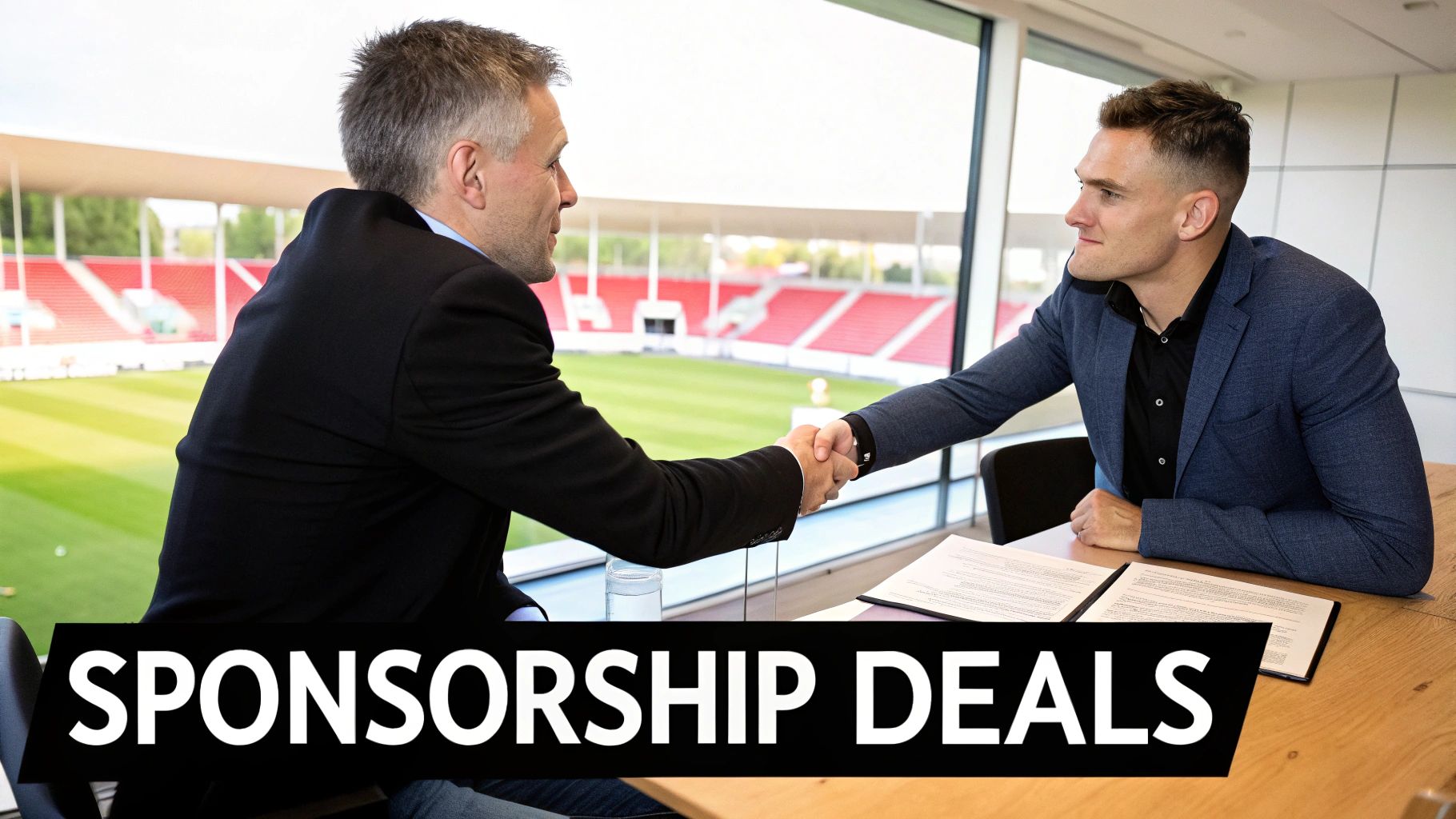
A sports sponsorship manager is the financial architect behind many sports organizations, responsible for securing and managing vital corporate partnerships. This role is a blend of high-stakes sales, relationship management, and strategic marketing, focused on generating revenue by connecting brands with the passionate audience of a team, league, or event. They design, pitch, and execute sponsorship packages that provide marketing value for corporate partners while funding the operations of the sports entity.
This career path is critical for the financial health of the sports industry, as sponsorship revenue is a primary income stream. These professionals identify potential sponsors, negotiate complex agreements for assets like stadium naming rights or jersey patches, and ensure all contractual obligations are met. Their work allows teams to sign top players and venues to enhance the fan experience, making it one of the most impactful sports management career paths.
Key Responsibilities & Required Skills
- Sponsorship Sales: Identify, pitch, and close deals with new corporate partners.
- Partnership Activation: Execute sponsor benefits, such as in-stadium signage, digital campaigns, and hospitality events.
- Relationship Management: Serve as the main point of contact for corporate partners, ensuring their objectives are met.
- ROI Analysis: Track and report on key performance metrics to demonstrate the value of the sponsorship.
- Inventory Management: Create and price sponsorship assets, from digital content to event naming rights.
Success requires a combination of persuasive sales and negotiation skills, a deep understanding of corporate marketing goals, and the ability to build and maintain long-term professional relationships.
Real-World Example: The partnership between the NFL and PepsiCo is a masterclass in sponsorship management. The deal, which includes the naming rights for the Super Bowl Halftime Show, is a multi-billion dollar agreement that provides the league with immense revenue while giving PepsiCo unparalleled global marketing exposure, demonstrating the massive scale and impact of this role.
Getting Started and Next Steps
Entry into this field often begins with roles in sales, marketing, or business development within a sports organization. Internships in a team's corporate partnerships department or at a sports marketing agency like IMG or Octagon are invaluable for building relevant experience and a strong professional network.
- Next Step: Focus on developing a portfolio of successful sales or partnership activations, even on a smaller scale. Certifications in digital marketing or sales can also strengthen your resume and provide a competitive edge.
- GetSportJobs Search: Use filters like "Corporate Partnerships," "Sponsorship Sales," or "Business Development" to find relevant openings. Look for job titles such as "Sponsorship Coordinator" or "Partnership Activation Assistant."
8. Sports Medicine and Sports Science Director
A Sports Medicine and Sports Science Director is the key figure responsible for the holistic health, well-being, and peak physical performance of athletes. This role operates at the intersection of medical science and athletic achievement, overseeing everything from injury prevention and rehabilitation to performance optimization through data analytics. They manage a team of athletic trainers, physicians, and strength coaches to create an integrated support system that keeps players healthy and competitive.
As a critical component of modern sports management career paths, this director ensures that all health and performance protocols are based on cutting-edge research and ethical practices. Their work directly impacts a team's success by minimizing time lost to injuries and maximizing each athlete's physical potential. This position is essential in high-level collegiate and professional sports, where the slightest physical advantage can determine the outcome of a championship.
Key Responsibilities & Required Skills
- Medical Staff Management: Lead and coordinate athletic trainers, team physicians, nutritionists, and sports scientists.
- Injury Prevention & Rehabilitation: Design and implement evidence-based programs to reduce injury risk and manage athlete recovery.
- Performance Optimization: Utilize biometric data and sports science research to enhance training, recovery, and nutrition protocols.
- Compliance & Safety: Ensure all medical practices adhere to league policies, anti-doping regulations, and safety standards.
- Communication: Serve as the primary liaison between the medical staff, coaching staff, and front office regarding player health status.
Success requires a foundation in medical or kinesiological sciences, combined with strong leadership abilities, data analysis skills, and excellent interpersonal communication to work effectively with both athletes and coaches.
Real-World Example: Dr. Daniel Cooper, head team physician for the Dallas Cowboys, exemplifies this role. He oversees a comprehensive medical staff and is renowned for his work in orthopedic surgery and athlete care, demonstrating how medical leadership is integral to the long-term success and health of a professional franchise.
Getting Started and Next Steps
To enter this field, a strong educational background in athletic training, physical therapy, or medicine is paramount. Gaining hands-on experience through internships with collegiate athletic departments or professional teams is crucial for understanding the demands of elite athlete care.
- Next Step: Pursue advanced degrees and certifications, such as a Doctor of Physical Therapy (DPT), Certified Athletic Trainer (ATC), or a medical degree (MD/DO) with a sports medicine fellowship.
- GetSportJobs Search: Use filters like "Sports Medicine," "Athletic Training," "Sports Science," or "Player Health" to find relevant positions. Look for job titles such as "Assistant Athletic Trainer," "Sports Science Intern," or "Physical Therapist."
9. Sports Event Manager
A Sports Event Manager is the master organizer behind the spectacle of live sports, responsible for planning, coordinating, and executing events from local tournaments to global mega-events like the Olympics or the Super Bowl. This role is the operational backbone of any successful sporting competition, ensuring that every logistical detail is flawlessly managed. They are the ultimate project managers, orchestrating everything from venue selection and vendor management to staffing and security.
This is one of the most hands-on sports management career paths, requiring a professional who can stay calm under pressure and solve problems in real-time. Event managers are responsible for the budget, timeline, and overall experience for athletes, fans, and sponsors. Their work ensures that the event not only runs smoothly but also meets its financial and strategic objectives, creating a memorable and safe environment for everyone involved.
Key Responsibilities & Required Skills
- Logistical Planning: Coordinate all event logistics, including venue setup, transportation, and scheduling.
- Budget Management: Create and manage event budgets, track expenses, and ensure profitability.
- Vendor & Staff Coordination: Hire and manage vendors, volunteers, and event staff.
- Risk Management: Develop contingency plans for weather, security threats, and other potential issues.
- Stakeholder Communication: Serve as the central point of contact for teams, sponsors, media, and venue operators.
Success in this field hinges on exceptional project management skills, meticulous attention to detail, and the ability to multitask effectively under extreme pressure. A strong network of reliable vendors and suppliers is also invaluable.
Real-World Example: The organizing committee for the London 2012 Olympic Games is a prime example of elite event management. The committee, led by Lord Sebastian Coe, successfully managed thousands of staff and volunteers to deliver one of the most celebrated Games in modern history, showcasing the incredible complexity and scale of world-class sports event execution.
Getting Started and Next Steps
Gaining hands-on experience is paramount. Volunteer for local marathons, collegiate sporting events, or community tournaments to understand the moving parts of event execution. Internships with event management companies, professional teams, or league offices provide critical exposure and networking opportunities.
- Next Step: Master project management software like Asana, Trello, or specialized event management platforms. Earning a certification like the Certified Meeting Professional (CMP) can also enhance your credentials.
- GetSportJobs Search: To find opportunities, use filters such as "Event Operations," "Game Day Staff," or "Tournament Coordinator." Look for job titles like "Event Coordinator" or "Operations Assistant." Explore more about the Sports Event Manager role on GetSportJobs.
10. Sports League Executive/Senior Administrator
A Sports League Executive or Senior Administrator operates at the highest level of a professional sports organization, guiding the overall direction and strategic vision of an entire league. This role is responsible for balancing the interests of team owners, players, broadcast partners, and fans to ensure the league's long-term health and growth. These individuals are the ultimate decision-makers, shaping policy, managing labor relations, and negotiating billion-dollar media rights deals that define the sport's commercial success.
As one of the most prestigious sports management career paths, this position involves immense pressure and public scrutiny. Executives oversee everything from league-wide marketing initiatives and global expansion to player conduct rules and crisis management. Their influence extends across the entire sport, making decisions that can impact generations of athletes and fans. The compensation for top executives reflects this responsibility, often running into the tens of millions annually.
Key Responsibilities & Required Skills
- League Governance & Policy: Develop and enforce rules, regulations, and policies that govern competition and team operations.
- Broadcast & Media Rights: Negotiate lucrative television, streaming, and digital media contracts.
- Labor Relations: Manage relationships with players' associations, including collective bargaining agreement (CBA) negotiations.
- Strategic Growth: Identify and pursue opportunities for league expansion, international growth, and new revenue streams.
- Stakeholder Management: Serve as the primary liaison between team owners, ensuring alignment on league objectives.
Success in this role requires a masterful combination of political acumen, exceptional business and legal expertise, and strong diplomatic and communication skills. A deep understanding of the sports media landscape is non-negotiable.
Real-World Example: Adam Silver, the Commissioner of the National Basketball Association (NBA), has overseen a period of unprecedented global growth and social engagement for the league. His handling of major issues, from player activism to navigating the COVID-19 pandemic, highlights the blend of business strategy and public leadership required for the role.
Getting Started and Next Steps
Ascending to a league office leadership role is a long-term goal that requires a diverse background in sports business, law, or media. Gaining experience within a team's front office or in corporate roles at major broadcast networks or sponsor brands provides an essential foundation. A law degree (JD) or an MBA is often a prerequisite.
- Next Step: Build a career that demonstrates expertise in a critical league function, such as legal counsel, marketing, or broadcasting. Focus on building an extensive network of team owners and high-level executives.
- GetSportJobs Search: Roles at this level are rarely posted publicly. However, you can find foundational positions by using filters like "League Operations," "Business Development," or "Corporate Counsel" for major leagues like the NFL, NBA, MLB, or MLS. Look for titles such as "Director of Business Affairs" or "Senior Manager, League Strategy."
Sports Management: 10-Role Career Comparison
| Role | 🔄 Implementation complexity | ⚡ Resource & skills required | 📊 Expected outcomes / impact | 💡 Ideal use cases | ⭐ Key advantages |
|---|---|---|---|---|---|
| Sports Agent | High — ongoing negotiations, licensing, client management | Network, contract law knowledge, negotiation, variable income model | Secured athlete contracts, endorsements, career growth for clients | Individual athlete representation and deal-making | Direct client impact; high upside with top clients |
| Sports Marketing Manager | Medium — campaign planning and cross-channel coordination | Marketing team, budget, analytics tools, creative skills | Increased fan engagement, brand awareness, measurable ROI | Team/brand campaigns, fan acquisition, sponsorship activation | Measurable results; creative and strategic role |
| Sports Team General Manager (GM) | Very high — roster, salary-cap, long-term strategy under scrutiny | Scouting/analytics, financial authority, negotiation, leadership | Team competitiveness, roster construction, organizational performance | Franchise-level roster & strategic operations | High decision authority; direct influence on team success |
| Sports Facility/Venue Manager | Medium — daily operations, event logistics, maintenance | On-site staff, vendors, maintenance budget, compliance systems | Safe, efficient venue operations; optimized bookings and revenue | Stadium/arena operations, event hosting, facility upkeep | Stable employment; operational control and community ties |
| Sports Public Relations Manager | Medium — media relations and crisis readiness | Media contacts, communication tools, rapid response capability | Managed public narrative, crisis mitigation, reputation maintenance | Media-facing organizations, athlete and crisis communication | Influence on public perception; varied communication work |
| Sports Analytics Manager | High — data modeling, ML, integration across departments | Data scientists, computing resources, advanced statistics, ML skills | Data-driven decisions, predictive insights, performance improvements | Player evaluation, injury prevention, strategic analytics | Quantifiable impact; growing demand; technical leadership |
| Sports Sponsorship Manager | Medium — sales cycles, negotiation, activation logistics | Corporate relationships, legal support, activation budget | Revenue generation, long-term sponsor partnerships, branded activations | Securing corporate partnerships, monetizing assets | High revenue impact; business development opportunities |
| Sports Medicine & Science Director | High — medical oversight, compliance, research responsibilities | Medical credentials, multidisciplinary staff, diagnostic tech | Improved athlete health, injury prevention, performance optimization | Team medical programs, rehab protocols, performance research | Direct impact on athlete wellbeing; respected leadership role |
| Sports Event Manager | High — multi-stakeholder logistics, risk and timeline control | Vendor networks, event staff, project management tools | Successful events, spectator experience, operational efficiency | Large-scale events (Olympics, Super Bowl), tournaments | Visible outcomes; varied projects; strong networking |
| Sports League Executive / Senior Administrator | Very high — policy, broadcast, labor negotiations, governance | Legal teams, negotiation power, league-wide resources, diplomacy | League governance, revenue strategy, broadcaster & labor agreements | League-level strategy, broadcast rights, collective bargaining | Industry-wide influence; top-level strategic authority |
Finding Your Position on the Field
The world of sports management is not a single track but a sprawling stadium of opportunity, with countless entry points and diverse avenues for success. As we've explored through ten distinct sports management career paths-from the high-stakes negotiations of a Sports Agent to the logistical mastery of a Sports Facility Manager-it's clear that a passion for the game is just the starting line. The true journey involves channeling that passion into a specialized, professional skillset.
Each role, whether it's the data-driven world of a Sports Analytics Manager or the brand-building creativity of a Sports Marketing Manager, demands a unique blend of business acumen, strategic thinking, and relentless dedication. The common thread is the dynamic, fast-paced environment where the final score is determined not just by athletes, but by the professionals working tirelessly behind the scenes.
Synthesizing Your Game Plan
The most crucial takeaway from this comprehensive roundup is the importance of strategic alignment. Simply wanting to "work in sports" is not enough. You must align your innate talents, your educational background, and your professional aspirations with a specific niche within this expansive industry.
Consider these key themes that emerged across all roles:
- Experience is Non-Negotiable: Every path, from team management to event coordination, values hands-on experience above all. Internships, volunteer roles, and entry-level positions are not just resume-builders; they are essential for developing practical skills and proving your commitment.
- Networking is Your Superpower: The sports world is notoriously relationship-driven. The connections you build in classrooms, at industry events, or during an internship can unlock doors that a stellar resume alone cannot.
- Continuous Learning is the Standard: The business of sports is constantly evolving with new technologies, marketing strategies, and data analytics tools. A commitment to lifelong learning, whether through formal certifications or staying current on industry trends, is vital for long-term growth.
Your Immediate Next Steps
Knowledge without action is merely potential. It's time to translate the insights from this guide into a tangible career strategy. Don't wait for the perfect opportunity to appear; start creating it now.
- Conduct a Self-Audit: Review the "Pros and Cons" and "Required Skills" for each career path. Which one genuinely excites you? Where do your natural strengths lie? Be honest about which environment-a high-pressure agency, a collaborative team front office, or a non-profit athletic department-best suits your personality.
- Target Your Experience: Once you've identified one or two target roles, seek out relevant entry-level experiences. If you're drawn to event management, volunteer for a local 5K or a collegiate sporting event. If sports marketing is your goal, offer to help a local minor league team with their social media.
- Refine Your Personal Brand: Update your resume and LinkedIn profile to reflect the specific career path you're pursuing. Use keywords from the job descriptions you admire. Showcase projects and experiences that demonstrate the exact skills employers in that niche are looking for.
Mastering these concepts is not just about finding a job; it’s about building a sustainable and fulfilling career in an industry you love. By being intentional and strategic, you move from being a passive fan to an active and indispensable player in the business of sports. The field is wide open, and with a clear game plan, your ideal position is within reach.
Ready to turn your passion into a profession? Start exploring thousands of curated opportunities across all sports management career paths on GetSportJobs. Our platform connects you directly with teams, leagues, and brands, making it easier than ever to find the internship or job that will launch your career. Find your place in the game today at GetSportJobs.