The Sports Management Job Outlook in a Changing Game
The Sports Management Job Outlook in a Changing Game
The future looks incredibly bright for anyone dreaming of a career in sports management. We're seeing some serious growth across the globe, opening up a ton of different roles for people who know how to handle the business side of the game. If you've got the passion, now is the time to channel it into a real, rewarding career.
A High-Level View of the Sports Industry
Jumping into a sports management career is a bit like being a scout for a top team. You have to know the current playing field inside and out, but more importantly, you need to spot where the real future opportunities are. The industry is so much more than just the action on the field—it's a massive global business built on media rights, big-money sponsorships, merchandise, and unforgettable fan experiences. All that complexity is exactly what makes the job market so exciting.
The global sports industry has proven it can bounce back from anything and just keeps growing. Projections show the market is set to jump from $506.93 billion to a staggering $629.81 billion in just four years. That's a compound annual growth rate of about 5.9%, which signals strong economic health and a whole lot of new jobs on the horizon. For a deeper dive into these numbers, Maryville University's research on the topic is a fantastic resource.
Key Drivers of Industry Growth
So, what’s pushing this growth? It’s not just one thing. A few key trends are working together to create this positive job outlook, and understanding them is key to finding your spot.
- Globalization of Major Leagues: The NFL, NBA, and other major leagues aren't just staying home anymore. They're pushing into international markets, which means new jobs in global marketing, international logistics, and broadcast management.
- Rise of Digital Media: The way we watch sports has completely changed. Streaming services and social media are king, creating a huge need for digital content creators, social media gurus, and data analysts who can make sense of it all.
- Emergence of New Sectors: Think about it—esports and sports betting were barely on the radar a decade ago. Now, they are booming industries creating entirely new career paths for savvy professionals.
- Focus on Fan Engagement: It's all about the experience. Teams and leagues are pouring money into making game day unforgettable, which means they're hiring for roles in event management, guest relations, and sponsorship activation.
The modern sports industry is a multifaceted ecosystem. Success is no longer just about winning games; it's about building a brand, engaging a global audience, and managing a complex business enterprise. This shift is at the heart of the optimistic sports management job outlook.
To give you a clearer idea of what this all means for your career, let's break it down.
Here’s a quick look at some of the hottest areas in sports management, what you can expect to earn as you get started, and the skills you’ll need to get in the door.
Sports Management Career Outlook at a Glance
| Growth Area | Typical Salary Range | Essential Skills |
|---|---|---|
| Sports Marketing & Sponsorship | $50,000 - $85,000 | Digital Marketing, Sales, Brand Management, Negotiation |
| Event & Facility Management | $45,000 - $75,000 | Logistics, Operations, Customer Service, Budgeting |
| Sports Analytics & Data Science | $65,000 - $100,000+ | Data Analysis, Statistical Modeling, Communication, SQL/Python |
| Esports Management | $55,000 - $90,000 | Community Management, Tournament Operations, Digital Media |
| Athletic Administration (College) | $48,000 - $80,000 | Compliance (NCAA), Fundraising, Program Development |
This table is just a snapshot, of course. Salaries can climb much higher with experience, and the skills listed here are just the foundation. The key takeaway is that the opportunities are diverse and growing, offering a path for almost any business-minded sports lover.
Decoding the Numbers on Growth and Salary Potential
To really get a handle on the sports management job outlook, you have to look at the hard data. The numbers don't just hint at growth; they scream it from the rooftops. This industry is a dynamic, expanding field, and that means a ton of opportunities for anyone looking to build a career here. Think of the sports world as its own economy—and right now, business is booming.
The foundation of this whole optimistic forecast is the rock-solid financial health of the global sports market. This isn't just a hunch; the momentum is powerful enough to create jobs all over the world.
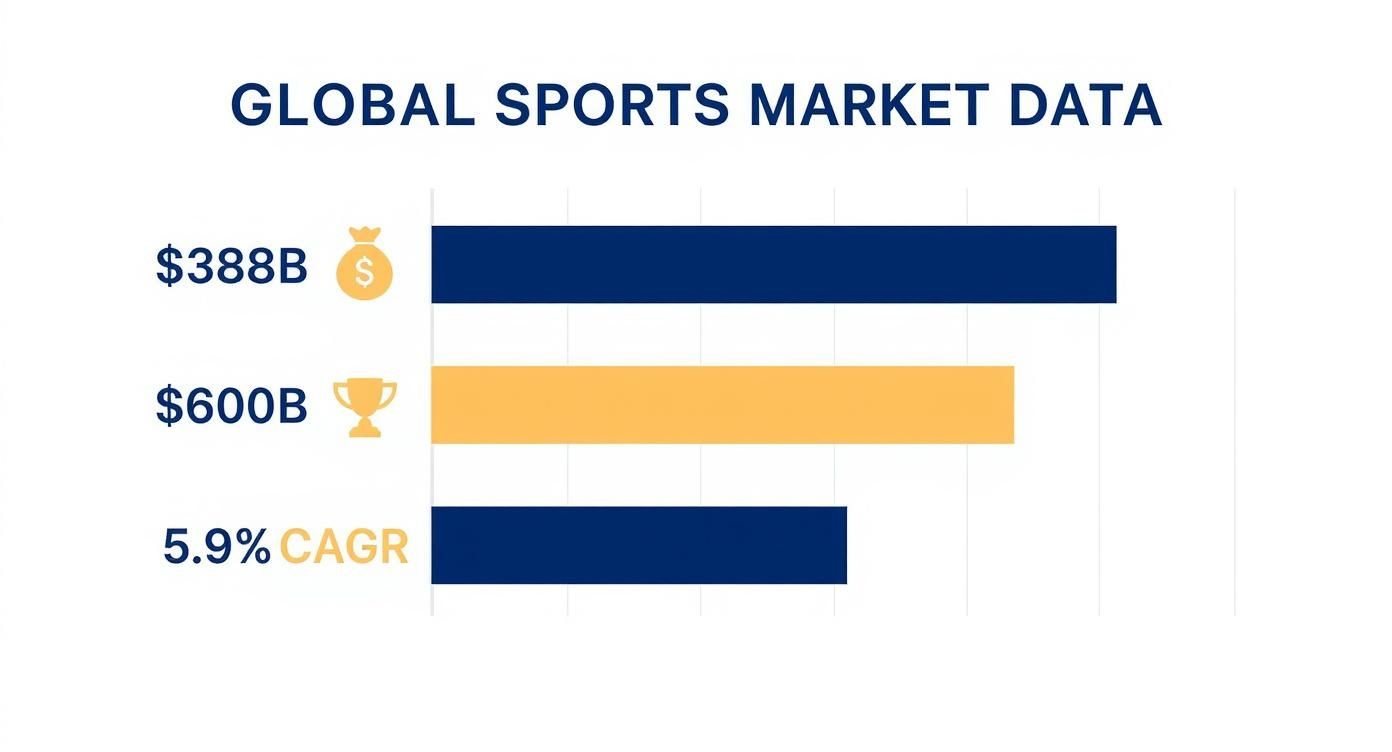
These figures are about more than just revenue. They represent a thriving ecosystem that needs a bigger and bigger workforce to handle its marketing, run its operations, and map out its future. The industry isn't just getting bigger; it's getting more complex, which is exactly why the demand for specialized talent is heating up.
Growth Projections Across the Board
One of the most telling signs is how employment in this sector is blowing past the national average. According to the U.S. Bureau of Labor Statistics, jobs in entertainment and sports are on track to grow faster than the average for all occupations through 2033.
What does that look like in real numbers? It translates to roughly 108,900 new job openings projected each year. On top of that, the ever-increasing popularity of sports is expected to create another 60,600 new jobs specifically. Plus, the median annual wage for these roles recently clocked in at $54,870, comfortably above the national median of $49,500 for all jobs. If you want to dig deeper into these trends, check out the latest research on sports industry opportunities.
This isn't just one big wave of growth; it's a series of ripples spreading across all kinds of specializations. Every role plays a part.
- Coaches and Scouts: These roles are looking at a strong 9% job growth, thanks to new pro leagues and expanding college programs.
- Marketing and Promotions Managers: With an expected 8% growth, these folks are absolutely essential for drumming up fan excitement and locking down sponsorships.
- Event Planners: Creating that unforgettable game-day experience is a big deal, and this field is set to grow by 7%.
- Facility Managers: As shiny new stadiums and athletic centers pop up, the need for sharp managers to run them is projected to jump by 6%.
Understanding Salary Potential by Role
Look, passion is what gets most of us into sports, but you have to plan for a career. Understanding your earning potential is a huge part of that. Salaries can be all over the map depending on your role, the league you're in, your location, and of course, your experience. An entry-level ticket sales coordinator is going to start in a very different place than a data analyst with a specialized degree.
Think of your career in sports management like a season. Your starting salary is the preseason. But with a strong performance, smart moves, and by constantly adding new skills, your earning potential can hit championship levels down the road.
Let's break down some typical salary ranges you might see out there. Just remember, these are averages. A top performer in a major market can easily blow these numbers out of the water.
Typical Median Salaries for Key Roles
| Role | Median Annual Salary |
|---|---|
| Athletics Director | $103,460 |
| Facility Operations Manager | $102,366 |
| Sports Marketing Specialist | $74,672 |
| Contract Analyst | $71,947 |
| Game Day Coordinator | $56,909 |
These figures make it clear that a career in sports management isn't just exciting—it can be financially rewarding, too. You might start out in a role earning somewhere in the $45,000 to $55,000 range, but the ceiling is high. Once you have some experience and a proven track record, six-figure salaries are common in leadership positions. That makes the sports management job outlook incredibly strong for anyone with ambition.
The Winning Skills Modern Sports Professionals Need

Passion for the game is your ticket in the door, but a sharp business mind is what gets you a seat at the table. In today's competitive sports world, teams and leagues operate less like a local club and more like a fast-paced, data-driven company. This evolution means the sports management job outlook is strongest for people who bring a blend of skills to the field.
Think about it this way: managing a team's budget is a lot like handling a high-stakes investment portfolio—every dollar has to work hard. Branding an athlete isn't so different from launching a major product; it takes smart marketing, public relations know-how, and a real feel for what the market wants. To thrive, you have to be more than a fan; you have to be a business leader.
The New Playbook: Business Acumen and Financial Literacy
At the end of the day, every sports team, league, and organization is a business. That means a solid grasp of business fundamentals isn't just a "nice-to-have" anymore; it's absolutely essential. Hiring managers are on the lookout for professionals who can talk strategy and finance with confidence.
This business-first mindset isn't just for the front office, either. As the industry gets bigger and more complex, there's a growing need for people with specialized expertise. Education plays a big part in this; professionals with a master's degree often earn salaries nearly 20 percent higher than those with only a bachelor's. As organizations grow, they need leaders who understand both the game on the field and the complex operations behind the scenes. You can get a deeper look into how business expertise is shaping the future of sports management to see just how critical this trend is.
Key business skills in high demand include:
- Financial Management: This is all about creating and managing budgets, forecasting revenue from things like ticket sales and sponsorships, and keeping the organization financially healthy for the long haul.
- Contract Negotiation: Whether you’re signing a star player, a stadium vendor, or a huge media rights deal, the ability to negotiate a good contract is priceless.
- Strategic Planning: This means seeing the big picture—setting clear goals for the organization, spotting opportunities for growth, and mapping out how to get there.
Digital Fluency and Marketing Mastery
Technology has completely changed how fans interact with their favorite teams. This digital shift has opened up a massive need for pros who are savvy with digital marketing, social media, and creating great content. Simply posting game scores isn't enough; teams need to build a vibrant online community and give fans experiences they can't get anywhere else.
In today's sports world, a team's digital presence is just as important as its performance on the field. A strong online brand drives ticket sales, merchandise purchases, and sponsorship value, making digital skills a top priority for employers.
A modern sports professional has to be comfortable with the tools of the digital trade. From running targeted ads on social media to producing compelling video content, these skills are fundamental to boosting fan engagement and, ultimately, revenue.
The Analytics Revolution: Data-Driven Decision Making
If there's one thing that has truly shaken up the sports industry in the last ten years, it's the rise of data analytics. Just as analytics changed how teams scout and evaluate players, it's now changing how they run the entire business. From the ticket office to the marketing department, data is guiding smarter decisions.
This is where being tech-savvy can make your career. Knowing your way around analytics software is no longer a niche skill; it's a core competency that can get you hired and help you climb the ladder faster. Organizations want people who can dig into the data to understand fan behavior, set the right ticket prices, measure the return on sponsorships, and find new markets to tap into.
It’s not just about crunching numbers; it’s about understanding what they mean. For example, an analyst might study fan demographics to help the marketing team create campaigns that really connect. This analytical mindset is one of the most valuable assets you can have, and it directly contributes to the positive sports management job outlook. To see where the industry is headed, just look at the growing demand for sports analytics roles available on GetSportJobs.
Exploring the Top Sports Management Career Paths

It’s one thing to know that the sports management job outlook is strong, but it’s another thing entirely to picture yourself in a specific role. This field is incredibly diverse, with distinct paths suited for different talents and personalities. Let's go beyond just job titles and really dig into what a day in the life looks like for professionals in some of the most visible roles.
Think of it like a team’s depth chart. Every position is specialized, and success depends on each person executing their unique playbook. In the world of sports management, the agent is the master negotiator, the athletic director is the head coach of an entire department, and the marketing manager is the playmaker connecting the team with its fans.
A Comparison of Key Sports Management Roles
To really understand the landscape, it helps to see these roles side-by-side. Each path demands a unique blend of skills and offers a different trajectory for growth, from entry-level positions to executive leadership.
| Role | Primary Responsibilities | Core Skills | Career Progression Path |
|---|---|---|---|
| Sports Agent | Securing contracts and endorsements; managing client relationships and brand. | Negotiation, networking, contract law, financial literacy. | Intern -> Junior Agent -> Senior Agent -> Agency Partner/Owner. |
| Athletic Director | Overseeing all athletic programs, managing budgets, hiring coaches, ensuring compliance. | Leadership, financial management, strategic planning, fundraising. | Assistant AD -> Associate AD -> Athletic Director -> Conference Commissioner. |
| Marketing Manager | Developing fan engagement campaigns, securing sponsorships, managing brand identity. | Digital marketing, data analysis, creativity, partnership sales. | Coordinator -> Manager -> Director -> Vice President of Marketing. |
As you can see, while all these roles fall under the "sports management" umbrella, the day-to-day realities and the skills needed to succeed are vastly different.
The High-Stakes World of a Sports Agent
Life as a sports agent is a non-stop hustle of high-stakes negotiations, constant communication, and fighting for your clients. Your core mission is simple: get athletes the best contracts and endorsement deals possible. A typical day could mean starting with a call to a GM, shifting to dissecting a complex sponsorship agreement, and ending on a red-eye flight to support your client at a game.
To make it in this role, you need a specific, rock-solid skill set.
- Masterful Negotiation: You have to be an expert at finding leverage and fighting for every clause, from salary guarantees to performance bonuses.
- Relationship Building: Trust is your currency. Building genuine, lasting relationships with athletes, team executives, and corporate sponsors is everything.
- Legal and Financial Acumen: A deep understanding of contract law and financial planning is non-negotiable. You're protecting your client's career and future.
Most people break into the business by starting in a support role at a big agency, learning the ropes before taking on their own clients. With enough success, you can eventually launch your own agency and represent some of the biggest names in the game.
The Strategic Leadership of an Athletic Director
At the college or high school level, the Athletic Director (AD) is the CEO of the sports department. They are the final decision-maker on everything from hiring coaches and managing multi-million-dollar budgets to ensuring every team complies with NCAA regulations. An AD’s day is a masterclass in juggling strategic planning with operational fires.
A great AD combines a true passion for sports with razor-sharp business instincts. Their median annual salary often reflects this immense responsibility, hovering around $103,460. They are also the public face of the department, tasked with wooing donors, handling the media, and rallying the community.
An Athletic Director is like the general manager and CEO of a franchise rolled into one. They are tasked with creating a winning culture on the field while ensuring the entire athletic program remains financially sound and ethically compliant.
The Creative Drive of a Sports Marketing Manager
The sports marketing manager is the ultimate architect of fan excitement. Their entire world revolves around building brand loyalty, locking in sponsorships, and putting fans in the seats. One day you might be brainstorming a social media campaign for a huge rivalry game; the next, you're pitching a new partnership to a local corporation or analyzing ticket-buyer data.
This job is a fantastic mix of art and science. You have to connect with fans on an emotional level but also prove the ROI for every dollar you spend. With a median salary that can top $74,000, these pros are the engine that drives revenue for the organization. The career path often starts at a coordinator level and can lead all the way up to a VP of marketing, where you'd shape the entire brand identity for a team or league.
Exploring the diverse sports management roles on GetSportJobs is a great next step to see which of these paths truly aligns with your strengths and long-term goals.
Where the Sports Industry is Headed Next
To build a career that lasts, you have to skate to where the puck is going, not where it has been. That old hockey adage is more true than ever in sports management. The job market is constantly being reshaped by new technology and the evolving ways fans connect with the games they love. If you want to stay ahead, you need to understand these trends and target the most promising areas for growth.
The industry is branching out well beyond the roles we've known for decades. It's like a major league expansion, but instead of new teams, we're seeing entirely new fields of play open up—creating jobs that didn't even exist ten years ago. From the virtual arenas of competitive gaming to data-driven front offices, the future is being built right now, and the demand for people who can navigate it is white-hot.
The Explosion of Esports
What was once a niche hobby has absolutely erupted into a global phenomenon. Esports now boasts a professional infrastructure that rivals traditional sports, pulling in billions from sponsorships, media rights, and merchandise. This isn't some fringe activity anymore; it's a central pillar of the modern entertainment world, and its rapid professionalization has created a tidal wave of new jobs.
The skills needed are a fascinating mix of classic sports business acumen and sharp, digital-first marketing.
- Tournament and League Operations: Just like the NFL or NBA, esports leagues need managers to handle the complex logistics, scheduling, and rule enforcement for massive global events.
- Community Management: Building and nurturing a passionate online fanbase is everything in esports. This requires dedicated pros who genuinely understand the culture and can speak the language.
- Sponsorship and Partnership Sales: Brands are falling over themselves to reach the young, highly engaged esports audience. This has created a huge need for skilled salespeople who can put those big-money deals together.
The Analytics and AI Revolution
We’ve all seen how data analytics has changed the game on the field—from player scouting to in-game strategy. But now, that same revolution is happening in the front office. Data and artificial intelligence are completely changing the business of sports, impacting everything from how tickets are sold to how fans experience the game. Think of data as the new superstar signing for the business operations team.
Sports organizations are snapping up analysts to fine-tune every part of their business. Data scientists can dig into fan behavior to create personalized marketing campaigns or use predictive models to set dynamic ticket prices that maximize revenue. Their insights are becoming critical for everything from draft-day decisions to long-term strategic planning.
The modern sports executive no longer relies on gut instinct alone. They are armed with data that informs everything from player contracts to stadium construction. This shift makes analytical skills one of the most valuable assets for any aspiring sports management professional.
NIL and the New College Sports Economy
The introduction of Name, Image, and Likeness (NIL) deals didn't just change the rules of college sports—it created an entirely new economy within it. A brand-new marketplace has emerged, and it requires a specialized workforce to run it. This is about more than just athletes getting paid; it's about building a compliant, effective, and supportive system around them.
This has swung the door open for new career paths focused on:
- NIL Coordinators: Universities are hiring dedicated staff to educate athletes on the rules of the road and ensure every deal complies with NCAA regulations.
- Athlete Brand Management: Agents and marketing specialists now work directly with college athletes, helping them build their personal brands and lock down endorsements.
- Compliance Officers: With a whole new set of complex regulations to follow, the demand for legal and compliance experts has shot through the roof.
These trends—esports, data analytics, and NIL—are not just passing fads. They represent deep, fundamental shifts in how the sports industry operates. They are the clearest signposts pointing to where the sports management job outlook is headed. By developing skills in these growth areas, you’re setting yourself up not just for a job, but for a long and successful career in a field that never stops moving.
How to Launch Your Career in Sports Management
<iframe width="100%" style="aspect-ratio: 16 / 9;" src="https://www.youtube.com/embed/QmRf72RpcF8" frameborder="0" allow="autoplay; encrypted-media" allowfullscreen></iframe>The future for sports management jobs looks bright, but let's be real—it's a competitive field. To break in, you need more than just passion for the game. You need a smart strategy built on the right education, hands-on experience, and a network you can count on. It all starts with building a solid foundation.
A common question I hear is whether to get a specialized sports management degree or a more traditional business degree. Honestly, both can work. A focused program drills down into specifics like sports finance and event logistics, while a general business degree gives you versatile skills in marketing or finance that you can apply anywhere. The secret isn't one degree over the other; it's pairing whatever you study with real-world experience.
Gaining Practical Experience
In the sports industry, experience is everything. Internships aren't just a good idea; they're essential. This is your chance to take what you learned in a classroom and see how it works in a real front office, build connections, and show a potential employer what you can do. Don't just chase the big professional teams, either. You can learn a ton from collegiate athletic departments, minor league clubs, and local sports commissions.
Volunteering is another fantastic way to get your foot in the door, especially if you're just starting out.
- Local Events: Help out at a local 5K, a youth soccer tournament, or a charity golf event. You'll get a crash course in event operations.
- College Athletics: Your own university’s athletic department is a goldmine. See if you can help with game-day promotions or social media.
Every one of these experiences adds a meaningful line to your resume and proves you're serious about your career.
Think of internships and volunteer roles as your minor league assignments. It's where you learn the fundamentals, prove you can handle pressure, and show the major league clubs—your future employers—that you're ready for the call-up.
Building Your Professional Playbook
Once you've got some experience under your belt, you have to sell yourself. Your resume isn't just a list of jobs; it's your personal highlight reel. Use powerful verbs and, whenever you can, back up your contributions with numbers. Instead of saying you "helped with ticket sales," reframe it as "Contributed to a campaign that increased student ticket sales by 15%." See the difference?
To make sure your resume is polished and ready to go, a specialized tool can give you a serious edge. You can get immediate, actionable feedback by running it through a professional sports industry resume analyzer designed to get you past the first cut.
Finally, you have to build your network. Get active on platforms like LinkedIn and start following the teams, leagues, and brands you want to work for. Interact with their posts and connect with people in the industry, especially alumni from your school. Forging real relationships is often the final piece of the puzzle that turns your dream into a career.
Ready to find your place in the game? On GetSportJobs, we connect talented professionals like you with the best career opportunities in the industry. Start exploring hundreds of listings from top teams, leagues, and brands today at https://www.getsportjobs.com.