Your Complete Guide to Finding Sports Nursing Jobs
If you're a nurse with a passion for athletics, a career in sports nursing could be the perfect way to merge your two worlds. This isn't your typical hospital job; it's a fast-paced field where you'll focus on keeping athletes at the top of their game by preventing, treating, and rehabbing sports-related injuries. You're right there in the action, playing a critical role in an athlete's success and safe recovery.
What Exactly Is a Sports Nurse?
Think of a sports nurse as the pit crew chief for a high-performance athlete. A pit crew doesn't just wait for a crash to happen. They're constantly monitoring, fine-tuning, and preparing the car to perform under extreme pressure. That’s a sports nurse in a nutshell—a specialist who manages the health of a high-performance human body.
They do a lot more than just tape ankles and hand out ice packs. A sports nurse is an emergency responder, health educator, and rehabilitation guide all rolled into one, specifically for the athletic population. They act as the central hub connecting the athlete, coaches, and the rest of the sports medicine team, like physicians and physical therapists.
Core Responsibilities and Daily Tasks
No two days are the same for a sports nurse. One morning you might be in a clinic running pre-season physicals, and that afternoon you could be sprinting onto the field to manage an injury during a packed game. It's a role that demands flexibility and a broad set of skills.
Here’s a look at what you’d typically be doing:
- Injury Prevention and Education: You'll spend a lot of time teaching athletes about proper nutrition, hydration, and conditioning techniques to keep injuries from happening in the first place.
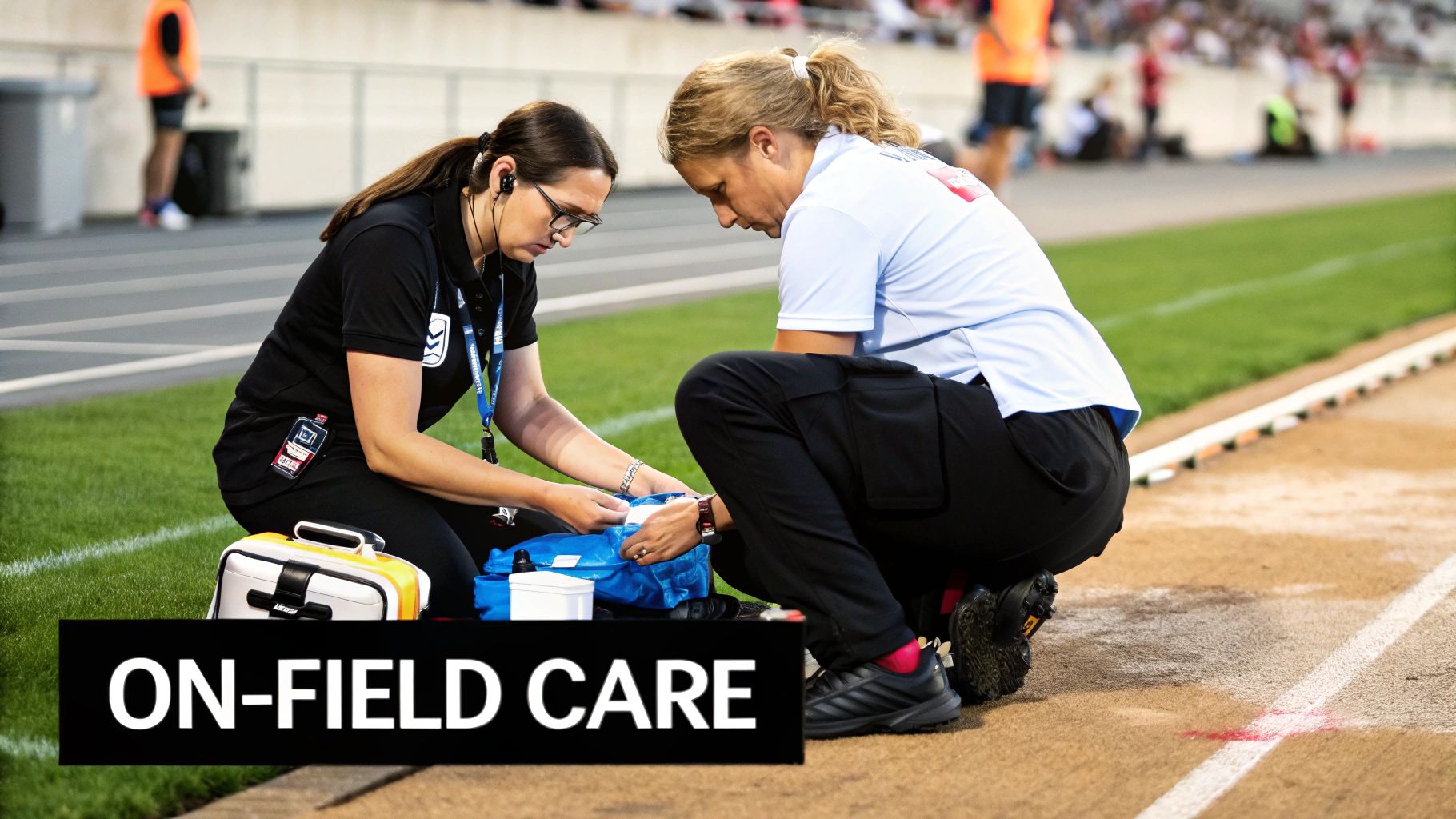
- Immediate On-Field Care: When injuries do occur, you're the first one there, providing immediate assessment and first aid for everything from sprains and fractures to concussions.
- Clinical Assessment and Treatment: Back in the clinic, you'll conduct more thorough evaluations, administer treatments, and manage care for athletes who are recovering from surgery.
- Rehabilitation Management: You'll work closely with physical therapists to create and monitor rehab plans, making sure athletes stick to their recovery protocols so they can return to play safely.
- Health Record Management: Keeping detailed, accurate records of injuries, treatments, and recovery progress is crucial for ensuring everyone on the medical team is on the same page.
A great sports nurse knows how to adapt. They understand the unique physical and mental pressures each athlete faces. Whether they're helping a pro get ready for a championship or an amateur stay active, their job is to build safe, effective recovery plans grounded in solid orthopedic knowledge.
The Growing Demand for Sports Nurses
The need for qualified sports nurses is definitely on the rise. As more people participate in organized sports and awareness grows around issues like concussions and overuse injuries, the demand for sports nursing jobs has seen a big jump. This trend is creating a strong, expanding job market for nurses with the right skills. You can get more insights on the career outlook from experts at JobsInSports.com.
And this growth isn't just happening in the big professional leagues. Opportunities are popping up at every level of competition and in all sorts of settings, from universities to private clinics. The entire sports world is shifting from just treating injuries to proactively managing athlete health, and the sports nurse is at the very center of that movement.
Building Your Foundation with Education and Skills
You can't just decide to become a sports nurse one day and start the next. It’s a career that demands a very specific and solid foundation, much like an elite athlete’s training regimen. You have to build the base before you can even think about specializing. That foundation is made of the right education, the proper licenses, and a unique blend of both clinical and people skills.
The journey starts with becoming a Registered Nurse (RN). This is the absolute, non-negotiable first step. Generally, you have two ways to get there: an Associate Degree in Nursing (ADN) or a Bachelor of Science in Nursing (BSN). An ADN is a two-year program that gets you into the nursing field faster.
However, if you have your sights set on sports nursing, the BSN is usually the smarter move. This four-year degree gives you a much deeper understanding of the science behind healthcare and really hones your research and leadership skills. Those are the qualities that top-tier employers, like university athletic departments and pro sports teams, are looking for.

Advancing Your Clinical Expertise
Once you’re a licensed RN, it’s time to get your hands dirty with real-world experience. The best place to start is in an environment where you’ll see the kind of injuries athletes face. Think orthopedics, trauma units, or surgical recovery. This is where you’ll master the practical skills for managing musculoskeletal issues, which are the bread and butter of sports medicine.
To really set yourself apart from the competition, you’ll want to pursue specialized certifications. Think of these as proof that you've gone the extra mile.
- Orthopaedic Nursing Certification (ONC): This is a huge credential in the sports world. To even sit for the exam, you need significant clinical experience—typically over 2,000 hours—in orthopedic nursing. It tells employers you’re an expert in everything from casting to post-op rehab.
- Certified Emergency Nurse (CEN): This one proves you can stay cool and effective in high-stakes emergencies, which is exactly what happens when an athlete goes down on the field.
- Basic Life Support (BLS) and Advanced Cardiovascular Life Support (ACLS): These are table stakes for any nurse. For a sports nurse, they are absolutely essential for handling a medical crisis on the sidelines or in the training room.
While these are nursing-specific, it also helps to understand the wider world of sports medicine. Your role will overlap with athletic trainers, so checking out an athletic trainer certification requirements guide can give you a better sense of how the entire medical team works together.
A BSN degree combined with an ONC certification is a powerful combination. It tells employers you have both the broad academic knowledge and the specialized, validated skills needed to manage the complex health needs of athletes effectively.
Mastering the Essential Soft Skills
Your clinical skills will get your resume noticed, but your soft skills will make you a great sports nurse. You aren't just treating an injury; you're working with a human being whose entire identity and career might be hanging in the balance.
You need a calm confidence when you're the first one running onto a field in front of thousands of screaming fans. You also need a deep well of empathy to help an athlete navigate the mental and emotional toll of a long, frustrating recovery. Just as crucial is crystal-clear communication, making sure the athlete, coaches, and physicians are all on the same page about the plan to get back in the game. Before diving into a specialty, it’s helpful to understand the general path; for a good overview, see this How to Become a Nurse in the UK: A Step-by-Step Guide.
Where You Can Find Sports Nursing Jobs
When you think of a sports nurse, what comes to mind? Probably someone sprinting onto a professional football field during a primetime game. That’s definitely one part of the job, but the reality is that the world of sports nursing jobs is much bigger and more varied than just the big leagues.
In fact, most sports nurses get their start in settings that might surprise you. These roles are the bedrock of a great career, giving you the kind of hands-on experience you need to handle the complex injuries common in athletics. The skills you pick up here are your ticket to more specialized, sports-focused positions later on.
University and Collegiate Athletics
One of the biggest and most dynamic employers for sports nurses is the world of college athletics. Think of a university athletic department as a small-scale hospital devoted entirely to student-athletes. You're not just patching up sprained ankles; you're overseeing the total health of young competitors who are under intense pressure to perform both in their sport and in the classroom.
A typical day could involve anything from:
- Running pre-season physicals to catch potential health issues before they become problems.
- Taping ankles and treating acute injuries in a busy training room right after practice.
- Working alongside physicians, physical therapists, and counselors to build comprehensive care plans.
- Hitting the road with a team to provide immediate medical support during away games.
This environment is fast-paced and incredibly rewarding. It requires top-notch organizational skills and a real understanding of what student-athletes go through. If this sounds like a fit, it’s worth looking into the full spectrum of jobs in college athletics to see how a nursing role slots into the larger team.
Specialized Clinics and Hospital Departments
You'll find a huge number of sports nursing jobs inside the walls of orthopedic clinics, sports medicine centers, and dedicated hospital units. These places are the technical command centers of sports healthcare, where cutting-edge diagnostics and treatment plans come to life. As a nurse here, you're a crucial part of an athlete's comeback story, especially after a major surgery.
A sports nurse in a clinic is basically a translator. You take a surgeon’s complex medical plan and turn it into practical, day-to-day recovery steps that an athlete can actually follow, paving the way for a safe return to their sport.
In this setting, a huge part of your job is patient education—walking athletes through their rehab exercises, helping them manage pain, and tracking their progress. It's the perfect role for nurses who thrive on structured, patient-centered care and love seeing the long-term impact of their work as an athlete gets back on their feet.
High Schools and Community Sports Programs
Don’t sleep on the opportunities at the high school and community levels. In many of these roles, you are the only healthcare provider on site, which makes your skills in injury prevention and early treatment absolutely vital. You're building the foundation for a lifetime of health and safety for young athletes just starting their journeys.
Working at a high school means you’ll be doing everything from managing concussion protocols to teaching coaches and parents how to spot the early signs of an injury. Likewise, larger community sports complexes and even fitness centers often hire nurses to provide on-site medical care and wellness programming, making sports safer for everyone from kids in youth leagues to weekend warriors.
Financially, this is often where the journey begins. For example, sports medicine nurses often start out earning between $55,000 and $65,000 a year in community or outpatient jobs. As they gain experience, they can move into orthopedic clinics or collegiate programs where the paychecks get bigger. For more details on this, you can check out sports nurse jobs and career paths on JobsInSports.com.
Understanding Salary and Career Growth Potential
Choosing a career in sports nursing isn't just a way to merge your passion for healthcare and athletics; it's a solid professional move with real financial upside and plenty of room to grow. Just like an athlete's career, your earnings will climb as you rack up experience, add specialized skills to your toolkit, and step into bigger roles.
Several key factors will directly shape your paycheck. Your geographic location is a huge one—jobs in big cities often pay more to account for a higher cost of living. The type of team or organization you work for matters, too. A nurse with a pro sports franchise will almost certainly have a different compensation package than one at a local orthopedic clinic.
Typical Salary Ranges and What Influences Them
If you're just breaking into the field, you'll likely start in a setting like an outpatient clinic or a high school. In these roles, you can expect an initial salary in the $55,000 to $65,000 range. This is where you'll build your foundation, learning to apply your core nursing skills to the unique demands of sports medicine.
After a few years, once you've proven yourself and maybe picked up a key certification, your value in the job market jumps. You'll become a strong candidate for positions in university athletic departments or busy orthopedic practices, where salaries often rise into the $70,000 to $85,000 bracket. The top earners—nurses running entire clinical departments or working with elite professional teams—can command salaries of $95,000 and beyond, a reflection of their deep expertise and leadership.
Think of certifications like an athlete making an all-star team. An ONC (Orthopaedic Nursing Certification) or CEN (Certified Emergency Nurse) credential proves you have specialized knowledge. It tells employers you can handle the high-stakes, complex world of sports medicine, which absolutely justifies a higher salary.
The chart below gives you a clear picture of where most sports nursing jobs are found.
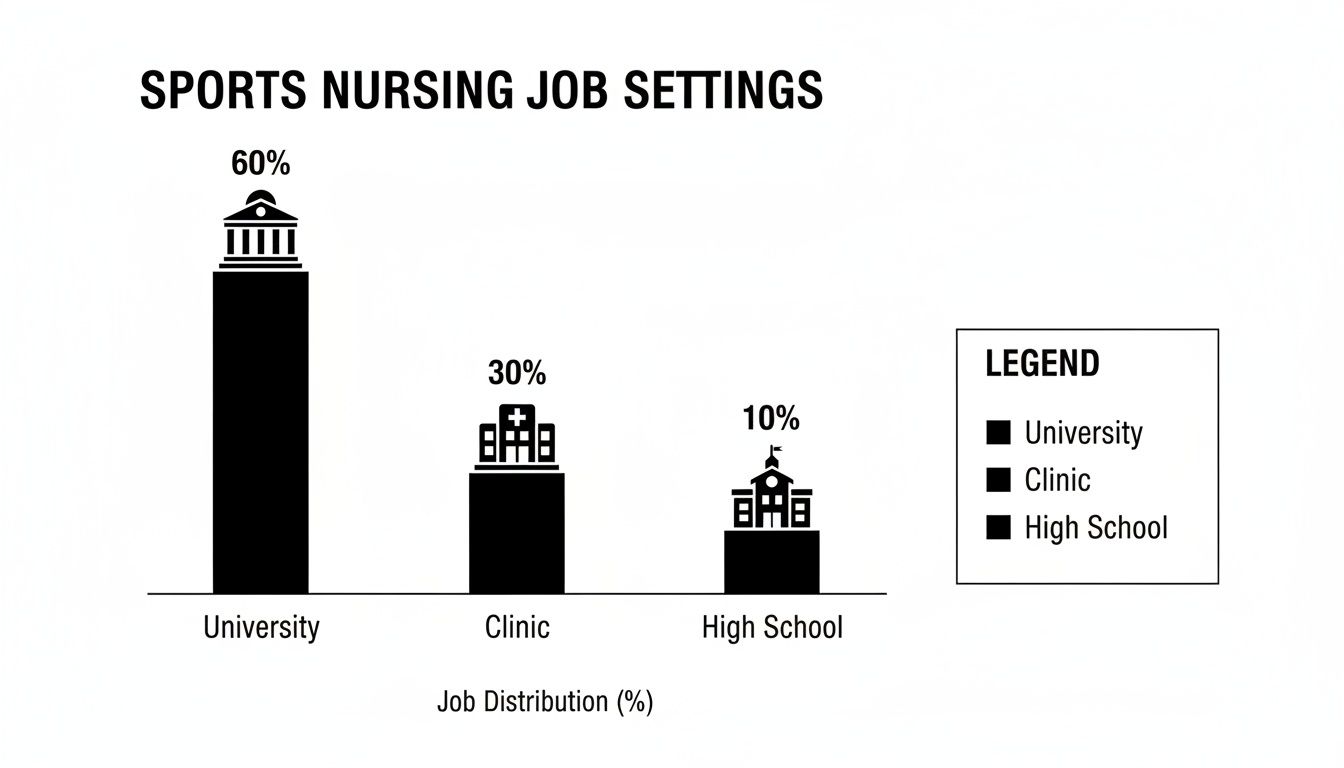
As you can see, universities are the biggest employer in this space, with specialized clinics not far behind.
The table below breaks down how your salary can progress based on your experience level and the type of environment you work in.
Sports Nurse Salary Progression by Experience and Work Setting
| Career Stage / Setting | Typical Annual Salary Range | Common Responsibilities |
|---|---|---|
| Entry-Level (0-2 years) / High School, Small Clinic | $55,000 - $65,000 | Basic first aid, triage, concussion protocols, taping, coordinating care with physicians. |
| Mid-Career (3-7 years) / University Athletics, Orthopedic Practice | $70,000 - $85,000 | Managing post-op recovery, administering treatments, educating athletes on injury prevention. |
| Senior/Specialist (8+ years) / Pro Sports Team, Clinical Lead | $95,000+ | Overseeing medical staff, developing health protocols, collaborating on performance optimization. |
This progression shows a clear path to a six-figure income as you dedicate more time and skill to the profession.
Job Outlook and Future Career Paths
The future for sports nurses looks incredibly strong. Your job security is tied to the stability of the entire nursing profession, which is a great place to be. With around 5.2 million registered nurses (RNs), it's the largest healthcare profession in the United States. Better yet, the U.S. Bureau of Labor Statistics projects a 5% growth in RN jobs through 2031. That steady demand ripples through all specialties, including this one. You can find more great insights in these nursing statistics on IncredibleHealth.com.
As you gain experience, your career doesn't have to stay on one track. It can branch out in some really interesting directions:
- Clinical Leadership: You could become a supervisor, managing the nursing staff at a large sports medicine clinic or running the entire athletic training room for a university.
- Specialized Practice: Level up your credentials and become a nurse practitioner (NP) specializing in sports medicine. This gives you much more autonomy to diagnose and treat athletes directly.
- Corporate Wellness: Many large companies are now hiring health professionals to develop injury prevention and wellness programs for their employees—a fantastic way to apply your skills in a different setting.
- Data and Technology: Jump into the fast-growing world of sports tech. You could work for companies that use wearable devices and data analytics to monitor athlete health, prevent injuries, and optimize performance.
How to Land Your First Sports Nursing Job
Breaking into the world of sports nursing takes more than just a nursing degree and clinical experience. It's a competitive field, so you need a game plan. You have to prove you understand the unique demands of athletics and can speak the language of coaches, trainers, and athletes.
Let's walk through how to craft a standout resume, build the right connections, and nail the interview. Think of it this way: your standard nursing background got you in the door, but this specialized approach is what will get you on the team.
Craft a Resume That Speaks Sports Medicine
Your resume is your highlight reel. A generic one that just lists your hospital duties won't cut it. You need to translate your clinical experience into the language of sports medicine. Think like the hiring manager for a pro team or a university athletic department—what would they want to see?
Here’s how you can reframe your existing skills:
- ER or Trauma Experience: Don't just say you worked in the ER. Frame it as having a "proven ability to perform rapid, high-pressure assessments and interventions in acute injury scenarios." That’s exactly what happens on the sidelines.
- Orthopedic Unit Experience: Instead of listing patient care, highlight your "deep expertise in managing musculoskeletal injuries, post-operative recovery protocols, and athlete mobility plans." This shows you understand the road to recovery.
- Patient Education: Rephrase this as "experience developing and implementing patient education programs to ensure compliance with treatment plans"—a vital skill when dealing with athletes eager to get back in the game.
Your resume has one job: to bridge the gap between the clinical and athletic worlds. Don’t just state you managed patient care. Explain how you helped a patient with an ACL repair stick to a complex rehab schedule to get back on their feet. That's a story a sports medicine director wants to hear.
To make sure your resume is hitting all the right notes, getting an objective opinion helps. A tool like our resume analyzer can give you feedback specifically tailored for the sports industry, helping you polish your application before you send it off.
Build Your Network Strategically
In the tight-knit sports community, who you know is often just as important as what you know. This isn't about collecting a bunch of random LinkedIn contacts. It's about building genuine relationships with people who can offer advice, mentorship, and maybe even a job lead down the road.
Start by showing up where the experts are. Attend sports medicine conferences, local athletic trainer meetings, or even university-hosted seminars. These events are goldmines for learning and connecting. Introduce yourself, ask smart questions, and let your passion for the field shine through. A quick, personalized follow-up on LinkedIn referencing your chat can make a huge difference.
The need for healthcare pros is booming—the global healthcare staffing market is projected to hit nearly $45 billion by 2025. Still, there are major shortages. In England, for example, there were almost 47,000 nursing vacancies in 2022. This paradox makes networking even more critical for landing specialized sports nursing jobs.
Ace the Scenario-Based Interview
An interview for a sports nursing job won't feel like your typical hospital interview. Get ready for scenario-based questions that test your critical thinking and how you handle yourself under pressure. They want to see how you'd react when things get real.
Be prepared for questions like these:
- "An athlete collapses on the field. What are your immediate first steps?" They’re checking your emergency assessment skills—are you checking for consciousness, securing an airway, and starting life support?
- "A star player is cleared to return from an injury but tells you they’re scared. How do you handle it?" This is all about your people skills. They want to know you can provide psychological support and build trust.
- "You disagree with a coach's decision to put an athlete back in the game. What do you do?" This tests your confidence and your commitment to being an athlete's advocate. Your priority has to be their safety, even when the pressure is on.
Practice your answers out loud. Walk through your thought process step-by-step. The goal is to show you’re a competent, confident, and compassionate nurse who can be trusted with an athlete's health and career. For more general advice on getting started, check out these six steps for landing your first nursing position.
A Day in the Life of Two Sports Nurses
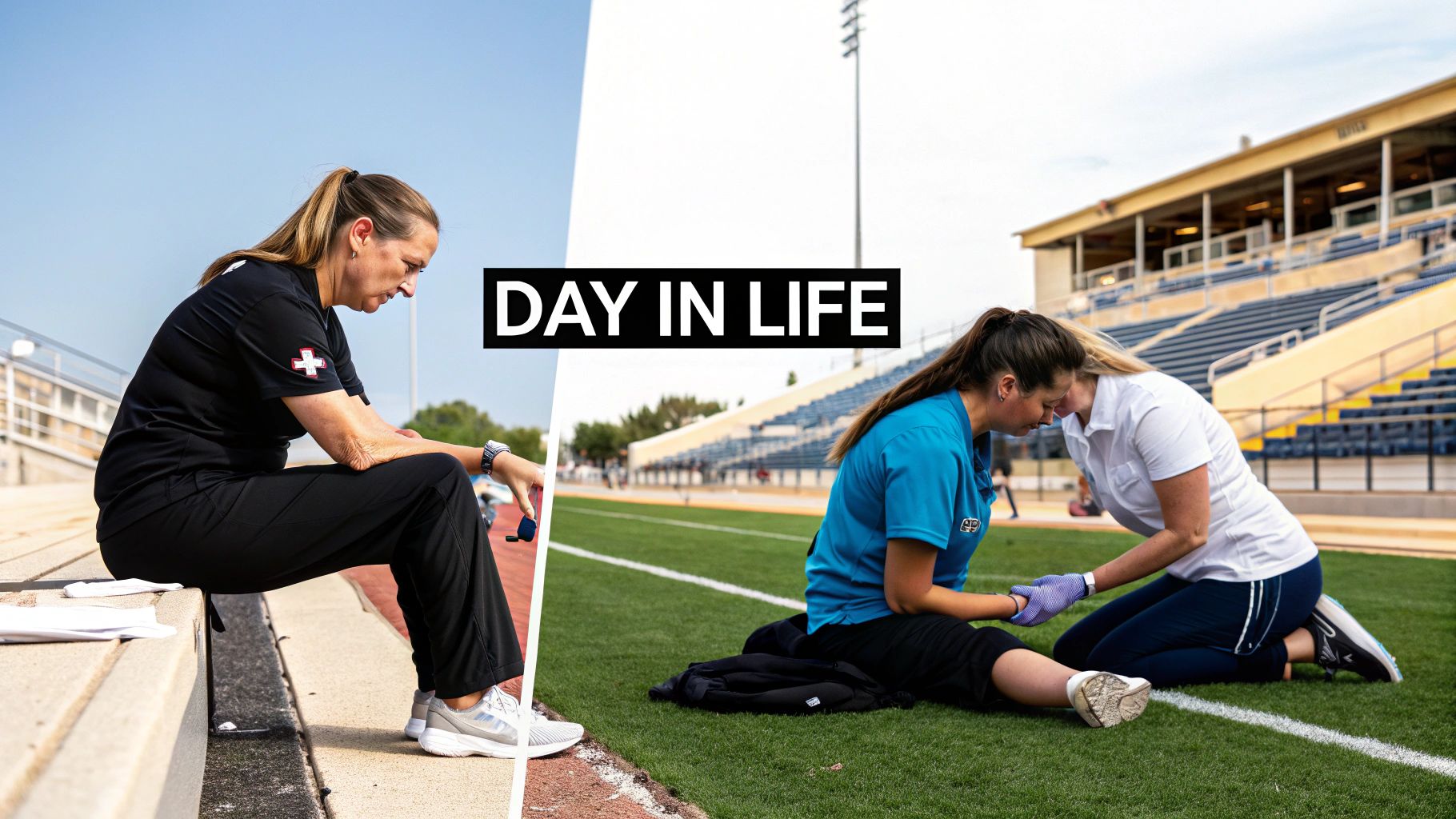
To really get a feel for what sports nursing jobs are like, it helps to walk a mile in someone else’s cleats—or, in this case, their comfortable, supportive nursing shoes. The job looks completely different depending on where you work. It’s not just that every day is unique; your entire world can shift based on your practice setting.
Let's look at two totally different scenarios to paint a clearer picture. We'll follow one nurse working in the high-octane environment of a university athletic department and another in the more structured setting of a specialized orthopedic clinic. Their stories really show the diverse challenges and rewards this career path holds.
Sarah: The University Sports Nurse
Sarah’s alarm blares at 6:00 AM. As a nurse for a Division I university, her day is already in motion before the athletes even start their warm-ups. When she walks into the training room, it’s already a hub of activity. Her morning is a blur of pre-practice prep.
For the first couple of hours, she’s triaging a steady stream of athletes—assessing a soccer player’s nagging hamstring, checking in on a basketball player’s sprained ankle, and more. She’s constantly documenting, coordinating with the head athletic trainer, and taping up players who are about to head out to practice.
After grabbing a quick lunch, Sarah’s focus switches to the administrative side. She updates medical charts, confirms all the pre-participation physicals are filed correctly, and calls a physician to follow up on a wrestler's recent MRI results. Her afternoon is filled with one-on-one rehab sessions, where she guides a swimmer through their recovery exercises.
The real action often happens at night. During a tense home volleyball game, a player lands badly, immediately clutching her knee. Sarah is the first person on the court, staying calm and focused despite the roaring crowd and the pressure of the moment. She quickly stabilizes the injury, consults with the on-site doctor, and makes sure the athlete gets safely to the next level of care. Her day finally ends long after the stands have emptied, a perfect example of the unpredictable rhythm of college athletics.
Michael: The Orthopedic Clinic Nurse
Michael’s day at a sports medicine clinic starts at a much more civilized 8:30 AM. His world is clinical, controlled, and built around carefully planned recovery. While Sarah’s role is often reactive, Michael’s is almost entirely proactive and centered on patient education.
His first appointment is with a high school quarterback who is six weeks post-ACL surgery. Michael spends a full thirty minutes reviewing the surgeon's notes, inspecting the incision, and then leading the young athlete through gentle range-of-motion exercises. He takes the time to explain the purpose of each movement, making sure the patient truly understands the "why" behind his recovery plan.
Michael's schedule is packed with similar appointments all day. He sees a wide range of people:
- A recreational runner struggling with chronic shin splints.
- A professional dancer working back from a stress fracture.
- A weekend warrior who just had shoulder surgery.
For every patient, his job is to be the crucial link between the surgeon's orders and the patient's real life. He works hand-in-hand with the physical therapy team, ensuring care is seamless and effective. Michael’s days are less about sideline chaos and all about the methodical, patient work of rebuilding an athlete’s body and spirit.
Questions on the Minds of Aspiring Sports Nurses
It's natural to have a lot of questions when you're thinking about a career that combines the intensity of clinical care with the fast-paced world of sports. It's a unique path, for sure. Let's tackle some of the most common things people ask when they're looking at sports nursing jobs.
Do I Need to Be a Former Athlete to Be a Sports Nurse?
Not at all. While having a personal background in sports might give you some insight into an athlete's head, it's definitely not a prerequisite for the job. Your success isn't measured by your own athletic past.
What really counts is your clinical skill, a rock-solid understanding of musculoskeletal injuries, and a genuine passion for helping athletes stay on the field. Great nursing abilities, empathy, and being able to build trust with your patients are far more important than any trophy you might have won.
What's the Toughest Part of the Job?
One of the biggest hurdles is dealing with the sheer pressure of the environment. You're caring for people whose entire careers and identities can hang in the balance, and that carries a lot of emotional weight. It takes a special kind of resilience to manage that stress day in and day out.
You're constantly walking a fine line between being an objective clinician and a compassionate supporter. On top of that, the hours can be a real grind. The job often means working nights, weekends, and traveling with the team, which can make a predictable work-life balance feel like a distant dream.
A huge part of this role is managing expectations—the athlete's, the coach's, the whole organization's. You have to be the steady, logical voice that puts the athlete's long-term health first, even when everyone is pushing for a quick return to the game.
How Is Sports Nursing Different From Orthopedic Nursing?
This is a great question because the two fields definitely share a lot of common ground. Both require a deep knowledge of musculoskeletal care. The real difference, though, is the end goal for the patient.
An orthopedic nurse is typically focused on helping a patient recover from an injury or surgery to get back to normal, daily life. The mission is to help them walk, work, and live without pain.
A sports nurse has a much more specialized and demanding goal: getting an athlete back to peak performance. This means a more intense focus on a few key areas:
- Injury Prevention: Actively looking for biomechanical quirks or training patterns that could spell trouble down the road.
- Sport-Specific Rehab: Creating recovery plans that are tailored to the exact movements and demands of the athlete’s sport.
- Performance Optimization: Working with the whole sports medicine team to not just heal the injury, but to help the athlete come back even stronger and more durable than before.
Think of it this way: an orthopedic nurse helps a patient walk again after a hip replacement. A sports nurse helps a sprinter shave a tenth of a second off their time after a hamstring tear. It's all about restoring elite athletic ability, not just basic function.
Ready to find your spot on the sidelines? The best sports nursing jobs from top universities, clinics, and pro teams are all waiting for you. Start checking out opportunities on GetSportJobs today and make your next career move. Find your next sports nursing job now!