What Is Sports Analytics and How Does It Reshape the Game

At its core, sports analytics is the art of turning raw data into a real-world competitive advantage. Think of it as upgrading a coach's traditional playbook with powerful, evidence-based insights. It's about moving beyond gut feelings to make smarter, data-informed decisions on and off the field.
Decoding the Game with Data
Sports analytics is really a systematic way of collecting, analyzing, and interpreting data from every aspect of sports performance. The ultimate goal? To find an edge—any edge—that can mean the difference between winning and losing.
Instead of just looking at final scores, analysts dive deep into the numbers. They're hunting for hidden patterns, player efficiencies, and strategic weaknesses that even the most experienced coach might miss. This discipline has completely changed how modern teams operate.
Decisions on player recruitment, in-game strategy, and even how teams connect with their fans are now heavily shaped by statistical models and performance metrics. It's a field that perfectly bridges the raw, passionate emotion of sports with the cold, hard clarity of mathematics.
The Core Objectives of Analytics
At every level, from high school to the pros, analytics aims to answer critical questions and solve specific problems. The insights aren't just interesting stats for a broadcast; they are designed to be actionable.
Here's what teams are trying to achieve:
- Improving On-Field Performance: Pinpointing which plays are most effective, which players excel in specific situations, and how to exploit an opponent’s tendencies.
- Optimizing Player Recruitment: Using data to find undervalued talent or predict a college prospect's future success, taking a lot of the guesswork out of drafting and trading.
- Enhancing Fan Experience: Analyzing fan behavior to personalize marketing campaigns, set smarter ticket prices, and improve everything about the gameday experience.
- Preventing Injuries: Monitoring athlete workload, biometric data, and movement patterns to flag injury risks before they sideline a key player.
To give you a clearer picture, here’s a quick breakdown of the foundational pillars that hold up the entire field.
The Key Pillars of Sports Analytics
| Pillar | Description | Example Application |
|---|---|---|
| Data Collection | Gathering raw information from various sources like wearables, tracking cameras, and historical box scores. | GPS trackers worn by soccer players logging their total distance covered and top speed during a match. |
| Descriptive Analytics | Summarizing past events to understand what happened. This is the most basic form of analytics. | Creating a shot chart for a basketball player to show where they are most and least effective on the court. |
| Predictive Analytics | Using historical data and statistical models to forecast what is likely to happen in the future. | Building a model that predicts a baseball pitcher’s likelihood of injury based on their pitch count and velocity. |
| Prescriptive Analytics | Recommending specific actions to take to achieve a desired outcome. This is the most advanced pillar. | An algorithm suggesting the optimal 5-player lineup to put on the court in the final two minutes of a close game. |
Each pillar builds on the last, moving from simply observing the game to actively shaping its outcome.
Beyond the Box Score
It’s easy to mistake sports analytics for just counting goals, assists, or touchdowns. But the field has moved far beyond those basic box score numbers. Modern analytics focuses on much more complex, context-rich metrics that tell a deeper story.
The real power of sports analytics lies in its ability to quantify parts of the game that were once considered intangible—things like player impact, defensive positioning, and clutch performance. It's about finding the 'why' behind the 'what.'
This shift means we're moving from simply recording what happened to predicting what will happen. For anyone new to this world, seeing how these ideas play out in a specific sport can be really helpful.
For instance, you can check out this essential guide to football analytics for beginners to see how key metrics are applied in soccer. This journey from raw numbers to strategic intelligence is what makes sports analytics such a powerful force in today's sports industry.
How Sports Analytics Actually Works
To really get what sports analytics is all about, you have to look under the hood. It’s not some kind of magic; it’s a methodical process that turns raw numbers into a winning game plan. The journey starts with collecting mountains of data and ends with a simple visual a coach can use to make a split-second decision.
The whole system runs on an incredible amount of information. We've moved way beyond just looking at final scores or player stats in a box score. Today, data collection is a high-tech, relentless operation.
This core process is what turns simple data points into a real competitive edge, guiding teams toward smarter, more effective strategies.
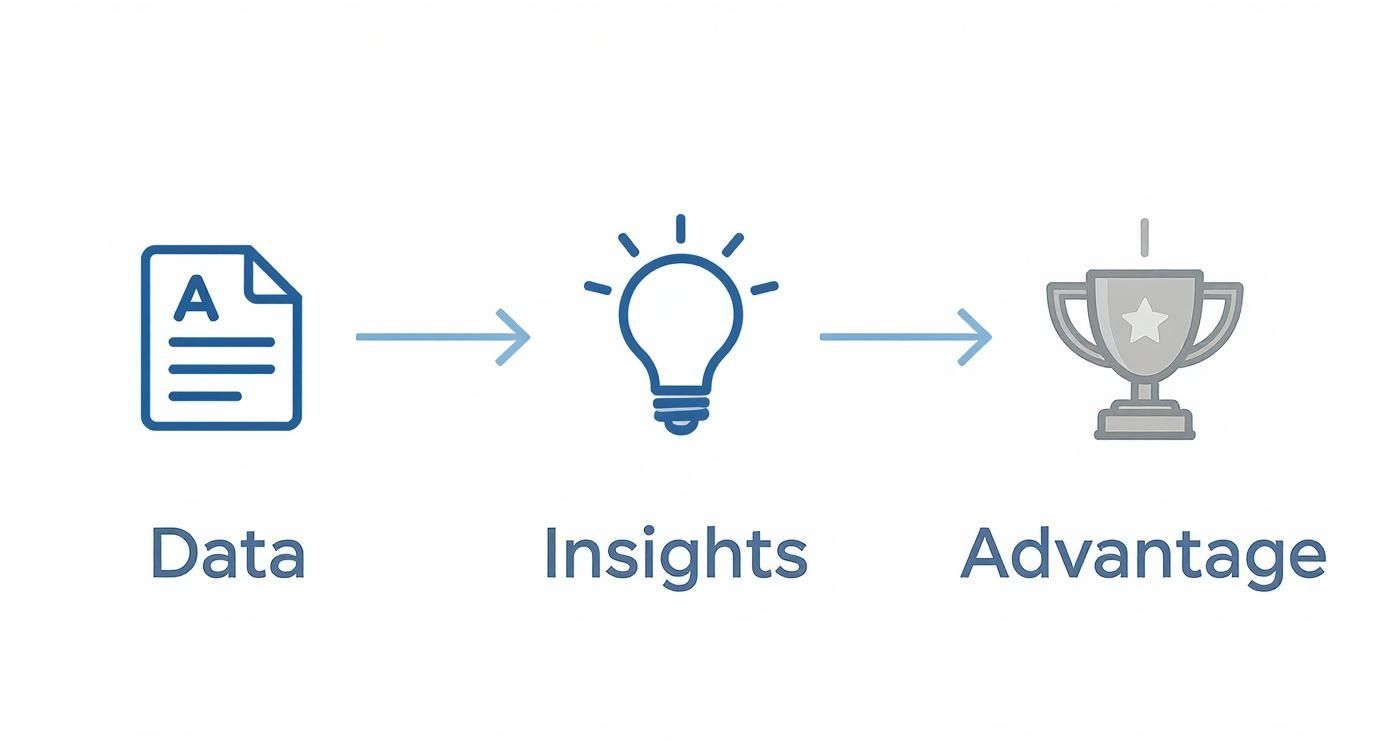
As you can see, the flow is straightforward but powerful: raw data gets refined into actionable insights, which then directly create an advantage on and off the field.
Starting with Data Collection
The first step is gathering the raw materials. Think of it like a chef sourcing the best ingredients before starting to cook. In sports, this means capturing millions of data points from every conceivable angle.
Where does all this data come from?
- Wearable Technology: Athletes are often kitted out with GPS trackers and biometric sensors. These devices monitor everything from heart rate and running speed to how quickly they accelerate and decelerate.
- Camera Systems: Sophisticated optical tracking systems, like the ones you see in the NBA and top soccer leagues, use a network of cameras to record the real-time position of every player and the ball, generating millions of coordinates per game.
- Historical Data: Decades of play-by-play logs, box scores, and old scouting reports provide a deep well of information. This is gold for spotting long-term trends and patterns.
This constant data gathering has fueled a massive industry. The global sports analytics market was recently valued at around USD 4.75 billion, and it's projected to soar to over USD 26 billion by 2032. That growth tells you just how much teams are investing in data—not just for player performance, but for everything from scouting to personalizing the fan experience. You can read the full research for a deeper dive into these market trends.
Finding Meaning with Advanced Metrics
Once you have all that data, the next challenge is making sense of it. Knowing a player ran five miles during a game is interesting, but it doesn't tell you much on its own. The real value comes from creating advanced metrics that add much-needed context.
This is where simple stats evolve into powerful insights. For instance, instead of just counting a player's goals, a soccer analyst might use Expected Goals (xG). This metric calculates the probability of any given shot resulting in a goal based on its location, the type of pass, and other factors. A team's xG score tells a coach if they're creating high-quality chances, not just taking a bunch of speculative shots.
Think of it this way: a basic stat tells you what happened. An advanced metric starts to explain why it happened and how likely it is to happen again.
Predicting Outcomes with Modeling
With solid metrics in hand, analysts can start building predictive models. A sports analytics model is a lot like a weather forecast; it uses historical data and current conditions to project a range of possible future outcomes.
For example, a model could predict a basketball team's chances of winning based on which five players are on the floor, the time left on the clock, and the current score. Coaches can use these real-time probabilities to make crucial in-game decisions, like when to call a timeout or which defensive set to run. These models aren't crystal balls, but they give teams a significant statistical edge.
Turning Data into Decisions with Visualization
The final, and arguably most critical, step is data visualization. A spreadsheet crammed with millions of numbers is completely useless to a coach on the sideline. The analyst's job is to translate complex findings into simple, intuitive visuals that tell a clear story at a glance.
Some of the most common visualization tools you'll see are:
- Shot Charts: These diagrams show every spot on the court or field where a player takes a shot, often color-coded to show their success rate from each area.
- Heatmaps: These visuals reveal where a player or team spends the most time, exposing strategic tendencies, defensive gaps, and preferred zones of attack.
- Dashboards: Interactive dashboards are a game-changer, allowing coaches and executives to explore data in real time. They can filter by player, game situation, or dozens of other variables to get immediate answers.
Ultimately, effective visualization closes the loop. It’s the bridge that turns deep statistical analysis into a clear, actionable directive that can be understood and executed in the heat of competition.
Seeing Sports Analytics in Action
It’s one thing to talk about concepts, but it’s another thing entirely to see how sports analytics actually plays out in the real world. This isn't just about crunching numbers in a spreadsheet; it’s about making tangible changes that lead to more wins, healthier athletes, and a better experience for the fans.
From the hardwood court to the front office, data is fundamentally changing how sports organizations operate. The applications are incredibly diverse, so let’s dive into three key areas where analytics is making a real, measurable impact.

On-Field Strategy and Talent Identification
Perhaps the most obvious use of sports analytics is right there on the field of play. Coaches and GMs now have tools that reveal insights the human eye could never catch on its own.
In the NBA, teams are using sophisticated player-tracking data to design more effective offensive plays. By analyzing millions of data points on player movement, analysts can spot subtle defensive weaknesses and figure out the most efficient shot for any lineup on the floor. This leads to plays designed to get specific players high-percentage looks in their sweet spots.
European soccer clubs have famously used data to unearth hidden gems in the transfer market. Instead of relying only on traditional scouting, they build models to find players who excel in advanced metrics that correlate with success—metrics other teams might completely overlook. This "Moneyball" approach helps clubs with smaller budgets compete against financial giants by simply making smarter, data-backed signings.
By quantifying player actions and team strategies, analytics turns the art of coaching into more of a science. It doesn't replace a coach's gut feeling, but it gives it powerful, objective evidence to lean on.
Business Operations and Fan Engagement
The impact of analytics doesn't stop at the sidelines; it extends deep into the business side of sports. Teams are massive enterprises, and just like any other company, they use data to boost revenue and improve the customer experience. This is a huge area of growth for the industry.
The numbers don't lie. The global sports analytics market was valued at USD 2.29 billion and is projected to climb past USD 4.75 billion by 2030. North America has been a major driver, holding a 35.3% market share as leagues like the NFL and NBA integrate analytics into every corner of their operations. You can discover more insights about these market trends and see just how fast this field is moving.
So how do teams put that investment to work?
- Dynamic Ticket Pricing: Franchises use algorithms to adjust ticket prices in real-time. Factors like the quality of the opponent, the day of the week, and even the weather forecast all feed into the model to maximize revenue for every single game.
- Stadium Logistics: By analyzing fan movement patterns, teams can optimize everything from how many people to staff at a concession stand to where the restrooms should be, all to cut down on wait times and create a smoother gameday.
- Personalized Marketing: Teams track fan purchasing habits and engagement to send out highly targeted offers. If you always buy a certain player's jersey, you might just get a special deal when the new one drops.
This data-driven focus helps ensure the organization is just as successful off the field as it is on it.
Player Health and Injury Prevention
A team's most valuable assets are its players. Keeping them healthy and on the field is mission-critical, and analytics has become an indispensable tool in that effort.
Many teams now use wearable technology to monitor athletes during every training session and game. This tech provides a constant stream of biometric data, from heart rate variability to the G-force of every step. Companies in this space are crucial partners for pro teams—for example, you can learn more about the work done by Catapult Sports, a leader in athlete monitoring systems.
Analysts take this firehose of data and build models that can predict fatigue and flag potential injury risks before they happen.
For instance, if a player's acceleration and deceleration metrics suddenly drop during practice, it could be an early warning sign of muscle fatigue. The training staff can then step in, adjusting that player's workload to allow for proper recovery. This proactive approach helps prevent the soft-tissue injuries that can sideline a star for weeks, saving the team millions and keeping their best talent where they belong: on the field.
Building a Career in Sports Analytics
So, you understand how sports analytics works. Now for the exciting part: turning that knowledge into a career. This field isn’t just a haven for stats nerds; it’s a dynamic space for creative problem-solvers who can fuse a love for the game with a sharp, analytical mind.
Breaking into the industry starts with understanding the key roles that power a team's data strategy. While job titles can vary from one organization to another, most positions fall into a few core categories, each demanding a unique blend of technical prowess and people skills.
Key Roles on an Analytics Team
The catch-all term "analyst" actually covers a wide range of responsibilities. Most pro sports organizations build their analytics departments with specialists who own different pieces of the data puzzle, from cleaning up raw numbers to shaping on-field strategy.
Here are a few of the most common roles you'll see posted:
- Data Scientist: This is often the most technical role on the team. Data scientists are the ones building complex predictive models, wrangling massive databases, and using machine learning to forecast player performance or simulate game outcomes.
- Performance Analyst: Working shoulder-to-shoulder with coaches and athletes, performance analysts turn data from wearables and player-tracking systems into practical advice on training loads, recovery plans, and in-game tactics.
- Quantitative Analyst (Quant): Quants are the statistical architects. They're often tasked with inventing new, advanced metrics (think WAR in baseball or EPA in football) and creating the analytical frameworks the entire department uses to evaluate players.
- Data Engineer: This is the person who builds and maintains the data highways. They create the infrastructure that ensures data flows smoothly from various sources into clean, organized databases that analysts can actually use.
While each role has its focus, they all share one common goal: finding a competitive edge hidden in the data. Their collective work influences everything from high-stakes draft picks to the split-second decisions made during a championship game.
Essential Skills You Need to Develop
Success in sports analytics demands more than just knowing the box score. The best in the business have a powerful combination of technical expertise and essential soft skills. They are, in essence, translators—able to turn complex statistical output into a simple, compelling story a coach can act on.
To build a solid foundation, you’ll want to focus your energy on two key areas.
A great analyst doesn't just present numbers; they tell a compelling story with the data. They connect the dots between a statistical anomaly on a spreadsheet and a real-world opportunity on the field.
First up are the technical skills. This is your toolkit for actually working with the data. These are the non-negotiable hard skills that will get your resume noticed and land you an interview.
Core Technical Skills:
- Programming Languages: You absolutely need proficiency in Python or R. These are the go-to languages for data manipulation, statistical modeling, and creating visualizations.
- Database Management: A strong command of SQL is critical for pulling, filtering, and organizing data from the massive databases that teams and leagues maintain.
- Data Visualization Tools: You have to make the data talk. That means being able to build clear, insightful charts and dashboards using software like Tableau, Power BI, or Python libraries like Matplotlib and Seaborn.
But technical chops alone won't cut it. The most valuable analysts are fantastic communicators who truly get the culture of sports. These soft skills are what separate a good analyst from a great one.
Crucial Soft Skills:
- Communication: Can you explain a complex model to a skeptical coach or general manager in plain English? This skill is priceless.
- Sports Intuition: A deep understanding of the game—its strategies, rules, and unwritten nuances—helps you ask the right questions and keeps your analysis grounded in reality.
- Problem-Solving: At its core, sports analytics is about solving puzzles. A curious and creative mindset is what leads to those "aha!" moments that can change a team's fortunes.
If you're just starting, building this skillset can seem daunting. The good news is there are tons of resources out there. For a detailed roadmap, check out this excellent guide on how to get into sports analytics, which lays out practical steps and learning paths for aspiring pros.
Sports Analytics Career Paths at a Glance
To give you a clearer picture, it helps to see these roles side-by-side. Each path offers a different way to make an impact, whether you're passionate about building predictive models, optimizing athlete performance, or designing the data systems that make it all possible.
| Job Role | Primary Responsibilities | Key Technical Skills | Essential Soft Skills |
|---|---|---|---|
| Data Scientist | Develops predictive models, conducts advanced statistical research, and uses machine learning to find competitive advantages. | Python/R, Machine Learning, Advanced Statistics, SQL | Critical Thinking, Problem-Solving, Research |
| Performance Analyst | Analyzes biometric and player-tracking data to advise on training, fatigue management, and in-game strategy. | Wearable Tech Platforms, Data Visualization (Tableau), Biomechanics | Communication, Collaboration, Empathy |
| Quantitative Analyst | Creates new metrics, builds valuation models (e.g., for player contracts or draft picks), and validates statistical methods. | Advanced Python/R, Statistical Theory, Econometrics, SQL | Detail-Orientation, Analytical Rigor, Innovation |
| Data Engineer | Builds and maintains the team's data pipelines, databases, and overall data architecture to ensure data quality and accessibility. | SQL, Cloud Platforms (AWS, Azure), ETL Processes, Python | System-Level Thinking, Reliability, Project Management |
Ultimately, finding the right role comes down to matching your unique blend of skills and interests to the needs of a team or organization. No matter the title, the goal is the same: use data to help your team win.
The Future of Data in Sports

If you think sports analytics is advanced now, just wait. The field is on the verge of its next major leap, and it’s all thanks to artificial intelligence and machine learning. We’re moving beyond just analyzing what happened and into the realm of predicting what will happen.
Imagine a coach getting real-time strategy adjustments from an AI assistant on the sidelines. Picture a model that instantly weighs an opponent's live formation, player fatigue, and thousands of historical plays to suggest the highest-probability next move. This isn't science fiction anymore; it's the direction we're headed.
The money follows the innovation. The sports analytics market, recently valued at around USD 1.5 billion, is expected to swell to USD 5.5 billion by 2033. That explosive growth is a direct result of teams, leagues, and media companies demanding smarter tools to improve everything from on-field performance to business operations.
The Rise of Wearables and Fan Personalization
The next data gold rush will come from increasingly sophisticated wearable technology. We’re already past simple GPS trackers and heart rate monitors. The new generation of devices can capture incredibly detailed biometric data, tracking everything from muscle oxygen levels to minute changes in a pitcher's throwing motion.
This firehose of new information opens up incredible possibilities. Teams can build hyper-specific training and recovery plans for each athlete. Of course, it also brings up new ethical questions about player privacy and how that sensitive data might factor into contract talks.
The fan experience is also being totally reshaped by data. Analytics is paving the way for hyper-personalization, where every single fan gets a unique, tailored experience.
- Customized Broadcasts: Soon, you might be able to pick which player’s stats you see on-screen or even choose an audio feed that focuses only on your favorite team.
- Dynamic Betting Odds: Real-time data will allow betting lines to shift with every play, creating a much more interactive and fast-paced wagering environment.
- Smarter Stadiums: From telling you the shortest concession line to sending a personalized seat upgrade offer right to your phone, data will make attending a game feel effortless.
Limitless Opportunities Ahead
Sports analytics has officially graduated from a niche, back-office role to a core component of the entire sports world. It’s influencing decisions in the front office, on the training ground, and everywhere in between.
This shift is creating a whole new wave of jobs and career paths, as you can see in the growing sports management job outlook. As AI continues to blend with sports, the opportunities for those who can turn data into an advantage are practically endless. For more on how AI is impacting different industries, the Parakeet AI's blog offers some great perspectives.
Common Questions About Sports Analytics
As you start to explore the world of sports analytics, a few practical questions almost always pop up. It's a fast-growing field, but getting your foot in the door can feel a little confusing. Let's clear up some of the most common hurdles.
Do I Need a Specific Degree to Work in Sports Analytics?
Not always, but having the right educational background gives you a serious leg up. A degree in statistics, data science, computer science, or math is the most direct path because it builds the technical foundation you'll need every single day.
That said, it’s not the only way in. I've seen successful analysts come from all sorts of backgrounds—business, economics, even kinesiology. What really matters is what you can prove you can do. A killer portfolio that shows you can wrangle data, build models, and actually explain what you found will often impress a hiring manager more than the specific title on your diploma.
How Much Coding Do I Really Need to Know?
You have to be comfortable with at least one programming language, plain and simple. Python and R are the undisputed champs in the sports world for data analysis and visualization. You don't need to be a top-tier software developer, but you absolutely must be able to clean a messy dataset, run a statistical analysis, and build a chart on your own.
Beyond that, a good handle on SQL is pretty much non-negotiable. It's how you'll pull information from the massive databases that every team, league, and sports company relies on. Being able to write a clean, efficient query is a fundamental skill for almost any analytics job out there.
The best analysts aren't just coders; they're problem-solvers who happen to use code as their main tool. The real goal is to answer interesting questions about the game, and code is just the vehicle that gets you to the answer.
Can I Get a Job Without Pro Sports Experience?
Yes, you definitely can. While having a front office or team internship on your resume is great, it’s not a requirement. The trick is to create your own experience.
Start a blog where you break down player performance. Contribute to an open-source sports data project. Enter a Kaggle competition focused on sports. Building a public portfolio of your work is the single best way to demonstrate both your skills and your passion for the game. Analyze a recent trade, invent a new metric for defensive players, or build a model to predict who will win next week's big game. This kind of initiative shows employers you have the drive and gives them concrete proof of what you can bring to the table.
Ready to turn your passion into a profession? GetSportJobs is the leading platform for finding your next role in the sports industry. Explore hundreds of job listings today and take the next step in your career.