Finance in Sport A Guide to the Money Behind the Game

Think of finance in sport as the team's front office—the strategic brain trust that makes everything you see on game day possible. It’s not just about crunching numbers or balancing a spreadsheet. It’s the engine that powers blockbuster player transfers, funds state-of-the-art stadium projects, and secures the global media deals that bring the action to your screen.
A solid financial game plan is just as critical as a coach's tactical genius. It’s what separates the contenders from the pretenders, ensuring a club can compete for championships year after year.
What Is Finance in Sport and Why It Matters
At its heart, sports finance is all about managing money in the world of athletics. It’s a unique field that blends traditional financial principles with the unpredictable, passion-driven nature of sports. It tackles the big questions that every organization faces: How do we sign that game-changing free agent? Can we afford to upgrade our training facilities? How do we structure our TV rights deals to maximize every dollar?
The sheer scale of this industry is staggering. The global sports market is a financial powerhouse, on track to hit an incredible USD 617.57 billion by 2029, growing at a steady clip of 5.7% each year. This boom is largely thanks to the explosion in digital streaming and supportive government policies encouraging sports participation. You can dig deeper into these numbers with this global sports market size report from Research and Markets.
The Four Pillars of Sports Finance
To really get a handle on how it all works, it’s helpful to break sports finance down into four core functions. Think of these as the foundation of any successful sports organization. Each one is vital for keeping the lights on, staying competitive, and building a lasting legacy.
Here's a simple breakdown of these essential functions.
The Four Pillars of Sports Finance
| Pillar | Core Function | Example in Action |
|---|---|---|
| Revenue Generation | Creating and maximizing all incoming cash flow. This is the financial "offense." | A club's commercial team securing a multi-year, multi-million dollar jersey sponsorship deal. |
| Cost Management | Meticulously controlling all expenditures to ensure financial stability. This is the "defense." | The front office negotiating player contracts to stay under the league's salary cap. |
| Capital Investment | Making strategic, long-term investments in assets that will fuel future growth. | A team ownership group financing the construction of a new, modern arena to boost ticket sales. |
| Compliance & Reporting | Adhering to all financial rules and regulations to operate legally and ethically. | A football club's finance department submitting detailed reports to meet UEFA's Financial Fair Play rules. |
Understanding these pillars helps connect the dots between the front office decisions and the on-field product.
Think of it this way: Revenue Generation is your star striker scoring goals. Cost Management is your rock-solid defense preventing goals. Capital Investment is your youth academy developing future talent. And Compliance is the referee making sure you play by the rules.
In the end, sharp financial management is the invisible force behind the scenes. It sets the level of a club's ambition, shapes the fan experience from the seats to the screen, and ultimately determines the long-term health of the entire league. Without a firm grasp of finance in sport, even the most decorated teams will find it impossible to sustain success.
Breaking Down the Primary Revenue Streams
If you want to understand finance in sport, you have to start with one simple question: where does the money come from?
While the specifics change from sport to sport, any successful organization—whether it's a global football giant or a major American league—builds its financial empire on three key pillars. I like to think of them as the three legs of a stool. If one is shaky, the whole thing gets wobbly.
These core revenue generators are Commercial, Broadcasting, and Matchday. Each works a little differently, but they all flow together to create the massive cash reserves that power the modern sports world. The truly dominant organizations are the ones that have mastered all three.
The diagram below shows how finance acts as the central hub connecting teams, leagues, and major events, keeping the entire ecosystem running.
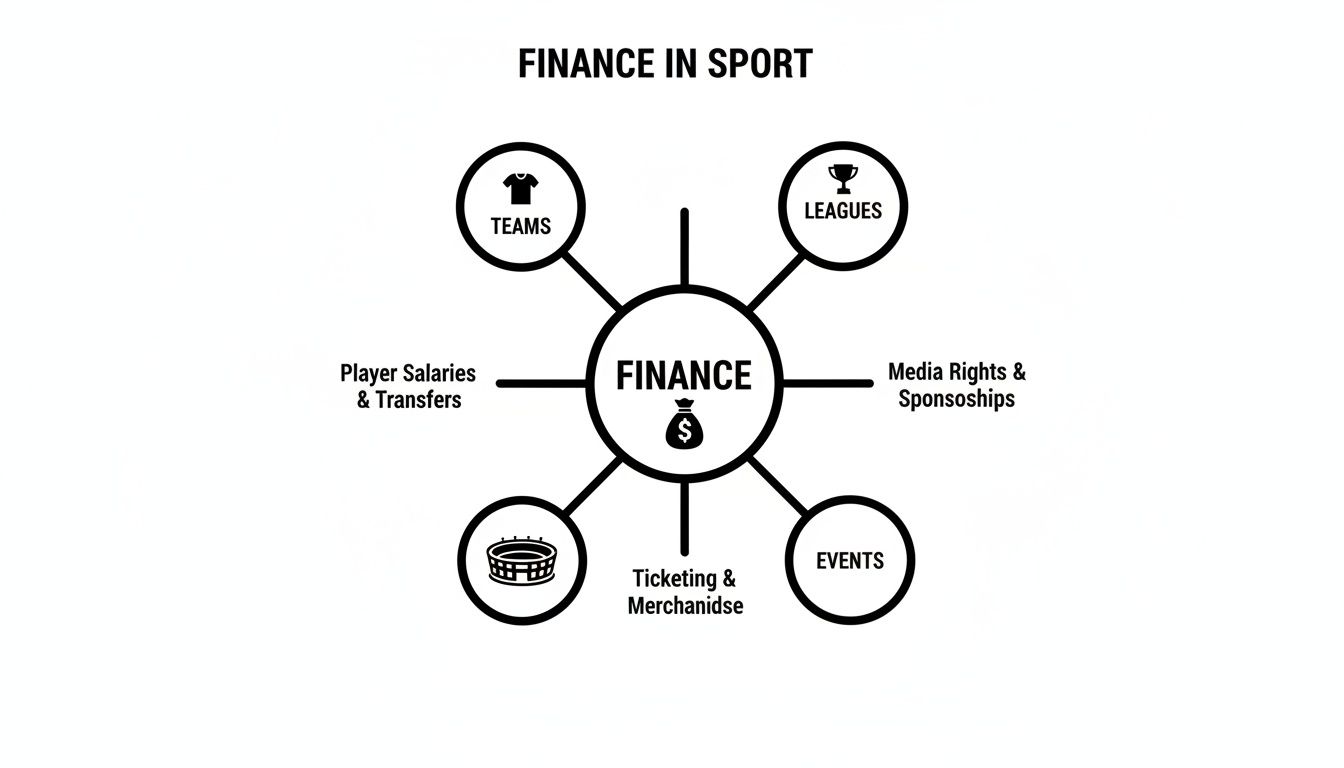
Whether we're talking about a team's player payroll, a league's prize money, or an event's operational budget, a healthy flow of cash is what separates the winners from the losers at every level.
Commercial Revenue: The Power of the Brand
Commercial revenue is all about turning a team or league's brand into cash. It’s easily the most diverse and creative income stream, covering everything from massive sponsorship deals to the t-shirt you buy at the team store.
Take a team’s jersey, for instance. It’s not just a uniform; it’s prime real estate. The logo on the chest, the patch on the sleeve—every inch represents a lucrative sponsorship deal. These partnerships are the bedrock of finance in sport, with the global sports sponsorship market projected to hit $115 billion in 2025. This isn't happening by accident; brands are paying for direct access to incredibly passionate fan bases.
Here are the main buckets where commercial revenue comes from:
- Sponsorships: This includes everything from jersey branding and stadium naming rights to becoming an "official partner." The Dallas Cowboys' deal for AT&T Stadium is a classic example of a massive, long-term income source.
- Merchandise: We're talking about the sales of jerseys, hats, and any other gear with a team logo on it. A club like Manchester United sells millions of shirts worldwide, turning that fan passion directly into profit.
- Licensing: This is when teams allow other companies to use their logos and branding on products, like in the EA Sports FC video game series or on collectible memorabilia.
And it doesn't stop there. New models are always popping up, like the NIL deals completely changing the game in college sports. Understanding the financial nuts and bolts of these agreements requires digging into specific details, such as NIL settlement details, including taxes and payouts for athletes.
Broadcasting Revenue: Selling the Spectacle
This is the big one. Broadcasting revenue is the money made from selling the rights to show games on TV, radio, and streaming platforms. For most major leagues today, this is the single largest source of income and the primary reason team valuations have exploded.
Just picture a bidding war between giants like ESPN, Fox, and Amazon for the rights to air NFL games. The league packages its product—the games themselves—and sells exclusive access to the highest bidder for billions of dollars. That massive check is then divvied up among all the teams in the league.
Broadcasting deals are the tide that lifts all boats. A massive national TV contract instantly increases the financial floor for every team in the league, regardless of their individual market size or on-field success.
Look at the Premier League's international broadcasting deals, worth over £5 billion. This firehose of cash ensures even smaller clubs get a financial windfall, allowing them to compete for top talent and stay afloat. This income stream is absolutely critical for financial stability.
Matchday Revenue: The Power of the Crowd
Matchday revenue is exactly what it sounds like: all the money generated directly from hosting a live game. It's the oldest form of income in sports, but it’s still a crucial part of the financial puzzle and a huge part of the fan experience.
This stream is built on a few key elements:
- Ticket Sales: The most obvious piece of the puzzle, this includes single-game tickets, season ticket packages, and group sales.
- Concessions: All the food, drinks, and merchandise sold inside the stadium on game day add up quickly.
- Premium Seating & Hospitality: This is where the real money is made. We're talking luxury suites, club seats, and corporate boxes that sell for a massive premium and deliver huge profit margins.
A packed stadium of 80,000 fans looks amazing on TV, but the real financial muscle on game day often comes from the few thousand people in those premium seats. A single corporate suite sold for a season can bring in more money than hundreds of regular season tickets. That's why modern stadium design is so heavily focused on the hospitality experience.
How Technology Is Rewriting the Financial Playbook
Technology isn't just about on-field performance or flashy fan apps anymore. It's now the quarterback of financial strategy in the sports world. We're seeing innovations that create entirely new ways to make money and make the old ways work a lot smarter, completely changing how teams and leagues run their business.
From the ticketing office to the sponsorship sales team, tech is the engine behind faster, more profitable decisions. This means that to really understand finance in sport today, you have to get comfortable with data, analytics, and digital platforms. The organizations jumping on board are gaining a serious edge, while those dragging their feet risk getting left behind.

Data Analytics: The New Most Valuable Asset
At the heart of this entire shift is data. Teams are vacuuming up incredible amounts of information on everything from what a fan buys at the concession stand to which social media posts they engage with. This data has become one of the most valuable assets a sports organization can own, directly shaping how they manage their money.
A perfect example of this in action is dynamic ticket pricing. Gone are the days of setting a fixed ticket price months in advance. Now, teams use sophisticated algorithms to adjust prices in real time. Is it a Tuesday night game against a struggling team? Prices might drop. A Saturday showdown with a historic rival? Prices will climb. Demand, opponent, and even the weather forecast all play a part.
The goal is simple: sell every seat for its optimal value. This isn't just a minor tweak; a smart pricing model can boost ticket revenue by 10-15%. That's how you turn empty seats into profit. If you want to dive deeper into how teams turn raw numbers into winning strategies, check out our guide on what is sports analytics.
Fan data is the new oil of the sports industry. It fuels personalized marketing, shapes sponsorship packages, and provides the insights needed to create experiences that keep fans coming back—and spending money.
Expanding Revenue Through Digital Innovation
Beyond making old revenue streams more efficient, technology is opening up financial opportunities that were pure science fiction a decade ago. Think about the massive impact of sports betting and the rise of digital collectibles.
- Sports Betting Integration: With legalization sweeping across the globe, sports betting has become a financial game-changer. Leagues like the NFL are now signing billion-dollar data deals with companies like Genius Sports to provide official, real-time data to sportsbooks. This creates a huge new revenue stream and also hooks fans in deeper—when you have money on the game, you're watching every single play.
- Blockchain and NFTs: While the initial hype has cooled, blockchain tech is still carving out new ways to make money. Non-Fungible Tokens (NFTs) let teams sell unique digital items, like iconic video highlights or virtual memorabilia. It's a brand-new market built around digital ownership and fan identity.
This isn't just a small shift; it's a massive growth engine. According to research from Morgan Stanley, faster tech adoption could inject an incredible $130 billion into the global sports industry. They even predict that AI could drive a 25% revenue uplift through new streams in media, gaming, and gambling.
The Future of Financial Roles in Sports
This tech-driven evolution is also changing what it takes to have a successful career in sports finance. It’s not just about being a wizard with spreadsheets anymore. Today's finance pros have to be data-literate and comfortable navigating new technologies.
The finance department of the future won't be siloed off. It will work hand-in-hand with analytics, marketing, and IT. We're seeing more and more roles that require a blend of financial expertise and data science skills. For anyone looking to build a career in this space, getting a solid grasp on how technology drives revenue isn't just a good idea—it's essential.
Mastering the Money Game Through Smart Budgeting
Bringing in revenue is one half of the equation; knowing how to manage it is what separates the winners from the rest of the pack. In the high-stakes world of finance in sport, a smart budget isn't just a spreadsheet—it's the strategic playbook guiding every single decision, from inking a deal with a star player to green-lighting a new training facility.
Without a solid financial game plan, even the most cash-rich clubs can spiral into trouble. This is where the real craft of sports finance shines. It’s a constant balancing act: spend big to win now, but don't mortgage the organization's future in the process. A sloppy budget can lead to disaster, while a disciplined one builds a dynasty.

Core Components of a Sports Budget
Picture a sports organization's budget as the head coach's game plan. It lays out the offensive moves (spending to win) and the defensive strategy (keeping costs in check). This isn't just about counting pennies; it's about channeling resources to hit specific targets, whether that's hoisting a championship trophy or boosting the brand's global reach. For anyone hoping to manage these finances, a crucial first step is understanding company financial statements.
A few key areas always demand careful planning:
- Player Salaries and Acquisition: This is almost always the biggest line item. It’s not just the players' paychecks but also hefty signing bonuses, agent fees, and the transfer fees paid to other clubs. Get this wrong, and you risk crippling the entire organization.
- Operating Expenses: These are the day-to-day costs of keeping the lights on. Think stadium maintenance, team travel, marketing blitzes, and salaries for the front office staff. These costs can balloon if you don't watch them like a hawk.
- Capital Investments: We're talking about the big, long-term plays designed to pay off down the road. This could be building a new stadium, overhauling the training grounds, or investing in next-gen data analytics. These projects demand serious financial foresight.
A budget isn't a financial straitjacket; it's a compass. It ensures that every dollar spent is a deliberate step toward a defined goal, preventing impulsive decisions that can jeopardize the future.
The Salary Cap and Player Costs Puzzle
One of the most unique challenges in sports finance is navigating player costs, especially in leagues with a salary cap. A salary cap is basically a collectively bargained spending limit on what teams can shell out for player salaries. It's there to promote a level playing field, stopping the richest teams from simply buying up all the top talent.
This creates an incredibly complex puzzle for general managers and their finance teams. They have to piece together a championship-caliber roster while staying under a rigid spending ceiling. It forces tough calls on who to sign, who to trade, and how to structure contracts for maximum financial wiggle room.
Another tricky piece, particularly in global soccer, is accounting for transfer fees. When a club buys a player from another team, that massive fee isn't treated as one giant expense in a single year. Instead, it’s amortized—or spread out—over the life of the player's contract. For instance, a $100 million transfer fee for a player signed to a five-year deal gets recorded as a $20 million expense on the books each year. This accounting maneuver is vital for managing profitability and staying compliant with financial rules.
Navigating Financial Fair Play Regulations
To stop clubs from spending their way into oblivion, many leagues and governing bodies have put financial guardrails in place. The most well-known example is UEFA's Financial Fair Play (FFP) rules, which essentially tell clubs they have to break even and can't spend more than they earn over a multi-year period.
FFP forces clubs to be financially responsible. They can't just have a wealthy owner write a blank check to cover massive losses year after year. Instead, they have to build a sustainable business by growing their commercial, broadcasting, and matchday revenues.
This has a huge impact on budgeting. The front office has to constantly forecast its income and make sure spending stays in line. Breaking these rules comes with some serious consequences:
- Heavy Fines: Financial penalties that can easily climb into the millions.
- Transfer Bans: Being blocked from signing any new players for one or more transfer windows.
- Competition Exclusion: The ultimate punishment—getting kicked out of prestigious tournaments like the UEFA Champions League.
At the end of the day, smart budgeting in sports finance is about so much more than numbers. It’s about having a clear vision, managing risk, and having the discipline to build an organization that can win on the field and on the balance sheet for years to come.
Building Your Career in Sports Finance
If you love the thrill of the game and have a knack for numbers, you're in luck. A career in sports finance isn't some far-fetched dream—it's a real, growing field that needs sharp minds to navigate its complex financial landscape. From massive player contracts to multi-million dollar sponsorship deals, every decision a team or league makes has a dollar sign attached to it.
But let's be clear: this is more than just being a fan who’s good with a spreadsheet. Succeeding in finance in sport demands a unique mix of hard analytical skills, business savvy, and a deep understanding of what truly drives revenue in the sports world. It’s a competitive field, no doubt, but the opportunities for those who come prepared are incredible.
Profiling Key Sports Finance Roles
While you'll find a variety of titles, a few key roles form the financial backbone of most sports organizations. Think of these as the starting lineup for the finance team—each one with a specialized job to do, but all working toward the same goal of financial health and growth.
Financial Analyst: This is your data guru, the person who lives and breathes spreadsheets. They’re responsible for budgeting, forecasting ticket and merchandise revenue, and crunching the numbers on new ventures. They provide the hard data that team presidents and general managers use to make critical strategic decisions.
Sponsorship Manager: This role is all about building relationships and bringing in cash. Sponsorship managers are the ones identifying potential corporate partners, pitching them compelling sponsorship packages, and negotiating the contracts that put brand logos on jerseys and stadium signs. It’s a job that requires serious sales chops and a creative flair for partnership.
Data Analyst (Financial Focus): Think of this as the tech-savvy cousin of the financial analyst. These pros dive into massive datasets on fan behavior, ticketing patterns, and digital engagement to uncover hidden revenue streams. They might design the dynamic pricing model that maximizes ticket sales for a high-demand game or prove the ROI on a social media campaign, connecting data directly to the bottom line.
The Skills and Trajectory You Need
Landing one of these jobs—and climbing the ladder—is all about building the right toolkit. Success isn't just about what you know, but how you apply that knowledge in the very unique, high-pressure environment of professional sports.
A typical journey might begin in an entry-level analyst role, where you'll learn the financial ins and outs of the organization. With experience, you could specialize in an area like sponsorships or stadium operations, moving up to a manager or director position. For many, the ultimate goal is a senior leadership role like Director of Finance or even Chief Financial Officer (CFO), where you're the one steering the entire financial strategy.
The most valuable professionals in sports finance are those who can bridge the gap between the numbers on a spreadsheet and the action on the field. They understand how a new player contract impacts the salary cap and how a winning season can drive up sponsorship value.
To carve out your path, concentrate on mastering these core skills:
- Financial Modeling: You absolutely must be able to build complex models in Excel that forecast future financial performance. This is non-negotiable.
- Contract Negotiation: Whether you’re dealing with a player agent or a corporate sponsor, you have to understand key terms and how to secure a favorable deal.
- Data Analysis: Getting comfortable with data analytics tools is no longer optional. The ability to pull clear insights from messy data is what sets candidates apart.
- Communication: You’ve got to be able to explain complex financial concepts to people who aren’t finance experts, like coaches, scouts, or marketing VPs.
Typical Career Paths and Salary Ranges in Sports Finance
To give you a clearer picture of the landscape, we've put together a table outlining some common roles, their core responsibilities, and what you might expect to earn. Keep in mind that salaries can vary quite a bit based on the league, team, and your level of experience.
| Job Title | Primary Responsibilities | Estimated Salary Range (USD) |
|---|---|---|
| Financial Analyst | Budgeting, forecasting, financial reporting, variance analysis, and supporting senior management with data-driven insights. | $65,000 - $90,000 |
| Sponsorship Manager | Identifying and securing corporate partners, negotiating sponsorship contracts, and managing partnership activations. | $80,000 - $125,000 |
| Director of Finance | Overseeing the entire finance department, managing long-term financial planning, and advising executive leadership. | $120,000 - $180,000+ |
| Chief Financial Officer (CFO) | Setting the organization's overall financial strategy, managing capital projects, and handling investor relations. | $200,000 - $500,000+ |
These roles represent a typical progression, but the sports industry also offers unique paths. You might move from a team-side role to a position at the league office, or even transition into a role with a sports-focused private equity firm.
If you’re ready to dive deeper and see what it really takes, check out our guide on the different jobs in finance in sport. It’s packed with insights that will help you tune up your resume, nail your interviews, and ultimately land that dream job.
How to Land Your First Sports Finance Job
Breaking into sports finance is tough, no doubt about it. Passion for the game is a great start, but it won't get you hired. You need a targeted strategy, because generic applications simply get ignored. Your first move is to build a resume and cover letter that speaks the industry's language, emphasizing skills like financial modeling, data analysis, or contract management—all with a clear sports focus.
Put yourself in the shoes of a hiring manager at a team or league. Instead of just saying you have "accounting experience," reframe it. Talk about how you managed a budget with razor-thin margins, drawing a direct parallel to navigating a team's salary cap. This simple shift proves you get the unique pressures of finance in sport and can hit the ground running.
Shape Your Experience and Build Real Connections
Think you need to have worked for a pro team to have relevant experience? Think again. Skills from event management, entertainment, and even large-scale hospitality are incredibly valuable and transferable. If you’ve ever managed the budget for a big music festival, you've juggled ticketing revenue, sponsorships, and operational costs. That's the day-to-day reality of running a sports organization.
Your resume needs to tell a story. Don't just list what you did; connect your past financial wins to the specific challenges a sports team faces, whether that’s boosting ticket sales, proving sponsorship ROI, or handling a complex payroll for athletes and staff.
Beyond a great resume, smart networking is your secret weapon. Find people on platforms like LinkedIn who are already in the roles you're aiming for. But here’s the key: don't just ask for a job. Instead, ask for their story—what was their career path? How did they get there? This builds a genuine connection and gives you priceless insight you can't find anywhere else.
Ace the Interview and Uncover Hidden Gems
When you finally land that interview, be ready for questions that go beyond your financial skills. They’ll test your business instincts. A hiring manager might ask how you’d structure a new sponsorship deal or which revenue stream you think has the most untapped potential for their team. This is your chance to show you’ve done your homework.
And don't get tunnel vision chasing the major leagues. There are countless amazing opportunities with minor league teams, college athletic departments, and sports marketing agencies. These jobs with sports teams often provide the hands-on experience that makes you a top candidate for bigger roles later on.
Finally, come prepared with a few sharp questions of your own. Ask about the club's biggest financial hurdles or their strategy for growing commercial partnerships. It shows you’re engaged and thinking like a problem-solver, not just a fan looking for a way in. You're a finance pro, ready to make a real impact.
Your Questions Answered: Sports Finance FAQ
Let's round things out by tackling a few common questions that always come up when talking about the money behind the game. Think of this as your quick-reference guide to some of the core financial realities in sports today.
What’s the Single Biggest Cost for a Sports Team?
Hands down, it’s player salaries. For just about any professional sports team, this is the line item that dwarfs all others.
We're not just talking about their base salary, either. This includes hefty signing bonuses, performance-based incentives, and the fees paid to agents. For major league teams, the player payroll can easily chew up more than 50% of the entire annual budget. This reality is exactly why skilled contract negotiators and salary cap managers are some of the most vital people in a club's front office.
How Do Underdog Teams Stay in the Financial Fight?
Smaller teams can't just write bigger checks than the powerhouses, so they have to out-think them. Their financial strategy is all about finding a competitive edge where deep pockets aren't the only thing that matters.
- Growing Their Own Talent: They pour resources into top-tier scouting and youth development programs. The goal? Unearth and nurture the next superstar instead of paying a premium for one on the open market.
- Winning with Data: Many smaller clubs become early adopters of advanced analytics. They use data to spot undervalued players and tactical opportunities that bigger, more traditional teams might miss.
- Building a Fortress at Home: They focus on creating an incredible connection with their local community. A passionate, loyal fanbase guarantees stronger ticket sales, merchandise revenue, and more attractive sponsorship deals with local businesses.
Is Private Equity Really Moving into College Sports?
Yes, and it's happening fast. College athletic departments are facing a perfect storm of rising operational costs and new rules that allow athletes to be compensated. This has created massive financial strain.
Private equity firms see a huge opening here. They are actively looking for ways to invest in the commercial rights of major university sports programs, bringing a professional, business-first mindset to the table.
While we're not quite at the point of firms taking direct ownership of a university team, the direction is unmistakable. Private money is pouring into college sports to run them more like professional franchises and unlock their revenue potential. It’s one of the biggest stories in the finance in sport world right now.
Ready to make your mark in the sports industry? The world of sports finance is brimming with incredible roles, from data-driven analyst positions to high-stakes sponsorship management. Your next big career move is waiting for you on GetSportJobs. Find your next job at https://www.getsportjobs.com.