Your Guide to Sports Communication Degrees and Careers
Ever wonder who's behind the perfectly crafted tweet after a buzzer-beater, the press conference that smooths over a controversy, or the captivating documentary that tells an athlete's story? That's the world of sports communication. A degree in this field is your ticket to becoming the master storyteller for teams, leagues, and athletes. It’s a unique blend of journalism, PR, and digital media, all laser-focused on the fast-paced, high-stakes sports industry.
What Is a Sports Communication Degree
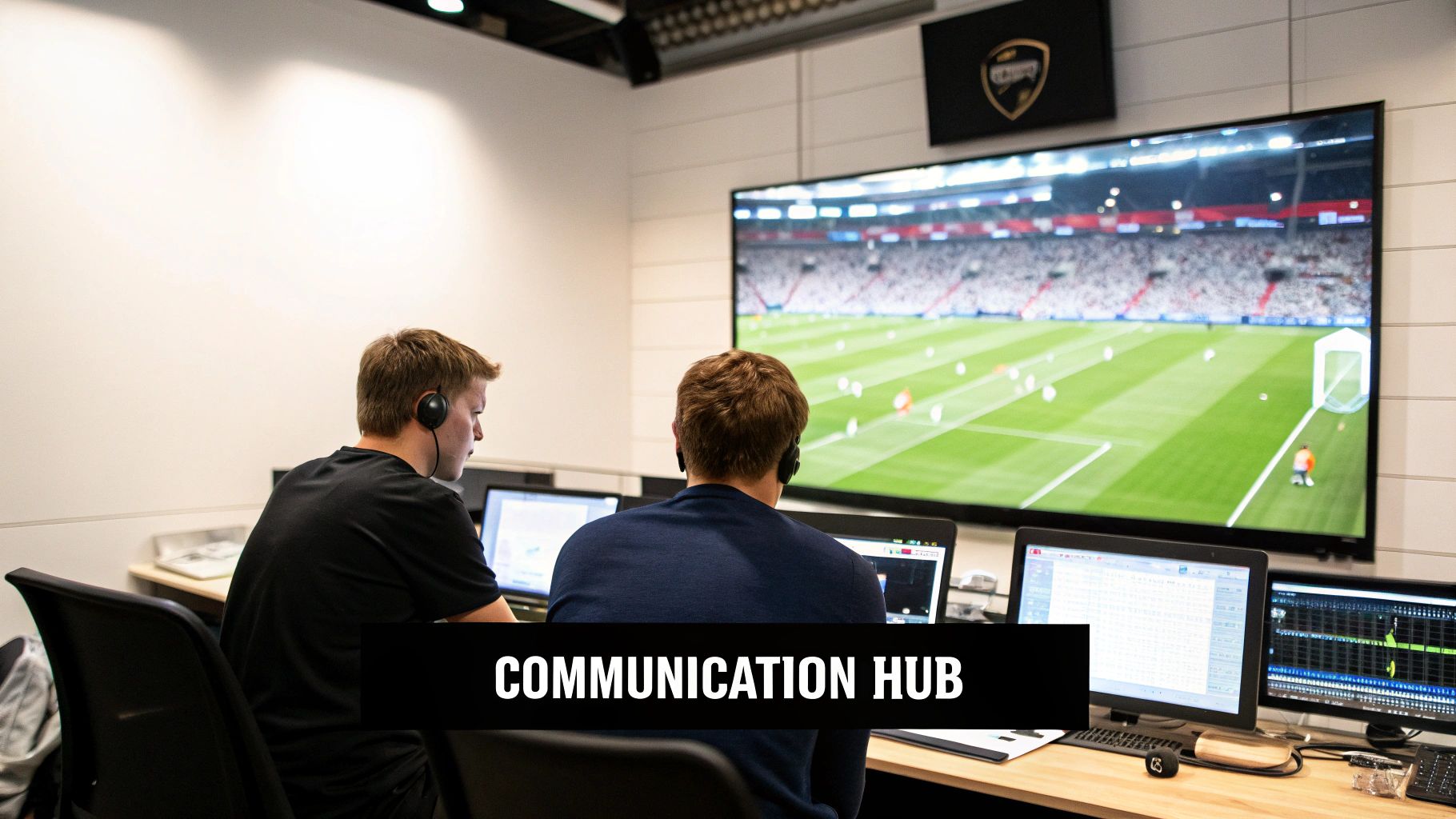
Think of a sports team or league as more than just a business—it's a brand with a personality, a voice, and a deep connection to its fans. A sports communication degree teaches you how to manage that voice and shape that personality. You learn to be the strategic mind behind every message sent to the public, the media, and sponsors.
This isn't just about reporting scores. It's the engine running behind the curtain, driving everything from a team's vibrant social media channels to its crisis management plan when things go wrong.
At its core, sports communication is the art and science of storytelling in the athletic world. It’s about creating narratives that build fan loyalty, protect brand reputations, and ultimately drive the business of sports forward.
Graduates come out ready to thrive in the 24/7 news cycle that defines modern sports. You'll master how to create content that cuts through the noise, build relationships with journalists, and run communication campaigns that hit all the right notes, whether on TV, online, or in the stadium.
The Modern Playbook: Blending Multiple Disciplines
A sports communication program is different from a straight journalism or marketing degree. It’s a specialized, interdisciplinary field because the job demands a versatile toolkit. One day you might be writing a press release, the next you’re producing a TikTok video or prepping a coach for a TV interview.
A good program gives you a solid foundation across several key areas. To get a better sense of what you'll be studying, here’s a breakdown of the core components of a typical curriculum.
Core Focus Areas in a Sports Communication Degree
| Focus Area | Description | Example Skills Gained |
|---|---|---|
| Journalism & Content Creation | The fundamentals of reporting, ethical storytelling, and crafting compelling narratives for print, broadcast, and digital platforms. | Writing game recaps, conducting interviews, shooting and editing video highlights, podcast production. |
| Public & Media Relations | Managing the public image of an organization or athlete, from handling press conferences to building relationships with reporters. | Writing press releases, developing crisis communication plans, pitching stories to the media, media training athletes. |
| Digital & Social Media Strategy | Creating and managing content for online communities on platforms like Instagram, TikTok, and X to engage fans directly. | Running social media campaigns, analyzing engagement metrics, creating viral content, managing online fan communities. |
| Marketing & Broadcasting | Understanding the principles of promotion, event production, and storytelling through live video and audio for a mass audience. | Creating promotional materials, basics of live game production, developing marketing campaigns, on-air commentary basics. |
This blend ensures you graduate as a well-rounded pro who can jump into various roles, not just a specialist stuck in one lane. The demand for these multi-talented communicators is growing fast. In 2023 alone, around 275 students earned sports communication degrees from a select group of top U.S. programs. And with the Bureau of Labor Statistics projecting a 6% growth in related jobs over the next decade, the opportunities are only expanding. You can discover more insights about the growth of sports communication programs and their curricula.
Ultimately, this degree prepares you to be that vital link between the action on the field and the passion in the stands. You won’t just report on the game—you’ll have the skills to shape how it’s seen, celebrated, and consumed by millions around the globe.
Building Your Skill Set Through Core Coursework
Think of a sports communication degree as your all-access pass to the industry's inner workings. It's designed to shape you into a versatile pro—someone who can write a gripping feature story, produce a viral social media clip, and prep an athlete for a tough press conference, maybe all in the same day. The coursework isn't just about theory; it throws you into real-world scenarios, building a deep and flexible skill set for a fast-moving field.
Your foundational courses are like spring training. This is where you master the absolute fundamentals of writing, ethical reporting, and public speaking. These aren't just boxes to check; they are the core abilities that every other skill you learn will be built on.
From the Classroom to the Press Box
As you move through the program, the classes get more specialized, directly reflecting the jobs you’ll be applying for. A sports journalism class, for instance, won't just teach you how to write a basic game summary. It will challenge you to find the human story behind the stats, conduct interviews that go beyond clichés, and craft narratives that connect with fans on a deeper level.
Likewise, a course in digital media production is about more than just learning how to use a camera. You’ll learn the entire content pipeline—from brainstorming an idea and scripting a story to shooting, editing, and getting it in front of the right audience. The aim is to make you a one-person production house who gets both the creative and strategic sides of the game.
The best sports communication programs operate on a simple principle: you learn by doing. The curriculum acts as a bridge, connecting academic knowledge with hands-on application. When you graduate, you don’t just have a diploma—you have a portfolio that proves you can do the work.
Mastering Strategic Communication
A huge chunk of your studies will be dedicated to the strategic side of the business. This is where you learn how to build, shape, and protect the public image of a team, league, or athlete.
Key areas you'll dive into include:
- Public Relations: You’ll get hands-on experience writing press releases, pitching stories to journalists, and running full-blown media campaigns. A big part of this is media training, where you’ll learn how to prepare athletes and coaches for even the toughest questions.
- Crisis Management: In sports, things inevitably go wrong. These courses simulate high-stakes situations, teaching you how to respond to scandals and controversies quickly and transparently to protect an organization's reputation.
- Media Law and Ethics: Knowing the legal landscape isn't optional. This coursework covers crucial topics like defamation, copyright, and the ethical tightropes media professionals walk every day. It ensures you can handle tricky situations with integrity.
This strategic foundation is what elevates you from just a content creator to a true communications professional. And remember, beyond sports-specific skills, a solid grasp of essential business communication best practices is a game-changer for success in any role.
The Digital Frontier of Sports Media
Today’s sports communication programs are all about blending timeless storytelling with modern tech. The curriculum is always being updated to keep pace with how fans actually consume sports. For example, you’ll find specialized courses in social media strategy, sports media analytics, and digital storytelling, all reflecting the shift toward data-driven communication.
Graduates with these skills are set up for a variety of in-demand roles, like digital content strategist, sports data analyst, or even esports manager. To get a feel for how these programs are structured, you can learn more about sports media graduate certificate curricula.
This well-rounded approach prepares you for the expanding role communication pros play in shaping sports narratives and engaging fans. You’ll leave with a robust and adaptable skill set, ready not just for the jobs of today, but for the roles that will define the future of the industry.
Exploring Diverse Career Paths and Earning Potential
Think a sports communication degree just means becoming a sideline reporter? Think again. This degree is your ticket into the heart of the sports industry, opening doors to a huge range of careers well beyond the press box. You'll find graduates shaping the stories of pro teams, running the show in college athletic departments, and calling the shots at major media networks and marketing firms.
This isn't just about loving sports; it's about becoming a master strategist in how sports stories are told. You could be the official voice of a team, the creative mind behind a viral digital campaign, or the producer who brings the roar of the crowd into millions of living rooms. The opportunities are as varied as the games themselves.
Roles in the Heart of the Action
Many grads jump right into roles where they work directly with teams and athletes. These jobs are high-energy and demand a sharp mind for both the game itself and the delicate art of managing public perception.
Here are a few of the most common landing spots for sports communication majors:
- Team Communications Coordinator: This is the command center for team information. You'll juggle media requests, craft press releases, and prep everyone from the star quarterback to the head coach for their time in the spotlight.
- Sports Information Director (SID): A staple in college athletics, SIDs are the official storytellers and statisticians for a school's teams. You'll be responsible for everything from media guides to keeping the record books straight.
- Broadcast Producer: Working behind the scenes in TV or radio, you’ll be the one making the magic happen. From planning out a pre-game show to directing the on-air crew during a live broadcast, the final product is in your hands.
But these roles are just the tip of the iceberg. The skills you build are versatile and essential across the entire industry.
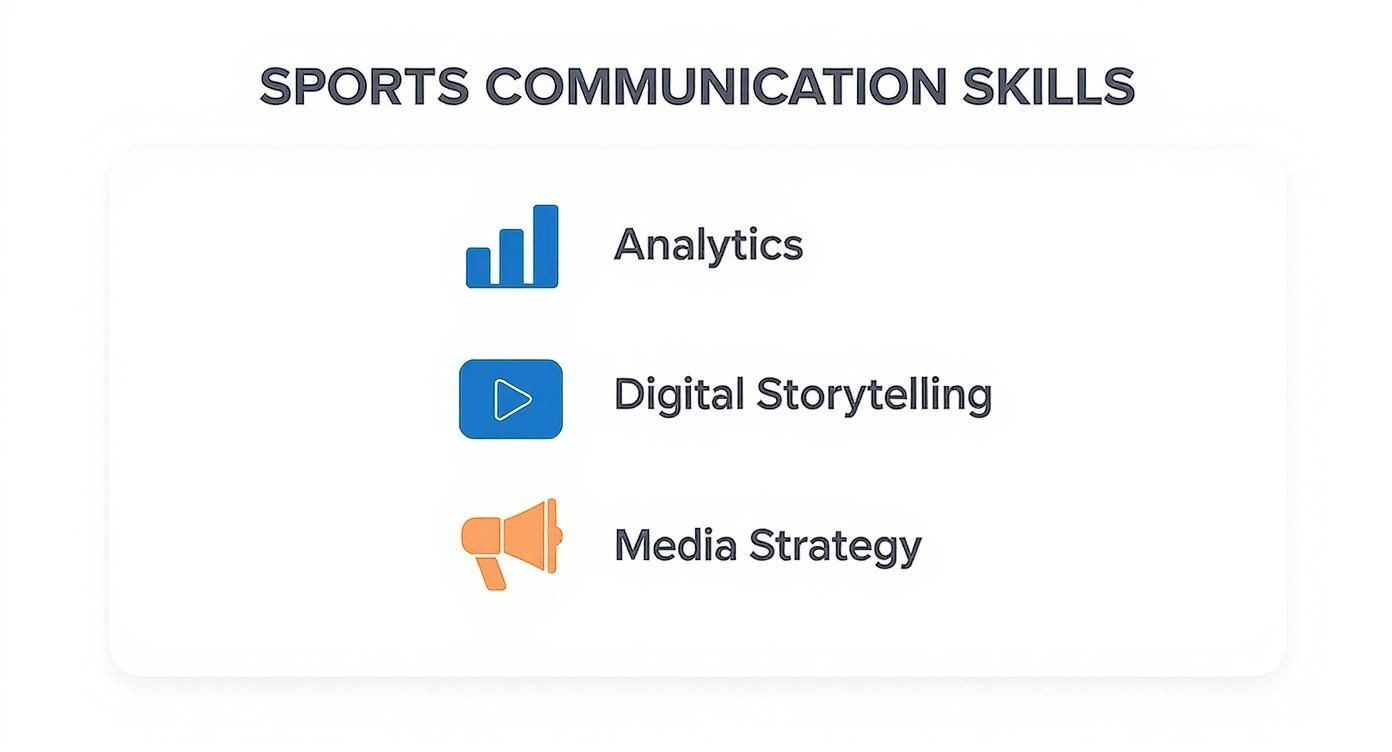
As you can see, the modern sports communicator is a true hybrid, blending creative storytelling with a sharp, data-driven mindset to get ahead.
Understanding Your Earning Potential
Salaries in sports communication can swing pretty widely depending on your experience, where you work, and which part of the industry you're in. An entry-level role in college sports might start around $40,000, but a seasoned communications director for a major professional team can easily clear $150,000 or more.
The demand is definitely there. Jobs for public relations specialists—a common path for grads—are expected to grow by 6% through 2033, which is faster than the average for all jobs. This tells us that skilled communicators are, and will continue to be, a hot commodity in sports. It's also worth noting that these skills travel well; exploring different sports management career paths can open your eyes to even more leadership opportunities.
Let’s take a look at what some of these career paths look like on paper.
Sports Communication Career Paths and Salary Projections
This table breaks down some of the most popular roles for sports communication graduates, giving you a clearer picture of their day-to-day responsibilities and what you can expect to earn.
| Job Title | Primary Responsibilities | Average Salary Range (USD) |
|---|---|---|
| Sports Information Director | Manages media relations, statistics, and publications for collegiate athletic programs. | $45,000 - $75,000 |
| Team Communications Manager | Serves as the primary media contact for a professional team; handles press releases and player interviews. | $60,000 - $120,000 |
| Sports Broadcast Producer | Oversees the production of live games or studio shows for TV, radio, or streaming platforms. | $55,000 - $100,000+ |
| Social Media Manager | Develops and executes content strategy across all social channels for a team, league, or brand. | $50,000 - $90,000 |
| Public Relations Specialist | Builds and maintains a positive public image for an organization, athlete, or sports brand. | $50,000 - $85,000 |
While these figures provide a solid baseline, remember that top performers in major markets can earn significantly more, especially as they move into senior leadership roles. Your career is what you make it.
Your career trajectory is not just about the job title; it's about the impact you make. A successful social media campaign can build a global fan base, and a well-handled crisis can save a team's reputation, making skilled communicators invaluable assets.
The New Frontier of Sports Careers
The sports world is always evolving, and a degree in sports communication puts you in a prime position to lead that evolution. New fields are popping up that didn't even exist ten years ago, creating exciting new career paths.
Two of the hottest growth areas are:
- Esports Communication: Competitive gaming is a global powerhouse with a massive, dialed-in audience. It needs pros who can manage communications for teams and leagues, from traditional media relations to creating engaging content for platforms like Twitch and YouTube.
- Sports Analytics and Storytelling: Teams and media outlets are swimming in data. Someone needs to make sense of it all. A communicator who can dig into complex analytics and spin them into fascinating stories for fans is an incredibly valuable hire.
These new frontiers prove that a sports communication degree isn't just about covering today's games—it's about writing the rulebook for how the sports stories of tomorrow will be told.
How to Choose the Right Sports Communication Program
Picking a sports communication degree is a bit like a GM building a team for a championship run. You can’t just go for the big-name players; you need to find the program that fits your specific game plan and sets you up for long-term success. Not every program is built the same—the right one can be a launchpad, while the wrong one might just leave you on the bench.
The trick is to think like a scout. Don't just read the program description. You need to dig deeper and figure out which school will give you the hands-on experience and professional network to actually win in the job market.
Look Beyond the Brochure
A university’s name and reputation are great, but the real game-changer in a sports communication degree is its connection to the industry. You want a program that throws you into the sports world from day one, not one that just has you reading about it from a textbook.
When you're weighing your options, these are the stats that really matter:
- Internship Placement Success: Don't be afraid to ask for the numbers. Where have recent grads actually interned? A program with a direct pipeline to pro teams, major networks, or top agencies is worth its weight in gold.
- Faculty with Real-World Experience: Your professors should be more than just academics. Look for instructors who are former ESPN producers, team PR directors, or award-winning journalists. They bring the industry right into the classroom.
- Access to Modern Facilities: Can you get your hands on the same gear the pros use? Having access to professional-grade broadcast studios, production labs, and editing software is essential for building a portfolio that gets you noticed.
- Strength of the Alumni Network: A strong, engaged alumni network is your secret weapon. A school that actively connects you with graduates already working in the industry gives you a massive head start.
Undergraduate vs. Graduate Degrees
Deciding between a bachelor's and a master's really depends on where you are in your career. Think of it this way: an undergrad degree is like your rookie contract, where you learn the fundamentals. A master's is your veteran deal, where you specialize and aim for the top.
A bachelor's degree is your foundation. It's designed to give you a solid, wide-ranging understanding of the field, covering everything from sports journalism and broadcasting to PR and social media. This is the perfect path if you're just starting out and need to build a versatile skill set.
A master's degree, on the other hand, is about honing your expertise. These programs are built for people who want to pivot into a specific niche like sports analytics or crisis management, or for those who need an advanced credential to move into leadership roles. They’re intense, focused, and designed to fast-track your career.
Exploring a Global Perspective
Sports are a global business, and your education should reflect that. Master's programs, in particular, are starting to offer incredible opportunities to see how the industry works on an international scale. For example, some programs in Spain and the UK offer master's degrees that blend global sports journalism with digital media skills, often including hands-on work with world-famous teams.
Back in the U.S., many schools offer specialized tracks within a Master of Arts in Mass Communication, with courses on PR, advertising, and ethics designed specifically for sports. Plus, with many of these advanced degrees now available in hybrid or fully online formats, they’re more accessible than ever for working professionals. You can discover more about international sports communication master's degrees to see how they might align with your career goals.
Choosing a program isn't just about the diploma you hang on the wall; it's about the doors that diploma will open. A program with deep industry connections, a global outlook, and tons of hands-on training is your best bet for a successful career.
Ultimately, the best sports communication degrees are the ones that connect your passion with a real profession. If you do your homework and evaluate these key factors, you’ll find a program that not only teaches you the right skills but gives you the experience and connections to hit the ground running.
Securing Internships and Building Your Network

In the sports world, your degree might get you an interview, but it’s your experience and connections that will land you the job. For anyone serious about a sports communication career, internships aren’t just a nice-to-have; they’re your spring training. This is where you put theory into practice and prove you can keep up with the industry’s breakneck pace.
Think of it this way: your classes give you the playbook, but an internship lets you run the plays in a real game. It’s your chance to build a portfolio that actually means something—whether that’s drafting press releases for a university athletic department, editing highlight reels at a local TV station, or running the social media for a minor league team on game day. That’s the kind of hands-on experience that separates your resume from the rest of the pile.
Finding Your All-Star Internship
Landing a great internship requires a smart game plan. Don't just blast your resume out to everyone; be strategic and target the opportunities that actually line up with where you want to go in your career. This focus shows employers you're not just looking for any credit, but the right experience.
Here are a few proven ways to find a position that counts:
- Lean on Your University's Resources: Your first stop should always be your program's career services office and your professors. They have the inside track and existing relationships with local teams, media outlets, and sports agencies.
- Start Local and Think Broadly: Don't get hung up on the big leagues right away. A local sports commission, a nearby college’s athletic department, or even a community sports league can offer incredible, hands-on learning experiences.
- Build a Compelling Portfolio: Get a personal website or online portfolio up and running to show off your best work. Pack it with writing samples, video projects, social media campaigns, and anything else that screams, "I know what I'm doing."
In sports, who you know is just as critical as what you know. Every handshake, every email, every conversation is a potential bridge to your next big break. Treat every interaction like it matters—because it does.
Networking The Right Way
Networking isn't about seeing how many business cards you can collect. It’s about building real, genuine relationships. You're trying to create a professional support system of mentors, peers, and contacts who can offer advice and open doors for you down the road. The key is to start building these connections long before you actually need them.
A great place to start is by learning from the pros who are already in the game. For a clear roadmap, check out this guide on how to get into sports. It’s full of practical, no-nonsense advice to help you focus your efforts.
Strategies for Effective Networking
Building a strong network is a marathon, not a sprint. You have to work at it consistently. Always aim for quality over quantity, and go into every conversation with genuine curiosity.
- Use LinkedIn Proactively: Don't just be a collector of connections. Follow industry leaders, join sports media groups, and leave thoughtful comments on their posts. Use it as a research tool to learn about people at companies you'd love to work for before you reach out.
- Conduct Informational Interviews: This is a game-changer. Ask professionals in roles you admire for 15-20 minutes of their time for a quick chat. Come prepared with smart questions about their career path, their day-to-day, and any advice they have. It’s a low-pressure way to get priceless insights and make a lasting impression.
- Volunteer at Sporting Events: Working at a local tournament, charity golf outing, or major sporting event gets you on the ground and side-by-side with industry professionals. It’s one of the best ways to show your work ethic and passion while making connections naturally.
By chasing both internships and networking opportunities, you’re not just waiting for your career to happen—you’re actively building it, piece by piece. This hustle is what will give you a major league advantage when you graduate.
Launching Your Career in Sports Communication
You've got the playbook, and now it's time to get in the game. Turning that degree into a real-deal career isn't just about what you know—it's about what you do next. Think of this as your personal preseason. It's time to shift from learning the theory to actively carving out your space in the industry.
The bridge from your sports communication degree to that first paycheck is built with practical experience and a sharp personal brand. So, start creating something today. Fire up a simple sports blog, launch a podcast breaking down your favorite team's latest moves, or build a professional social media feed dedicated to smart sports commentary. These projects aren't just for fun; they become your portfolio, tangible proof you can show a hiring manager.
Your Action Plan for Success
Don't wait for the confetti to fall at graduation to start thinking about the job market. The real work begins now. A clear, step-by-step plan will put you way ahead of the pack.
- Finalize Your Program Shortlist: Use what you've learned here to zero in on the right schools. Reach out to their admissions teams with pointed questions about internship placements and where their alumni actually work.
- Sharpen Your Professional Toolkit: Your resume and cover letter are your personal sales pitch. As you start putting them together, a key detail is figuring out how long a resume should be to grab an employer's attention without overwhelming them.
- Network with a Purpose: Get on LinkedIn and connect with program alumni and people doing the jobs you want. Don't just ask for a job—ask for a quick, 15-minute chat to hear their story and get advice. People love to talk about their own careers.
A degree gets you in the door, but initiative is what gets you the job. The pros who succeed are always creating, connecting, and preparing long before the perfect role even gets posted.
This is the kind of proactive hustle that gets you noticed. Hiring managers want to see your passion in action, not just read about it on a piece of paper.
As you get started, it’s a smart move to see what's out there right now. A quick look at current jobs with professional sports teams can give you a real-time snapshot of the skills and experience that teams are looking for today.
Your journey in sports communication is a marathon, not a sprint. Embrace the grind, stay persistent, and treat every class, internship, and conversation as a chance to get better. The path you're on is incredibly exciting and packed with opportunity. Take these next steps with confidence—you're building the foundation for an amazing career.
Your Top Questions About Sports Communication Degrees, Answered
Jumping into a field as specific as sports communication is bound to bring up some questions. It's a big decision, so let's get you some clear answers. This is your chance to get the inside scoop before you commit to the program.
Think of this as a quick Q&A session to help you figure out if this degree lines up with where you want to go in your career.
Is a Sports Communication Degree Really Worth It?
Absolutely, especially if you're passionate about the intersection of sports and storytelling. This degree gives you a very specific set of tools that you just won't get from a general communications or journalism program. It’s designed from the ground up for the sports industry.
The numbers back it up, too. The U.S. Bureau of Labor Statistics expects jobs for public relations specialists—a very common path for grads—to grow by 6% through 2033. That's faster than the average for all jobs, showing a real, lasting need for people who can communicate effectively within the sports world.
A sports communication degree isn't just a piece of paper. It’s a signal to employers that you get it. You don't just know how to write a press release; you understand the culture, the business, and the unique media environment that makes sports tick.
What's the Difference Between Sports Communication and Sports Journalism?
It's a great question, because they definitely overlap. The easiest way to think about it is like a broadcast team: the journalist is the play-by-play announcer calling the game as it happens, while the communications pro is the producer making sure the entire broadcast runs smoothly and presents the team in the best light.
- Sports Journalism is all about objective reporting. You're telling stories for the public, whether that's through articles, podcasts, or on-air analysis. The goal is to inform.
- Sports Communication is about managing the message for a specific team, league, or athlete. You're building the brand, managing crises, and connecting with the fanbase. The goal is to build and protect a reputation.
A good program will give you a foundation in both, but you’ll eventually specialize in one direction when you start your career.
Can I Break Into the Industry Without This Specific Degree?
You might be able to, but you'd be playing on hard mode. The sports industry is notoriously competitive. When hiring managers see a sports communication degree on a resume, they know you're already familiar with the unique demands of the business.
A degree gives you the structured training and hands-on experience (think required internships) that are tough to get otherwise. More importantly, it plugs you directly into a network of professors, alumni, and industry contacts. It’s a dedicated path designed to get you in the door with a solid portfolio and the right connections.
Ready to put those skills to the test? GetSportJobs is the leading job board in the sports industry, featuring openings from the biggest teams, leagues, and brands. Start exploring hundreds of roles and find your spot in the game at https://www.getsportjobs.com.