What Does An Athletic Director Do Explained

An athletic director is the glue that holds a sports program together. From assembling the right coaching staff to juggling budgets and compliance, they ensure every piece moves in harmony.
Core Functions Of An Athletic Director
Every day, athletic directors shift between big-picture vision and granular details.
Here’s a breakdown of their central duties:
- Strategic Planning: Crafting long-term goals and mapping out resources to hit them
- Budget Management: Overseeing finance sheets for staff pay, facility upkeep, and travel costs
- Compliance Oversight: Making sure Title IX, league rules, and safety standards are never overlooked
- Staff Leadership: Recruiting, mentoring, and evaluating coaches and support personnel
- Program Growth: Driving fundraising efforts, marketing campaigns, and community engagement
Below is a quick reference table that distills these roles into their core elements.
Athletic Director Role Summary
| Responsibility | Summary |
|---|---|
| Strategic Planning | Defines long-term vision and objectives |
| Budget Management | Prepares, tracks, and adjusts multi-source budgets |
| Compliance Oversight | Enforces regulations, safety standards, and eligibility requirements |
| Staff Leadership | Hires, develops, and evaluates coaching and support staff |
| Program Growth | Drives revenue, partnerships, and engagement through events and outreach |
Together, these functions illustrate why athletic directors are central to sustaining and growing sports programs. Discover opportunities.
Understanding Role And Scope Across Levels
Think of an athletic director as the CEO of a miniature enterprise—balancing budgets, coordinating staff, and running events all at once. Yet, the specifics change dramatically depending on whether you’re in a neighborhood park or a major league stadium.
At the youth level, an AD often wears many hats: recruiting volunteer coaches, lining up field schedules, and organizing bake sales or small fundraisers to cover equipment costs.
In a K–12 setting, the plate gets even fuller. You’re handling Title IX compliance, arranging buses for away games, and making sure gym floors stay in top shape. You also act as the point person between parents, school principals, and coaching staff.
- Scheduling games and practices across district schools
- Rallying volunteers and managing part-time event staff
- Running lean budgets and securing local sponsorships
College Program Leadership
Once you step onto a college campus, you’re managing seven-figure budgets and a full team of administrators. Negotiations range from media rights deals to scholarship distributions, with NCAA compliance audits woven into your weekly routine.
For instance, a Division I AD might lock in a $2 million contract for televised games, then host compliance workshops to keep coaches up to speed.
“A college AD juggles stakeholder interests like a conductor guiding an orchestra,” says a former Division I athletic director.
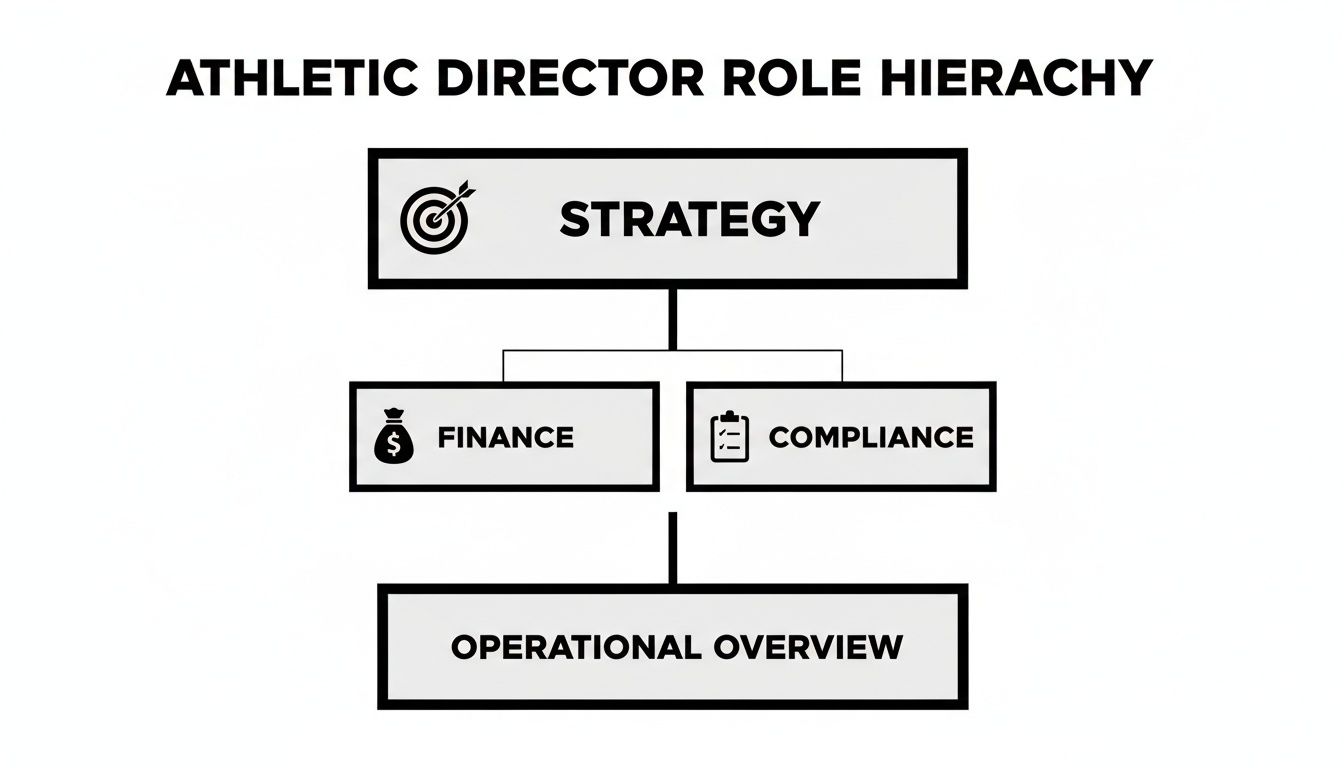
This graphic breaks down how Strategy, Finance, and Compliance stack up at each level, making clear where your focus needs to be.
Professional Team Leadership
On the pro side, the stakes rise even higher. You’re dealing with multimillion-dollar media agreements, worldwide sponsorships, and marquee events that draw global audiences.
Key tasks include:
- Negotiating broadcast deals north of $50M+
- Building brand partnerships with Fortune 500 firms
- Leading crisis management when players or venues hit the headlines
Success at this tier requires savvy in contract law, corporate finance, and brand-building—but at its heart, it’s still about sharp communication, strategic planning, and strong team leadership.
For those targeting college roles, check out our guide on careers in college athletics to see qualifications and job listings that fit your ambitions.
By mapping the path from youth leagues to professional arenas, you’ll notice the same core skills—stakeholder communication, fundraising, compliance—simply stretch and flex to meet new challenges. Embrace continuous learning and forge meaningful relationships, and you’ll be ready to advance at any level of athletic leadership.
Breaking Down Daily Responsibilities
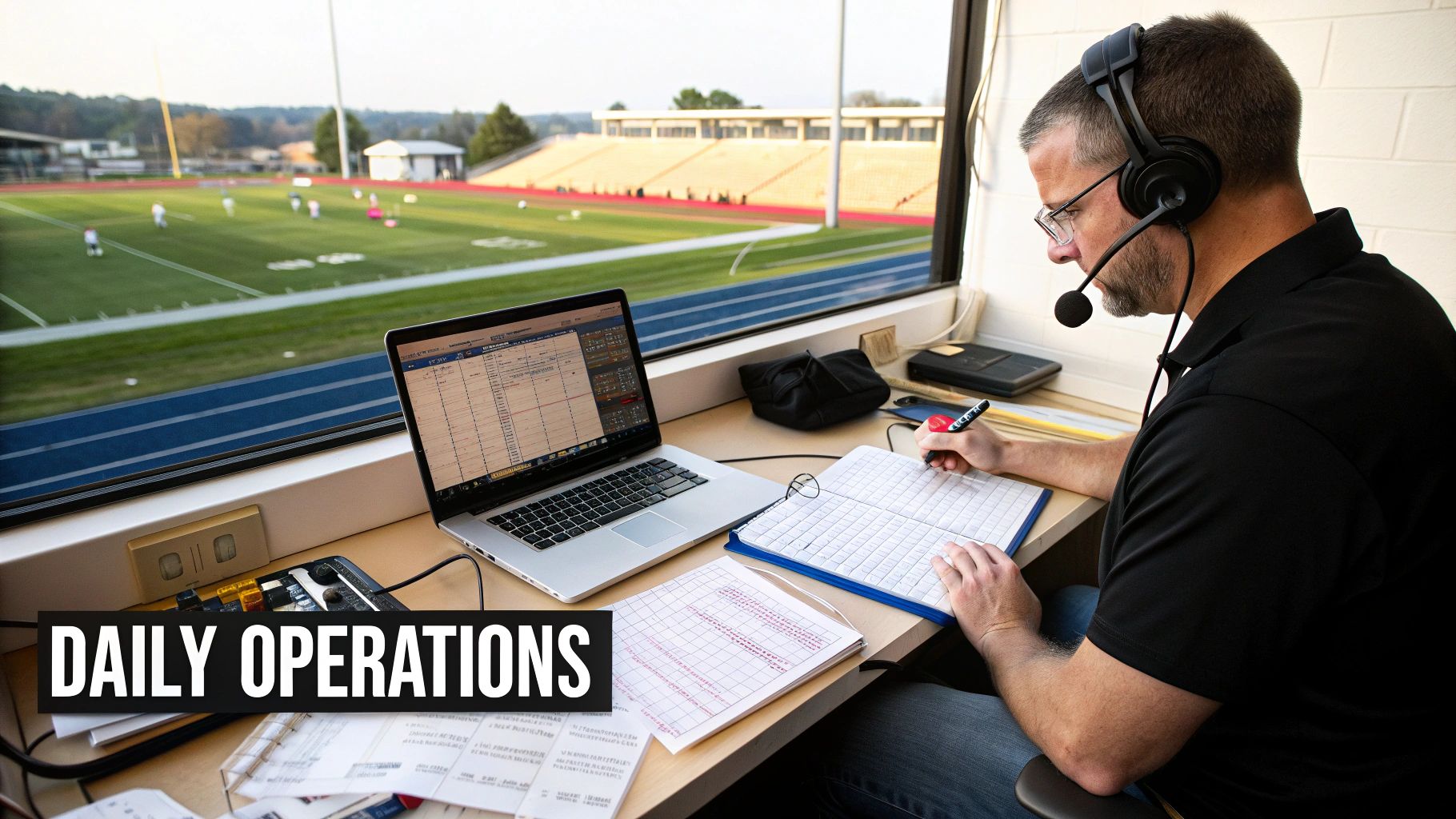
Before the sun rises, the athletic director is already mapping out the day’s priorities. One moment they're finalizing a $50,000 sponsorship deal; the next, they're diving into a surprise compliance audit. It’s a constant shuffle between big-picture strategy and on-the-ground problem solving.
Imagine a gym light going out in the middle of a tournament. The AD calls the electrician, tweaks the schedule, and keeps everyone moving without missing a beat.
Scheduling Games And Events
- Coordinate dates for 50+ games across seasons
- Manage venue availability and team travel logistics
- Align staff schedules with facility maintenance
- Secure officials and arrange transportation
Beyond match dates, athletic directors oversee facility budgets, vendor contracts, equipment orders, and routine safety checks. By mid-morning, they’ve often reviewed budget spreadsheets and ticked off compliance checklists. When a sudden weather alert threatens an outdoor match, they shift plans in real time and keep coaches informed.
“An AD operates at the intersection of strategy and operations,” says an NCAA director.
Next up, they draft marketing briefs to boost ticket sales and strengthen community engagement.
Time Management Tactics
Effective time management is an AD’s secret weapon. Here are three go-to methods:
- Eisenhower Matrix for sorting urgent versus important tasks
- Time blocking to protect review and planning windows
- Delegation to trusted team members during peak periods
Clear communication tools also keep everyone in sync:
- Slack channels for instant coach updates
- Asana boards to monitor deadlines and approvals
- Google Calendar integrations for automated reminders
Around lunch, ADs meet with student-athletes to discuss their academic progress and well-being. Those one-on-one conversations strengthen trust and improve performance on and off the field.
Best Tech Tools For Reporting
| Tool | Purpose |
|---|---|
| TeamSnap | Game scheduling |
| Tableau | Performance dashboards |
| Trello | Task tracking |
Choosing the right software can make a real difference. For example, one high school cut scheduling errors by 30% after adopting TeamSnap.
In the afternoon, ADs guide sponsors through facility tours, negotiate renewals, and highlight branding opportunities. Later, compliance auditors may arrive to examine certification records and safety logs.
At the end of the day, they compile attendance figures, update budget summaries, and draft reports for the weekly leadership meeting. Balancing urgent tasks with long-term vision is how ADs keep programs thriving.
Connecting with GetSportJobs opens doors to roles that match these dynamic demands. Use these insights to picture yourself succeeding in this multifaceted position. Explore current openings on GetSportJobs and take the next step in your athletic director career.
Required Qualifications And Career Path
Turning a love of sports into a leadership position hinges on blending classroom learning with on-the-ground training. Most athletic directors start with a Bachelor’s Degree in Sports Management or Business Administration. That foundation covers budgeting, compliance rules, and team-building tactics.
- Bachelor’s Degree in Sports Management or Business Administration
- Master’s Degree in Education or Business Administration
- NFHS Certification (NFHS) or NCAA Compliance Credential (NCAA)
- First Aid and CPR Training (Red Cross)

Education And Certification
Many aspiring ADs kick off their journey in a bachelor’s program that weaves lectures, case studies, and hands-on internships together. Meanwhile, 73% of entry-level AD roles require NCAA compliance training, pushing candidates toward workshops or certificates from the National Federation of State High School Associations.
“Practical certifications bridge the gap between theory and reality,” says a seasoned athletic director.
Across smaller schools, teaching credentials can open doors. At larger colleges, a master’s often becomes the ticket in. Yet, no matter the level, compliance remains non-negotiable. Strong communication and conflict-resolution skills carry equal weight alongside strategic planning.
Building Experience
Graduation is just the start of the climb. Think of each role as a stepping-stone toward the director’s chair. Here’s a typical roadmap:
- Spend 1–2 years coaching teams or teaching physical education
- Land an internship or assistant role in an athletic department
- Take charge of youth leagues or campus programs
- Move up to Assistant Athletic Director before leading the department
On top of that, networking can turbocharge your progress. Join the NIAAA and attend regional conferences. Presenting at workshops also helps you stand out in a crowded field.
| Role Level | Typical Experience Required |
|---|---|
| Entry (Intern/Asst) | 1–2 years coaching or internships |
| Mid (Assistant AD) | 3–5 years in department roles |
| Senior (Director) | 5+ years of leadership plus advanced degree |
For practical advice on getting started, check out our guide on pathways in sports management. Learn more about career entry steps in our how to get into sports management article.
Next Steps For Advancement
Once you’ve settled into an AD role, look for leadership opportunities in local leagues or districts. Tailor your resume to showcase wins—like budget improvements or program growth.
Use platforms such as GetSportJobs to hunt for openings. Listing at least five concrete achievements can bump your interview rate by 40%, according to recent hiring data. With each win, you’re one step closer to the top.
Salary Trends And Pay Ranges
Compensation for athletic directors can swing widely depending on the institution’s size, its regional market, and the scope of its sports programs. From a small-town high school to a Division I powerhouse, each setting brings its own budget pressures and revenue streams.
In what follows, we’ll break down the median figures, explore the 25th and 75th percentiles, and share practical tips to help you negotiate a stronger offer.
Median And Percentile Breakdown
Across the United States, athletic director salaries typically land between $62,000 and $72,000 per year. Think of these figures as milestones on a track—some roles keep you in the middle lanes, while a few sprint ahead into the upper brackets.
ZipRecruiter reports an average pay of $62,246 annually (about $29.93/hour). The middle half of professionals earn between roughly $40,500 (25th percentile) and $77,000 (75th percentile). At the top end, seasoned directors can reach $105,500 a year. Meanwhile, PayScale’s data tilts higher, showing an average of $72,440, with experienced leaders pulling in up to $115,000. Learn more about athletic director salary data on ZipRecruiter
- $40,500 at the 25th percentile sets a clear entry point.
- $62,246 ZipRecruiter average reflects the mid-range.
- $72,440 PayScale average signals seasoned professionals.
- $105,500 illustrates what top performers can command.
Below is a quick comparison across typical institution levels:
| Level | Average Salary |
|---|---|
| High School AD | $61,000 |
| Division I AD | $120,000 |
Region also plays a starring role in pay gaps. Cost of living, state funding models, and sponsorship deals can push numbers up or down.
“Strong negotiation skills can boost starting salaries by up to 10 percent,” notes one industry recruiter.
How To Negotiate For More
When it’s time to discuss compensation, preparation is everything. Start by gathering local salary benchmarks—this gives you firm ground instead of guessing in the dark. Then, tie your request to concrete wins like budget increases or program expansions you’ve led.
- Research recent salary data in your area.
- Document specific achievements—revenue growth or team performance spikes.
- Craft a concise pitch explaining why your track record justifies a higher salary.
Don’t forget to ask for perks beyond base pay, such as travel stipends or professional development budgets. And use platforms like GetSportJobs to spot listings that openly share pay bands—knowing the range beforehand puts you in the driver’s seat.
With these insights, you can map out realistic financial goals for your career.
Next section explores budgeting.
Budget Management In Athletic Programs

Every athletic director ends up wearing the finance hat at some point. Balancing ticket sales, media rights, sponsorships, donor gifts and conference revenues demands constant attention.
- Revenue Streams: Ticketing strategies, broadcast contracts, sponsorship packages, donor campaigns
- Expense Lines: Coaching salaries, scholarships, travel budgets, facility maintenance
Building A Realistic Budget
Start by forecasting revenue using past seasons and market indicators. Look for patterns in attendance, renewals from sponsors and university allocations. From there, apply a zero‐based budgeting model to ensure every dollar is justified.
- Identify essential costs for the season
- Layer discretionary spending for events and promotions
- Secure approvals from leadership on capital requests
“A clear, data-driven budget is the roadmap for a thriving program,” says a veteran AD.
Tools And Presentation
Picking the right software cuts down on errors and frees up your time. Platforms like Microsoft Excel and BudgetPro come with templates and forecasting tools built in. When you bring numbers to the board, emphasize clear visuals and call out any big variances immediately.
| Category | Projected Amount |
|---|---|
| Total Revenue | $5.2 million |
| Total Expenses | $4.8 million |
| Net Surplus | $400,000 |
Handling these figures goes beyond spreadsheets. At the collegiate level, top programs manage budgets from several million to over $200 million a year. ADs oversee multi-source revenues—ticketing, media rights, donor giving, conference distributions and sponsorships—while also controlling expenses like coaching salaries, scholarships, travel and facility operations.
For an overview of what athletic directors earn, see the Payscale salary data.
Learn more about financial management in sports in our article on finance in sports.
Regular reviews keep budgets on track. Use variance analysis to spot overspending and reallocate funds quickly, ensuring your program stays healthy and transparent.
FAQ
Navigating the path of an athletic director raises plenty of questions. Below, you’ll find clear answers and practical tips to guide your career journey.
What Core Skills Should An Athletic Director Have?
An effective athletic director wears many hats—leader, communicator and organizer. They recruit coaching talent, steward budgets, manage emergencies, and cultivate relationships with donors and community groups.
- Hiring and leading coaching teams
- Overseeing budgets and financial reports
- Implementing crisis response protocols
- Networking with stakeholders and community partners
How Does The Role Differ Between K-12 And College Levels?
In K–12 settings, athletic directors often roll up their sleeves to handle facility maintenance, coordinate volunteers, and spearhead local fundraising drives. At the college level, the scope widens: you’re juggling bigger budgets, negotiating media rights, allocating scholarships, and ensuring NCAA compliance.
“Understanding regulatory complexity is crucial at the college level,” notes a university athletic director.
Negotiation And Salary Growth
What Steps Help Negotiate A Higher Salary?
Start by researching local pay benchmarks and compiling data on comparable positions. Then, present concrete achievements—think a 20% budget boost or a successful sponsorship deal—and tie them to your negotiation.
- Compare salary surveys for your region
- Document program growth with hard numbers
- Build a concise pitch highlighting revenue wins
How Can I Start Gaining Experience As An Aspiring AD?
Hands-on involvement is key. Volunteer at youth leagues and help coordinate events. Intern in a college athletic department to master compliance and budgeting. And don’t underestimate the power of networking and certifications.
- Join local sports boards or clubs to practice leadership.
- Seek assistant roles in school or community programs.
- Enroll in NFHS or NCAA compliance workshops.
This FAQ lays out the daily grind and strategic moves for anyone asking, “What does an athletic director do?” Stay curious, keep learning, and network relentlessly.
Ready to explore athletic director roles? Visit GetSportJobs to browse current listings and land your next opportunity. Subscribe to the weekly newsletter for timely job alerts, and use filters to refine your search by location and department.